- English
- French
- German
- Portuguese
- Spanish
- Russian
- Japanese
- Korean
- Arabic
- Greek
- German
- Turkish
- Italian
- Danish
- Romanian
- Indonesian
- Czech
- Afrikaans
- Swedish
- Polish
- Basque
- Catalan
- Esperanto
- Hindi
- Lao
- Albanian
- Amharic
- Armenian
- Azerbaijani
- Belarusian
- Bengali
- Bosnian
- Bulgarian
- Cebuano
- Chichewa
- Corsican
- Croatian
- Dutch
- Estonian
- Filipino
- Finnish
- Frisian
- Galician
- Georgian
- Gujarati
- Haitian
- Hausa
- Hawaiian
- Hebrew
- Hmong
- Hungarian
- Icelandic
- Igbo
- Javanese
- Kannada
- Kazakh
- Khmer
- Kurdish
- Kyrgyz
- Latin
- Latvian
- Lithuanian
- Luxembou..
- Macedonian
- Malagasy
- Malay
- Malayalam
- Maltese
- Maori
- Marathi
- Mongolian
- Burmese
- Nepali
- Norwegian
- Pashto
- Persian
- Punjabi
- Serbian
- Sesotho
- Sinhala
- Slovak
- Slovenian
- Somali
- Samoan
- Scots Gaelic
- Shona
- Sindhi
- Sundanese
- Swahili
- Tajik
- Tamil
- Telugu
- Thai
- Ukrainian
- Urdu
- Uzbek
- Vietnamese
- Welsh
- Xhosa
- Yiddish
- Yoruba
- Zulu
High Precision Servo Controller
High Precision Servo Controller – Military-Grade Angle Control for Satellite & Aerospace Systems
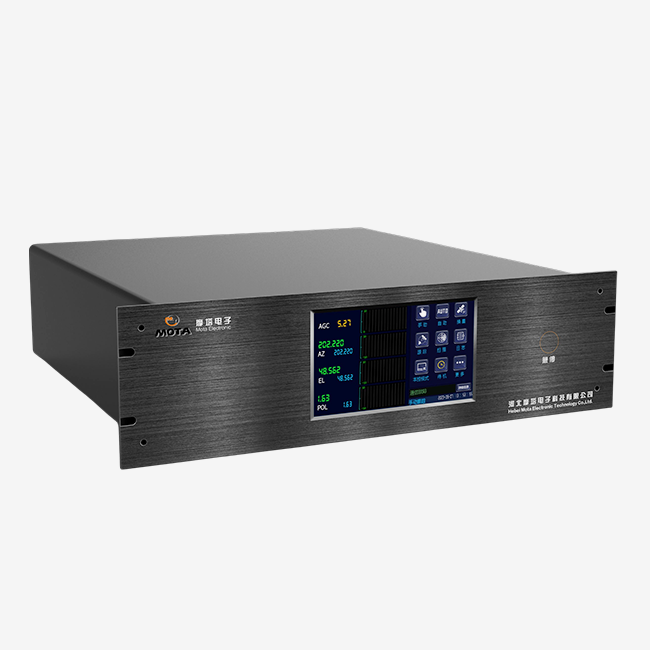
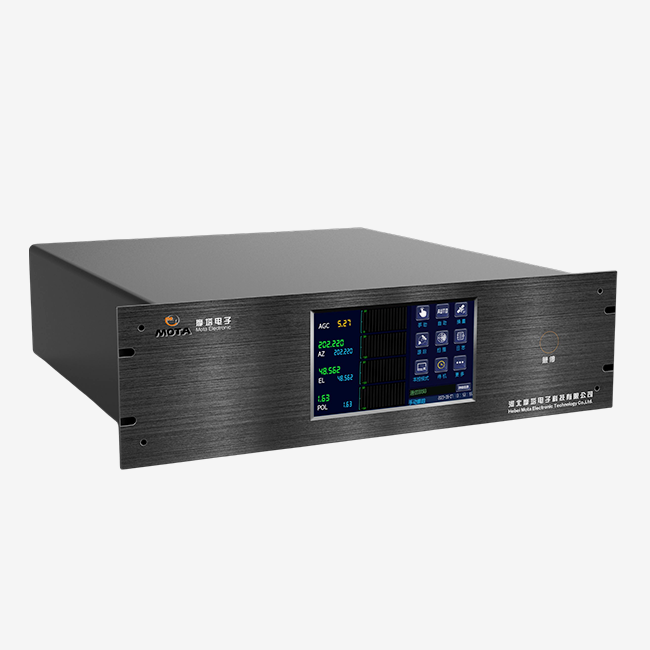
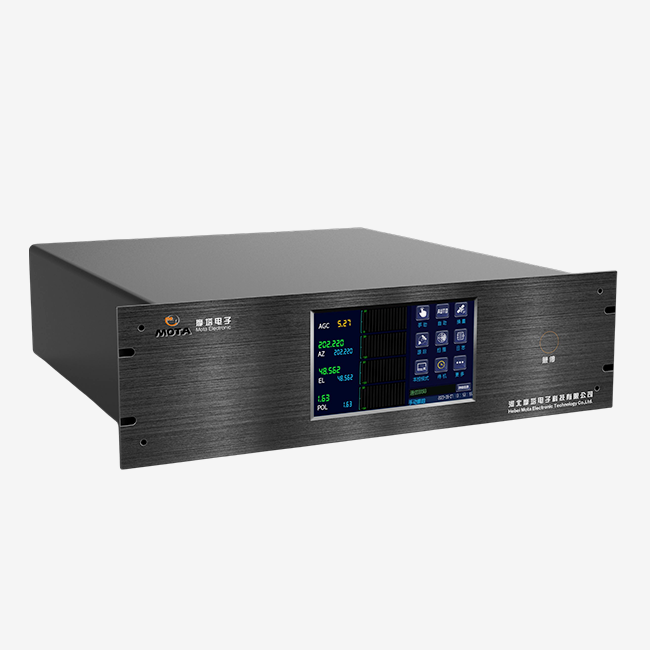
When you need enterprise-level antenna positioning that won't compromise on accuracy, our High Precision Servo Controller delivers what ground stations and defense radars demand. Developed by Hebei Mota Electronics Technology Co., Ltd., this core drive unit employs fully digital dual-closed-loop PID architecture paired with high-resolution encoders to achieve angle control accuracy ≤0.005° and repeat positioning precision ≤0.003°.
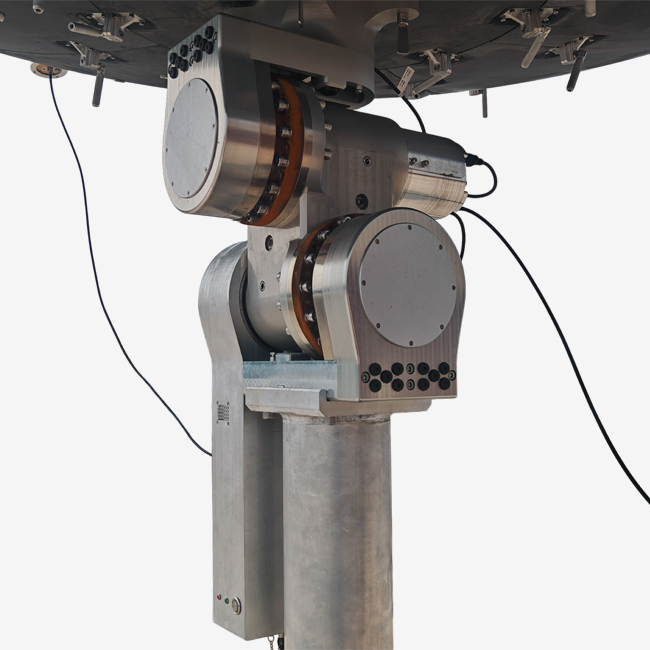
Response time stays under 5 milliseconds, enabling your system to lock onto fast-moving Low Earth Orbit satellites without lag. It smoothly drives three-axis motors across 0.3m to 18m antennas—from portable tactical terminals to large-aperture deep-space TT&C arrays—while eliminating jitter and overshoot. With comprehensive hardware protection, wide motor compatibility (DC servo, stepper, AC servo), and operation across -45°C to +70°C, this controller meets the rigorous standards aerospace and defense applications require.
Why Your Mission-Critical Systems Need This Controller?
Aerospace-Grade Precision You Can Verify
You're not chasing theoretical specs—you need proven, repeatable results. Our controller's 0.003° repeat positioning precision meets the strict indicators of deep-space tracking, telemetry, and command stations. Every angle adjustment is consistent, cycle after cycle.
High-resolution encoder integration ensures that even sub-degree movements translate into reliable beam pointing. Whether you're tracking geostationary satellites or intercepting weak signals from remote sensing payloads, positioning errors stay minimal.
Smooth Operation Under High Inertia
Large-aperture antennas generate significant mechanical inertia. Standard drives produce impact jitter during start-stop sequences, stressing your mechanical structures and reducing lifespan.
Our optimized dual-closed-loop algorithm tames these dynamics. Motors accelerate and decelerate smoothly, protecting gearboxes, bearings, and mounting assemblies. You'll see fewer maintenance calls and longer equipment uptime.
Universal Motor Compatibility for Easy Retrofits
Existing ground stations often mix motor brands and types. Replacing a controller shouldn't mean ripping out your entire drive train.
This product works seamlessly with DC servo motors, stepper motors, and AC servo motors—domestic or imported. Retrofit projects become straightforward, cutting both downtime and capital expenditure.
Millisecond Response for Fast-Moving Targets
Low Earth Orbit satellites traverse the sky quickly. Sluggish control loops lose tracking lock, interrupting communication windows.
With response times ≤5ms, our controller adjusts antenna angles almost instantaneously. You maintain stable signal acquisition even when targets accelerate or change trajectory.
Military-Grade Reliability in Harsh Environments
National-level ground stations and run offices work year-round, regularly in extraordinary climates. Controllers must stand up to electromagnetic impedances and temperature swings without float or failure.
Our plan joins strong EMC protecting and wide-temperature hardware (-45°C to +70°C). It performs dependably whether you're sending in leave warm or cold cold, assembly the solidness measures defense and aviation segments command.
Technical Specifications
| Parameter | Value |
|---|---|
| Control Mode | Full-digital Dual-closed-loop PID Control |
| Angle Control Precision | ≤0.005° |
| Repeat Positioning Precision | ≤0.003° |
| Response Time | ≤5ms |
| Drive Adaptation | DC Servo Motor, Stepper Motor, AC Servo Motor |
| Operating Voltage | AC220V / DC24V / DC48V |
| Operating Temperature | -45°C ~ +70°C |
| Adapted Antennas | 0.3m–18m full-aperture parabolic and TT&C radar antennas |
Who Benefits Most from This Controller?
Deep-Space Tracking Stations
When you're receiving telemetry from interplanetary probes, every tenth of a degree matters. Our controller's sub-0.005° accuracy ensures your antenna stays locked on faint, distant signals.
Satellite Communication Ground Terminals
Rapid satellite handovers require fast, jitter-free repositioning. Millisecond response keeps your link stable during pass transitions, maximizing data throughput.
Defense Radar Systems
High-precision radars demand repeatable beam steering for target identification and tracking. Our High Precision Servo Controller supports the angular resolution these systems need to distinguish closely spaced objects.
Emergency Communication Deployments
Portable satellite stations must set up quickly and connect reliably. Universal motor support and intuitive control integration speed deployment, even when technicians swap components in the field.

How to Choose the Right Servo Controller?
Match Precision to Your Application
If you're aiming for sub-degree pointing—think satellite uplinks or TT&C—prioritize controllers with proven ≤0.005° accuracy. Laboratory claims aren't enough; look for real-world validation in demanding projects.
Evaluate Response Time for Target Dynamics
Geostationary satellites move slowly relative to the ground. LEO constellations don't. Controllers with <10ms response keep up with fast-moving targets; slower units will lag and lose lock.
Check Motor and Voltage Compatibility
Your existing drive motors may be DC or AC, 24V or 48V. Controllers with multi-motor, multi-voltage support simplify integration and future upgrades.
Verify Environmental Ratings
If your antennas operate outdoors year-round, ensure the controller handles your site's temperature extremes and electromagnetic environment. Military-grade designs (-45°C to +70°C, strong EMC performance) reduce failure risk.

FAQ
Q: How does your controller smother mechanical reverberation in expansive antennas?
A: We utilize versatile sifting inside the dual-closed-loop PID calculation to distinguish and constrict reverberation frequencies consequently. This keeps high-inertia frameworks steady without manual tuning.
Q: What input interfacing does the controller support?
A: Our unit coordinating with high-resolution outright and incremental encoders, guaranteeing high-bandwidth information exchange for exact closed-loop control.
Q: Can the controller handle changing stack dormancy amid recieving wire movement?
A: Yes. The control calculation alters PID parameters in genuine time based on reflected stack, keeping up smooth movement indeed as payload weight or wind stacking changes.
Q: What communication conventions empower multi-axis synchronization?
A: The controller underpins standard mechanical conventions, accomplishing tight coordination between azimuth, rise, and polarization tomahawks with negligible latency.
Q: Does the controller incorporate security highlights for basic missions?
A: Comprehensive equipment assurance shields against overcurrent, overvoltage, and warm occasions. Crisis halt inputs stop movement promptly if irregularities occur.
Q: How troublesome is it to retrofit this controller into an existing system?
A: All inclusive engine compatibility and adaptable voltage input (AC220V/DC24V/DC48V) make integration clear. Most retrofits require as it were wiring overhauls and parameter setup.
Ready to Upgrade Your Antenna Positioning?
Contact us at hebei_mota@163.com to discuss your High Precision Servo Controller specifications and system requirements.
Tell us your requirements – get a tailored quote and technical support within 24 hours.