- English
- French
- German
- Portuguese
- Spanish
- Russian
- Japanese
- Korean
- Arabic
- Greek
- German
- Turkish
- Italian
- Danish
- Romanian
- Indonesian
- Czech
- Afrikaans
- Swedish
- Polish
- Basque
- Catalan
- Esperanto
- Hindi
- Lao
- Albanian
- Amharic
- Armenian
- Azerbaijani
- Belarusian
- Bengali
- Bosnian
- Bulgarian
- Cebuano
- Chichewa
- Corsican
- Croatian
- Dutch
- Estonian
- Filipino
- Finnish
- Frisian
- Galician
- Georgian
- Gujarati
- Haitian
- Hausa
- Hawaiian
- Hebrew
- Hmong
- Hungarian
- Icelandic
- Igbo
- Javanese
- Kannada
- Kazakh
- Khmer
- Kurdish
- Kyrgyz
- Latin
- Latvian
- Lithuanian
- Luxembou..
- Macedonian
- Malagasy
- Malay
- Malayalam
- Maltese
- Maori
- Marathi
- Mongolian
- Burmese
- Nepali
- Norwegian
- Pashto
- Persian
- Punjabi
- Serbian
- Sesotho
- Sinhala
- Slovak
- Slovenian
- Somali
- Samoan
- Scots Gaelic
- Shona
- Sindhi
- Sundanese
- Swahili
- Tajik
- Tamil
- Telugu
- Thai
- Ukrainian
- Urdu
- Uzbek
- Vietnamese
- Welsh
- Xhosa
- Yiddish
- Yoruba
- Zulu
How Portable Satellite Antennas Support Communication in Remote Areas
It is possible to communicate in remote areas with a portable fixed satellite antenna because it sets up a direct radio link to a satellite where there are no cell towers or fiber lines. When they get to the site, the crew points the dish at the chosen satellite just once. They then leave it there while a modem and router send data, voice, and video. It saves money and time by not using tracking hardware because the antenna stays still while it's being used. This book tells you how these systems work, what specs are important, how to set one up, and how to pick a supplier.
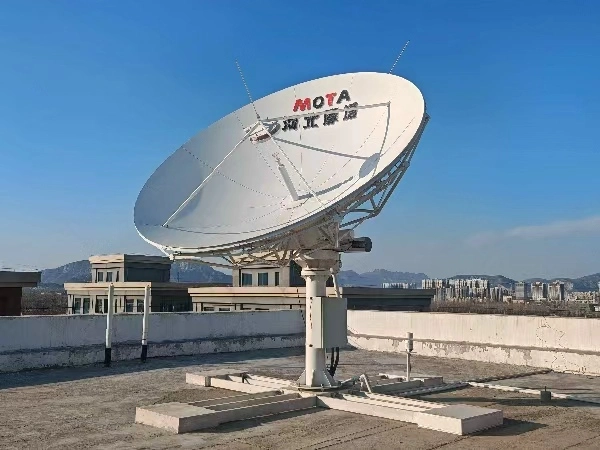
How Portable Fixed Satellite Antennas Work in Remote Areas
The Link From Your Site to the Satellite
The way I like to describe it is as a relay chain. Routers and modems get data from your laptop or camera. It is sent from the modem to the antenna, which focuses it into a narrow beam that is pointed at a satellite. There are a lot of communication satellites in geostationary orbit, which is about 35,786 km above the equator. This makes them look like they are fixed in the sky. The signal is sent from the satellite to a gateway on the ground. This gateway connects to either the internet or a private network. The dish, feed, modem, router, cables, a power source, and an active service plan are all part of a full kit.
Alignment: Azimuth, Elevation, and Polarization
How you point affects whether the link works or not. Azimuth (compass direction), elevation (angle above the horizon), and polarization (the radio wave's direction) are all set by the operator. Since a geostationary satellite stays in the same place, these settings will not change once the dish is locked on. Tools that use GPS and signal meters make the search go faster. A bigger dish puts more power into a smaller beam, which increases gain but needs more precise pointing. That's why a stable mount is important. The full-band fixed antenna from MOTA has a four-axis stabilization platform that keeps the lock with an alignment error of 0.05° or less.
Why Fixed Operation Suits Temporary Sites
If the antenna is in fixed operation, it will never follow a moving target. That gets rid of the need for motors and constant power use, which makes maintenance easier. Following a dish around for days or months isn't very useful in a field hospital, drilling camp, or flood response post. There is some latency with geostationary links. The round trip time is about 500 to 700 milliseconds. That delay works well for cloud apps, video calls, email, and telemetry. It can be annoying for real-time remote control. When you know this limit early on, you can be clear with your team about what you expect from them.
Key Performance Factors for Remote-Area Connectivity
Frequency Band and Rain Fade
Both the weather and the services that are available are affected by frequency bands. Ku-band is used by a lot of business and broadcast networks, and Ka-band is used by a lot of high-throughput satellites. ITU-R Recommendation P.618 talks about how to design links so that higher frequencies don't lose as much signal when it rains a lot. C-band works better in the rain, but it needs bigger dishes. Before you buy, make sure you know what band your satellite provider uses in your area and ask for a link budget that includes extra money for rain in your area. MOTA's antenna works with bands Ku, Ka, S, X, C, and Qv, and it can automatically switch between them, so a single terminal can connect to multiple networks.
Gain, Noise Figure, Isolation, and Sidelobes
Four numbers tell you a lot about the signal strength. Gain tells you how well the dish concentrates power. The noise figure tells you how much noise the receive chain adds. Less noise is better. How well the send signal stays away from the receiver is measured by transceiver isolation. It's important to keep neighboring satellites from getting messed up, and the first sidelobe level shows how much energy leaks outside the main beam. The noise figure for MOTA's multi-band antenna is 0.6 dB or less, the transceiver isolation is 98 dB or more, and the first sidelobe is -22 dB or less. A military-grade filter gets rid of interference.
Power, Wind, Temperature, and Ingress Protection
Hardware is put to the test more in the field than in any lab for portable fixed satellite antenna. Your generator, battery, or solar array should be able to handle the load if you check the power input and startup current. As wind speed and dish area go up, wind force goes up as well. This means that a 2.4 m reflector needs a stronger stand than a smaller one. According to IEC 60529.1, IP68 means that the device is dust-tight and can withstand being submerged in water for a long time under conditions set by the manufacturer. The antenna from MOTA works from -45°C to +70°C, has an IP68 rating, and can be used 24 hours a day, seven days a week.
Portable Fixed Satellite Antenna Installation, Setup, and Care
Choosing the Site
Hardware doesn't change the link; the site you choose does. Make sure you can see the satellite clearly. Buildings, trees, and ridgelines can block the signal, especially when you're low to the ground. Choose a flat, stable surface or a base that has already been prepared. Keep the antenna away from equipment that vibrates, exhaust, dust, and water that isn't moving. Short cable runs will help keep the signal strong, and grounding points should be close to the mount. You can save hours of work by quickly surveying the site with a compass and your service provider's pointing data.
Step-by-Step Setup
This is the order we suggest. First, put the mount together and make sure it won't blow away. Next, connect the dish and feed. After that, link the modem and router with cables. Set the azimuth, elevation, and polarization, and then enter the satellite parameters that your service provider gave you. Slowly make changes until the signal meter reads "peak," then tighten all the screws and check the reading again, since tightening can change the point of aim. Finally, test the site with a real app, like a video call, before you make it public.
Commissioning Tests and Maintenance
Write down the signal strength, signal-to-noise ratio, throughput, latency, and packet loss after the lock. If you need to troubleshoot or do another deployment, you can use those numbers as a starting point. For maintenance, check the reflector for corrosion, wipe down the connectors, and check the fasteners and grounding points. This is especially important in dusty or coastal areas. Keep kits that have spare cables, a quick-start card, and parts that have been labeled. Real-time monitoring, self-diagnosis, and remote parameter adjustment are all possible with MOTA's antenna, which can cut down on the number of site visits.
Applications and Antenna Comparisons
Emergency Response and Public Safety
Most of the time, terrestrial networks fail first after hurricanes, earthquakes, and floods. The National Emergency Communications Plan from the U.S. Cybersecurity and Infrastructure Security Agency stresses that communications for first responders must be reliable and work with other systems. Temporary command centers, rescue teams, and field hospitals can get backhaul with a portable fixed satellite antenna instead of relying on the local infrastructure. The multi-band antenna on MOTA supports multiple HD video streams, which gives the command staff a real-time picture of what's going on. The link stays open even during storms thanks to its extreme-weather rating.
Industry, Research, and Remote Sensing
Teams that work in mining, energy, construction, and research are far from fiber. Their offices are linked to enterprise networks, voice systems, and cloud tools by a satellite link. The link also sends sensor data back to headquarters. A low noise figure also helps receivers pick up weak signals from faraway payloads, which is good for remote sensing stations as well. MOTA's system can handle 10 Gbps data backhaul and 8K@60fps video. It can also be used for defense communications as well as aerospace telemetry, tracking, and command work.
Fixed, Flat-Panel, and Tracking Systems Compared
Every kind of antenna is good for a specific job. A fixed dish is better for places where the terminal stays put, costs less, and has fewer moving parts. Flat-panel terminals are easy to install and may work well in some vehicles, but they may use more power or not be able to connect to as many networks. It costs more and is harder to set up, but automatic tracking systems keep a link open while a vehicle or ship moves. Bigger dishes, like 1.8 m and 2.4 m ones, add gain and link margin, but they need to be moved by car and have a firm base. Pick the one that works best for your budget, mobility, and satellite service.
Buying Guide and Supplier Evaluation
Specifications and Total Cost
Before you compare prices, you should decide on the deployment's region, satellite network, number of users, uptime goal, and power source. Then look at the frequency band, gain, polarization, interfaces, modem compatibility, environmental rating, wind resistance, size, weight, packing, and rating for wind. Include the cost of shipping, installation, service fees, spare parts, and the warranty in the total cost of ownership. For deployments in the United States, check with your service provider and an engineer to see which FCC rules apply to the equipment that will be used for transmission, and then make sure that the manuals, test reports, and labels you get match those rules.
How to Evaluate a Supplier
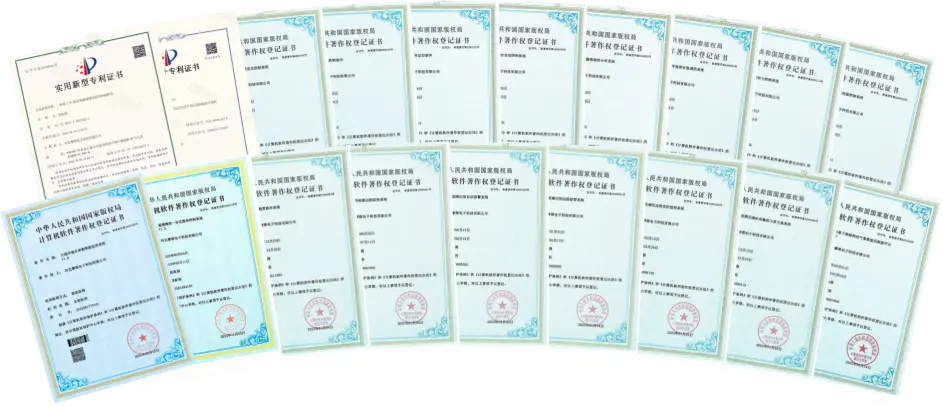
First, find out if the company you are dealing with is a manufacturer, a distributor, an integrator, or a trading company. Next, request the results of the RF tests, proof of the environment, records of the final inspection, and the terms of the warranty. MOTA has been making things for nine years and has ISO 9001, ISO 14001, and ISO 45001 certifications. They also have a domestic type approval for radio transmission equipment. We keep a lot of stock on hand for regular orders. It takes 45 to 90 days for custom or large systems. We use shockproof and waterproof materials to pack precision electronics, and we help with customs paperwork, tracking, and ODM/OEM changes to hardware, interfaces, and modules.
Product Advantages Buyers Should Compare
This is what MOTA's multi-band fixed satellite antenna for remote sites does best:.
- Multi-band versatility: The antenna covers Ku, Ka, S, X, C, and Qv bands with automatic switching. One terminal can serve several satellite networks, which reduces the number of spare models you stock and simplifies training for crews who move between projects and sites.
- Pointing stability: The four-axis stabilization platform holds alignment error to 0.05° or less. Steady pointing keeps the link locked through temperature swings and small ground shifts, which supports continuous backhaul and live video from sites nobody visits every day.
- Extreme-weather protection: The military-grade integrated design operates from -45°C to +70°C with an IP68 rating. MOTA specifies a service life above 15 years of 24/7 operation, which helps cover desert heat, arctic cold, sandstorms, and heavy rain with fewer replacements.
These benefits fix three common issues that happen at remote sites: bands that don't match, alignments that move, and damage from the weather. Each aperture size is 1.8 m or 2.4 m, and it works well for command posts and ground stations where the antenna stays in place.
Conclusion
A portable fixed satellite antenna connects faraway places by aligning a dish with a geostationary satellite only once. The dish stays in place while a modem and router send data, voice, and video. How good a link is depends on the frequency band, rain margin, gain, noise figure, isolation, sidelobes, power supply, wind loading, temperature range, and protection against outside interference. Choose the right site, make sure it's aligned correctly, record baseline tests, and check the link regularly to keep it stable. For emergency response, industry, research, and remote sensing sites that don't move, fixed antennas work well. Tracking systems, on the other hand, are needed for vehicles and ships that are moving. Buyers get better results when they first plan the deployment, check the documents and specifications, and rate suppliers based on testing, certifications, stock, and customer service.
FAQ
How long does setup take?
Setup depends on the model and how experienced the crew is. Tools and signal meters that use GPS shorten the alignment process. Ask your supplier how long it took to set up the exact model when it was tested.
Does the antenna provide internet by itself?
No, you need a service plan, a modem that works with it, the right frequency band, and a satellite network that reaches your area.
Can it work on a moving vehicle or vessel?
When it's working, a fixed antenna has to stay in one place. Platforms that move need equipment that keeps them stable or tracks them automatically.
Which documents should I request?
It is important to ask for the datasheet, manuals, certifications, warranty terms, and RF and environmental test reports. People in the U.S. should also check the FCC's rules for transmitting equipment.
Request a Portable Fixed Satellite Antenna Solution From MOTA
Are you planning a link from afar and want to talk to a manufacturer of a portable fixed satellite antenna directly? To place an order, email MOTA at hebei_mota@163.com with your region, satellite network, frequency band, power source, and expected order volume. We have stock available right away, can customize for OEM/ODM, and are available 7 days a week. Let us look over your requirements and give you a quote for samples or bulk orders.
References
1. Satellite Communications Systems: Systems, Techniques and Technology (Maral and Bousquet), 2020
2. Satellite Communications (Pratt, Bostian, and Allnutt), 2019
3. Introduction to Satellite Communication (Bruce R. Elbert), 2008
4. Handbook on Satellite Communications (International Telecommunication Union), 2002
5. Recommendation ITU-R P.618: Propagation Data and Prediction Methods Required for the Design of Earth-Space Telecommunication Systems (International Telecommunication Union), 2017
6. National Emergency Communications Plan (Cybersecurity and Infrastructure Security Agency), 2019
Tell us your requirements – get a tailored quote and technical support within 24 hours.