- English
- French
- German
- Portuguese
- Spanish
- Russian
- Japanese
- Korean
- Arabic
- Greek
- German
- Turkish
- Italian
- Danish
- Romanian
- Indonesian
- Czech
- Afrikaans
- Swedish
- Polish
- Basque
- Catalan
- Esperanto
- Hindi
- Lao
- Albanian
- Amharic
- Armenian
- Azerbaijani
- Belarusian
- Bengali
- Bosnian
- Bulgarian
- Cebuano
- Chichewa
- Corsican
- Croatian
- Dutch
- Estonian
- Filipino
- Finnish
- Frisian
- Galician
- Georgian
- Gujarati
- Haitian
- Hausa
- Hawaiian
- Hebrew
- Hmong
- Hungarian
- Icelandic
- Igbo
- Javanese
- Kannada
- Kazakh
- Khmer
- Kurdish
- Kyrgyz
- Latin
- Latvian
- Lithuanian
- Luxembou..
- Macedonian
- Malagasy
- Malay
- Malayalam
- Maltese
- Maori
- Marathi
- Mongolian
- Burmese
- Nepali
- Norwegian
- Pashto
- Persian
- Punjabi
- Serbian
- Sesotho
- Sinhala
- Slovak
- Slovenian
- Somali
- Samoan
- Scots Gaelic
- Shona
- Sindhi
- Sundanese
- Swahili
- Tajik
- Tamil
- Telugu
- Thai
- Ukrainian
- Urdu
- Uzbek
- Vietnamese
- Welsh
- Xhosa
- Yiddish
- Yoruba
- Zulu
Industrial Fixed Satellite Antenna: Key Specifications Buyers Should Compare
The key specifications to compare on an industrial fixed satellite antenna are frequency band coverage, gain and sidelobe level, transmit-receive isolation, ingress protection, temperature range, wind stability, and the level of component integration. I rank them by one question: will the link stay up at your site around the clock? Below, I explain each specification, compare fixed terminals with mobile and VSAT options, and show how MOTA builds its units for unattended energy, mining, and plant sites.
Understanding the Industrial Fixed Satellite Antenna: Overview and Core Functions
What an Industrial Fixed Satellite Antenna Does
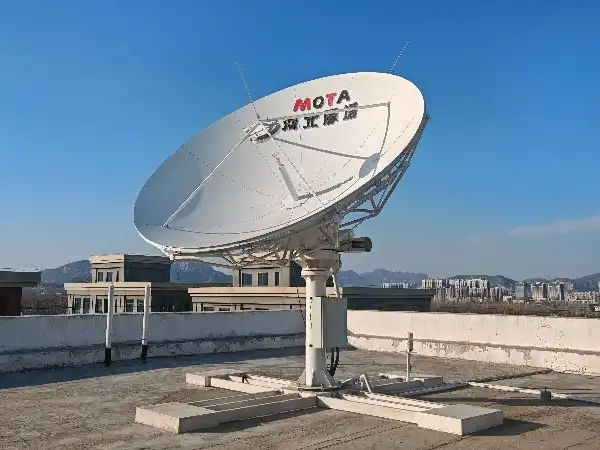
An industrial fixed satellite antenna is a ground terminal that is permanently put in place and sends and gets data through a satellite. It always points at the same satellite because it is in geostationary orbit, which is about 35,786 km above the equator and doesn't need to be tracked all the time. The modem and translators get the data ready for the uplink while the computer gets it from sensors, SCADA systems, and cameras. This gives operators a data path at unattended pump stations, mine sites, and substations where there isn't a fiber or cell tower.
Frequency Bands in Plain Terms
Satellite bands trade the ability to handle rain for the ability to carry more data. C-band, which is between 4 and 8 GHz, works well in heavy rain but needs bigger dishes. Ku-band, which ranges from 12 to 18 GHz, works well with medium-sized dishes and is commonly used for business data.
ITU-R P.618 propagation guidance says that Ka-band, which is between 26.5 and 40 GHz, has a lot of capacity but loses more signal when it rains a lot. S- and X-bands show up in certain types of ties. The MOTA terminal can manually switch between the Ku, Ka, S, X, C, and Qv bands, so it can work with a number of different satellite services.
Where These Terminals Work Best
When a lost link costs a lot, fixed ports are the best choice. Pipelines need readings of flow and pressure from switches that are far away. Mines need information about ventilation and video from places that don't have towers. Government agencies in charge of forestry and water need to be able to monitor things without being watched.
It doesn't matter what case it is; the buyer wants uptime and a steady data rate more than transfer. MOTA makes its terminal for use in factories, on the job site, and as a long-term ground station, with features like high-definition data and remote monitoring.
Key Specifications to Compare When Buying an Industrial Fixed Satellite Antenna
Frequency Band Compatibility
The first thing you should do is get the satellite service, not the dish. The band is set by your service provider's beam, and the terminal must match it. Find out what bands the unit can handle, how to change them, and whether someone needs to come to the site to make the change. The industrial fixed satellite antenna from MOTA can pick up Ku, Ka, S, X, C, and Qv signals and can be switched manually. This is important when a project switches service providers or when sites in different areas use different services. Before you place your order, make sure that the band you want to use is licensed in the country where it will be used.
Gain, Sidelobes, and Isolation
Gain tells the dish how much signal to pick up. In terms of link budget, G/T and EIRP tell you how strong the receive and send signals are. Make sure you get both for the exact setup you want to buy. A lot of the energy that leaks toward nearby satellites is controlled by sidelobes, and ITU-R S.580 sets design goals for radiation patterns at earth stations.
MOTA says that the first sidelobe level should be -16 dB or less. Even in noisy plants, isolation is important. MOTA requires transmit-receive isolation of 88 dB or more. This is what keeps the receiver from being overwhelmed by the strong signal going out. Ask for these numbers in writing, along with the test circumstances.
Environmental Protection and Wind Stability
Rates are only useful if they match the site. IEC 60529 says that IP65 means that something is dust-tight and can handle water jets. The MOTA unit is protected by IP65, has a high-strength, corrosion-resistant housing, and can work in temperatures ranging from -30°C to +55°C. It can hold a stable 1080p video return in force 7 winds, which are 50 to 61 km/h on the Beaufort scale. The beam stays steady on a two-axis fixed base. Ask for salt spray data under ASTM B117 for places near the coast or chemicals. If the area is dry or high up, ask the provider what conditions they tried it in.
Integration and Power Management
Every extra box on the job site adds a chance for something to go wrong and a task for a group that doesn't have much time. It comes with a smart power control system, an industrial-grade BUC and LNB, and a high-speed connection, so it can be used right away. Its industrial alignment algorithm helps stop industrial electromagnetic interference and gets the link up in three minutes.
Before the delivery, you should talk about a backup plan, like batteries or solar power, and ask how the terminal works when the power goes out. MOTA's ODM/OEM service can change protocols and functional modules to fit your RTU or SCADA setup when it comes to interfaces.
Comparing the Industrial Fixed Satellite Antenna with Mobile and VSAT Solutions
Fixed Versus Mobile Terminals
Mobile stations keep an eye on a satellite even when a car, boat, or backpack is moving. For that flexibility, you need motors, gyros, and tracking software, all of which get worn out after years of use. A fixed unit gives up mobility in exchange for a stable mount and an easier job cycle.
This type of unit is best for a pump station that doesn't move. Mobile units can be used by survey teams and first responders. A set design generally gives a site that runs 24 hours a day for years a more stable link and fewer parts to deal with. If the object is moving, use a mobile terminal, and if it's a permanent spot, use a fixed terminal.
How It Relates to VSAT Networks
VSAT stands for "very small aperture terminal." This word refers to a type of network where many small dishes are linked together by a satellite service. Low-cost and quick setup are the main goals of consumer-grade VSAT kits. An industrial fixed satellite antenna can work with the same network model, but it needs to have a more durable housing, be able to handle a wider range of temperatures, and have better control over interference. The real question isn't usually "fixed or VSAT." It's about whether the terminal in your network can make it through the site. Check with your source to make sure the computer and network will work before you buy.
Choosing by Site Profile
Three questions help narrow down the options. How long will the page be up? A permanent port has been used for years. How dirty and harsh is the place? When there is salt, dust, or freezing weather, the IP rating, corrosion protection, and temperature range need to be checked. How many websites are you going to launch?
One standard model makes it easier to get extra parts and train the crew if you plan to build 5 to 100 units over time. Think about the total cost when making your budget. A cheaper terminal that needs to be rolled by truck a lot of times can cost more over five years than a stronger one.
How to Shortlist Industrial Fixed Satellite Antenna Models and Suppliers
Documents and Certifications to Request
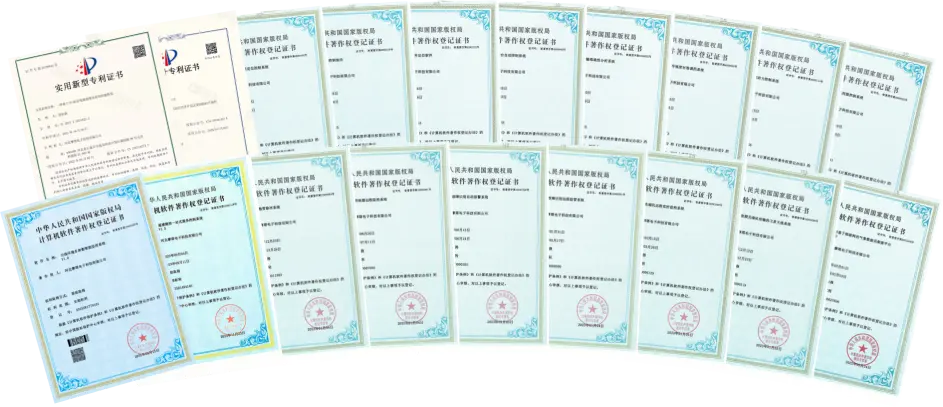
For corporate qualification reviews, you'll need records, so get it together early. Ask for certificates for the quality system, reports on outdoor tests, license for radio equipment, and a datasheet with a list of test conditions. MOTA (Hebei Mota), which was founded in 2017, has been making things for nine years. ISO 9001, ISO 14001, and ISO 45001 are some of the certifications it has.
It also has a GJB 9001C military quality management certification and a type approval for radio communication equipment in China. Through ODM/OEM work, MOTA changes the hardware, interface protocols, and certifications to fit the rules of other markets. Talk to your satellite provider and safety team right away to make sure you know what US licenses you need for your industrial fixed satellite antenna.
Pilot Sites and Operating History
A datasheet shows what you want to do, but a pilot shows how you'll do it. It's a good idea for industrial buyers to run a pilot station for eight to sixteen weeks before placing a large order. Write down when the link is available, how long it takes to restore after the power goes out, how well it works during storms, how it reacts to changes in temperature, and how much data it sends to your SCADA system during the test. Ask each supplier for operating records from the past instead of using words to describe them. If a seller lets a test run and shares logs publicly, they probably trust the hardware.
Delivery, Spares, and Support
Rolling site building needs a steady flow of materials. Standard types are always in stock at MOTA, and it takes 45 to 90 days to make special or large-scale systems. Shipments can be made in stages to fit the needs of each site. Precision equipment is shipped in shockproof and moisture-proof containers.
The cross-border system includes dedicated international lines, sea freight, air freight, tracking, help with customs clearance, and storage overseas for your industrial fixed satellite antenna. 24 hours a day, seven days a week, a remote team does setup, troubleshooting, and upgrades. International standards are followed by the full-unit guarantee, and partner channels offer on-site service and extra parts.
Practical Guide: Performance and Maintenance of an Industrial Fixed Satellite Antenna
Alignment and Pointing Checks
Even a fixed dish needs to be carefully pointed when it is first set up. Record the satellite's direction, elevation, and orientation, and make sure there is a clear line of sight and no new buildings or trees growing in the way. The industrial alignment algorithm from MOTA sets up the link in three minutes, which saves time for crews working in remote areas. Next, make sure all the hardware is tight, write down how strong the signal is, and save the numbers as a starting point. A later drop from that baseline shows that there are moved mounts, moisture, or obstructions long before the link breaks.
Routine Inspection Checklist
Here is a short list of things I suggest you do on planned visits, each one linked to a common reason why links fail:
- Mount and hardware: Make sure that the foundation bolts, brackets, and pointing locks are not loose. Slowly, wind, vibration, and changes in temperature can loosen fasteners, and a small shift can cause a Ka-band link to fall. Re-torque to the numbers given and label the bolts so that the next crew can quickly see which ones are moving.
- Housing and seals: Look for cracks, corrosion, or water marks in the housing, cable glands, and connector seals. Seals must be unbroken for IP65 protection to work, so repair any worn gaskets right away. Shorten the time between visits to chemical or coastal sites and wash off any salt or dust that may have built up.
- Power and signal logs: Check the readings for power and signal levels against the baseline used for commissioning. A slow drift is often caused by water, worn connectors, or an obstruction that is getting bigger. Sudden drops, on the other hand, are usually caused by weather or power outages. Write down every visit in a single log that everyone can see.
These checks don't take long and remove the most common causes of unplanned outages for an industrial fixed satellite antenna.
Troubleshooting Common Issues
Move from easy to hard when a link drops. First, make sure that the computer has power and that the modem's status lights are on. Second, look at your baseline and compare the signal level to it. Moisture or an obstruction could be causing the loss over time, while misalignment or hardware damage could be the cause of a sudden loss.
Third, check for new sources of interference, like transmitters or welding gear, and make sure the cables are still connected. Ku and Ka transmissions can get weaker in heavy rain, but the link gets stronger again after the storm is over. If you still can't figure out what went wrong, send your logs to the supplier's remote support team.
Conclusion
People put the industrial fixed satellite antenna in places that teams don't go to very often to keep a link going. The main things that are compared are the frequency range, gain, sidelobe level, transmit-receive isolation, ingress protection, temperature range, wind stability, and the number of built-in parts. Mobile units are good for moving assets, and fixed terminals are good for permanent sites.
VSAT describes the network that either type can connect to. Certificates, test records, pilot results, extra parts, and shipping plans should all be checked by the supplier. After the investment is made, alignment records and regular checks protect it. Specifications are only useful if they are backed up by test conditions and proof from the field. For energy, mining, and plant communications, buyers who compare numbers with working history make safer decisions.
FAQ
How long does installation take?
Once the industrial fixed satellite antenna is placed on a ready stand and MOTA's industrial alignment method is used, link lock takes about three minutes. Depending on the site, foundation work and wiring take more time.
Can one model serve different satellite services?
The MOTA device can manually switch between the Ku, Ka, S, X, C, and Qv bands, which means it can work with a variety of service providers. Talk to your operator first about the band plan.
Does it work with existing VSAT networks?
How well they work together depends on what your provider's modem and network needs. Send them to our team, and we'll make sure they work, including changing the process through the ODM/OEM service.
What affects the price?
Cost is based on band choice, customization, quantity, interface needs, and delivery schedule. It takes 45 to 90 days to make a unique system, but standard types can be sent out right away.
Contact MOTA for Your Industrial Fixed Satellite Antenna Order
Planning to launch a site? With ready stock, 45–90 day custom production, ODM/OEM support, and response time of 7–24 hours, MOTA has what you need. We can quote pilot units and staged batches because we make industrial fixed satellite antennas. Send an email to hebei_mota@163.com with your bands, site conditions, and numbers, or go to motasat.com for more information.
References
1. ITU-R Recommendation S.580-6, Radiation Diagrams for Use as Design Objectives for Antennas of Earth Stations Operating with Geostationary Satellites, 2004
2. ITU-R Recommendation P.618-13, Propagation Data and Prediction Methods Required for the Design of Earth-Space Telecommunication Systems, 2017
3. IEC 60529, Degrees of Protection Provided by Enclosures (IP Code), 2013
4. ASTM B117, Standard Practice for Operating Salt Spray (Fog) Apparatus, 2019
5. Maral and Bousquet, Satellite Communications Systems, Wiley, 2009
6. Ippolito, Satellite Communications Systems Engineering, Wiley, 2017
Tell us your requirements – get a tailored quote and technical support within 24 hours.