- English
- French
- German
- Portuguese
- Spanish
- Russian
- Japanese
- Korean
- Arabic
- Greek
- German
- Turkish
- Italian
- Danish
- Romanian
- Indonesian
- Czech
- Afrikaans
- Swedish
- Polish
- Basque
- Catalan
- Esperanto
- Hindi
- Lao
- Albanian
- Amharic
- Armenian
- Azerbaijani
- Belarusian
- Bengali
- Bosnian
- Bulgarian
- Cebuano
- Chichewa
- Corsican
- Croatian
- Dutch
- Estonian
- Filipino
- Finnish
- Frisian
- Galician
- Georgian
- Gujarati
- Haitian
- Hausa
- Hawaiian
- Hebrew
- Hmong
- Hungarian
- Icelandic
- Igbo
- Javanese
- Kannada
- Kazakh
- Khmer
- Kurdish
- Kyrgyz
- Latin
- Latvian
- Lithuanian
- Luxembou..
- Macedonian
- Malagasy
- Malay
- Malayalam
- Maltese
- Maori
- Marathi
- Mongolian
- Burmese
- Nepali
- Norwegian
- Pashto
- Persian
- Punjabi
- Serbian
- Sesotho
- Sinhala
- Slovak
- Slovenian
- Somali
- Samoan
- Scots Gaelic
- Shona
- Sindhi
- Sundanese
- Swahili
- Tajik
- Tamil
- Telugu
- Thai
- Ukrainian
- Urdu
- Uzbek
- Vietnamese
- Welsh
- Xhosa
- Yiddish
- Yoruba
- Zulu
Why use a low-power satellite antenna for industrial applications?
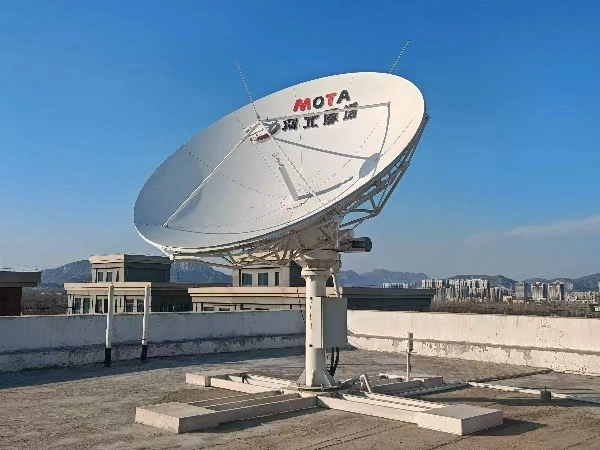
A low-power industrial fixed satellite antenna lets industrial sites that are far away connect to the internet without using a lot of energy. A lot of the time, fiber, cell phone towers, and the grid are far away from weather stations, substations, and pipelines. This means that every watt a terminal uses raises the cost of solar panels and batteries. When not in use, our Ku-band antenna uses 3 W or less of power, and when it is, it uses 12 W or less. This is more than 50% less power than regular industrial terminals. It also sends SCADA data, 1080p video, and sensor readings to the control center all the time. We'll show you how to pick one, where it fits, and how it works below.
Why Remote Industrial Sites Need Low-Power Satellite Connectivity?
Remote Sites Often Sit Beyond Terrestrial Networks
The pipes go through deserts and frozen ground. On top of mountain ridges are substations. On the coasts and in the mountains, weather and hydrological stations stand. A lot of these places don't have fiber, cell service is weak or nonexistent, and there is no grid connection. The U.S. pipeline network is millions of miles long, and a lot of it goes through land with few people living in it. No matter what time of day or nite, operators still need data on pressure, flow, and alarms from every point. A geostationary satellite is about 35,786 km above the equator and covers a large area. This means that a fixed antenna can reach a place where there isn't a tower. Because of this, satellite is a good backhaul option for monitoring points that aren't being watched.
What "Low-Power" Means in Practice
Being low on power doesn't mean being slow. It tells you how much power the terminal needs in each state of operation for low-power industrial fixed satellite antenna. Our antenna uses no more than 3 W when it's not in use and no more than 12 W when it is. It's easy to figure out: 12 W for 24 hours is equal to 288 Wh, and 3 W for 24 hours is equal to 72 Wh. Those are the terminal's rated values; what you can use it for depends on how long it transmits. Still, a smaller daily load means that the solar panel and battery bank can be smaller. This saving is made at every pole, cabinet, and shelter in a project with dozens of stations.
How the Satellite Link Works at a Fixed Site
A feed, a low-noise block converter (LNB), a high-speed modem, and a power module are all parts of a fixed satellite terminal. The antenna stays in place and points at one satellite. It starts at your RTU or sensor and goes to the satellite, then to a gateway, and finally to the control center. The antenna gain, frequency band, modulation, and satellite coverage all affect the quality of the link. Our model has an industrial LNB module, a high-speed modem, and an energy-saving power module built in, which means that installers only have to connect a few parts. The unit goes to sleep when there isn't much traffic and wakes up when data comes in thanks to smart power management.
Key Benefits of a Low-Power Industrial Fixed Satellite Antenna
Smaller Solar and Battery Investment
Costs are often driven by power at an unattended site. For every extra watt, you need a bigger cabinet or a stronger mount, as well as more panel space and battery space. When compared to regular industrial terminals, our antenna uses more than half as much power. This means that many solar-powered stations don't need to add panels and batteries. Auto sleep and wake mode saves even more space because it puts the terminal to sleep when no data is being sent or received. A lighter load also puts less stress on the battery bank, which can cut down on trips to faraway places to replace batteries. The power budget is a big part of the project estimate when a lot of stations are put in place at once.
Steady Operation in Harsh Conditions
Remote sites are bad for equipment. According to IEC 60529. our antenna has an IP67 rating, which means it is dust-tight and can handle being submerged in water for a short time. It works from -30°C to +60°C and doesn't get damaged by water, dust, corrosion, or hits. It can also handle changes in voltage, which happen a lot on solar and weak-grid supplies. A noise figure of 1.0 dB or less keeps the signal that is received clean, and a transceiver isolation of 85 dB or more keeps the send and receive paths from interfering with each other. In Level 7 wind, which the Beaufort scale calls a "near gale," the unit can send stable 1080p video and industrial data.
Easier Integration and Faster Setup
Project teams care about how well a terminal works with other tools they already have. It only takes three minutes to align the satellites with our antenna, which is fully built in and ready to use. Regular operations staff can finish deployment without special RF training, which cuts down on downtime and labor costs. The link sends data from sensors and RTUs back to the control room for SCADA work. We can also customize the hardware design, interface protocols, and software interfaces to fit the style of your site through ODM/OEM. Follow the security steps outlined in NIST SP 800-82 for the satellite link as if it were an important part of your operational technology network.
Where a Low-Power Industrial Fixed Satellite Antenna Fits Best?
Oil and Gas Pipeline Monitoring
Long pipelines that go through deserts and tundra need to be watched all the time. When solar power is the only source, our antenna can send real-time data about pressure, flow rate, and leaks. Because it draws little power, it can work 24 hours a day, seven days a week without needing to add more batteries. This means that you can keep an SCADA network running hundreds of kilometers away from the nearest power grid. If the link is down, the leak alarm doesn't do much good, so uptime is just as important as wattage. In bad weather, that alarm path is supported by a sealed, IP67-rated terminal that can handle dust, water, and cold.
Smart Grid and Electrical Substations
To balance the load, find faults, and set up automatic switching, mountain substations and remote distribution points need backhaul for low-power industrial fixed satellite antenna. A fixed satellite link is used in places where cell phone coverage isn't available or where installing fiber costs too much. The antenna can handle changes in voltage, which is good for remote grid sites where power quality often changes. No matter the terrain or weather, your grid management stays responsive. Having a substation that reports faults quickly and a low draw means that the site's power system has more reserve. This is a simple practical gain for utility teams.
Environmental and Meteorological Stations
Some of the harshest places on Earth have long-term climate and hydrological stations set up. From the humid coasts to high-altitude sites that go through freeze-thaw cycles, our antenna sends data steadily. The satellite link stays open even when bad weather knocks out ground towers. That makes it possible to keep collecting data on water level, rainfall, and the weather. The WMO Guide to Instruments and Methods of Observation stresses the importance of careful, consistent observation practice. This is because forecasting and research depend on records that have not been broken. It helps to keep those records safe if there is a terminal that keeps reporting during storms.
Technical Specifications to Evaluate Before Purchase
Frequency Band and Aperture
IEEE Std 521 says that the Ku band is between 12 and 18 GHz, which is where our antenna works. When it rains a lot, Ku signals get weaker, but C-band signals can reach the same gain with a bigger dish. ITU-R P.618 gives ways to figure out how much attenuation a site has. Make sure you know about satellite coverage, licensing, and the cost of the link before you buy. Another thing that matters is the aperture, since a bigger reflector gives you more gain. We have nine different sizes: 13 m, 11 m, 9 m, 7.3 m, 6.2 m, 5.4 m, 4.5 m, 3.3 m, and 2.4 m. Don't just go by price; match the size to your data rate and rain margin as well.
Power and Environmental Ratings
Find out how much power the system has in standby, operating, peak, and startup states. Our rated values are less than 3 W when not in use and less than 12 W when they are. Then check the input voltage tolerance, since supplies from solar panels and weak grids tend to drift. Our antenna can handle changes in voltage. Look at the ingress rating, temperature range, corrosion resistance, and wind when it comes to the environment. It's IP67, works in temperatures from -30°C to +60°C, and is resistant to corrosion and impact. As long as the test conditions are the same, compare the numbers from each supplier. A high peak or startup draw can be hidden by a high headline wattage. It's a common mistake to size a solar system based only on average load, since winter and cloudy times are important.
RF Performance and Integration Checks
You should pay attention to two RF numbers. The noise figure tells you how much noise the receive chain makes. An dB level of 1.0 means that the noise temperature is about 75 K, so our rating of 1.0 dB or less means that the reception is clean. The level of transceiver isolation tells you how well the unit keeps its own transmit signal out of the receive path. Ours is at least 85 dB. Next, check the security, interfaces, modem compatibility, and remote management. Our antenna has an industrial LNB module and a high-speed modem, so during a pilot, you can make sure that it works with your RTU and sensor vendors.
Choosing, Installing, and Buying
Comparing Low-Power Industrial Antennas With Other Options
Standard home equipment doesn't have the right seals, temperature range, or mounts for industrial sites where no one is watching. Portable terminals are good for emergencies and short-term work, but a permanent monitoring point needs to be stable and in the same place all the time. Flat-panel antennas are easier to install in places where space or wind load is an issue, but they still need to meet aperture and gain requirements. Built-in modems make deployment easier, while external modems work with designs that use more than one network. Most of the time, industrial fixed models protect the environment better, last longer, and work better with SCADA networks. Don't just look at the first bill; compare the total cost, support, and energy use over a number of years.
Selection Checks That Prevent Costly Mismatches
These are the checks you should do before you place an order:.
- Define the site and the load. Record the location, climate, data volume, and whether the link is primary or backup. Then calculate average and peak energy demand, including the modem, heaters, and seasonal battery performance. Size solar panels for the weakest month, not the yearly average. Low standby draw helps most here.
- Verify the band and the link. Confirm satellite coverage, licensing, and a link budget that includes rain fade. Choose aperture and band together, because a smaller dish gives less margin. Delays often start when a team picks equipment before checking regional satellite availability. Ask your supplier for the link-budget assumptions in writing.
- Check integration and support. Confirm interfaces with RTUs and sensors, security controls, warranty terms, and spare-parts response time. In remote areas, a slow replacement part can keep a site offline for a long time, so support speed carries real cost. Ask how the supplier handles remote troubleshooting and shipping to your region.
These checks make it less likely that the equipment won't work with the conditions on the job site.
Installation, Maintenance, and Procurement With MOTA
Before you start, you should do a site survey to check the elevation, line of sight, azimuth, wind exposure, obstructions, and grounding. Add protection against lightning and overvoltage, and then record the alignment, signal levels, and power draw when the system is turned on. On a regular basis, check the mounts, cables, connectors, and corrosion. A pilot-site test, a performance review, an annual supply agreement, and rolling deployment are some of the steps that many buyers take. This process usually takes between 3 and 9 months. With nine years of experience making things, ISO9001, ISO14001, and ISO45001 certifications, and type approval for radio transmission equipment, MOTA backs that path. We keep a lot of stock on hand for regular orders, and it takes 45 to 90 days to deliver custom and large-scale systems. Our team that works across borders handles customs clearance, packaging that is resistant to shock and moisture, and tracking from start to finish. It comes with a full-unit warranty and a response team that is available 24 hours a day, 7 days a week.
Conclusion
A low-power industrial fixed satellite antenna works well at remote locations because it connects things that aren't being watched to the control center while using little energy. On land, networks rarely reach weather stations, pipelines, or mountain substations, and for every watt used, more solar panels and batteries are needed. With rated power of 3 W or less in standby and 12 W or less in operation, that investment can be cut down. With IP67 protection, a range of -30°C to +60°C, the ability to handle voltage changes, a low noise figure, and high isolation, this device keeps data steady even in harsh conditions. Before placing an order, buyers should look at the product's band, aperture, link budget, power in all states, integration, installation quality, and customer service. They should also compare the product's lifecycle cost instead of just price. One fixed terminal can provide both a steady field and low energy use.
FAQ
What power does the antenna draw?
Our Ku-band antenna uses no more than 3 W when it's not in use and no more than 12 W when it is. Since these are rated values, how often they are used each day will depend on how long the terminal can send.
Can it run at remote solar-powered sites?
Yes. It works well in solar sites because it has a low power draw, can sleep and wake up on its own, and can handle changes in voltage. Choose the right size panels and batteries based on your duty cycle and the month with the least amount of sunlight.
What conditions can it withstand?
It works from -30°C to +60°C and is protected by IP67. It can stand up to water, dust, corrosion, and impact, and in Level 7 wind, it can keep 1080p video and industrial data stable.
How long does alignment take, and can you customize the system?
It takes three minutes to align. We can make hardware, interface protocols, functional modules, and software interfaces exactly the way you want them. It takes 45 to 90 days to make customized and large-scale systems.
Request a Low-Power Industrial Fixed Satellite Antenna Quote From MOTA
Tell MOTA about your site, and they'll send you a technical and financial proposal for your project. We have been making low-power industrial fixed satellite antennas for nine years and have ISO9001, ISO14001, and ISO45001 certifications. We also offer ODM/OEM services and a response team that is available 24 hours a day, seven days a week. We can handle pilot orders and rolling deployments. For datasheets, configurations, and prices, email hebei_mota@163.com.

References
1. IEC 60529, Degrees of Protection Provided by Enclosures (IP Code), 2013
2. NIST Special Publication 800-82 Revision 3, Guide to Operational Technology (OT) Security, 2023
3. ITU-R Recommendation P.618-14, Propagation Data and Prediction Methods Required for the Design of Earth-Space Telecommunication Systems, 2023
4. IEEE Std 521-2019, IEEE Standard Letter Designations for Radar-Frequency Bands, 2019
5. World Meteorological Organization, Guide to Instruments and Methods of Observation (WMO-No. 8), 2018
6. Maral, G., Bousquet, M., and Sun, Z., Satellite Communications Systems, 6th Edition, Wiley, 2020
Tell us your requirements – get a tailored quote and technical support within 24 hours.