- English
- French
- German
- Portuguese
- Spanish
- Russian
- Japanese
- Korean
- Arabic
- Greek
- German
- Turkish
- Italian
- Danish
- Romanian
- Indonesian
- Czech
- Afrikaans
- Swedish
- Polish
- Basque
- Catalan
- Esperanto
- Hindi
- Lao
- Albanian
- Amharic
- Armenian
- Azerbaijani
- Belarusian
- Bengali
- Bosnian
- Bulgarian
- Cebuano
- Chichewa
- Corsican
- Croatian
- Dutch
- Estonian
- Filipino
- Finnish
- Frisian
- Galician
- Georgian
- Gujarati
- Haitian
- Hausa
- Hawaiian
- Hebrew
- Hmong
- Hungarian
- Icelandic
- Igbo
- Javanese
- Kannada
- Kazakh
- Khmer
- Kurdish
- Kyrgyz
- Latin
- Latvian
- Lithuanian
- Luxembou..
- Macedonian
- Malagasy
- Malay
- Malayalam
- Maltese
- Maori
- Marathi
- Mongolian
- Burmese
- Nepali
- Norwegian
- Pashto
- Persian
- Punjabi
- Serbian
- Sesotho
- Sinhala
- Slovak
- Slovenian
- Somali
- Samoan
- Scots Gaelic
- Shona
- Sindhi
- Sundanese
- Swahili
- Tajik
- Tamil
- Telugu
- Thai
- Ukrainian
- Urdu
- Uzbek
- Vietnamese
- Welsh
- Xhosa
- Yiddish
- Yoruba
- Zulu
Low Latency RF Fiber Transmission Module
Low Latency RF Fiber Transmission Module – Enterprise-Grade Solution for Real-Time Satellite Communications
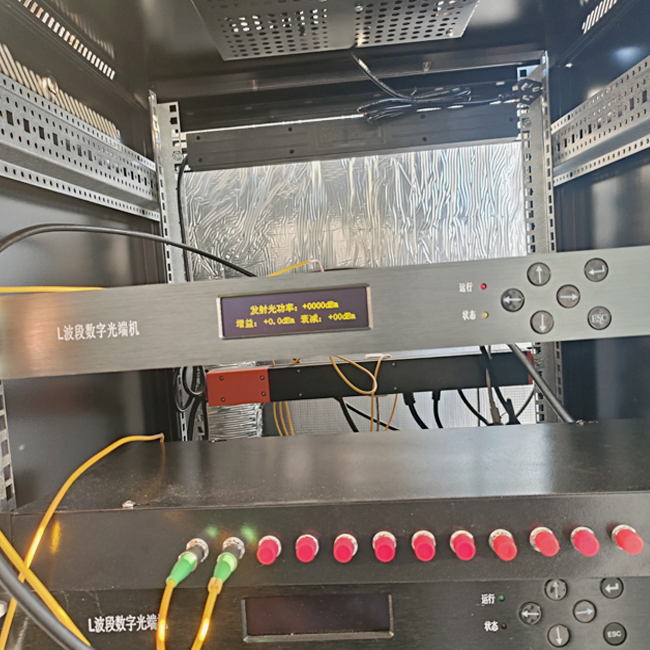
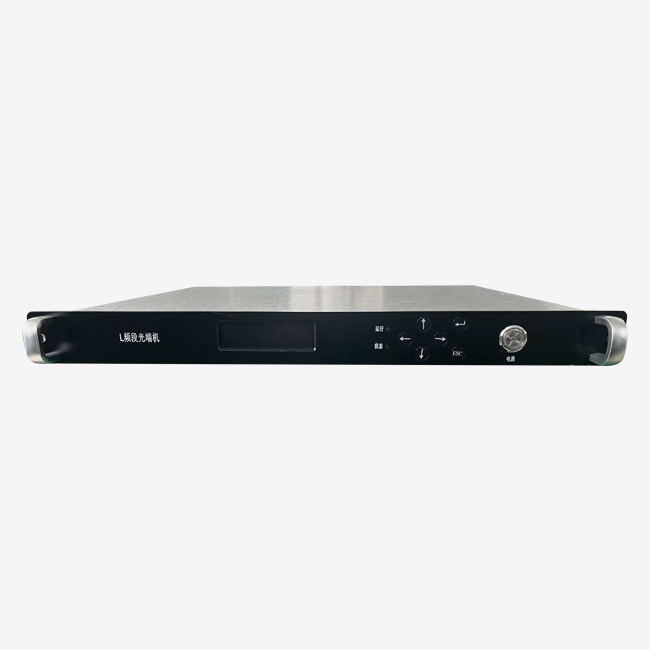
When you're managing high-speed LEO satellite networks or mission-critical TT&C operations, every nanosecond counts. Hebei Mota's Low Latency RF Fiber Transmission Module is engineered specifically for these demanding scenarios. Built with high-speed laser chips and streamlined circuit architecture, this module achieves a remarkable single-channel delay below 20ns and jitter under 1ps.
Covering the full 0.5–18GHz frequency range, it seamlessly supports Ku-band and Ka-band broadband services. The built-in anti-Doppler shift algorithm handles rapid frequency variations from fast-moving LEO satellites, ensuring stable signal integrity even during high-speed transits. Its compact modular design integrates effortlessly into gateway stations and phased-array antennas, making it the ideal choice for your next-generation satellite communication infrastructure.
Why Choose Our RF Fiber Transmission Solution?
Ultralow Latency for Real-Time Operations
You require exact timing in disciple following and control frameworks. Our item conveys single-channel proliferation delay beneath 20 nanoseconds.
This execution level guarantees that your ground station can prepare telemetry information and send commands without discernible slack. Not at all like conventional coaxial setups that collect delay over remove, our fiber-optic approach keeps up reliable timing over kilometers.
High-Frequency Broadband Coverage
The module works over 0.5–18GHz, completely covering Ka/Ku/L/S/X/C band frequencies. This wide transfer speed underpins next-generation obsequious web administrations requiring expansive information throughput.
Whether you're getting high-resolution inaccessible detecting symbolism or overseeing multi-gigabit backhaul joins, the broadband capability disposes of the require for numerous frequency-specific frameworks. You get one bound together arrangement for differing communication requirements.
Built for LEO Constellation Challenges
Fast-moving LEO satellites make noteworthy Doppler recurrence shifts. Our coordinates anti-Doppler move calculation naturally compensates for these varieties in genuine time.
This versatile capability implies your ground gear remains bolted on target amid quick adj. passes. You won't involvement flag drops or require steady manual recurrence alterations, significantly making strides operational effectiveness.
Technical Specifications
| Parameter | Value |
|---|---|
| Single-Channel Delay | <20 ns |
| Jitter | <1 ps |
| Frequency Range | 0.5–18 GHz |
| Band Support | Ku/Ka/S/X/C/L |
| Link Architecture | Streamlined design |
| Doppler Compensation | Built-in algorithm |
| Form Factor | Compact modular |
| Integration Targets | Gateway stations, phased arrays |
| Application Focus | LEO satellites, TT&C, high-speed data backhaul |
Key Applications in Satellite Communications
Real-Time Tracking, Telemetry & Command (TT&C)
For space mission control centers, timing precision is non-negotiable. Our module's sub-20ns latency ensures that your command signals reach satellites without perceptible delay.
The ultralow jitter (<1ps) maintains phase coherence across distributed antenna systems. This is critical when you're coordinating multiple ground stations for orbital determination and attitude control maneuvers.
High-Speed LEO Data Backhaul
Modern LEO constellations generate terabytes of Earth observation and communication data daily. Traditional RF distribution systems introduce bottlenecks through bandwidth limitations and signal degradation.
Our Low Latency RF Fiber Transmission Module solves this by transmitting high-frequency signals over fiber with minimal loss. You can place your processing equipment far from antenna sites without sacrificing data rates or signal quality.
Next-Generation Ka-Band Satellite Internet
Ka-band frequencies enable multi-gigabit throughput for satellite broadband services. However, these higher frequencies suffer severe attenuation in conventional coaxial cables.
Our fiber-optic transmission maintains signal integrity over extended distances. Gateway operators can centralize RF equipment while distributing antenna farms across optimal geographic locations, reducing infrastructure costs and improving network flexibility.
Core Advantages for Your Operations
Minimalist Link Architecture
We've killed pointless transformation stages in the flag way. Less components cruel higher by and large framework unwavering quality and diminished focuses of failure.
This streamlined approach is especially important in farther partisan ground stations where upkeep get to is restricted. You get military-grade steadfastness without complex repetition requirements.
Immunity to Electromagnetic Interference
Optical fiber is totally resistant to EMI and RFI. In high-density RF situations like teleports or defense establishments, this anticipates flag crosstalk and ground circle issues.
Your flag remains flawless indeed when hardware racks are filled with high-power transmitters. This confinement too improves security by dispensing with electromagnetic emanations that seem be intercepted.
Compact Modular Integration
The module's little frame calculate permits establishment interior space-constrained situations. You can insert it specifically into phased-array recieving wire congregations or rack-mount door equipment.
This measured quality underpins adaptable models. As your organize develops, basically include more modules without overhauling your whole RF dispersion infrastructure.

Quality Standards and Reliability
Hebei Mota fabricates this module beneath GJB 9001C military item quality administration guidelines. Each unit experiences thorough stage soundness testing over temperature extremes from -40°C to +85°C.
We confirm pick up levelness and return misfortune over the full operational transmission capacity. Natural push screening incorporates 48-hour high-temperature burn-in to guarantee long-term unwavering quality in cruel field conditions.
Our ISO-certified forms ensure reliable execution clump after clump. You get items sponsored by comprehensive test information and traceability documentation.

FAQ
Q: How does the module accomplish such moo latency?
A: The module employments high-speed laser chips with optimized balance circuits that present as it were picoseconds of preparing delay. The essential inactivity comes from the physical fiber itself, at roughly 5 microseconds per kilometer.
Q: Can it handle bidirectional flag transmission?
A: Yes, our plan bolsters concurrent transmit and get over a single fiber strand utilizing WDM innovation. This decreases cabling complexity in your installations.
Q: What upkeep is required for the optical interfaces?
A: Fiber connectors ought to be assessed and cleaned agreeing to IEC 61300-3-35 benchmarks. We suggest intermittent review with a fiber magnifying lens to anticipate flag reflection from sullied end-faces.
Q: How does the anti-Doppler calculation work?
A: The algorithm continuously monitors frequency variations and applies real-time compensation. It adapts to the acceleration profiles typical of LEO satellite passes without manual intervention.
Q: What is the expected service life?
A: Our modules feature an MTBF exceeding 100,000 hours under normal operating conditions, calculated per MIL-HDBK-217F standards. DFB laser technology ensures stable long-term performance.
Q: Is the module compatible with existing RF infrastructure?
A: Yes, RF interfaces use standard SMA or K-connectors compatible with most professional RF equipment. The optical side uses industry-standard LC or FC connectors.
Get Started with Advanced RF Fiber Technology
Contact us today at hebei_mota@163.com to request detailed specifications, integration guides, or a customized Low Latency RF Fiber Transmission Module solution proposal.
Tell us your requirements – get a tailored quote and technical support within 24 hours.