- English
- French
- German
- Portuguese
- Spanish
- Russian
- Japanese
- Korean
- Arabic
- Greek
- German
- Turkish
- Italian
- Danish
- Romanian
- Indonesian
- Czech
- Afrikaans
- Swedish
- Polish
- Basque
- Catalan
- Esperanto
- Hindi
- Lao
- Albanian
- Amharic
- Armenian
- Azerbaijani
- Belarusian
- Bengali
- Bosnian
- Bulgarian
- Cebuano
- Chichewa
- Corsican
- Croatian
- Dutch
- Estonian
- Filipino
- Finnish
- Frisian
- Galician
- Georgian
- Gujarati
- Haitian
- Hausa
- Hawaiian
- Hebrew
- Hmong
- Hungarian
- Icelandic
- Igbo
- Javanese
- Kannada
- Kazakh
- Khmer
- Kurdish
- Kyrgyz
- Latin
- Latvian
- Lithuanian
- Luxembou..
- Macedonian
- Malagasy
- Malay
- Malayalam
- Maltese
- Maori
- Marathi
- Mongolian
- Burmese
- Nepali
- Norwegian
- Pashto
- Persian
- Punjabi
- Serbian
- Sesotho
- Sinhala
- Slovak
- Slovenian
- Somali
- Samoan
- Scots Gaelic
- Shona
- Sindhi
- Sundanese
- Swahili
- Tajik
- Tamil
- Telugu
- Thai
- Ukrainian
- Urdu
- Uzbek
- Vietnamese
- Welsh
- Xhosa
- Yiddish
- Yoruba
- Zulu
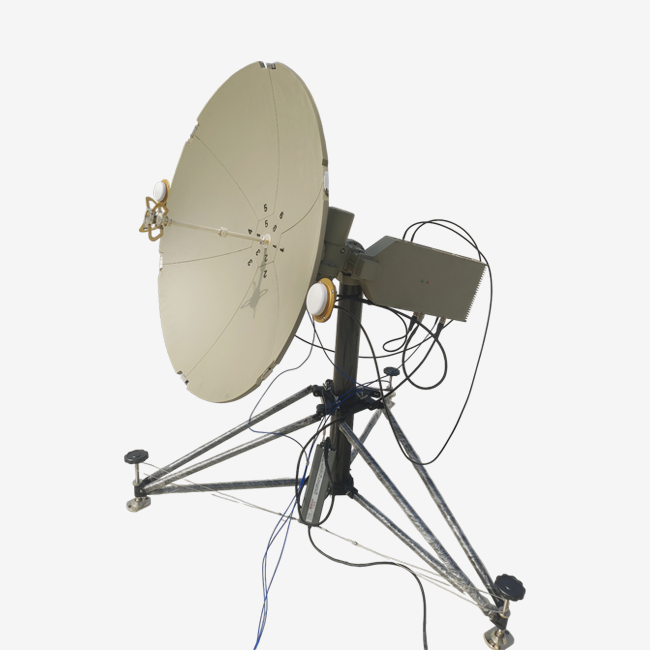
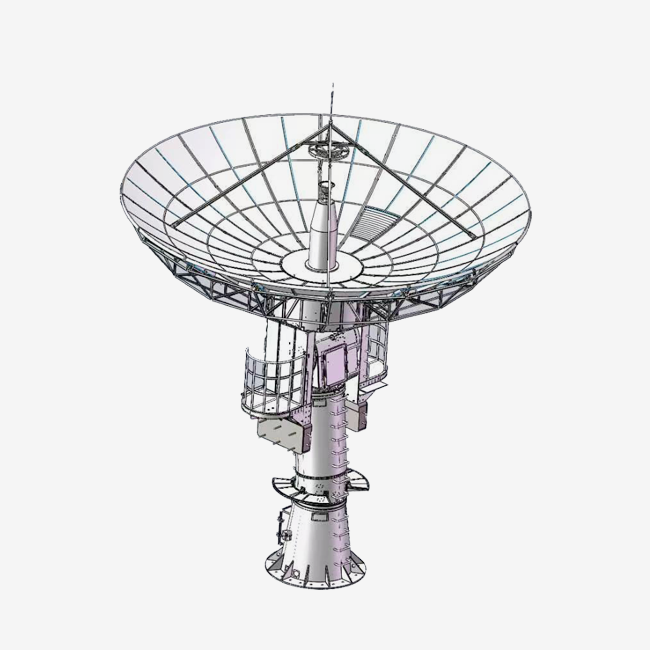
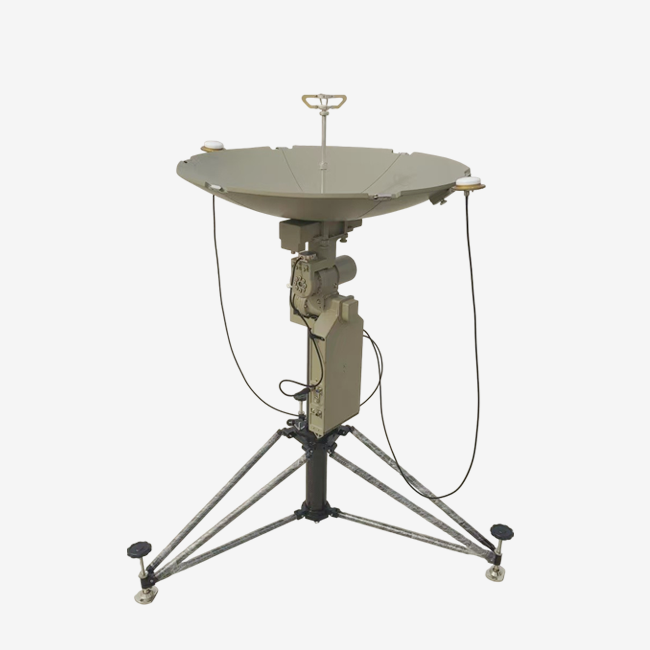
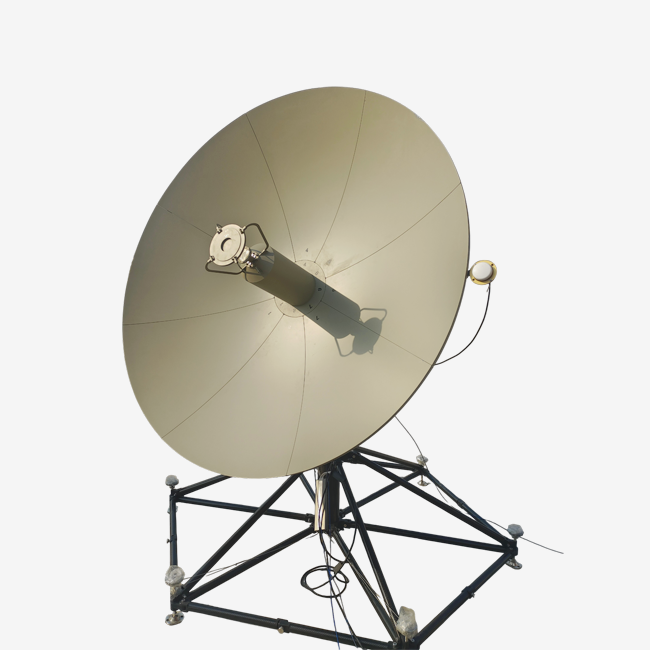
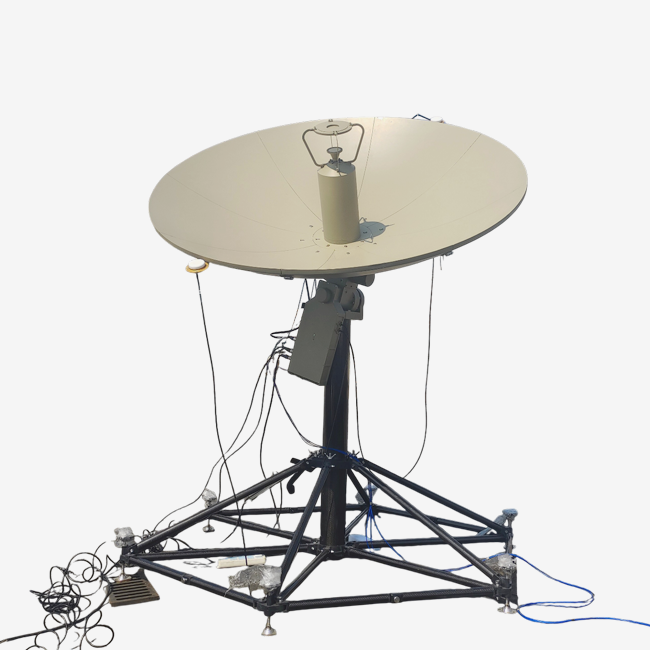
High-Gain TT&C Antenna
Aperture size of antenna: 13m, 11m, 9m, 7.3m, 6.2m, 5.4m, 4.5m, 3.3m, 2.4m
Multi-stage filtering delivers outstanding anti-interference performance. Built with heavy-duty structure and IP68 protection, it withstands strong winds and harsh conditions. Fully compliant with deep-space TT&C protocols for major aerospace projects.
High-Gain TT&C Antenna for Deep-Space & High-Orbit Missions
When your aerospace mission demands uncompromising signal integrity across millions of kilometers, you need a High-Gain TT&C Antenna engineered to military standards. Hebei Mota's S-band solution delivers gain ≥42dB with ultra-low noise performance, dramatically improving link margin for high-orbit and deep-space satellites. Our dual-axis servo system provides full-angle rotation with multi-mode tracking and zero blind zones, ensuring continuous contact during critical maneuvers.
Built to IP68 protection with heavy-duty reinforcement, this product withstands harsh outdoor conditions and strong winds. The integrated multi-stage filtering architecture isolates external electromagnetic clutter, guaranteeing zero-interference transmission of long-distance measurement and control commands. Fully compliant with deep-space TT&C protocols, it's purpose-built for ground measurement and control systems in major national aerospace exploration projects.
Why High-Orbit & Deep-Space Missions Require Ultra-High Gain?
You face a unique challenge in satellite communications: as your spacecraft travels farther from Earth, signal attenuation increases exponentially. A standard antenna simply cannot overcome the path loss encountered in Geostationary Orbit (GEO) or interplanetary missions.
That's where high-gain directional technology becomes essential. By concentrating electromagnetic energy into a narrow, focused beam, you maximize Effective Isotropic Radiated Power (EIRP) and dramatically improve your G/T ratio. This means reliable telemetry downlink and precise command uplink, even when onboard power is severely limited.
For missions spanning millions of kilometers, every decibel counts. Our solution addresses the critical pain point of weak signal recovery, enabling your ground station to maintain robust communication links during all mission phases.
Core Technical Advantages
Ultra-High S-Band Performance
Our product solves the weak signal problem inherent in high-orbit and deep-space operations. With gain ≥42dB and ultra-low noise characteristics, you'll see a measurable improvement in your measurement and control link margin.
This performance boost translates directly to mission success. You can recover sub-picowatt level signals that would be impossible with lower-gain systems.
Precision Tracking with Zero Blind Zones
The dual-axis servo system offers multi-mode high-precision tracking with comprehensive angle coverage. You'll maintain contact during various orbital motions typical of high-orbit and deep-space satellites.
Whether your target executes complex maneuvers or follows predictable trajectories, our tracking system adapts seamlessly. Full-angle rotation capability ensures you never lose the link during critical operations.
Superior Anti-Interference Design
External electromagnetic clutter can compromise your telemetry and command integrity. Our built-in multi-order filtering isolates interference sources, protecting your long-distance measurement and control commands.
This robust filtering architecture delivers exceptional anti-electromagnetic interference performance. You can operate confidently even in crowded spectrum environments or near industrial facilities.
Extreme Environment Readiness
Large-scale ground stations face punishing outdoor conditions year-round. Heavy-duty structural reinforcement combined with IP68 full protection ensures your antenna withstands strong winds, rain, dust, and temperature extremes.
Built to military-grade quality standards, this system provides the reliability demanded by national aerospace projects. Your investment is protected against environmental degradation and mechanical stress.
Technical Specifications
| Parameter | Specification |
|---|---|
| Frequency Band | S-band |
| Aperture | 13m, 11m, 9m, 7.3m, 6.2m, 5.4m, 4.5m, 3.3m, 2.4m |
| Antenna Gain | ≥42 dB |
| Noise Performance | Ultra-low noise |
| Servo System | Dual-axis, full-angle rotation |
| Tracking Modes | Multi-mode (Monopulse, Step Track, Program Track) |
| Tracking Coverage | Full angle, no blind zones |
| Filtering | Multi-stage, high-order |
| EMI Performance | Excellent anti-electromagnetic interference |
| Structural Design | Heavy-duty reinforcement |
| Protection Rating | IP68 |
| Wind Resistance | High (suitable for harsh outdoor environments) |
| Protocol Compliance | Deep-space TT&C protocols |
| Application | Aerospace exploration ground systems |
Application Scenarios
Deep Space Exploration Ground Stations
You'll achieve the high-bitrate communication necessary for Mars rovers, lunar orbiters, and beyond. Our antenna integrates seamlessly with Deep Space Network (DSN) architectures.
Signal recovery from sub-picowatt levels becomes routine. Your science teams receive the high-resolution data they need for mission-critical analysis.
High-Orbit Satellite Operations
Geostationary and high-elliptical orbit satellites require continuous telemetry and command links. Our system maintains contact throughout all orbital positions.
You'll minimize communication gaps and maximize operational efficiency. Command latency stays predictable, even at extreme distances.
Strategic Aerospace Communications
Complex electromagnetic environments demand directivity and selectivity. This High-Gain TT&C Antenna overcomes intentional jamming while maintaining secure command links.
High-altitude platform stations (HAPS) and long-range aerospace vehicles benefit from the focused beam pattern and superior gain characteristics.
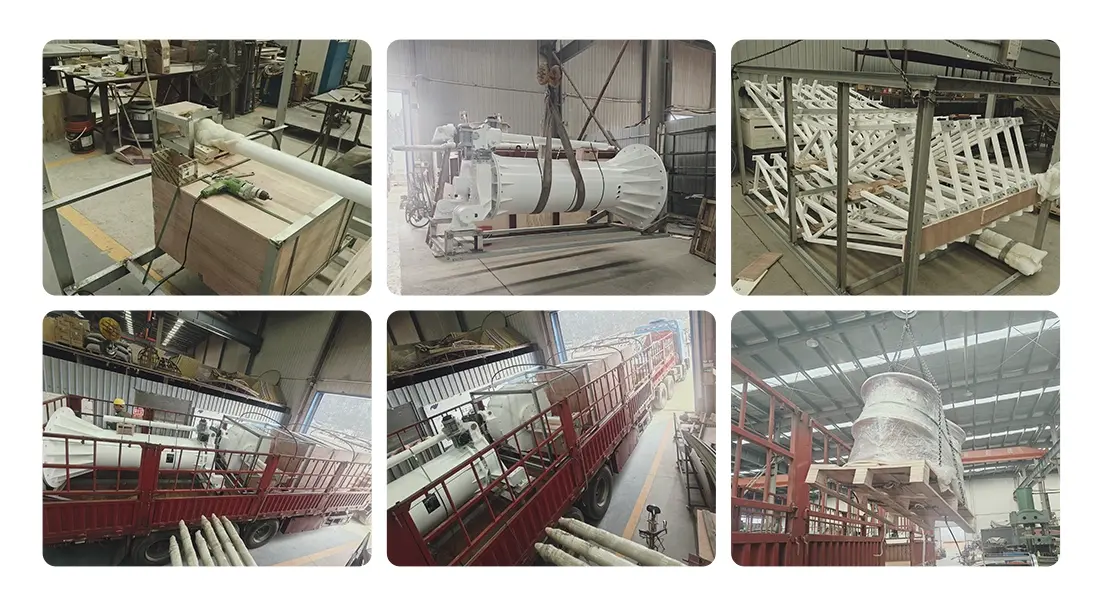
Quality Assurance You Can Trust
Hebei Mota makes each recieving wire framework agreeing to strict military guidelines. We hold GJB 9001C military item quality administration framework certification nearby ISO coordinates administration certifications.
Our multi-stage confirmation handle incorporates radiation design estimation in anechoic chambers, Inactive Intermodulation (PIM) testing, and warm vacuum (TVAC) cycling. Vibration and stun testing guarantees your recieving wire survives dispatch loads and acoustic pressures.
As a National High-Tech Endeavor and Military-Civil Integration Undertaking, we bring broad skill from state-level investigate establishing. Our center R&D group incorporates overseas-returned PhDs and senior engineers with profound specialization in disciple communications and estimation control technologies.

FAQ
Q: Why is the Hub Proportion imperative for a product?
A: A moo hub proportion (regularly <2dB) indicates high circular polarization purity. This minimizes Faraday rotation losses and ensures signal stability when your transmissions penetrate the atmosphere. You'll experience fewer dropouts and more consistent link quality.
Q: How does pointing error affect my link margin?
A: Since high-gain antennas produce narrow beams, even a 0.1-degree pointing error can cost you several decibels of signal. That's why our precision auto-tracking systems—including Monopulse and Step Track modes—are essential for maintaining optimal alignment throughout your mission.
Q: Can this radio wire bolster multi-band operation?
A: Yes. Advanced mission profiles frequently require distinctive recurrence groups for different phases—from dispatch back to high-speed logical information return. Our plans can consolidate multi-band bolsters (S/X/Ka-band) to handle your advancing requirements.
Q: What is the affect of surface RMS mistake on radio wire performance?
A: Surface harshness or distortion diminishes pick up and increments sidelobes. For high-frequency Ka-band applications, you require micron-level surface exactness to keep up hypothetical effectiveness. Our fabricating forms and quality controls guarantee your reflector keeps up the required precision.
Q: How do you moderate Multipaction hazard in high-power TT&C feeds?
A: We utilize specialized venting plans and apply silver/gold plating with controlled surface wraps up. Each high-power component experiences vacuum testing to anticipate RF breakdown. You can work at most extreme control without fear of multipaction events.
Q: What natural testing does this radio wire undergo?
A: We conduct warm vacuum cycling from -150°C to +120°C, recreating space conditions. Vibration and stun testing confirms mechanical keenness beneath high-G loads. IP68 testing affirms add up to security against tidy and drawn out water submersion. Your radio wire is mission-ready upon delivery.

Partner with a Proven Industry Leader
Since 2017, Hebei Mota Gadgets Innovation Co., Ltd. has been conveying progressed recieving wire frameworks, servo frameworks, and following arrangements for requesting aviation applications. We hold different plan licenses, utility show licenses, and program copyrights—evidence of our commitment to autonomous innovation.
Our customer-focused approach implies we work closely with you to get it your particular mission necessities. Whether you're arranging deep-space investigation, LEO star grouping administration, or vital aviation communications, we give the skill and innovation to guarantee your victory.
Contact Us Today
Ready to enhance your ground station capabilities with a military-grade High-Gain TT&C Antenna? Contact our technical team at hebei_mota@163.com to discuss your project requirements and receive a detailed specification proposal.
Tell us your requirements – get a tailored quote and technical support within 24 hours.