- English
- French
- German
- Portuguese
- Spanish
- Russian
- Japanese
- Korean
- Arabic
- Greek
- German
- Turkish
- Italian
- Danish
- Romanian
- Indonesian
- Czech
- Afrikaans
- Swedish
- Polish
- Basque
- Catalan
- Esperanto
- Hindi
- Lao
- Albanian
- Amharic
- Armenian
- Azerbaijani
- Belarusian
- Bengali
- Bosnian
- Bulgarian
- Cebuano
- Chichewa
- Corsican
- Croatian
- Dutch
- Estonian
- Filipino
- Finnish
- Frisian
- Galician
- Georgian
- Gujarati
- Haitian
- Hausa
- Hawaiian
- Hebrew
- Hmong
- Hungarian
- Icelandic
- Igbo
- Javanese
- Kannada
- Kazakh
- Khmer
- Kurdish
- Kyrgyz
- Latin
- Latvian
- Lithuanian
- Luxembou..
- Macedonian
- Malagasy
- Malay
- Malayalam
- Maltese
- Maori
- Marathi
- Mongolian
- Burmese
- Nepali
- Norwegian
- Pashto
- Persian
- Punjabi
- Serbian
- Sesotho
- Sinhala
- Slovak
- Slovenian
- Somali
- Samoan
- Scots Gaelic
- Shona
- Sindhi
- Sundanese
- Swahili
- Tajik
- Tamil
- Telugu
- Thai
- Ukrainian
- Urdu
- Uzbek
- Vietnamese
- Welsh
- Xhosa
- Yiddish
- Yoruba
- Zulu
Fixed Satellite Reception Antenna: Features, Benefits, and Key Applications
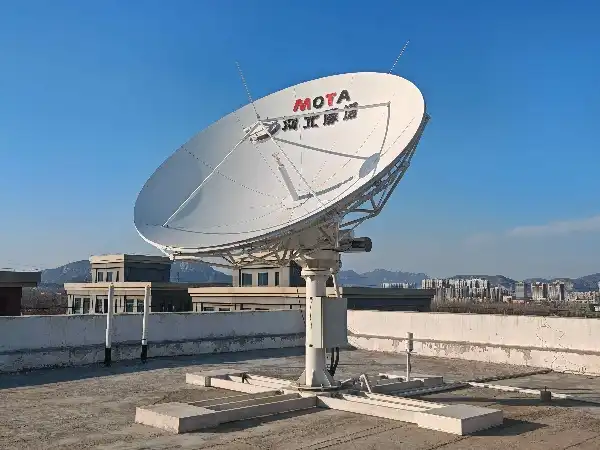
When your business depends on constant satellite contact across countries, the technology that connects your infrastructure on the ground to satellites in orbit becomes mission-critical. A fixed satellite reception antenna is a special kind of ground station terminal that is designed to pick up and focus electromagnetic signals from geostationary or non-geostationary satellites while staying in one place. These systems fix important problems like signal instability due to loss in the atmosphere, mechanical wear and tear in hard environments, and radio frequency interference from ground stations. These antennas use high-precision parabolic geometry to turn low-power satellite downlinks into high-quality data, video, or voice streams for distribution networks. This makes them essential for aerospace contractors, companies that make precise electronics, and companies that coordinate cross-border logistics.
Understanding Fixed Satellite Reception Antennas: Features and Technical Specifications
Modern methods for receiving satellites are much more complex than simple dish setups. Today's industrial-grade antennas are made with advanced engineering that combines performance needs with operating dependability.
Core Working Principles and Components
The parabolic reflector is the most important part of a fixed satellite reception antenna for receiving satellite signals. It gathers electromagnetic waves and places them on a feed horn assembly. This feedhorn picks up the boosted signal and sends it to the low noise block downconverter (LNB). The LNB changes the high-frequency satellite signal to a lower frequency that can be processed. The mirror surface is made of materials that don't expand or contract too much when the temperature changes, like carbon fiber or sheet molding compound. This keeps the surface RMS accuracy within acceptable limits.
The Block Upconverter (BUC) is in charge of communication and boosts signals before they are sent back to the satellite. In MOTA's newest antenna systems, the BUC/LNB modules are built right into the unit, along with the modem and smart power management parts. This makes it possible for a plug-and-play setup that doesn't require installing any extra equipment.
Multi-Band Frequency Capabilities
Modern ground stations have to be able to handle a wide range of contact needs across a number of radio ranges. Our fixed satellite reception antenna systems can manually switch between Ku, Ka, S, X, C, and Qv frequency bands, which cover most satellite transmission frequencies. This dual-band flexibility lets operators set up the system in a way that fits the needs of the task without having to replace any hardware.
Ku-band (12-18 GHz) is still used for broadcasting and business communications, while Ka-band (26.5-40 GHz) is better for apps that need to send and receive a lot of data. The X-band is used by the military and the government, and the C-band is effective in humid areas where rain fade can be a problem. Organizations that manage multiple contact methods will find it much easier to do procurement when all of these choices are on a single platform.
Environmental Resilience and Stabilization Technology
Most of the time, industrial setup settings are not perfect for working. Our antenna systems work reliably in temperatures ranging from -25℃ to +55℃, which means they can be used in study stations in the Arctic, sites in the desert, and tropical maritime platforms. The secure enclosure with an IP rating keeps wetness, dust, and other harmful substances from getting into the sensitive electronics.
With our own satellite-pointing method built into the two-axis self-stabilizing platform, it stays in the best position even when the structure moves or settles. This stability system makes it possible to send stable 1080p HD video even when there is 7 levels of wind. This keeps contact going even when bad weather would normally break down other systems.
Critical Performance Metrics
The technical specs of professional satellite tools show what they can really do. Transceiver isolation of ≥85 dB is achieved by our fixed satellite reception antenna systems. This means that broadcast signals don't interfere with receiving signals, which is very important for full-duplex communication lines. At -14 dB, the first sidelobe level, orbital interference is kept to a minimum, and the level meets ITU-R S.580-6 sidelobe performance guidelines.
Signal quality is based on the Gain-to-Noise Temperature ratio, aperture efficiency, and Voltage Standing Wave Ratio (usually 1.3:1). When opening efficiency is higher, more of the mirror surface works to collect signals, which has a direct effect on how well the system works. These factors are very important, especially when working with satellite transponders that don't have a lot of power or when setting up links in places where the atmosphere is very thick.
Benefits of Fixed Satellite Reception Antennas for B2B Applications
Choosing the right satellite technology gives your business real benefits that go far beyond just being connected.
Reliable Connectivity in Remote Operations
Mining activities, oil and gas extraction sites, and ships often work in places that land-based networks can't reach. In these situations, a fixed satellite reception antenna deployed at satellite ground sites often provides the only reliable way to communicate. For safety systems, remote process tracking, and real-time operating planning, reliability is very important.
Our clients who are working in offshore drilling say that constant satellite links let them keep videoconferencing with engineering teams onshore, send sensor data from drilling equipment, and provide crew comfort services—all at the same time and without any problems. This ability to be used for more than one thing comes from the fact that stationary antennas with good engineering offer high bandwidth and reliable signal quality.
Long-Term Cost Efficiency and ROI
The starting cost of capital for satellite equipment may seem high, but the total cost of ownership is often lower than other options. A high-quality fixed satellite reception antenna can deliver a service life of well over ten years with little upkeep because it is built with industrial-grade components. Mobile satellite stations wear out faster because they have to be moved around all the time. Static placements, on the other hand, don't put any mechanical stress on the positioning systems.
Instead of service every month, maintenance checks can happen every three or six months. We use an integrated design that puts all the necessary parts in a single waterproof shell. This cuts down on the number of places where things could go wrong and makes it easier to fix problems when they do happen.
Enterprise-Grade Communication Capabilities
These days, running a business requires more than just being connected. Enterprise resource planning (ERP) systems, video chat platforms, and cloud-based tools for working together all need reliable, fast links. Our fixed satellite reception antenna systems can handle these uses because they deliver stable 1080p video and low-latency data transmission for demanding applications.
Broadcasting companies use these ground stations as their main broadcast sources for direct-to-home services. Their 24/7 dependability has a direct impact on how happy their customers are and how well they follow the rules. Because we built our systems to be stable and reliable at a military level, they can keep running even when conditions would shut down commercial-grade equipment.
Business Continuity and Disaster Recovery
Natural disasters, political unrest, and building breakdowns can still affect terrestrial network infrastructure. When main networks go down, satellite communication offers path diversity that keeps important business processes running. Satellite backup systems are becoming more and more important for businesses in areas that are prone to disasters as part of their business survival plans.
This duplication is especially useful for banks, government bodies, and healthcare networks. When there are hurricanes or earthquakes, satellite links are often the only way to communicate that works to coordinate emergency action and keep critical services running.
Installation and Optimization Guide for Fixed Satellite Reception Antennas
The right way to put something has a direct effect on how well and reliably it works in the long run.
Pre-Installation Assessment and Planning
Site inspections are the most important part of deploying a fixed satellite reception antenna. Engineers have to look at the line-of-sight to target satellites, taking into account things like the geography, nearby buildings, and the way plants grow that could block signals over time. Radar sites, high-voltage power lines, and radio emitters are all examples of electromagnetic interference sources that need to be found and plans made for how to reduce their effects.
What kind of foundation is needed depends on the size of the tower and how much wind there is in the area. For bigger holes, you need strengthened concrete pads that are properly anchored so they can stand up to storm forces. The type of soil affects how things settle, which is why geological assessment is useful for long-term installs.
Mounting and Alignment Procedures
Being careful during the physical installation process will pay off for a long time. The frame for fixing must provide rigid support while also being able to handle changes in temperature. Our quick-deployment systems can set up a link and align the satellites in just three minutes, which is a huge improvement over traditional setups that need a lot of complicated manual changes.
The self-made tracking program fixes small errors automatically, but the antenna should be placed so that it is within a few degrees of the target satellite's azimuth and elevation when it is first set up. GPS-based positioning systems that figure out exact pointing angles based on geographic data may be used in more advanced setups.
Signal Optimization and Troubleshooting
Fine-tuning is essential for every fixed satellite reception antenna, even when the system has been installed correctly. Spectrum analyzers and specialized satellite signal meters show measurements of signal strength that regular installation tools can't see. Engineers should check the carrier-to-noise ratio, the signal strength across the frequency band, and the lack of disturbance from nearby satellites.
Problems that happen a lot include wrong LNB frequency choices, bad wire terminations that cause signal reflections, and not enough weatherproofing that lets water in. These weaknesses are kept to a minimum by our combined design, but verification processes are still needed during commissioning.
Ongoing Maintenance Protocols
Preventive repair keeps things working well for decades. Every three months, the mounting bolts should be checked for tightness, the wire links should be checked for rust, and the reflector surface should be cleaned of any dirt that has built up. As part of their annual thorough reviews, engineers check the accuracy of the alignment, test the backup power systems, and update the firmware to make it work better.
When expert troubleshooting is beyond what can be done in-house, warranty plans and supplier support services become very important. MOTA's customer response system works 24 hours a day, seven days a week, so technical experts are always available, no matter what time zone they're in. This is especially helpful for global businesses that span multiple countries.
Comparing Fixed Satellite Reception Antennas with Other Antenna Types
When making decisions about what to buy, it helps to know how different antenna designs meet different practical needs.
Fixed Versus Mobile Satellite Terminals
Mobility adds technical complexity and changes the way things work. To keep satellite lock while moving, mobile systems need to have automatic pointing and tracking. This adds weight, power use, and possible failure modes. Signal quality is generally better with a fixed satellite reception antenna because larger apertures and more precise alignment are difficult to maintain on moving platforms.
Logistics companies that run teams of vehicles need mobile apps to keep track of them and talk to their drivers in real time. Ground stations that serve the same teams use fixed antennas to run the network centrally and collect large amounts of data. In the same transmission system, each type of antenna has a different job to do.
Parabolic Reflectors Versus Phased Array Technology
Traditional parabolic dishes are most common in new setups because they have been reliable for a long time and are cheaper when the opening size is bigger. Phased array antennas are a new type of technology that offers electronic beam steering without mechanical movement. This makes it possible to switch between satellites quickly and makes them less likely to get damaged.
At the moment, phased array systems are much more expensive than similar parabolic setups. This means that they can only be used in certain military and government situations. As production volumes rise, prices will fall, making this technology more appealing for business uses that need to connect to multiple satellites or places where traditional dishes can't be used because of their size.
Supplier Landscape and Vendor Selection
Hughes Network Systems, Gilat Satellite Networks, and Viasat are some of the biggest companies that make business satellite technology. Each one has its own benefits for different types of applications. Hughes is great at building internet access networks, Gilat is great at building systems for defense and mobility, and Viasat is great at building systems with a lot of capability.
Not only should procurement managers look at the specs of the equipment, but they should also look at the regional support infrastructure, the availability of extra parts, and how well it works with other network management systems. When you need to fix a problem quickly, it's especially helpful to work with suppliers who have established cross-border logistics skills and regional service teams.
Key Applications and Industry Use Cases of Fixed Satellite Reception Antennas
Examples of real-world deployments show how satellite ground infrastructure can help businesses in a wide range of fields.
Telecommunications Network Expansion
Satellite backhaul is a way for phone companies to expand their networks to areas that don't have enough service and where building fiber optic equipment is still too expensive. Cellular towers in rural areas link to core networks via satellite, making mobile services available to places that wouldn't have them otherwise. More and more, government universal service responsibilities list satellite as a technology that can be used to meet the needs for internet access in rural areas.
Our fixed satellite reception antenna systems support these applications by delivering carrier-grade reliability and meeting strict uptime requirements. Being able to keep links steady during bad weather has a direct effect on service quality measures and following the rules.
Broadcast Media Distribution
Satellite distribution is how TV and radio stations get their shows to area transmission spots and cable headends. Teleport sites use dozens of antennas at the same time to pick up various channels that are then sent back to terrestrial networks. Signal clarity and dependability have a direct effect on how viewers feel, which is why equipment reliability is a very important factor when buying it.
Our systems have strong anti-interference features and high transceiver separation, which stop crosstalk between neighboring channels. This lets dense antenna farms work without interruption from each other. This efficiency makes the best use of the restricted space at the ground station.
Industrial IoT and Remote Monitoring
A lot of sensor data needs to be sent reliably to central monitoring centers from places like mines, pipeline networks, and green energy sites. These assets are spread out, but satellite links connect them into cohesive operating networks that allow for predictive repair, safety tracking, and production optimization.
Our antenna systems are easier to set up in remote areas where technical knowledge may be limited because the modem and power control are built in. Single-person rollout cuts down on installation costs and speeds up project timelines.
Maritime and Offshore Communications
Offshore oil platforms, study boats, and commercial ships all use satellite communication to coordinate operations and make sure crews are safe. Extreme problems can happen in maritime settings, such as corrosion from salt spray, structure vibrations, and wave action that keeps fixed offshore platforms moving.
Platforms like Hebei MOTA's systems, which were designed to work in these situations, keep contact going, which is important for safety systems and running operations smoothly. The wide temperature range and IP grade make sure that it can work on all global sea routes, from Arctic crossings to tropical waters.
Conclusion
To choose the right satellite ground infrastructure, you have to weigh technical requirements against operating needs and long-term support factors. Modern Fixed Satellite Reception Antenna systems do much more than provide connectivity; they form the foundation of business-grade networks that operate across borders and in locations where terrestrial infrastructure is unavailable. The development of satellite reception technology toward turnkey solutions that don't need a lot of specialized knowledge to run is shown by the addition of multi-band frequency support, environmental protection, fast deployment capabilities, and intelligent tracking algorithms. When businesses invest in satellite technology, they get more than just better communication. They also get operating resilience and the ability to run business models that would not be possible with terrestrial-only networks. It's becoming more and more important to have ground infrastructure that can take advantage of these improvements as satellite groups grow and bandwidth costs go down.
FAQ
What bands should I choose for communication?
The band you choose depends on the needs of your application and the place where you will be working. Ku-band is great for general-purpose data and video applications in most places. Ka-band works well for high-throughput tasks, but it fades more in humid areas when it rains. In tropical areas, C-band is more reliable, but it needs bigger receivers. You don't have to commit to a single frequency when you buy our systems because they can switch between Ku, Ka, S, X, C, and QV bands manually. This gives you options as your communication needs change.
How often does the maintenance need to be done?
Compared to mobile systems, industrial-grade fixed satellite reception antennas don't need as much regular repair. Visual checks every three months make sure that the structure is sound and that all connections are secure. Performance testing and checking the alignment should be part of yearly thorough reviews. Our integrated design makes upkeep easier, and most regular tasks don't need any special tools besides common hand tools. The choice of military-grade parts guarantees long-term dependability, even if maintenance is done later than planned during operating emergencies.
Can these systems work when the weather is very bad?
Professional satellite technology is different from consumer-grade systems because it can handle harsh environments. Our antennas keep sending 1080p video steadily in 7 different wind speeds and work nonstop from -25°F to +55°F. Different frequency bands are affected by rain fade in different ways on all satellite links. However, most weather effects can be ignored with good link budget planning and flexible modulation. The IP-rated security keeps weather-related equipment breakdowns that lower the availability of operations from happening.
Partner with MOTA for Your Satellite Communication Requirements
Hebei MOTA has been making satellite communication equipment for more than nine years and has a wide range of manufacturing skills as well as tracking methods that they created themselves. As a well-known company that sells fixed satellite reception antenna solutions, we keep our ISO9001, ISO14001, and ISO45001 certifications up-to-date to make sure that every system meets the highest quality and environmental standards around the world. Our production capacity allows us to complete orders right away from stock for standard setups and create custom ODM/OEM solutions with 45–90 day delivery times for complex integrations. Our experienced cross-border logistics system includes professional packing that keeps items safe from shock and water, as well as full-process tracking and flexible customs planning. This ensures your equipment arrives at its destination ready for use, no matter where it's going. Technical support is available 24 hours a day, seven days a week through our 24/7 response system. Engineering experts can be reached at hebei_mota@163.com for help with startup questions, system improvement, and fixing problems. When a company chooses MOTA to make their antenna systems, they get more than just tools. They get a strategic partner who cares about the long-term success of their satellite transmission infrastructure.

References
1. International Telecommunication Union. "Technical Characteristics of Fixed Satellite Service Antennas." ITU-R S.580-6 Recommendation Series, 2019.
2. Morgan, Walter L., and Gordon D. Gordon. "Communications Satellite Handbook." John Wiley & Sons, Second Edition, 2017.
3. Maral, Gérard, and Michel Bousquet. "Satellite Communications Systems: Systems, Techniques, and Technology." John Wiley & Sons, Sixth Edition, 2020.
4. Elbert, Bruce R. "The Satellite Communication Ground Segment and Earth Station Handbook." Artech House Publishers, 2014.
5. Bhattacharyya, Arun K. "Phased Array Antennas: Floquet Analysis, Synthesis, BFNs, and Active Array Systems." " John Wiley & Sons, 2006.
6. Pattan, Bruno. "Satellite-Based Cellular Communications." McGraw-Hill Professional Engineering, 2017.
Tell us your requirements – get a tailored quote and technical support within 24 hours.