- English
- French
- German
- Portuguese
- Spanish
- Russian
- Japanese
- Korean
- Arabic
- Greek
- German
- Turkish
- Italian
- Danish
- Romanian
- Indonesian
- Czech
- Afrikaans
- Swedish
- Polish
- Basque
- Catalan
- Esperanto
- Hindi
- Lao
- Albanian
- Amharic
- Armenian
- Azerbaijani
- Belarusian
- Bengali
- Bosnian
- Bulgarian
- Cebuano
- Chichewa
- Corsican
- Croatian
- Dutch
- Estonian
- Filipino
- Finnish
- Frisian
- Galician
- Georgian
- Gujarati
- Haitian
- Hausa
- Hawaiian
- Hebrew
- Hmong
- Hungarian
- Icelandic
- Igbo
- Javanese
- Kannada
- Kazakh
- Khmer
- Kurdish
- Kyrgyz
- Latin
- Latvian
- Lithuanian
- Luxembou..
- Macedonian
- Malagasy
- Malay
- Malayalam
- Maltese
- Maori
- Marathi
- Mongolian
- Burmese
- Nepali
- Norwegian
- Pashto
- Persian
- Punjabi
- Serbian
- Sesotho
- Sinhala
- Slovak
- Slovenian
- Somali
- Samoan
- Scots Gaelic
- Shona
- Sindhi
- Sundanese
- Swahili
- Tajik
- Tamil
- Telugu
- Thai
- Ukrainian
- Urdu
- Uzbek
- Vietnamese
- Welsh
- Xhosa
- Yiddish
- Yoruba
- Zulu
Why Fixed Satellite Reception Antennas Are Essential for Modern Communication Systems?
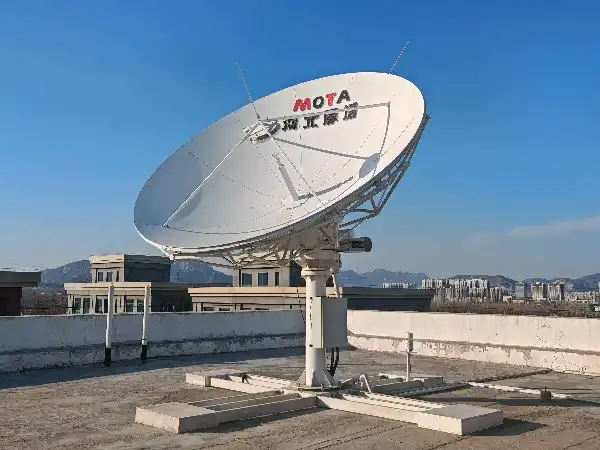
In today's connected world, businesses from aerospace to logistics depend on effective communication systems to run their global operations. A fixed satellite reception antenna is a special kind of ground station terminal that is designed to pick up and focus electromagnetic signals from geostationary or non-geostationary satellites while staying in one place. These systems solve important problems like signal instability due to attenuation in the atmosphere, mechanical wear and tear in hard environments, and radio frequency interference from land sources. They make sure that mission-critical applications around the world can always connect.
Understanding Fixed Satellite Reception Antennas: Technology and Principles
Modern satellite transmission depends on precise tech, and a fixed satellite reception antenna is essential to keep people connected over very long distances. Procurement managers and technical teams can better understand how useful these systems are in complex working settings when they know how they work.
How Satellite Ground Stations Capture Signals
A fixed satellite reception antenna gets its power from receiving messages from satellites in space. They do this by using parabolic geometry to focus electromagnetic waves on a single point. This approach gets the best signal capture while reducing noise disturbance as much as possible. High-precision mirrors are used in the system. These are usually made of sheet molding compound or carbon fiber, which don't expand or contract when the temperature changes. This keeps the surface accurate, which is important for keeping the system working at its best even when the temperature changes.
How well the antenna can handle weak messages from space depends on its gain-to-noise temperature ratio and opening efficiency. Advanced models keep a voltage standing wave ratio of 1.3:1, which makes sure that signals are reflected as little as possible and power is transferred as much as possible. For end users, these technical factors directly mean faster data transfer and more reliable connections.
Multi-Band Frequency Coverage and Flexibility
Modern systems need to be flexible across communication bands so they can meet a wide range of operating needs. Systems that work with Ku/Ka/S/X/C/Qv frequency bands are very flexible and can be used in a wide range of satellite transmission situations. Operators can get the best performance based on mission factors, weather conditions, or the presence of satellites by manually switching between these bands.
This ability to work with multiple bands is very helpful for businesses that need to handle several communication methods at the same time using a fixed satellite reception antenna. Being able to switch between frequency bands without having to update hardware lowers capital costs and increases the lifecycle of equipment, which is a very important factor for procurement teams to consider when figuring out the total cost of ownership.
Environmental Resilience and Operational Continuity
Industrial-grade devices have to work in harsh circumstances and keep the integrity of the signals. Modern fixed antennas work consistently in temperatures ranging from -25°C to +55°C. They have IP-rated casings that keep electronics safe from water, dust, and other damaging substances. This weather hardening makes sure that service stays up and running in remote areas where replacing equipment would be hard to do and cost too much.
Another important success measure is the ability to resist wind. Advanced designs keep 1080p HD video streaming stable even when there is 7-level wind, showing the structural stability needed for long-term installs in open areas. This kind of stability cuts down on downtime and repair needs, which has a direct effect on how well operations run and how reliable they are in the long term.
Comparing Fixed Satellite Reception Antennas with Alternative Technologies
To choose the right transmission infrastructure, you need to know how different platforms meet different operating needs. This comparison shows why fixed setups often work better than other options in some situations.
Fixed Versus Mobile Satellite Systems
While mobile satellite antennas can be used for short operations or uses that are placed on vehicles, fixed placements provide better performance for long-term sites. Stationary Fixed Satellite Reception Antennas have higher gain numbers because their openings are bigger and they are placed more optimally. This makes the signal quality better and increases the bandwidth capacity. Their constantly aligned setup gets rid of the tracking latency that comes with mobile systems, which cuts the time it takes to make a link from minutes to seconds.
When it comes to responding to emergencies, military actions, or short-term events, mobile devices are very useful. But companies that want the fastest speeds, lowest latency, and most reliable connections for mission-critical tasks always choose fixed systems for their offices, data centers, and tactical command centers.
Advantages Over VSAT and Traditional Parabolic Designs
Very Small Aperture Terminal devices connect places that are spread out and only need a small amount of data at a low cost. They can't match the efficiency cap of bigger fixed systems, though. Larger fixed antennas provide more bandwidth, which is needed by businesses that send high-definition video, manage real-time factory automation, or support heavy IoT networks.
Traditional parabolic antennas that don't have built-in systems need a lot of extra tools to work. Modern fixed satellite reception systems combine BUC/LNB units, modems, and smart power control systems into single, plug-and-play setups. This combination makes release a lot easier. Installation and operation can be finished by one-person teams in three minutes, compared to hours or days for traditional systems with multiple parts.
Performance Metrics That Matter for Industrial Applications
Professional-grade systems are different from household tools in key ways related to their electrical performance. Transceiver isolation rates of ≥85dB stop signal leaks that could mess up other systems or break the rules set by the government. First sidelobe values of -14 dB stop signals from nearby satellites from being picked up by other devices, which is very important for meeting ITU-R S.580-6 orbital interference guidelines.
These requirements have a direct effect on how well the system can work in settings with a lot of interference. To keep signals from crossing between channels, organizations that run multiple ground stations or work with international partners must use equipment that meets strict cross-polarization isolation standards exceeding 30dB. This is a must for aerospace, defense, and commercial broadcast applications.
Guide to Procurement and Installation of Fixed Satellite Reception Antennas
When buying a fixed satellite reception antenna, you have to balance technical specs, the supplier's skills, and the need for long-term assistance. Making strategic decisions about buying improves both the success of the operation right away and the value over time.
Evaluating Supplier Credentials and Certifications
Verification of the seller is the first step in quality assurance. Companies that have ISO9001, ISO14001, or ISO45001 certifications show that they care about quality control, being good to the earth, and meeting health and safety standards at work. These qualifications show that the production process is well-developed and that the quality of the output is always the same. These are important things to keep in mind when equipment has to work nonstop in harsh or rural areas.
Production knowledge is very important. Suppliers that have been in business for a long time have improved their manufacturing processes, built strong quality control systems, and gained real-world experience that they can use to solve problems. Companies that have been in production for nine years or more usually have extensive networks for getting parts and engineers who can help with customization needs without affecting delivery times.
Customization Capabilities and ODM/OEM Services
Standard goods don't always meet all of your complex business needs perfectly. Suppliers that offer full ODM/OEM design services are helpful for companies that are in charge of large-scale operations or specialized applications. This feature lets frequency setups, mechanical mounting systems, environmental protection levels, and built-in sections be customized to meet the exact needs of a project.
Being clear about the production cycle helps with planning projects. Reliable providers give clear timelines, which are usually 45 to 90 days for custom and large-scale systems. This makes it possible to accurately coordinate schedules with larger building projects. If suppliers keep enough stock of standard setups, they can speed up partial deploys while custom units are being made.
Installation Best Practices and Maintenance Protocols
Installing something correctly has a big effect on how well it works in the long run. During site studies for a fixed satellite reception antenna, it's important to check the line-of-sight to the target satellites, the mounting system's structural load capacity, and any possible sources of interference. Professional installation teams use precise positioning tools to make sure the antenna is pointed correctly, which has a direct effect on the quality of the signal received.
Two-axis stabilization platforms with self-developed tracking algorithms make it possible to quickly acquire satellites. In just three minutes, alignment and link formation are complete. In particular, this feature comes in handy when setting up multiple ground stations or moving current ones to different orbital places. To keep the equipment running at its best for as long as possible, maintenance plans should include checking the reflector surface, the feed system, and the computer section on a regular basis.
Why Trusted Brands and Reliable Suppliers Matter for B2B Clients
Long-term business success depends a lot on how well you get along with your suppliers after you buy a fixed satellite reception antenna or related equipment. Strategic relationships with well-known makers offer long-term benefits like expert help, easy access to parts, and consistent service.
Global Support Infrastructure and Logistics Capabilities
For international business to run smoothly, providers must have well-developed cross-border transportation systems. Professional packing using materials that are resistant to shock and water keeps fragile items safe while they're being shipped. Full-process logistics tracking lets you see the whole delivery process, and flexible customs clearance help and foreign storage choices speed up the time it takes to set up projects that span multiple sites.
Companies that are in charge of global infrastructure profit when their providers offer localized after-sales services. Centralized support offices take longer to respond and don't understand different cultures and languages as well as regional technical support teams. Customer reaction systems that are available 24 hours a day, seven days a week make sure that people can get help in emergencies, no matter what time zone they are in.
Warranty Terms and After-Sales Service Commitments
Full guarantee coverage protects the value of an investment. Suppliers who offer flexible guarantee plans that can be used in a variety of settings and with different levels of usage show that they trust the reliability of their products. When problems happen, there is no room for confusion when clear terms cover things like part replacement, work costs, and reaction times.
Technical help for installation, testing, troubleshooting, and system changes is available 24 hours a day, seven days a week. Suppliers with proactive repair plans find problems before they cause downtime. This increases the life of the equipment and lowers the total cost of ownership. These service promises set transactional sellers apart from strategic partners who care about the success of their clients.
Building Strategic Supplier Relationships
Procurement teams like it when sellers show steady delivery performance, clear communication, and ways to work together to solve problems. Competitive pricing systems and flexible payment terms can work with a range of spending cycles and purchasing plans. Even when there are problems with global transportation, project deadlines can still be met if supply chains are stable and not affected by disruptions.
Long-term relationships help providers learn more about what their customers want, guess what they will need in the future, and come up with proactive solutions. As time goes on, communication networks grow, technology changes, and practical needs rise, this level of relationship complexity becomes even more valuable.
Future Trends and Innovations in Fixed Satellite Reception Antennas
The satellite transmission business is still changing quickly because technology is getting better and more applications need them. Understanding new trends helps businesses make beneficial investments that will work in the future.
AI-Powered Signal Optimization and Smart Materials
Adding artificial intelligence changes how radio performance control is done. Machine learning algorithms look at the properties of signals in real time and change settings automatically to improve receiving quality even when the environment or sources of interference change. These smart systems make it easier for operators to do their jobs while also making connections more stable and consistent in terms of traffic.
The main goal of advanced materials research is to make reflective surfaces that are more stable at high temperatures, lighter, and last longer. Carbon nanocomposite structures have high strength-to-weight ratios that allow for bigger openings without increasing the amount of mounting infrastructure needed. This means that they can perform better within the limits of their current usage.
Next-Generation Frequency Band Utilization
Spectrum congestion leads to research into higher frequency bands that have more capacity available. Ka-band and new Qv-band systems can handle much higher data rates, which makes it possible for bandwidth-heavy tasks like streaming 4K video in real time, setting up huge IoT sensor networks, and automating factories through the cloud. As supporting infrastructure for satellite constellations is put in place, organizations will be able to take advantage of these new powers thanks to equipment that supports smooth multi-band operation.
Integration with Hybrid Communication Networks
Satellite, ground fiber, cellular, and wireless technologies are being combined with fixed satellite reception antennas into single communication networks in modern infrastructure. Advanced ground stations manage traffic across these different links by instantly sending data along the best paths based on needs for cost, latency, bandwidth, and dependability. This integration of satellites and terrestrial systems makes the network more reliable and improves operations costs.
Conclusion
Fixed satellite reception antennas are still very important parts of modern communication systems because they offer the best stability, speed, and flexibility for mission-critical uses. Their high level of technical complexity, which includes supporting multiple frequency bands, being resistant to environmental damage, being able to be set up quickly, and being reliable enough for military use, meets the strict needs of the aerospace, defense, transportation, and industrial automation sectors. Strategic purchasing choices that focus on seller qualifications, customizable options, full support services, and technology that is ready for the future set up businesses for long-term operating success in a world that is becoming more linked.
FAQ
Which communication frequency bands do professional fixed antennas support?
Most industrial-grade systems can work in dual-band Ku/Ka/S/X/C/Qv configurations and allow human swapping. This multi-band compatibility covers common satellite communication frequencies, allowing for flexible setup based on the communication task needs of the ground station and adapting to different operating situations involving satellite communication.
How do these antennas maintain signal stability in harsh environmental conditions?
Advanced designs make sure that 1080p high-definition video streaming stays stable even in 7-level wind situations by strengthening the structure and making the mounting systems work better. High transceiver isolation rates of ≥85 dB and strong link anti-interference capabilities make sure of stable signal reception in complex field settings. This keeps the connection even when the weather or electromagnetic interference sources are bad.
What distinguishes fixed installations from mobile satellite communication systems?
Fixed ground stations work better than mobile ones because they are permanently aligned, have bigger apertures, and have combined elements that give them better gain, lower noise, and more bandwidth. Mobile systems give you more options for where to put them, but fixed installs give permanent buildings that need mission-critical connections the best throughput and stability.
Partner with MOTA for Your Satellite Communication Infrastructure
MOTA is ready to help you with your satellite communication needs by providing industrial-grade fixed satellite reception antenna options made for tough situations. Our systems have high gain and low noise, and they cover all Ku/Ka/S/X/C/Qv bands. They also have two-axis stabilization platforms and combined parts that can be plugged in and used right away. We offer reliable tools backed by a global logistics network and ISO9001, ISO14001, and ISO45001 certifications, as well as over nine years of production excellence and expert help 24 hours a day, seven days a week. Get in touch with our team at hebei_mota@163.com to talk about your needs with a fixed satellite reception antenna seller who is dedicated to your business's success.

References
1. Elbert, Bruce R. The Satellite Communication Ground Segment and Earth Station Handbook. Boston: Artech House, 2014.
2. Maral, Gerard, and Michel Bousquet. Satellite Communications Systems: Systems, Techniques, and Technology. 6th ed. Chichester: Wiley, 2020.
3. Pratt, Timothy, Charles Bostian, and Jeremy Allnutt. Satellite Communications. 3rd ed. Hoboken: John Wiley & Sons, 2019.
4. International Telecommunication Union. ITU-R S.580-6: Radiation Diagrams for Use as Design Objectives for Antennas of Earth Stations Operating with Geostationary Satellites. Geneva: ITU, 2019.
5. Kadish, Julius E. Satellite Ground Station Systems Engineering. Washington: AIAA, 2017.
6. Pelton, Joseph N. and Scott Madry, eds. Handbook of Satellite Applications. 2nd ed. New York: Springer, 2017.
Tell us your requirements – get a tailored quote and technical support within 24 hours.