- English
- French
- German
- Portuguese
- Spanish
- Russian
- Japanese
- Korean
- Arabic
- Greek
- German
- Turkish
- Italian
- Danish
- Romanian
- Indonesian
- Czech
- Afrikaans
- Swedish
- Polish
- Basque
- Catalan
- Esperanto
- Hindi
- Lao
- Albanian
- Amharic
- Armenian
- Azerbaijani
- Belarusian
- Bengali
- Bosnian
- Bulgarian
- Cebuano
- Chichewa
- Corsican
- Croatian
- Dutch
- Estonian
- Filipino
- Finnish
- Frisian
- Galician
- Georgian
- Gujarati
- Haitian
- Hausa
- Hawaiian
- Hebrew
- Hmong
- Hungarian
- Icelandic
- Igbo
- Javanese
- Kannada
- Kazakh
- Khmer
- Kurdish
- Kyrgyz
- Latin
- Latvian
- Lithuanian
- Luxembou..
- Macedonian
- Malagasy
- Malay
- Malayalam
- Maltese
- Maori
- Marathi
- Mongolian
- Burmese
- Nepali
- Norwegian
- Pashto
- Persian
- Punjabi
- Serbian
- Sesotho
- Sinhala
- Slovak
- Slovenian
- Somali
- Samoan
- Scots Gaelic
- Shona
- Sindhi
- Sundanese
- Swahili
- Tajik
- Tamil
- Telugu
- Thai
- Ukrainian
- Urdu
- Uzbek
- Vietnamese
- Welsh
- Xhosa
- Yiddish
- Yoruba
- Zulu
How do anti-interference satellite antennas suppress unwanted RF signals?
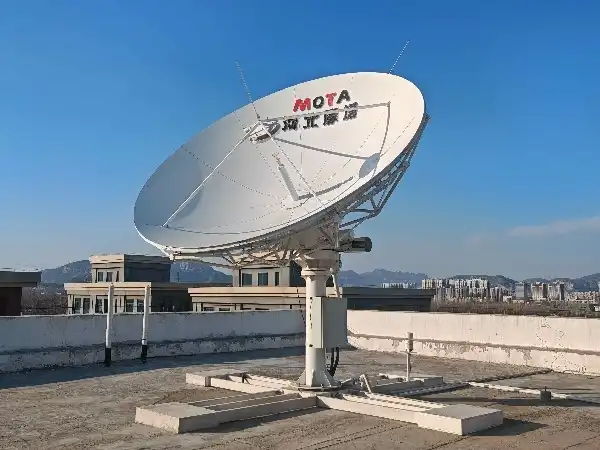
Anti-interference satellite antennas suppress unwanted RF signals in four main ways. A narrow, low-sidelobe beam rejects energy from other directions. Built-in filters block out-of-band noise. High transmit-receive isolation keeps the antenna from overloading its own receiver. A low-noise front end protects the weak satellite signal. An industrial-grade anti-interference fixed satellite antenna adds a sealed, sturdy housing so those protections last in dusty, hot or corrosive plants. In this article, I explain each method in plain terms, show where it matters on mining, power and factory sites, and share what to check before you buy.
Understanding Interference in Satellite Antennas
What RF Interference Is and Why It Hurts Data Links
RF interference is any radio waves that you don't want that get into the frequency band of your detector. Standard books on satellite tech explain that because a geostationary satellite is about 35,786 km above the equator, its signal is very weak when it gets to your dish. Noise of any size can lower the signal-to-noise ratio.
If that ratio drops, video stops, packets get lost, and control data shows up late. It's like trying to hear a whisper next to a machine that's moving. The Ku-band links on our antenna, which work between 10.7 and 12.75 GHz, also weaken in heavy rain, as ITU-R Recommendation P.618 says. More bad weather can happen when you get rid of more noise at the antenna.
Common Interference Sources on Industrial Sites
A plant makes a lot more noise than a quiet roof. Power is switched quickly by variable frequency drives, which also send out broadband noise. Arc welders make short, strong bursts that cover a lot of ground. Electrical fluctuations are caused by big motors, switches, and high-voltage equipment.
Man-made signals are added by radar, microwave links, and other emitters that are close by. Nature also plays a role. For a few minutes every day near the equinoxes, when the sun lines up behind the satellite, Ku-band transmissions go down because of the rain. Drawing a picture of these sources by direction helps me suggest a place to put the antenna so that its main beam stays away from the strongest ones.
Why Commercial Dishes Often Struggle in Plants
A lot of commercial dishes are made to be used in homes and offices, where noise levels are low and the weather isn't too bad. Their housings, filters, and feed assemblies are often made to be cheap and light, not to have tight sidelobes or strong isolation. This can show up as shaky links near drives, welders, or emitters inside a mine, smelter, or substation.
For every lost SCADA link, a technician has to go to the spot and check it by hand, which takes hours and makes choices take longer to make. That's why an industrial-grade anti-interference fixed satellite antenna doesn't add weather protection or interference rejection later. It does both of those things in one unit.
Core Technologies Behind Anti-Interference Fixed Satellite Antennas
Low Sidelobes and Beam Control
A dish gets most of its signal from the main beam, but it also gets some power from sidelobes. The level of our first sidelobe is -19 dB, which means it is at least 19 dB below the main beam peak, or about 1/80 of the power. When the sidelobes are lower, they pick up less from close emitters and satellites. In 47 CFR § 25.208, the FCC sets off-axis performance rules for earth station antennas.
This is something that regulators take very seriously. Aperture is also important because antenna theory books like Balanis show that a wider reflector makes a narrower beam. You can choose from 13 m, 11 m, 9 m, 7.3 m, 6.2 m, 5.4 m, 4.5 m, 3.3 m, and 2.4 m lengths, so you can find the right beam width and gain for your link.
Filtering and Transceiver Isolation
Filters let only the band you want through and block everything else. The antenna works with frequencies between 10.7 and 12.75 GHz, and our built-in anti-interference filter module stops industrial electromagnetic interference before it gets to the sensitive stages. Isolating the transceiver helps with a different issue.
It is much stronger to send a signal than to receive one, and some of the send signal can get into the receive line. The ≥90 dB isolation we offer cuts that leakage by a billion times in terms of power. If there isn't good separation, the front part of the receiver can get too busy or pick up extra noise. Filtering and isolation work together to clean up the input to the receive chain.
Low-Noise Reception and Sturdy Construction
The noise figure tells you how much noise a radio makes on its own. Ours is 0.9 dB, which means that weak satellite signals stay clear longer. It's also important how you look. The die-cast aluminum shell is resistant to damage from impact, aging, and UV light. In general, a metal casing helps keep electromagnetic noise from reaching electronics; this is something that Henry Ott's Electromagnetic Compatibility Engineering book talks about.
According to IEC 60529, an IP67 rating means that the device is protected from dust and has been tested to be resistant to short-term immersion. The antenna works from -35°F to +65°F, and the shell can last for more than 8 years. Filters and bits with low noise only help if the building works all year, even when it's dusty or cold outside.
How Anti-Interference Satellite Antennas Work: A Systematic Breakdown
Step 1: Reject Off-Axis Energy at the Dish
Math is the first line of defense. Energy coming from the ground or the side hits the reflector at an angle, and most of it doesn't get into the feed because of low sidelobes. The dish must be pointed at the satellite's peak for this to work. It only takes our automatic alignment method 3.5 minutes to line the satellites, so installers don't have to look for the peak by hand. If you point the satellite correctly, it will be in the middle of the main beam, which will boost the signal you want compared to everything else. Before electronics do anything, interference is taken care of by an antenna that is well aligned and has low sidelobes.
Step 2: Filter and Isolate in the RF Chain
The signal goes through filtration, and the low-noise step after the reflector focuses the energy on the feed. Order is important. Amplification can't tell the difference between wanted and unwanted energy, so filters work best before a lot of amplification. Out-of-band industrial noise is taken out early by our built-in filter module.
There is ≥90 dB isolation, which keeps send leaks out of the receive path, and there is ≦0.9 dB noise figure, which stops extra noise. As a result, stable 1080p video and industrial data can be sent with a latency of less than 60 ms. For each figure, engineers can ask what the test conditions were, and we're happy to answer them.
Step 3: Monitor and Correct Over Time
It's not possible for interference to stay put for the industrial-grade anti-interference fixed satellite antenna. The picture can change months after it was set up if there is a new drive, a new emitter, or a loose link. Our monitoring module is built in and offers real-time status checks, automatic alarms, and remote O&M. This way, your team can find drift early and fix problems without having to go to the site. To fix things, some systems add adaptable methods.
Our antenna is automatically aligned and constantly watched, so control experts can always guess what it will do. When a department is in charge of several sites that are far away, remote checks take the place of many manual inspection rounds. This way, maintenance crews can focus on repairs that need to be done by hand.
Practical Applications and Benefits for Industrial B2B Clients
Mining and Energy Sites
Mines, oil fields, and offshore platforms are often far from land-based networks. To keep track of equipment, make sure safety systems work, and coordinate operations, satellite links are used. Variable frequency drives, crushers, and welding stations are all noisy things that are often close to SCADA links on the surface of a mine. When things are like that, a Ku-band dish with ≥90 dB separation and a built-in filter helps keep the link stable.
The antenna also sends industrial data and 1080p video, so teams that are far away can see what the sensors say. If your project includes dangerous or underground areas, please let us know as soon as possible. We will then go over the local approval requirements with you before the planning process begins.
Power Grid and Factory Automation
To balance the load and find faults, smart grids need constant data. However, substations are full of noisy high-voltage equipment. That noise is blocked by the anti-interference design so that control data can keep moving between control centers and substations. With IoT sensors, automated systems, and remote monitoring, factories also have to deal with the same problems.
Distributed facilities can be seen thanks to stable 1080p video and low-latency data backhaul. When you grow, the 3.5-minute alignment also helps because a team can add a link at a new building or move one without having to hire satellite experts. With nine different lens sizes, you can find the right link for every place.
Cost and Uptime Benefits
The financial case rests on three things. First, the service life is longer than 8 years, so you can plan ahead for a long time with just one purchase. Second, automatic warnings and remote O&M cut down on regular site trips, which saves technicians time and travel. Third, your regular operations team can set up the system without any special training in satellites, so you won't have to pay a consultant.
I always tell people to keep track of the cost per site over the whole service life, not just the purchase price. You can save money on data gaps like missed alarms or extra inspection trips when an industrial-grade anti-interference fixed satellite antenna holds its link next to drives and welders.
Selecting and Procuring the Right Anti-Interference Fixed Satellite Antenna
Specifications to Verify Before You Buy
Start with the numbers that tell you how well the interference works: receiver isolation ≥90 dB, first sidelobe ≤-19 dB, noise figure ≤0.9 dB, and frequency covering of 10.7 to 12.75 GHz. In the next step, make sure the latency is less than 60 ms, it's protected by IP67, and it can work in temperatures between -35°F and +65°F. Ask each provider for test results that explain each number.
ITU-R P.618 shows that rain absorption increases at Ku-band, so choose the opening based on the link budget and the rain margin. A lot of mining and power companies do a small test on-site before they put in an offer. That step is what I think you should do because it replaces claims with measurements from your own plant.
Compatibility and Customization
Compatibility should be a top priority right away because older systems often have different interfaces and protocols. We offer ODM/OEM creation of hardware design, interface protocols, useful modules, software interfaces, and certifications that are tailored to the rules of each country and the needs of your project. We offer scheme design, prototyping, and mass production as part of our service.
Let our engineers know about your current SCADA ports, mounting conditions, and network needs, and they'll come up with a way to integrate them. This method works well for retrofitting, where a new antenna needs to connect to old equipment that was put in years ago without having to replace the whole communication chain. We can also talk about rolling out in stages, since stable mass delivery capacity allows for projects at more than one place.
Quality, Lead Time and Support
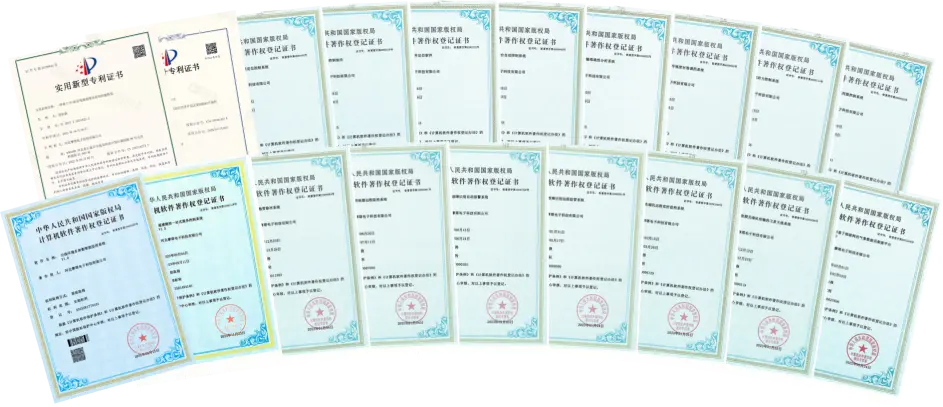
Processes that are written down build trust. We've been making things for nine years and have been certified by ISO 9001, ISO 14001, and ISO 45001 for our management systems. We also have domestic type approval for radio transmission equipment. For regular sales, we keep stock on hand, but it takes 45 to 90 days to make special and large-scale systems. For export, we ship precision electronics in packaging that is resistant to shock and moisture.
We also offer tracking, help with customs clearance, and storage overseas. International standards say that each unit comes with a full warranty, and there are different payment plans to choose from. We offer remote support 24 hours a day, seven days a week for installation, troubleshooting, and upgrades. Cooperative channels provide local on-site service and spare parts. We also have reasonable prices and easy payment options.
Conclusion
Several types of anti-interference satellite receivers work together to block out unwanted RF signals. Filters get rid of out-of-band noise, low sidelobes and accurate alignment block off-axis energy, high receiver isolation keeps the receive path safe, and a low noise figure keeps weak satellite signals. There is isolation of ≥90 dB, first sidelobe of ≒-19 dB, and noise figure of ≒0.9 dB in this industrial-grade anti-interference fixed satellite antenna.
It has IP67 protection, a die-cast metal shell, and a service life of over 8 years. Performance can be seen after installation thanks to monitoring and online O&M. When these things are near noise sources like drives, welders, and high-voltage equipment, which costs money to keep down, they are more important. A careful buyer checks the specs, does tests on-site, and makes sure the product works with other things before buying it.
FAQ
How does an industrial-grade antenna differ from a commercial one?
An industrial unit is built to handle harsh conditions and interference. Ours specifies ≥90 dB isolation, ≤-19 dB first sidelobe, ≤0.9 dB noise figure, IP67 protection and a die-cast aluminum shell. Commercial units often focus on cost and weight, so compare datasheets line by line.
Which sites need extra interference protection?
The sites that benefit the most are those that have variable frequency drives, welders, high-voltage equipment, radar, or other close emitters. This describes places like mines, power plants, and industries. A study of the spot that makes a map of noise sources helps prove the need.
Can I retrofit an existing system?
Sometimes. Adding an outside filter can cut down on out-of-band noise, but it can't fix the dish's sidelobes or weak isolation. Send us a picture of your current setup, and we'll let you know if you need to change it or get a new one.
How long does alignment take?
Our automatic system aligns the satellites in 3.5 minutes, and the tracking module lets you check on their state from afar afterward.
Request a MOTA Quote for Anti-Interference Satellite Antennas
Send MOTA information about your site, your preferred aperture, and the interface you need to hebei_mota@163.com, and our team will get back to you as soon as possible. We are an industrial-grade anti-interference fixed satellite antenna maker with nine years of experience, ISO-certified management systems, OEM/ODM choices, and support 24 hours a day, seven days a week. We can give you a price for your project and suggest a good Ku-band design. If you want to know more, go to motasat.com.
References
1. Satellite Communications Systems: Systems, Techniques and Technology (Maral and Bousquet), 2009
2. Electromagnetic Compatibility Engineering (Henry W. Ott), 2009
3. Antenna Theory: Analysis and Design (Constantine A. Balanis), 2016
4. IEC 60529, Degrees of Protection Provided by Enclosures (IP Code), 2013
5. ITU-R Recommendation P.618-13, Propagation Data and Prediction Methods Required for the Design of Earth-Space Telecommunication Systems, 2017
6. Electronic Code of Federal Regulations, Title 47, Section 25.209, Earth Station Antenna Performance Standards, 2023
Tell us your requirements – get a tailored quote and technical support within 24 hours.