- English
- French
- German
- Portuguese
- Spanish
- Russian
- Japanese
- Korean
- Arabic
- Greek
- German
- Turkish
- Italian
- Danish
- Romanian
- Indonesian
- Czech
- Afrikaans
- Swedish
- Polish
- Basque
- Catalan
- Esperanto
- Hindi
- Lao
- Albanian
- Amharic
- Armenian
- Azerbaijani
- Belarusian
- Bengali
- Bosnian
- Bulgarian
- Cebuano
- Chichewa
- Corsican
- Croatian
- Dutch
- Estonian
- Filipino
- Finnish
- Frisian
- Galician
- Georgian
- Gujarati
- Haitian
- Hausa
- Hawaiian
- Hebrew
- Hmong
- Hungarian
- Icelandic
- Igbo
- Javanese
- Kannada
- Kazakh
- Khmer
- Kurdish
- Kyrgyz
- Latin
- Latvian
- Lithuanian
- Luxembou..
- Macedonian
- Malagasy
- Malay
- Malayalam
- Maltese
- Maori
- Marathi
- Mongolian
- Burmese
- Nepali
- Norwegian
- Pashto
- Persian
- Punjabi
- Serbian
- Sesotho
- Sinhala
- Slovak
- Slovenian
- Somali
- Samoan
- Scots Gaelic
- Shona
- Sindhi
- Sundanese
- Swahili
- Tajik
- Tamil
- Telugu
- Thai
- Ukrainian
- Urdu
- Uzbek
- Vietnamese
- Welsh
- Xhosa
- Yiddish
- Yoruba
- Zulu
What is the difference between anti-interference and standard satellite antennas?
The main difference is how each antenna handles unwanted radio energy. A standard satellite antenna collects the wanted signal and leaves the receiver to cope with everything else. An anti-interference fixed satellite antenna adds sidelobe control, high transmit-receive isolation, filtering, and adaptive processing. The link stays clean when 5G transmitters, radar, and other sources crowd the spectrum.
For buyers, this means fewer bit errors, fewer dropped links, and steadier service at military bases, border stations, and industrial sites. This article compares both designs and explains how to choose between them. Fixed satellite antennas carry video, data, and telemetry for broadcasters, utilities, government agencies, and industrial operators. When a link drops, operations pause, and procurement teams absorb the cost of retransmission, downtime, and emergency service calls.
Standard antennas work well in quiet radio environments, but they struggle near strong terrestrial transmitters. We wrote this guide for buyers who must choose between the two designs. It covers interference sources, technical differences, cost, procurement checks, and future trends, using MOTA specifications as a working example.
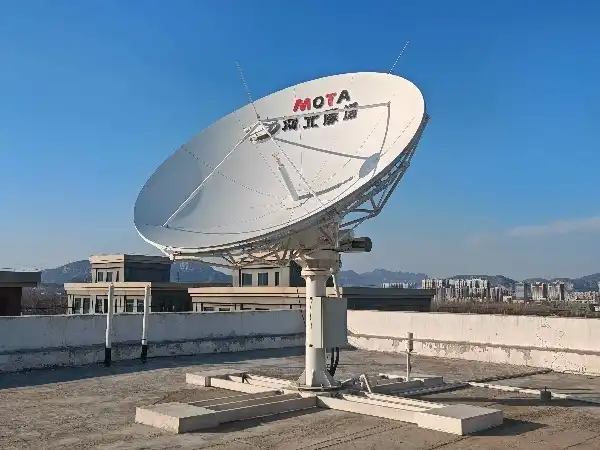
Understanding Interference in Fixed Satellite Antennas
Before we compare the gear, we need to see what the antenna can do. Outside noise, radio waves near the antenna, and the antenna itself are the three types of interference.
Environmental and Physical Sources
The weather and the site can mess up a satellite link before the electronics are used. When it rains a lot, signals are weaker, especially in the Ku and Ka bands. This is because raindrops can absorb and scatter short wavelengths of energy. The mirror moves away from the satellite as the wind picks up. Some of the path can be blocked by nearby buildings or trees.
Ice, dust, and salt can also change how well an antenna works over time. These results are not really radio interference. They do, however, narrow the link margin, which means that extra noise has less space to be absorbed. That extra room is kept free by an antenna that stays pointed and isn't affected by what's going on around it.
External Electromagnetic Noise
Anti-interference fixed satellite antennas are mostly asked about because of noise from outside sources. The FCC said that 5G on the ground could use the 3.7–3.98 GHz part of the C-band in 2020. However, downlinks from satellites would still use the 4.0–4.2 GHz band. From now on, earth stations that receive in that area will be able to get stronger cell phone signals.
Radar, microwave links, and interference that is done on purpose all add more energy. Because of these things, there is more noise at the listener. The number of bits that go wrong goes up, and if the gap gets too small, the link can break. Also in this group are sounds that are outside of the main frequency range and sounds that are very loud and make the first amplifier overloaded.
Internal Design Limits and Business Impact
It also depends on how it's built on the inside how much radiation it can handle. Some signals from other satellites can get picked up by the dish when the sidelobes are high. The signal from the antenna can reach the receiver because there isn't much space between the send and receive paths. A figure with a lot of noise makes the signal noisier before it is boosted.
Each weakness costs money because lost links need to be sent again, video feeds need to be stopped, data transfer times need to be sped up, and techs need to be sent to the site. It can be more important for government and business buyers that the power goes out during a key job than the price difference between two types of antennas. Interference risk should be on both the list of things to buy and the list of things to look at in the technical review.
Core Differences Between Anti-Interference and Standard Satellite Antennas
The gap can be seen in four places: the shape of the antenna, the distance between them, the signal processing, and the stability of the hardware. We'll do one after the other.
Filtering, Sidelobe Control, and Isolation
Normal receivers that follow the rules set by groups like ITU-R S.580 and S.465 can pick up the target signal. An anti-interference fixed satellite antenna goes even further. We stopped the sidelobes so the dish can pick up less off-axis energy. We also split the broadcast and receive lines so the uplink doesn't overwhelm the receiver.
Because our model gets transceiver isolation of ≥95 dB, the signal being sent is at least 95 dB stronger than the signal that is being leaked. This is more than 3 billion to 1 in terms of power. The noise level stays at -0.7 dB, which is around 51 K, and the first sidelobe stays at -20 dB.
Adaptive Detection and Fast Pointing
This is because most receivers are inactive, which means they can't tell when there is interference. It looks at the spectrum environment in real time, finds electromagnetic noise, and changes the filtering settings all by itself, without any help from a person. When new sources of interference come in or when patterns change during the day, the algorithm changes to fit those patterns.
The same method works for setting. A special algorithm for pointing that doesn't cause interference sets up the link and lines up the satellites in just three minutes. That makes it faster to set up temporary and emergency sites, and it also means that experts don't have to check the link by hand as often.
Mechanical Stability, Environmental Protection, and Ownership Benefits
Being able to block interference well doesn't help much if the beam changes because of wind or weather. Any issues that happen in real time because of wind load, thermal expansion, or shaking can be fixed by a three-axis base that can keep itself stable. Based on IEC 60529, the case has an IP66 grade, which means it is dust-tight and can handle strong water jets.
The antenna can send 4K video and works in temperatures from -30°C to +55°C. It also stays stable in 8-level wind. With military-grade parts and proper calibration, breakdowns are less likely to happen, and the cost of ownership is cheaper over time because of less downtime and repair calls. These perks add up over time and help big projects get a better return on their money.
Comparing Market Options: Anti-Interference vs. Standard Satellite Antennas
When comparing two things next to each other, it's better to use measured factors instead of making big claims.
Datasheet Comparison
On standard antenna datasheets, you can find details about gain, G/T, and how well they work with regulators. Transceiver isolation, first sidelobe level, noise figure, acquisition time, and a description of how the system handles interference should all be part of anti-interference fixed satellite antenna models.
It works with Ku, Ka, S, X, C, and Qv bands and has nine aperture sizes: 13 m, 11 m, 9 m, 7.3 m, 6.2 m, 5.4 m, 4.5 m, 3.3 m, and 2.4 m. You can choose between them by hand. We don't use rankings from outside sources since we can't tell which ones are fair. Ask each service provider what measures they used and how they came up with those numbers.
Cost Versus Total Cost of Ownership
Most of the time, an anti-interference fixed satellite antenna design costs more than a regular antenna with the same aperture because it has more screening, separation, and processing. The total cost of ownership tells the whole story. It includes the time it takes to set up, align, fix, lose power, and put in a new one. There may not be a need for multiple antenna systems if more than one band can work in the same fixed location.
That makes the system smaller and easier to maintain. We saw that regular maintenance, like checking the feed, the posts, and the reflector surfaces, is the same as for normal antennas. In other words, the higher starting price is balanced out by the fact that fewer fails happen.
Scenarios That Justify the Investment
A standard antenna is still a great choice in quiet country places where there aren't any strong transmitters nearby. When there is a lot of electromagnetic interference, it is worth the extra money to get the anti-interference fixed satellite antenna. Some places where this can happen are military camps, border stations, government emergency communication hubs, industrial buildings, teleports in towns close to 5G sites, and stations along the coast close to port radar.
A spectrum survey of the planned site is the best way to find out. Most of the time, the extra isolation and adaptive filtering are worth the extra cost if measurements show that there are strong transmitters nearby or if the link is used for tasks that need to be done right away.
Procurement Considerations for Anti-Interference Fixed Satellite Antennas
Fit isn't the only thing that counts. What makes a project go well is the supplier's strength, delivery terms, and help.
Supplier Credibility and Documentation
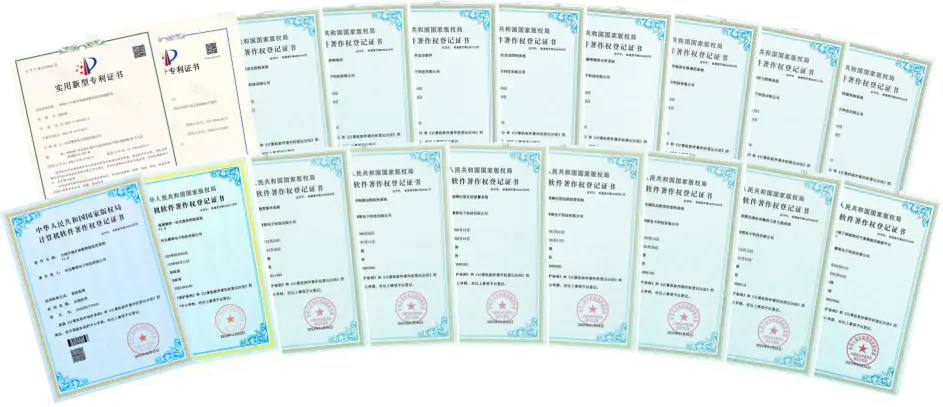
Hebei Mota Electronics Technology Co., Ltd. has been running MOTA for nine years and has been making anti-interference fixed satellite antennas. Our management systems are all in line with ISO 9001, ISO 14001, and ISO 45001 codes. Local type permission is also given to radio transmission tools that we have. We created our own satellite communication devices, high-precision tracking algorithms, and communication technology that works between space and Earth.
These are our main technologies, and they are protected by many intellectual property rights. You should always ask for test results and factory paperwork, no matter who you buy from. But before they place an order, they should also talk to their own compliance advisers to make sure they know the rules for spectrum, import, and export.
Orders, Customization, and Delivery
We keep enough in stock to cover average sales. Making unique and large-scale systems takes 45 to 90 days, and we don't change how much we can offer in bulk. Different countries have different rules and needs when it comes to hardware design, functional parts, interface standards, and certifications. This is what our ODM/OEM service does. Planning the idea, making a prototype, and then making a lot of them are all parts of it.
We use foreign specialized lines, sea freight, and air freight to move things. Containers that are shockproof and waterproof are used to ship precision tools. From beginning to end, it is watched, and it is kept in a different country so that it doesn't cross lines.
Warranty, Support, and Maintenance
Full-unit warranties are standard around the world, and plans can be changed to fit your needs. One team works from home 24 hours a day, seven days a week to help with setup, problems, and system updates. When we work together, we can also set up quick supply of extra parts and service right here in the area. First, make sure the aiming is correct. Then, check the plugs and wires. Finally, check the feed window. Finally, do a spectrum check to see if there are any new sources of interference. When you have a repair contract with regular checks, small problems don't turn into power outages.
Future Trends and Innovations in Anti-Interference Satellite Antennas
Spectrum use will change how anti-interference fixed satellite antennas are made as it does. People who want to buy things for projects that will last more than a year should pay attention to three ways.
AI-Powered Adaptive Signal Management
As the radio band gets busier, set filters won't be able to keep up with the interference that changes. More and more, it's helpful to have tools that can quickly find the source of the interference and change the filters. The AI part of our work already does this, and as new things get in the way, it learns how to handle them. People who want to buy something should ask the seller how they handle changes to algorithms, since better software can make hardware last longer.
Material Science and Shielding
Shielding materials change how well electronics block radiation from the outside, and reflector materials change how accurate the surface is, how heavy it is, and how well it doesn't rust. Antennas can keep working well in seaside, desert, and industrial places with a better coating and better ways to shield. People shouldn't wait for new goods because these changes take a long time to happen. Instead, they should compare the datasheet's current protection ratings, operating temperature ranges, and resistance to corrosion.
Spectrum Sharing and Procurement Planning
Near earth stations, 5G will still be used, but the bands that are used may change by government. Antennas that can switch between the Ku, Ka, S, X, C, and Qv bands don't need to be bought all over again when licenses and tasks change. Choose an aperture and band set that can grow with you, and make sure the seller lets you make upgrades from afar if you want to buy something. The investment is safe with that method, even if things change.
Conclusion
A standard satellite dish and an anti-interference fixed satellite antenna can both pick up a satellite signal, but they deal with unwanted energy in different ways. It's possible for interference to come from the weather, nearby emitters like 5G and radar, and even the device itself. An anti-interference fixed satellite antenna has a low noise figure, adaptive AI filtering, sidelobe suppression, a high receiver isolation level, and a stable, sealed structure.
The comparison shows that it costs more to buy, but how much it costs to own depends on how often it breaks down, needs fixes, or needs to be repaired. The extra power is most useful where strong sources are present. It might not be needed in quiet places. Once the supplier's paperwork, shipping terms, warranty, and assistance are all in order, the decision process is over. As spectrum congestion rises, adaptive filtering and the ability to work with more than one band become more crucial.
FAQ
What is an anti-interference fixed satellite antenna? Can it get rid of all the noise?
No, it can't promise that there won't be any more problems. It is true that adaptable filtering, sidelobe reduction, and high isolation make signals more stable in noisy areas and lower the chance of lost links.
How does the feature that de-jams work?
In our AI function, we keep an eye on the spectrum, look for noise patterns, and filter automatically. When interference patterns change during the day, it changes its settings on its own.
Does it cost more to keep these antennas up?
Just like any other antenna, it needs to be serviced regularly. The higher price may be worth it in the long run because the equipment will last longer and need less service.
Request a Quote for Your Anti-Interference Fixed Satellite Antenna from MOTA
You can choose between normal and anti-interference fixed satellite antenna styles based on how your site works. MOTA, a trusted anti-interference fixed satellite antenna manufacturer with nine years of experience, offers ODM/OEM customization, ready stock, and 7x24 response. If you want to know more about the product, you can email hebei_mota@163.com with your band, aperture, and position.
References
1. Federal Communications Commission, Report and Order on Expanding Flexible Use of the 3.7 to 4.2 GHz Band, 2020
2. International Telecommunication Union, Recommendation ITU-R S.580-6: Radiation Diagrams for Use as Design Objectives for Antennas of Earth Stations, 2004
3. International Telecommunication Union, Recommendation ITU-R S.465-6: Reference Radiation Pattern for Earth Station Antennas in the Fixed-Satellite Service, 2010
4. International Electrotechnical Commission, IEC 60529: Degrees of Protection Provided by Enclosures (IP Code), 2013
5. Dennis Roddy, Satellite Communications, 4th Edition, McGraw-Hill, 2006
6. Gérard Maral and Michel Bousquet, Satellite Communications Systems, 6th Edition, Wiley, 2020
Tell us your requirements – get a tailored quote and technical support within 24 hours.