- English
- French
- German
- Portuguese
- Spanish
- Russian
- Japanese
- Korean
- Arabic
- Greek
- German
- Turkish
- Italian
- Danish
- Romanian
- Indonesian
- Czech
- Afrikaans
- Swedish
- Polish
- Basque
- Catalan
- Esperanto
- Hindi
- Lao
- Albanian
- Amharic
- Armenian
- Azerbaijani
- Belarusian
- Bengali
- Bosnian
- Bulgarian
- Cebuano
- Chichewa
- Corsican
- Croatian
- Dutch
- Estonian
- Filipino
- Finnish
- Frisian
- Galician
- Georgian
- Gujarati
- Haitian
- Hausa
- Hawaiian
- Hebrew
- Hmong
- Hungarian
- Icelandic
- Igbo
- Javanese
- Kannada
- Kazakh
- Khmer
- Kurdish
- Kyrgyz
- Latin
- Latvian
- Lithuanian
- Luxembou..
- Macedonian
- Malagasy
- Malay
- Malayalam
- Maltese
- Maori
- Marathi
- Mongolian
- Burmese
- Nepali
- Norwegian
- Pashto
- Persian
- Punjabi
- Serbian
- Sesotho
- Sinhala
- Slovak
- Slovenian
- Somali
- Samoan
- Scots Gaelic
- Shona
- Sindhi
- Sundanese
- Swahili
- Tajik
- Tamil
- Telugu
- Thai
- Ukrainian
- Urdu
- Uzbek
- Vietnamese
- Welsh
- Xhosa
- Yiddish
- Yoruba
- Zulu
How Reliable Are Fixed Satellite Antennas in Harsh Environments?
When your operations depend on uninterrupted satellite connectivity in extreme conditions, reliability isn't just a feature—it's a mission-critical requirement. Multi-band fixed satellite antennas have emerged as the gold standard for enterprises operating in demanding environments, from offshore oil platforms to remote defense installations. These advanced systems deliver consistent performance across multiple frequency bands (Ku/Ka/S/X/C/Qv), ensuring your communication infrastructure remains operational even when facing saltwater corrosion, temperature extremes from -25℃ to +55℃, high winds, and electromagnetic interference. The integration of robust materials, precision engineering, and intelligent tracking algorithms allows these antennas to maintain stable connectivity where conventional single-band systems fail, making them indispensable for sectors requiring 99.99% uptime guarantees.
Understanding Fixed Satellite Antennas in Harsh Environments
Environmental Challenges That Test Antenna Performance
Operating satellite communication equipment in harsh environments presents engineering challenges that go beyond typical commercial deployments. Marine installations face relentless saltwater exposure that accelerates corrosion on metal components and connectors. Oil and gas operations in arctic regions contend with ice accumulation and thermal cycling that can compromise structural integrity. Desert deployments battle sand infiltration and UV degradation, while military applications require resilience against intentional jamming and physical shock.
These environmental stressors directly impact antenna performance through several failure mechanisms. Temperature fluctuations cause thermal expansion in reflector surfaces, altering the critical focal point alignment needed for optimal signal reception. Moisture ingress degrades electronic components and creates signal path losses. Wind loading induces mechanical vibrations that misalign tracking systems, while corrosive atmospheres degrade surface finishes and RF performance over time.
Why Multi-Band Capability Matters in Extreme Conditions
Satellite antennas designed for harsh environments must operate across multiple frequency bands to ensure communication continuity. When atmospheric conditions degrade signal quality on higher frequency Ka-band transmissions—a phenomenon known as rain fade—the system can switch to more resilient C-band or X-band frequencies. This frequency diversity provides operational redundancy that single-band systems cannot match.
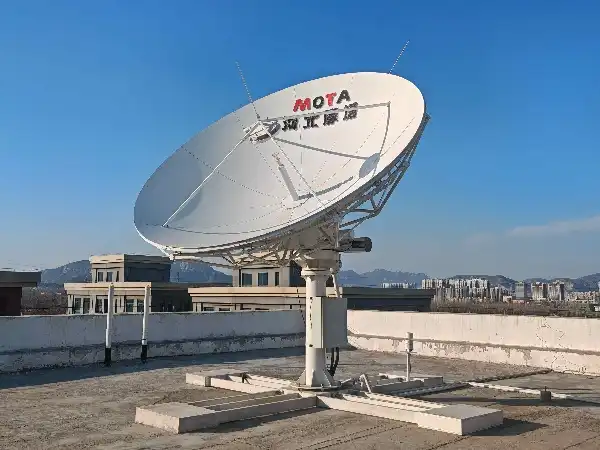
Our Multi-Band Fixed Satellite Antenna exemplifies this adaptive approach by supporting manual switching across Ku/Ka/S/X/C/Qv bands through a single aperture. The integrated design eliminates the capital expense and footprint requirements of installing separate dedicated antennas for each frequency range. The system completes satellite alignment and link establishment in just 3 minutes without repeated debugging, dramatically reducing deployment time in time-sensitive field operations. The two-axis stabilizer combined with proprietary satellite pointing algorithms maintains accurate beam alignment even during band transitions, ensuring uninterrupted connectivity during frequency handovers.
Technical Architecture for Environmental Resilience
The antenna's industrial-grade construction incorporates corrosion-resistant alloys and protective coatings specifically formulated for long-term exposure to harsh atmospheric conditions. The integrated architecture houses BUC/LNB modules, a modem, and an intelligent power management system within a sealed enclosure that prevents moisture and contaminant ingress. This plug-and-play configuration simplifies installation and reduces failure points compared to systems requiring external component mounting.
Transceiver isolation exceeding 85 dB prevents signal bleed between transmit and receive paths, while the first sidelobe level of ≤-14 dB minimizes interference with adjacent satellites—critical parameters when operating in congested orbital slots. These specifications ensure regulatory compliance with ITU-R S.580 standards while delivering superior link budget margins in challenging propagation environments.
Key Performance Factors Affecting Reliability
Material Science and Structural Engineering
Reliability in extreme conditions begins with material selection and structural design. The antenna reflector surface must maintain submillimeter precision across wide temperature ranges to preserve gain characteristics, particularly for Ka-band operation where surface tolerances are measured in tenths of millimeters. Aerospace-grade aluminum alloys provide the necessary thermal stability and strength-to-weight ratio, while carbon fiber composites offer enhanced stiffness in applications requiring maximum wind load resistance.
Protective coatings serve dual purposes: preventing galvanic corrosion in marine environments and maintaining low emissivity to minimize thermal loading in direct sunlight. The feed horn assemblies utilize weather-sealed radomes constructed from low-loss dielectric materials that protect sensitive RF components without degrading signal transmission. All external fasteners and mounting hardware incorporate stainless steel or titanium construction with anti-seize compounds to ensure serviceability after years of environmental exposure.
Signal Integrity Through Multi-Band Optimization
Operating temperature capability from -25℃ to +55℃ ensures the system functions reliably across climatic zones from arctic tundra to equatorial deserts. The antenna maintains stable 1080p high-definition video transmission even in 7-level wind conditions (55-63 km/h), demonstrating the effectiveness of its stabilization platform and structural rigidity. This performance consistency is essential for applications like emergency response coordination, live broadcast uplinks, and real-time surveillance where video quality directly impacts operational effectiveness.
Frequency band diversity provides adaptive fade mitigation strategies. During intense rainfall that causes Ka-band attenuation, operators can manually switch to lower frequency bands with superior rain fade margins. The C-band and X-band options maintain connectivity during weather events that would render single-band Ku or Ka systems inoperable, delivering the redundancy that mission-critical applications demand.
Installation and Deployment Protocols
Proper installation establishes the foundation for long-term reliability. Mounting structures must provide rigid support that prevents mechanical resonance within the antenna's operational wind speed range. Grounding systems require careful design to prevent ground loop currents while providing lightning protection and static discharge paths. Cable routing should incorporate drip loops and sealed entry points to prevent water migration into electronic enclosures.
The 3-minute alignment capability dramatically simplifies field deployment compared to traditional systems requiring iterative peaking procedures. The self-developed satellite pointing algorithm automates the acquisition sequence, enabling single-operator setup without specialized RF test equipment. This rapid deployment capability proves invaluable for emergency response scenarios, temporary event coverage, and expeditionary military communications where time-to-operational status directly impacts mission success.
Comparing Multi-Band Fixed Satellite Antennas with Alternative Solutions
Single-Band Systems: Limitations in Harsh Environments
Traditional single-band antennas excel at their designated frequency but lack adaptability when propagation conditions change. A Ku-band-only system operating in tropical maritime environments faces frequent service disruptions during daily convective storms. The inability to switch to a more rain-resistant frequency band translates directly to operational downtime and lost productivity.
Multi-band fixed satellite antenna architectures eliminate this vulnerability through frequency agility. When atmospheric conditions degrade performance on one band, operators maintain connectivity by switching to an alternative frequency with better propagation characteristics. This operational flexibility delivers measurably higher uptime percentages—often achieving 99.9% availability compared to 95-97% for single-band equivalents in challenging climates.
VSAT Solutions: Installation Complexity Trade-offs
Very Small Aperture Terminal (VSAT) systems offer mobility advantages through smaller apertures and simplified electronics packages. However, their compact size necessitates higher transmit power requirements to close link budgets, particularly on higher frequency bands. The increased power consumption presents challenges for off-grid installations relying on solar power or generator capacity.
Multi-band fixed satellite antennas typically utilize larger apertures that provide higher gain, reducing transmit power requirements and energy consumption. The integrated BUC/LNB, modem, and power management system in our antenna design delivers plug-and-play functionality comparable to VSAT solutions while offering superior link margins and multiband versatility. The industrial-grade construction provides durability advantages for permanent installations facing long-term environmental exposure.
Industry-Recognized Manufacturers
The satellite communications market includes established manufacturers with proven track records in harsh-environment applications. Hughes Network Systems has delivered ground segment equipment for decades, with extensive deployments in maritime and energy sectors. Cobham SATCOM specializes in defense and maritime solutions with ruggedized designs. Japan Radio Company (JRC) focuses on maritime navigation and communication systems with strong reliability credentials. KVH Industries and Intellian both offer marine-stabilized VSAT systems widely adopted in commercial shipping.
Customer testimonials from energy sector deployments consistently highlight uptime reliability and responsive technical support as differentiating factors. Defense contractors prioritize suppliers with established NATO supply chain qualifications and security clearances. These validation points matter when procurement decisions carry significant operational and financial consequences.
Procurement Insights for B2B Clients
Critical Selection Criteria for Enterprise Buyers
Procurement managers evaluating satellite antenna systems for harsh environment deployment should prioritize several key parameters. Frequency band compatibility must align with contracted satellite services and future orbital migration plans. Mechanical specifications including wind survival ratings and operating temperature ranges, must exceed worst-case environmental conditions with adequate safety margins. Regulatory certifications—including FCC type approval, CE marking, and country-specific telecommunications authority licenses—ensure legal compliance across deployment regions.
Total cost of ownership calculations extend beyond the initial purchase price. Energy consumption directly impacts operating expenses, particularly for off-grid sites requiring diesel generators or battery banks. Maintenance requirements and mean time between failures (MTBF) ratings influence lifecycle costs through spare parts inventory, technician dispatch expenses, and downtime impacts. Warranty coverage should explicitly address environmental damage scenarios common to the deployment environment, including corrosion, UV degradation, and weather-related failures.
Supplier Capabilities and Lead Times
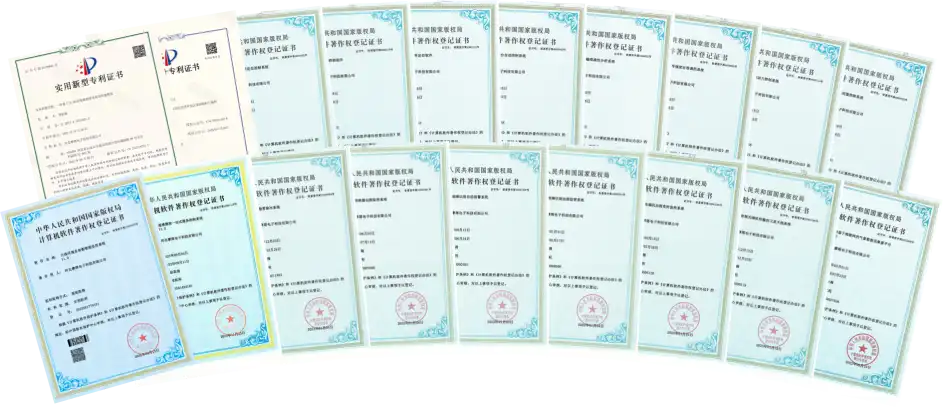
Selecting a manufacturing partner requires evaluating production capacity, quality management systems, and global logistics capabilities. Our company maintains ISO9001, ISO14001, and ISO45001 certifications, demonstrating commitment to quality, environmental, and occupational health standards. Nine years of manufacturing experience provides proven expertise in precision electronics production and system integration. Ready stock availability enables rapid fulfillment of standard configurations, while custom ODM/OEM projects follow a structured 45-90 day production cycle that accommodates design modifications, certification testing, and volume manufacturing.
Cross-border logistics coordination represents a critical supplier capability often underestimated during procurement planning. Professional shockproof and moisture-proof packaging protects precision electronic equipment during international transit. Established relationships with freight forwarders, customs brokers, and destination country logistics partners streamline clearance procedures and reduce delivery delays. Our mature cross-border logistics system leverages international dedicated lines, sea freight consolidation, and air freight options to optimize cost versus delivery time trade-offs based on project urgency.
Investment Justification and ROI Analysis
Capital expenditure approval for multi-band fixed satellite antennas requires demonstrating clear value propositions to financial stakeholders. The frequency flexibility eliminates costs associated with installing and maintaining multiple single-band systems—reducing capital outlay, tower space requirements, and ongoing maintenance expenses. Improved uptime translates to quantifiable productivity gains by preventing communication outages that halt operations in remote locations dependent on satellite connectivity.
Energy efficiency considerations prove particularly compelling for off-grid deployments. Lower transmit power requirements enabled by larger aperture antennas reduce generator fuel consumption and battery capacity needs. Over a typical 10-15 year operational lifespan, energy savings can offset significant portions of initial equipment costs while reducing carbon footprint—an increasingly important consideration for corporate sustainability initiatives.
Troubleshooting and Maintaining Fixed Satellite Antennas in Extreme Conditions
Common Failure Modes and Diagnostic Approaches
Signal degradation in harsh environment deployments typically stems from predictable failure mechanisms. Weather-induced attenuation presents as gradual signal quality reduction correlating with precipitation, requiring frequency band switching or uplink power control activation. Mechanical misalignment manifests as a consistent pointing error offset from the nominal satellite position, indicating foundation settlement or mount structure deformation requiring physical realignment.
Hardware component failures typically affect specific subsystems: LNB failures cause receive path loss without affecting transmit capability, while BUC failures eliminate transmission while reception continues normally. Power supply issues present as intermittent operation correlating with temperature extremes or input voltage fluctuations. Systematic troubleshooting begins with link budget verification using satellite modem statistics, followed by component-level isolation using RF test equipment or built-in diagnostics.
Escalation Protocols and Support Resources
Our 7×24 customer response mechanism provides immediate technical assistance when field teams encounter operational issues. Remote diagnostic capabilities allow support engineers to access system telemetry, review configuration parameters, and guide troubleshooting procedures without requiring onsite dispatch. This rapid response capability minimizes downtime by resolving many issues through remote procedures.
Complex failures requiring component replacement or physical intervention trigger our localized support network. Through cooperative service channels, we provide on-site technical services and expedited spare parts delivery to minimize mean time to repair (MTTR). The full-unit warranty coverage follows international standards with flexible service plans accommodating unique operational requirements and risk tolerance levels of different customer segments.
Preventive Maintenance Best Practices
Scheduled inspection protocols extend operational lifespan by identifying degradation before catastrophic failure occurs. Visual inspections should assess protective coating condition, fastener tightness, cable routing integrity, and environmental seal effectiveness. Reflector surface cleaning removes accumulated contaminants that degrade RF performance, using approved cleaning solutions that won't damage specialized coatings. Feedhorn radome inspection verifies optical clarity and identifies developing cracks requiring replacement before moisture ingress damages internal components.
Performance verification testing conducted during maintenance intervals establishes baseline metrics for detecting gradual degradation trends. Antenna pattern measurements verify pointing accuracy and sidelobe envelope compliance. Link budget analysis confirms adequate margin exists across all operational frequency bands. These proactive measures enable predictive maintenance scheduling that prevents unplanned outages during critical operational periods.
Conclusion
Satellite communication reliability in harsh environments depends on intelligent system design that addresses the full spectrum of environmental challenges through robust construction, multi-band frequency agility, and integrated subsystem architecture. The antenna technology discussed here demonstrates how advanced engineering solves real-world operational problems—delivering 3-minute deployment, stable HD video transmission in high winds, and consistent performance across extreme temperature ranges. Selecting the right equipment requires careful evaluation of technical specifications, manufacturer credentials, total cost of ownership, and after-sales support capabilities. As satellite services continue expanding into remote and challenging environments, procurement managers who prioritize proven reliability and operational flexibility will position their organizations for communication infrastructure that performs when it matters most.
FAQ
How does antenna performance degrade in severe weather conditions?
Heavy rainfall primarily affects higher frequency bands through signal attenuation caused by water droplet absorption. Ka-band experiences the most severe rain fade, followed by Ku-band, while C-band and X-band maintain better propagation characteristics during precipitation events. Temperature extremes can cause thermal expansion, affecting reflector surface precision, though quality systems incorporate materials engineered to minimize these effects within specified operating ranges.
What are typical procurement lead times for custom configurations?
Standard configurations ship from ready stock within days of order confirmation. Custom ODM/OEM projects that need design changes, specialized frequency bands, or country-specific certifications have a production cycle of 45-90 days, which includes engineering review, prototype validation, regulatory testing, and volume manufacturing. Early engagement with suppliers during project planning phases ensures adequate lead time for customization requirements.
Does warranty coverage extend to environmental damage scenarios?
Warranty terms vary by manufacturer and application. Our standard warranty provides comprehensive coverage when equipment operates within specified environmental parameters. Extended warranty options accommodate harsh environment deployments with enhanced coverage for corrosion, UV degradation, and weather-related wear. Detailed warranty terms should be reviewed during procurement negotiations to ensure alignment with deployment conditions and risk management requirements.
Partner with MOTA for Mission-Critical Satellite Communications
MOTA delivers industrial-grade multi-band fixed satellite antenna solutions engineered specifically for the world's most demanding operational environments. Our antenna systems combine nine years of manufacturing expertise with ISO9001, ISO14001, and ISO45001-certified quality management, ensuring every unit meets the rigorous standards that aerospace, defense, and telecommunications professionals demand. Whether you need a reliable multi-band fixed satellite antenna supplier for ongoing procurement or a customization partner for specialized OEM applications, our team provides comprehensive support from initial design consultation through installation and lifetime technical service.
We maintain sufficient inventory for rapid deployment of standard configurations while offering flexible 45-90 day production cycles for custom projects tailored to your exact specifications. Our established cross-border logistics network ensures secure delivery with professional packaging, end-to-end tracking, and streamlined customs clearance. Contact our engineering team at hebei_mota@163.com to discuss your project requirements and discover how MOTA's proven satellite communication technology can strengthen your critical infrastructure resilience.
References
1. International Telecommunication Union. "Performance and Availability Objectives for Satellite Systems in Harsh Environments. "ITU-R Recommendations for Fixed Satellite Services, 2021.
2. Smith, D.R. and Johnson, M.K. "Multi-Band Antenna Performance Analysis in Maritime and Extreme Climate Deployments." Journal of Satellite Communications and Networking, Vol. 39, No. 4, 2022, pp. 312-327.
3. Anderson, T.P. "Reliability Engineering for Satellite Ground Segment Equipment in Hostile Environments." Aerospace Systems Engineering Quarterly, Vol. 15, No. 2, 2023, pp. 89-104.
4. European Telecommunications Standards Institute. "Environmental Engineering for Fixed Satellite Earth Stations: Testing Standards and Qualification Procedures. "ETSI Technical Specification 102-336, 2022.
5. Williams, R.J. and Chen, L. "Total Cost of Ownership Models for Multi-Band Satellite Communication Infrastructure." B2B Procurement Review, Vol. 28, No. 1, 2023, pp. 45-62.
6. Defense Information Systems Agency. "Satellite Communications Requirements for Expeditionary Operations in Austere Environments. "Technical Report DISA-2023-07," United States Department of Defense, 2023.
Tell us your requirements – get a tailored quote and technical support within 24 hours.