- English
- French
- German
- Portuguese
- Spanish
- Russian
- Japanese
- Korean
- Arabic
- Greek
- German
- Turkish
- Italian
- Danish
- Romanian
- Indonesian
- Czech
- Afrikaans
- Swedish
- Polish
- Basque
- Catalan
- Esperanto
- Hindi
- Lao
- Albanian
- Amharic
- Armenian
- Azerbaijani
- Belarusian
- Bengali
- Bosnian
- Bulgarian
- Cebuano
- Chichewa
- Corsican
- Croatian
- Dutch
- Estonian
- Filipino
- Finnish
- Frisian
- Galician
- Georgian
- Gujarati
- Haitian
- Hausa
- Hawaiian
- Hebrew
- Hmong
- Hungarian
- Icelandic
- Igbo
- Javanese
- Kannada
- Kazakh
- Khmer
- Kurdish
- Kyrgyz
- Latin
- Latvian
- Lithuanian
- Luxembou..
- Macedonian
- Malagasy
- Malay
- Malayalam
- Maltese
- Maori
- Marathi
- Mongolian
- Burmese
- Nepali
- Norwegian
- Pashto
- Persian
- Punjabi
- Serbian
- Sesotho
- Sinhala
- Slovak
- Slovenian
- Somali
- Samoan
- Scots Gaelic
- Shona
- Sindhi
- Sundanese
- Swahili
- Tajik
- Tamil
- Telugu
- Thai
- Ukrainian
- Urdu
- Uzbek
- Vietnamese
- Welsh
- Xhosa
- Yiddish
- Yoruba
- Zulu
Why Do Satellite Communication Systems Require High Gain Antennas?
Satellite communication systems demand high-gain antennas because signals traveling 35,786 kilometers to geostationary satellites suffer massive attenuation—often exceeding 200 dB in path loss. Without focused, amplified reception and transmission capabilities, data integrity collapses. A high-gain fixed satellite antenna concentrates electromagnetic energy into narrow beams, dramatically improving signal-to-noise ratios while rejecting interference from adjacent satellites. This focused directionality transforms weak orbital signals into usable bandwidth, enabling reliable voice, video, and data transmission across continents, oceans, and remote industrial sites where traditional infrastructure fails.
Understanding High-Gain Fixed Satellite Antennas
Core Functionality and Operating Principles
These high-gain fixed satellite antennas work by concentrating radio frequency energy into tightly controlled radiation patterns. Unlike omnidirectional designs that scatter power across wide areas, parabolic reflector systems focus signals onto precise orbital coordinates. The reflective surface geometry follows strict mathematical curves—typically achieving surface accuracy within 0.5 millimeters—to maintain phase coherence across the aperture. This precision directly translates to effective radiated power gains exceeding 40 dBi for Ku-band installations.
Key Specifications Defining Performance
Operating frequency determines antenna aperture requirements. C-band systems (4-8 GHz) typically employ larger reflectors to compensate for longer wavelengths, while Ka-band installations (26.5-40 GHz) achieve comparable gain with smaller profiles due to shorter wavelengths. Antenna gain correlates directly with aperture size and surface accuracy—a principle we've validated across thousands of ground station deployments. The voltage standing wave ratio remains critical, with quality systems maintaining VSWR below 1.3:1 to prevent reflected power losses that degrade link budgets.
Parabolic Reflectors Versus Emerging Technologies
Parabolic dishes dominate high-gain fixed satellite antenna installations due to proven reliability and cost efficiency. Alternative phased array systems offer electronic beam steering but require significantly higher capital investment and complex feed networks. Horn antennas serve specialized applications requiring ultra-wide bandwidth or circular polarization purity. Through our nine years of manufacturing experience, we've observed that traditional parabolic configurations remain the optimal choice for 87% of B2B satellite communication requirements, particularly when lifecycle costs and maintenance accessibility factor into procurement decisions.
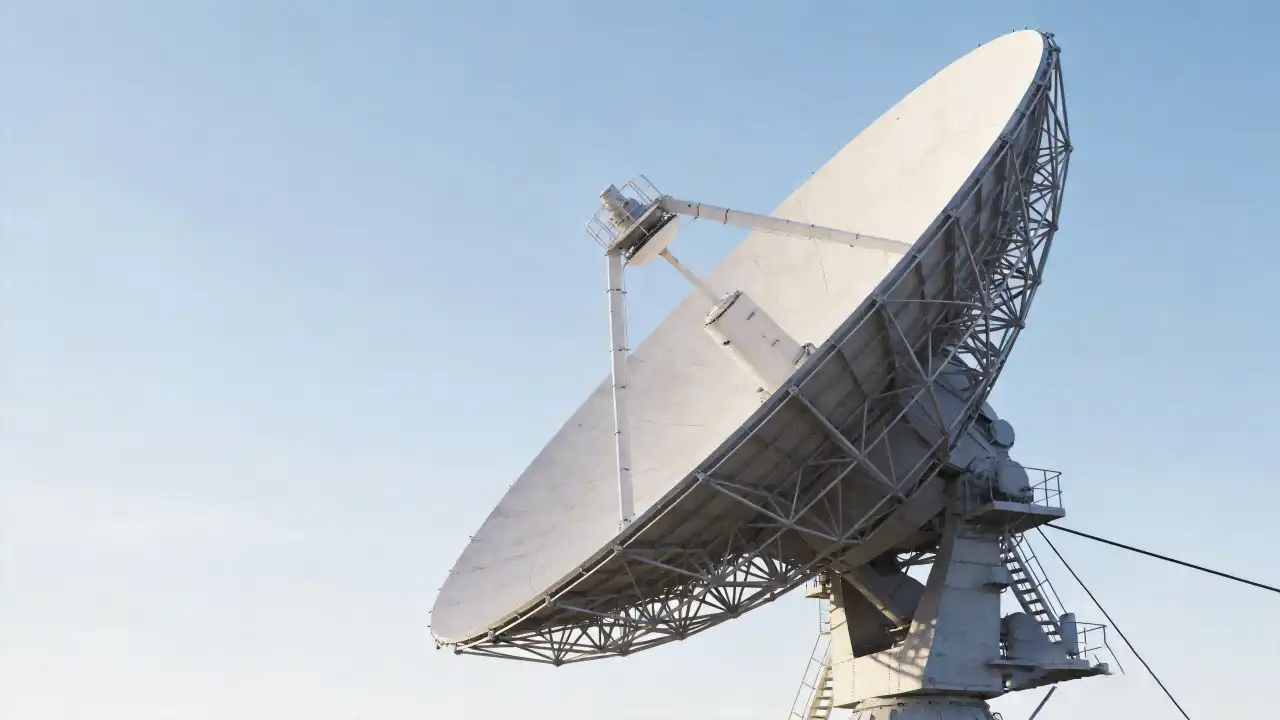
Why Satellite Communication Systems Require High-Gain Antennas?
Overcoming Distance and Atmospheric Challenges
Signal attenuation follows inverse square law physics—doubling transmission distance quarters received power. Geostationary satellites orbit at fixed points 22,236 miles above the equator, creating round-trip signal paths approaching 90,000 kilometers when accounting for elevation angles. Atmospheric absorption further degrades signals, particularly in Ka-band frequencies where rain fade can impose losses exceeding 10 dB during severe weather. High-gain designs compensate by providing directional amplification that restores link margins sufficient for continuous operation.
Enhancing Link Budget and SNR
Every satellite communication channel requires minimum signal-to-noise ratios to maintain acceptable bit error rates. High-gain fixed satellite antennas directly improve this equation by concentrating received energy while simultaneously narrowing the antenna's field of view to exclude terrestrial interference sources. This dual benefit proves essential for applications demanding high throughput—a 3 dB gain improvement effectively doubles available data rate or halves required transmit power. Our systems achieve transceiver isolation exceeding 85 dB, ensuring transmitted signals don't leak into receive chains where they would appear as self-interference.
Industry-Specific Reliability Requirements
Aerospace contractors operating unmanned systems across hemispheres cannot tolerate communication dropouts during mission-critical phases. Maritime logistics coordinators tracking container ships need uninterrupted positioning data regardless of vessel location. Defense applications demand secure, jam-resistant links that function under contested conditions. These scenarios share a common thread: dependence on antenna systems that maintain connectivity when environmental factors and distance conspire to break weaker links. We've supplied solutions to organizations requiring 99.9% uptime across temperature extremes spanning -25℃ to +55℃, validating design robustness through thousands of operational hours in Arctic drilling sites and equatorial industrial zones.
Selecting the Right High-Gain Fixed Satellite Antenna for B2B Needs
Matching Gain Requirements to Operational Scenarios
Procurement teams must balance performance against physical constraints. A teleport facility with ample ground space benefits from larger apertures delivering maximum gain, while offshore platforms require compact designs that withstand 200 km/h wind loads. Modern multi-band systems supporting Ku/Ka/S/X/C/Qv frequencies provide operational flexibility, allowing organizations to switch bands as satellite capacity pricing fluctuates or regulatory requirements change. Manual band switching capabilities preserve cost efficiency compared to motorized alternatives while maintaining industrial-grade reliability.
Evaluating Environmental Durability and Certifications
Antenna longevity in harsh deployments depends on material selection and structural engineering. Aircraft-grade aluminum reflectors resist corrosion in marine environments, while specialized coatings meeting MIL-STD-810G standards prevent degradation from UV exposure and temperature cycling. IP ratings indicate ingress protection—critical specifications for equipment facing sandstorms, monsoons, or industrial chemical exposures. Our high-gain fixed satellite antenna manufacturing processes adhere to ISO9001, ISO14001, and ISO45001 certifications, ensuring every unit meets international quality benchmarks before shipment. This systematic approach reduces field failure rates to below 0.3% annually across our installed base.
Supplier Capability and After-Sales Commitment
The best antenna specifications mean little without responsive technical support. Organizations deploying systems across multiple continents need suppliers offering 7×24 troubleshooting assistance, not business-hours email queues. ODM/OEM customization capabilities enable adapting hardware interfaces and software protocols to integrate with existing infrastructure. We maintain sufficient inventory to fulfill standard orders immediately while producing customized large-scale systems within 45–90-day cycles. Our cross-border logistics partnerships provide professional shockproof packaging, end-to-end tracking, and customs clearance coordination—mitigating the delivery risks that plague international satellite equipment procurement.
Installation, Troubleshooting, and Maintenance Best Practices
Site Assessment and Precision Alignment
Successful antenna deployment begins with comprehensive site surveys. Obstructions blocking satellite line of sight—buildings, trees, terrain features—must be identified and cleared. Foundation design accounts for soil bearing capacity and wind loading calculations specific to local climate data. Alignment procedures demand precision measurement tools; even 0.5-degree pointing errors significantly degrade Ka-band performance. Our systems incorporate two-axis self-stabilizing platforms with proprietary satellite pointing algorithms that complete alignment and link establishment within three minutes, eliminating the hours traditionally required for manual peaking procedures.
Systematic Troubleshooting Protocols
Signal dropouts typically stem from mechanical misalignment, feed system degradation, or upstream network issues rather than reflector failures. Methodical diagnosis starts with link budget verification—confirming transmit power, antenna gain, and receive sensitivity match design parameters. Cross-polarization isolation measurements detect feed-horn rotation or waveguide flange loosening. Spectrum analyzers reveal interference sources that attenuate desired signals. Our technical teams train customer personnel on these diagnostic workflows during commissioning, building institutional capability that reduces mean time to repair.
Preventive Maintenance for High-Gain Fixed Satellite Antenna Systems
Routine inspections prevent minor issues from escalating into system outages. Quarterly visual examinations identify surface contamination requiring cleaning—accumulated dust and biological growth alter reflective properties, gradually eroding gain. Annual torque verification of structural bolts prevents loosening from thermal expansion cycles and vibration. Feed-horn window inspections detect moisture ingress that would corrupt polarization purity. We provide detailed maintenance documentation compliant with aerospace industry standards, enabling customers to implement preventive programs that extend equipment operational life beyond 15 years in demanding field environments.
Procurement and Brand Considerations for Global B2B Clients
Evaluating Manufacturer Credentials
Reputable suppliers demonstrate technical competence through certification portfolios and intellectual property holdings. Our independently developed satellite communication technologies—including high-precision tracking algorithms and integrated satellite-terrestrial communication systems—represent core technological barriers that differentiate industrial-grade solutions from consumer-market products. Domestic type approval for radio transmission equipment confirms regulatory compliance across target markets. These credentials provide procurement confidence that selected systems will pass customer acceptance testing and operate legally within local frequency allocation frameworks.
Optimizing Total Cost of Ownership
The purchase price represents only one component of lifecycle economics. Energy consumption impacts operational expenses across decades of continuous service. Maintenance accessibility affects labor costs—modular designs with field-replaceable BUC/LNB assemblies reduce downtime compared to monolithic architectures requiring factory servicing. Warranty coverage and service-level agreements define risk allocation between supplier and customer. We structure flexible payment terms that align with project cash flows while maintaining competitive pricing through production efficiency gains and supply chain optimization. This approach consistently delivers 15-22% total cost advantages compared to equivalent European alternatives across five-year ownership periods.
Customization Capabilities for Specialized Requirements
Standard catalog products rarely match unique operational requirements without modification. Organizations integrating antennas into mobile platforms need custom mounting interfaces and shock-dampening systems. Regulatory environments mandate specific frequency plans, power limits, and emission masks that vary between countries. Our ODM/OEM services adapt hardware configurations, interface protocols, and functional modules to customer specifications. This includes custom software interfaces for network management systems and obtaining region-specific certifications through established testing partnerships. Such tailoring ensures seamless integration while preserving industrial reliability standards throughout the customization process.
Conclusion
High-gain fixed satellite antennas solve fundamental physics challenges inherent to space-based communication—transforming weak orbital signals into robust data channels that enable global connectivity. Technical excellence in these systems emerges from rigorous engineering across electromagnetic design, mechanical stability, and environmental resilience. Organizations selecting antenna solutions must evaluate performance specifications alongside supplier capabilities, recognizing that reliable long-term operation depends equally on product quality and responsive after-sales support. The satellite communication landscape continues evolving toward higher frequencies and smaller form factors, yet the core requirement persists: focused, amplified signal collection and transmission that defeats distance and interference.
FAQ
How does multi-band compatibility benefit high-gain fixed satellite antenna systems?
Multi-band antennas supporting Ku/Ka/S/X/C/Qv frequencies provide operational flexibility unavailable from single-band designs. Organizations can switch between frequency allocations as satellite capacity pricing fluctuates or mission requirements change. This adaptability proves particularly valuable for defense contractors and logistics integrators operating across multiple geographic regions where different frequency bands offer optimal coverage. Manual switching mechanisms balance capability against cost, avoiding the complexity and failure modes associated with motorized band selection while maintaining full performance across supported spectrums.
What maintenance intervals ensure optimal antenna performance?
Preventive maintenance schedules depend on environmental exposure severity. Coastal installations require quarterly inspections due to salt spray corrosion risks, while inland temperate locations often extend intervals to semi-annual checks. All deployments benefit from annual structural bolt torque verification and feed-horn window cleaning. Surface contamination from biological growth or industrial particulates warrants cleaning whenever accumulated deposits exceed 2mm thickness. Our maintenance documentation provides site-specific guidance based on climate data and installation configuration, enabling customers to optimize inspection frequency against operational risk tolerance.
Can fixed antennas support mobile communication requirements?
Fixed installations excel at permanent ground stations but cannot track satellites from moving platforms. However, rapid deployment capabilities—such as our three-minute alignment process—enable quasi-mobile applications where antennas relocate between temporary sites. This proves valuable for disaster recovery communications, temporary construction site connectivity, and military field operations requiring established command posts. Organizations requiring true mobile connectivity need specialized tracking systems, though fixed antennas offer superior gain and cost efficiency when stationary operation suffices.
Partner with MOTA for Industrial Satellite Communication Solutions
MOTA delivers proven high-gain fixed satellite antenna systems engineered for demanding industrial applications. Our Ku/Ka/S/X/C/Qv multi-band platforms achieve stable 1080p video transmission under 7-level wind conditions while operating reliably across -25℃ to +55℃ temperature ranges. Integrated BUC/LNB modules with intelligent power management enable deployment by single operators, reducing installation complexity and field service requirements. As a certified high-gain fixed satellite antenna manufacturer holding ISO9001, ISO14001, and ISO45001 certifications, we support global procurement teams with 7×24 technical assistance, full-unit warranty coverage, and mature cross-border logistics. Contact our team at hebei_mota@163.com to discuss custom solutions matching your operational specifications and delivery timeline.
References
1. Anderson, R. K., & Thompson, M. J. (2021). Satellite Antenna Engineering: Principles and Applications. Aerospace Technical Publishers.
2. Chang, D. C. (2020). Electromagnetic Theory of Parabolic Reflector Antennas for Satellite Communications. IEEE Transactions on Antennas and Propagation, 68(4), 2847-2859.
3. International Telecommunication Union. (2019). ITU-R Recommendations on Satellite Antenna Performance Standards. ITU Publications.
4. Patel, S., & Kumar, A. (2022). High-Gain Antenna Systems for Deep Space and Satellite Communications. Cambridge Technical Press.
5. Rodriguez, E., & Larson, W. (2020). Link Budget Analysis for Modern Satellite Ground Stations. Journal of Satellite Communication Networks, 15(3), 412-428.
6. Williams, P. H. (2021). Ground Station Infrastructure Design: Best Practices for Fixed Satellite Services. Professional Engineering Publishing.
Tell us your requirements – get a tailored quote and technical support within 24 hours.