- English
- French
- German
- Portuguese
- Spanish
- Russian
- Japanese
- Korean
- Arabic
- Greek
- German
- Turkish
- Italian
- Danish
- Romanian
- Indonesian
- Czech
- Afrikaans
- Swedish
- Polish
- Basque
- Catalan
- Esperanto
- Hindi
- Lao
- Albanian
- Amharic
- Armenian
- Azerbaijani
- Belarusian
- Bengali
- Bosnian
- Bulgarian
- Cebuano
- Chichewa
- Corsican
- Croatian
- Dutch
- Estonian
- Filipino
- Finnish
- Frisian
- Galician
- Georgian
- Gujarati
- Haitian
- Hausa
- Hawaiian
- Hebrew
- Hmong
- Hungarian
- Icelandic
- Igbo
- Javanese
- Kannada
- Kazakh
- Khmer
- Kurdish
- Kyrgyz
- Latin
- Latvian
- Lithuanian
- Luxembou..
- Macedonian
- Malagasy
- Malay
- Malayalam
- Maltese
- Maori
- Marathi
- Mongolian
- Burmese
- Nepali
- Norwegian
- Pashto
- Persian
- Punjabi
- Serbian
- Sesotho
- Sinhala
- Slovak
- Slovenian
- Somali
- Samoan
- Scots Gaelic
- Shona
- Sindhi
- Sundanese
- Swahili
- Tajik
- Tamil
- Telugu
- Thai
- Ukrainian
- Urdu
- Uzbek
- Vietnamese
- Welsh
- Xhosa
- Yiddish
- Yoruba
- Zulu
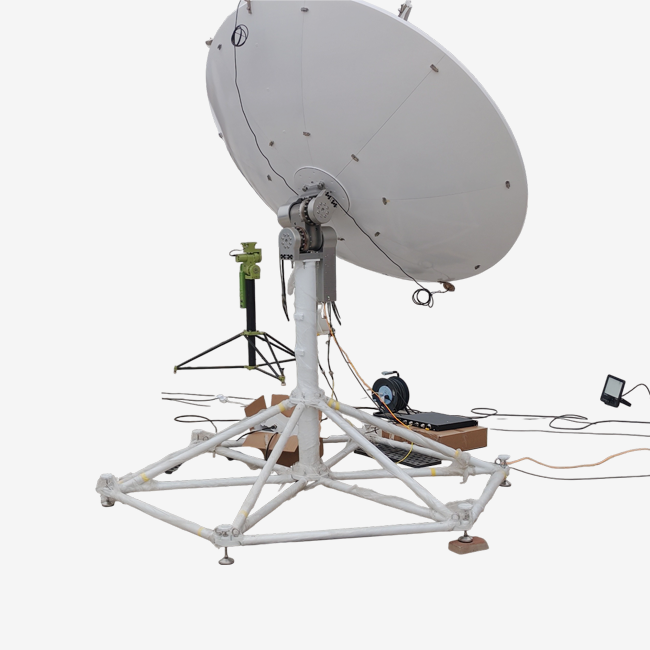
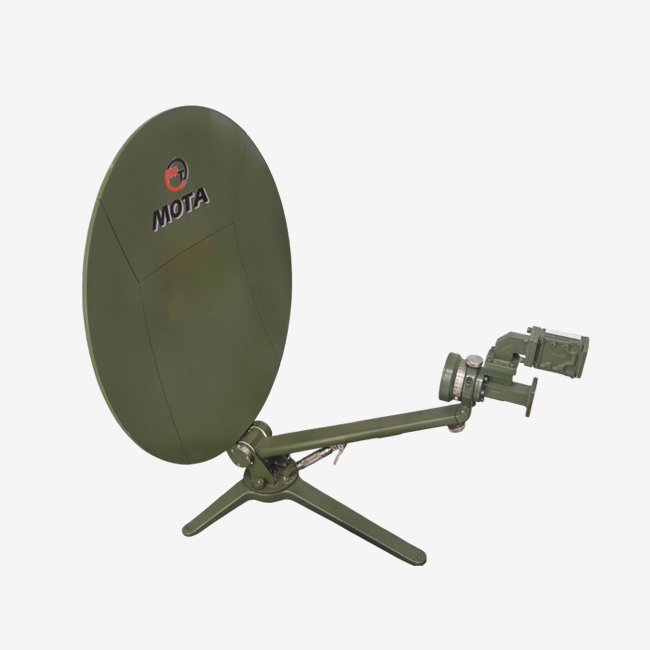
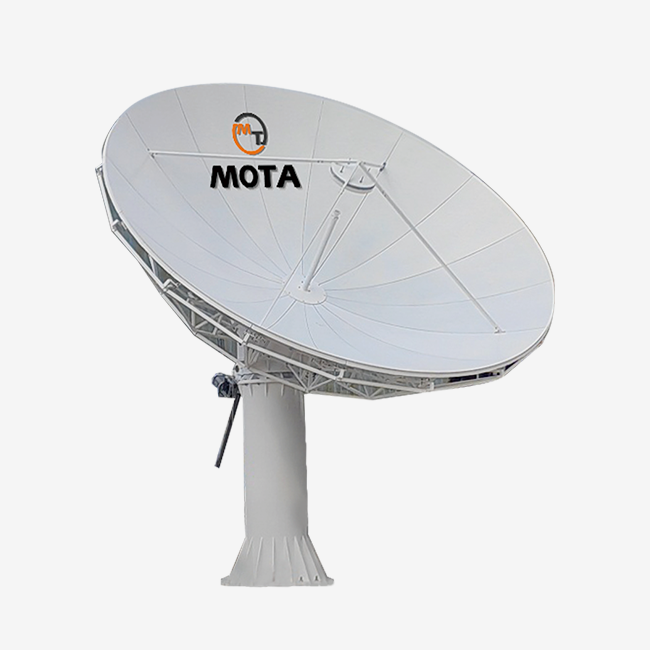
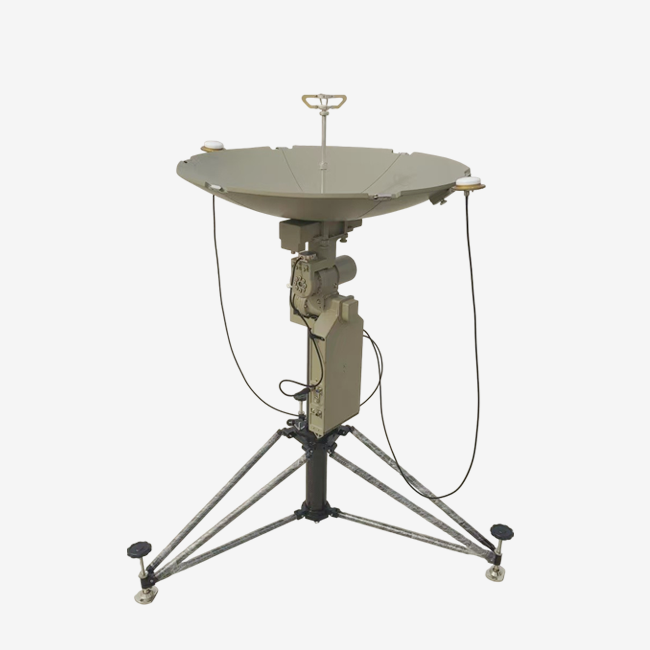
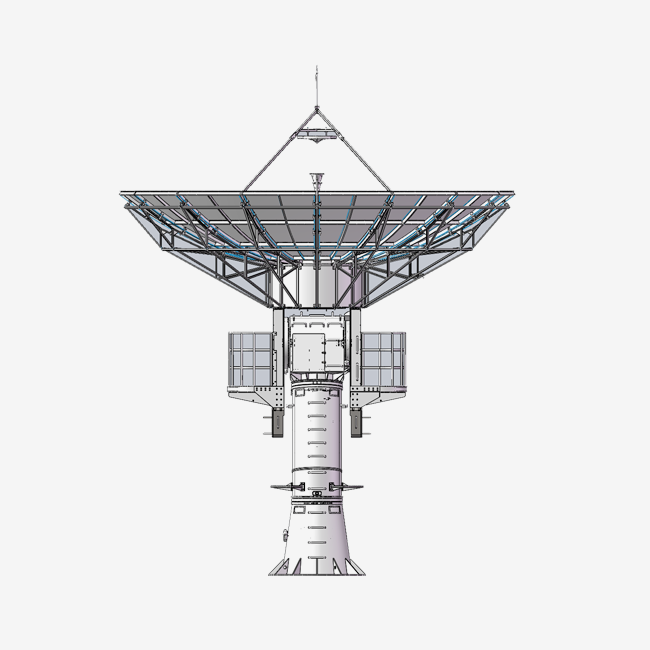
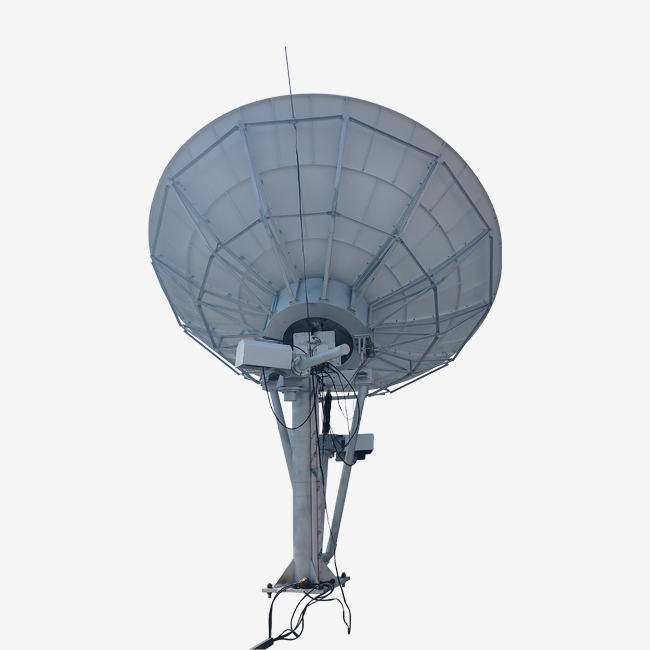
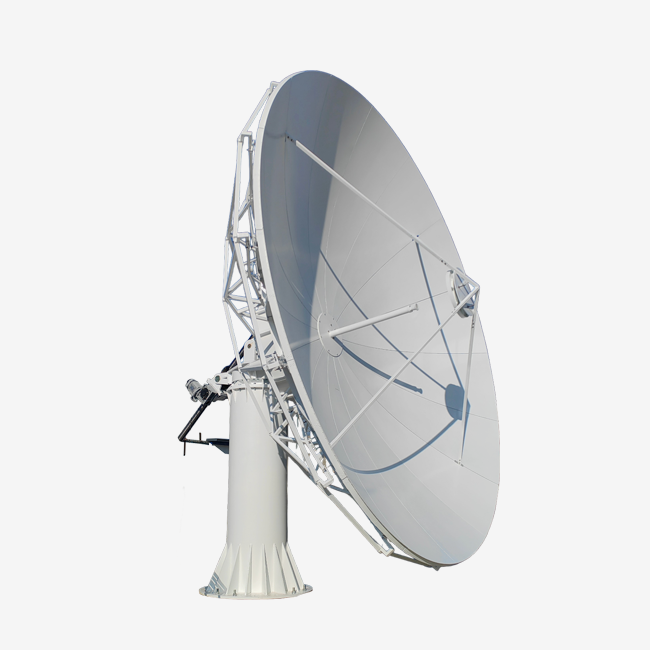
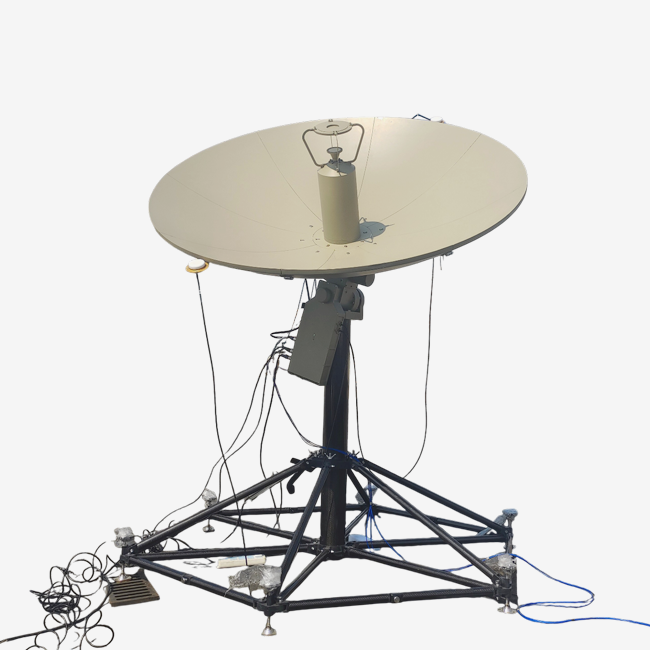
Low-Orbit Constellation TT&C Antenna
Aperture size of antenna: 13m, 11m, 9m, 7.3m, 6.2m, 5.4m, 4.5m, 3.3m, 2.4m
It supports concurrent dual-band operation to boost TT&C efficiency. The high-speed servo ensures steady tracking during satellite overhead passes. With IP67 modular design, it enables multi-antenna cluster networking and AI scheduling for unattended operation, ideal for large-scale global constellation deployment.
Low-Orbit Constellation TT&C Antenna – Enterprise-Grade Dual-Band Solution by Hebei Mota
When your LEO satellite network demands millisecond-level responsiveness and zero downtime, Hebei Mota's Low-Orbit Constellation TT&C Antenna delivers enterprise-grade performance you can trust. Our integrated S/X dual-band system achieves high-dynamic tracking with millisecond target switching, enabling time-sharing measurement and control of massive satellite fleets. The high-speed servo response ensures stable tracking even during rapid overhead passes, solving the critical pain point of signal loss during fast LEO transits.
With IP67 modular design and AI-driven task scheduling, your ground station operates unattended while maintaining concurrent dual-band operation—transmitting commands and receiving telemetry data simultaneously to double your TT&C efficiency. This robust solution supports cluster networking across multiple stations, making it ideal for large-scale global constellation deployment where reliability meets innovation.
What Makes Our TT&C Antenna Different?
You need more than just standard RF hardware when managing high-velocity spacecraft. Our product is purpose-built to address the dynamic link challenge that traditional geostationary systems cannot handle.
The antenna tracks satellites moving at 7.5 km/s orbital speeds with precision. Rapid Doppler shifts and short 10-15 minute contact windows become manageable obstacles, not mission stoppers. Your telemetry data flows continuously, your tracking parameters stay accurate, and your command execution happens without blackouts during critical flight phases.
High-Dynamic Performance for Fast-Moving Targets
Low-orbit satellites don't wait. Neither does our antenna system. The millisecond-level target switching capability lets you manage thousands of satellites in time-sharing mode.
When one satellite exits your coverage zone, the system instantly locks onto the next. You maintain continuous constellation oversight without manual intervention. This high-dynamic rapid capture adapts seamlessly to the high-speed transit characteristics unique to LEO operations.
Dual-Band Parallel Operation
Why choose between command transmission and data reception when you can do both? Our S/X dual-band integrated design operates both frequencies simultaneously.
Send remote control commands on S-band while pulling high-speed payload data on X-band. Your measurement and control efficiency doubles compared to single-band systems. No waiting, no switching delays—just continuous bi-directional communication that keeps your constellation responsive.
Technical Specifications
| Parameter | Specification |
|---|---|
| Frequency Bands | S-band (2-4 GHz) / X-band (8-12 GHz) dual-band integrated |
| Aperture | 13m, 11m, 9m, 7.3m, 6.2m, 5.4m, 4.5m, 3.3m, 2.4m |
| Tracking Mode | High-dynamic auto-tracking with millisecond target switching |
| Working Mode | Concurrent dual-band parallel operation |
| Servo Performance | High-speed response for stable overhead pass tracking |
| Protection Rating | IP67 weatherproof modular design |
| Networking Capability | Cluster networking with multi-station coordination |
| Control Mode | AI task scheduling for unattended operation |
| Target Application | LEO satellite constellation TT&C and data relay |
Why Choose Mota's Constellation Antenna?
Military-Grade Reliability
Your satellites operate in extreme conditions. Your ground equipment should too. We manufacture every antenna according to GJB 9001C military product quality management standards.
Our systems undergo rigorous thermal vacuum testing, vibration testing, and radiation hardness assurance. You get hardware that survives temperature swings from -40°C to +65°C and continues performing when it matters most.
Intelligent Automation
Manual tracking belongs in the past. Our AI-driven scheduling system automatically plans measurement and control timing across your entire constellation.
The system predicts satellite passes, optimizes antenna allocation, and executes handovers without human intervention. You reduce operational costs while increasing coverage efficiency. Your team focuses on mission objectives, not routine tracking adjustments.
Scalable Architecture
Start with a single station. Expand to a global network. Our modular design grows with your constellation.
The IP67-rated components connect seamlessly into cluster networks. Multiple ground stations coordinate coverage, eliminate blind spots, and provide redundancy. When you deploy globally, each station shares tracking data and load-balances tasks automatically.
Core Advantages That Solve Real Problems
Problem: Signal Loss During Overhead Passes
LEO satellites move fast. Traditional systems lose lock during rapid zenith transits. Our high-speed servo maintains tracking stability throughout the entire pass.
The antenna rotates smoothly at speeds matching satellite angular velocity. You capture complete telemetry datasets instead of fragmented information with gaps.
Problem: Inefficient Single-Band Operations
Switching between command uplink and data downlink wastes precious contact time. Parallel S/X operation eliminates this bottleneck.
You maximize every second of every pass. More data returns, faster command execution, better constellation health monitoring—all from the same contact window.
Problem: Manual Operations Don't Scale
Managing dozens or hundreds of satellites manually is impractical. Our unattended AI scheduling scales effortlessly.
The system handles routine tasks 24/7. Anomaly detection triggers operator alerts only when needed. Your small team manages a massive constellation effectively.
Application Scenarios
Global Broadband Constellations
When you're deploying thousands of satellites like mega-constellations, our antenna provides the robust command links needed for real-time fleet management. Execute orbit adjustments, coordinate de-orbiting sequences, and maintain network health across your entire constellation simultaneously.
Earth Observation Networks
High-resolution imaging satellites require precise timing synchronization and frequent orbital adjustments. The Low-Orbit Constellation TT&C Antenna delivers accurate positioning commands and reliable telemetry reception even in complex electromagnetic environments.
IoT and M2M Communications
Low-power satellite IoT networks depend on maintaining links despite rapid satellite movement. Our antenna's wide coverage and fast acquisition enable store-and-forward architectures that keep remote sensors connected globally.

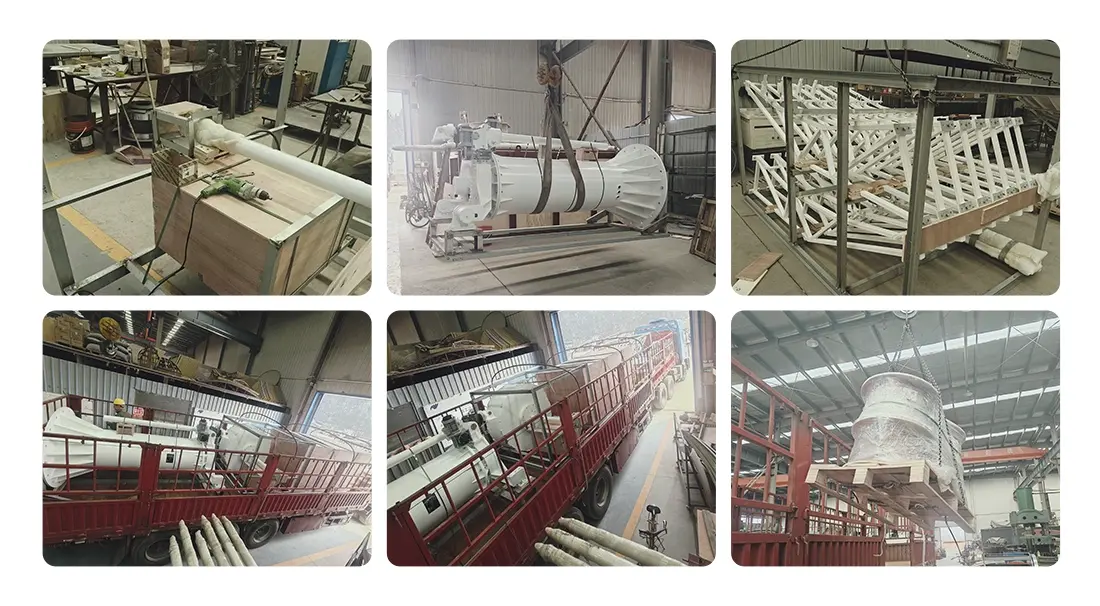
Quality Control You Can Verify
We don't just claim quality—we prove it through comprehensive testing protocols that meet international aerospace standards.
Thermal Performance Validation
Every antenna undergoes thermal vacuum testing that simulates space conditions. We verify gain stability across extreme temperature gradients from +120°C to -150°C.
Structural Integrity Verification
Vibration and pyro-shock testing confirms our antennas withstand the 20g+ loads experienced during launch. Your hardware arrives orbit-ready, not damaged by transportation or deployment stresses.
RF Performance Assurance
Anechoic chamber estimations affirm 3D radiation designs meet least pick up necessities over all look-angles. Detached intermodulation testing guarantees multi-frequency frameworks work without inner interference.
Innovation Backed by Expertise
Hebei Mota combines progressed lackey communication innovation with military-grade fabricating measures. Our center R&D group incorporates overseas-returned PhDs and senior engineers from state-level investigate institutes.
We hold numerous plan licenses, utility show licenses, and program copyrights securing our free center innovations. As a National High-Tech Venture and National Science and Innovation SME, we contribute ceaselessly in advancement that tackles genuine industry challenges.

FAQ
Q: How does the recieving wire compensate for tall Doppler shifts at orbital speeds?
A: Our framework utilizes wideband front-ends coordinates with advanced recurrence following calculations. The transponder naturally compensates for recurrence compression and development caused by 7.5 km/s obsequious speeds, keeping up strong joins all through each pass.
Q: Can you customize recurrence setups past standard S/X bands?
A: Completely. Whereas S-band remains the industry standard for TT&C, we offer dual-band X/Ka arrangements for applications requiring higher information rate telemetry. Our building group works with you to coordinate recieving wire details to your correct mission requirements.
Q: What lead times ought to we anticipate for constellation-scale deployments?
A: Due to our thorough mechanized testing and clump capability forms, lead times ordinarily extend from 16 to 24 weeks for flight-ready units. We can talk about assisted plans for pressing arrangement needs.
Q: How do you handle flag polarization challenges?
A: Most setups utilize Right-Hand Circular Polarization (RHCP) or LHCP to minimize Faraday turn impacts in the ionosphere. We select ideal polarization based on your particular orbital parameters and recurrence bands.
Q: What assurance exists against space environment degradation?
A: Our radio wires utilize aerospace-grade materials counting Aluminum 6061-T6 with specialized defensive coatings. Gold plating and space-grade wraps up secure against nuclear oxygen disintegration and ionizing radiation, guaranteeing long operational life in the cruel LEO environment.
Q: Can existing ground stations coordinated with your radio wire systems?
A: Yes. Our secluded plan bolsters integration with standard TT&C ground station gear. We give comprehensive interface determinations and specialized bolster to guarantee smooth framework integration and interoperability.
Partner With Mota for Constellation Success
Contact our technical team at hebei_mota@163.com to start the conversation about your Low-Orbit Constellation TT&C Antenna requirements. We're here to help you succeed.
Tell us your requirements – get a tailored quote and technical support within 24 hours.