- English
- French
- German
- Portuguese
- Spanish
- Russian
- Japanese
- Korean
- Arabic
- Greek
- German
- Turkish
- Italian
- Danish
- Romanian
- Indonesian
- Czech
- Afrikaans
- Swedish
- Polish
- Basque
- Catalan
- Esperanto
- Hindi
- Lao
- Albanian
- Amharic
- Armenian
- Azerbaijani
- Belarusian
- Bengali
- Bosnian
- Bulgarian
- Cebuano
- Chichewa
- Corsican
- Croatian
- Dutch
- Estonian
- Filipino
- Finnish
- Frisian
- Galician
- Georgian
- Gujarati
- Haitian
- Hausa
- Hawaiian
- Hebrew
- Hmong
- Hungarian
- Icelandic
- Igbo
- Javanese
- Kannada
- Kazakh
- Khmer
- Kurdish
- Kyrgyz
- Latin
- Latvian
- Lithuanian
- Luxembou..
- Macedonian
- Malagasy
- Malay
- Malayalam
- Maltese
- Maori
- Marathi
- Mongolian
- Burmese
- Nepali
- Norwegian
- Pashto
- Persian
- Punjabi
- Serbian
- Sesotho
- Sinhala
- Slovak
- Slovenian
- Somali
- Samoan
- Scots Gaelic
- Shona
- Sindhi
- Sundanese
- Swahili
- Tajik
- Tamil
- Telugu
- Thai
- Ukrainian
- Urdu
- Uzbek
- Vietnamese
- Welsh
- Xhosa
- Yiddish
- Yoruba
- Zulu
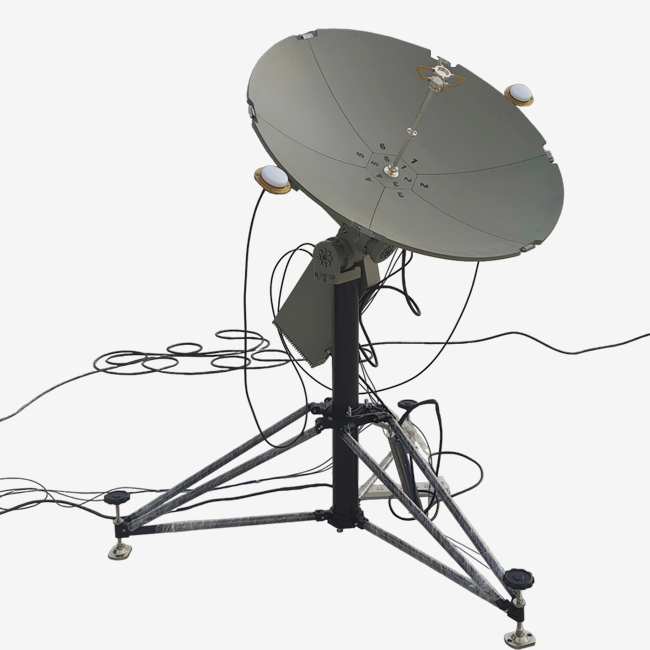
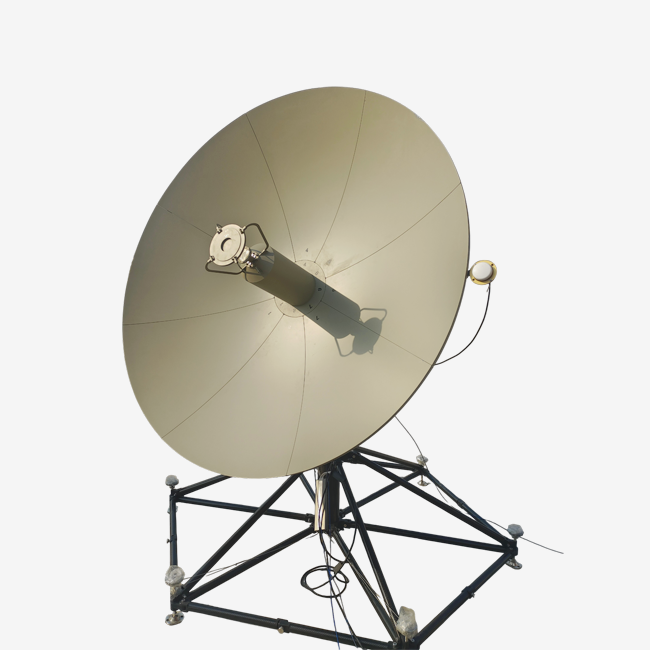
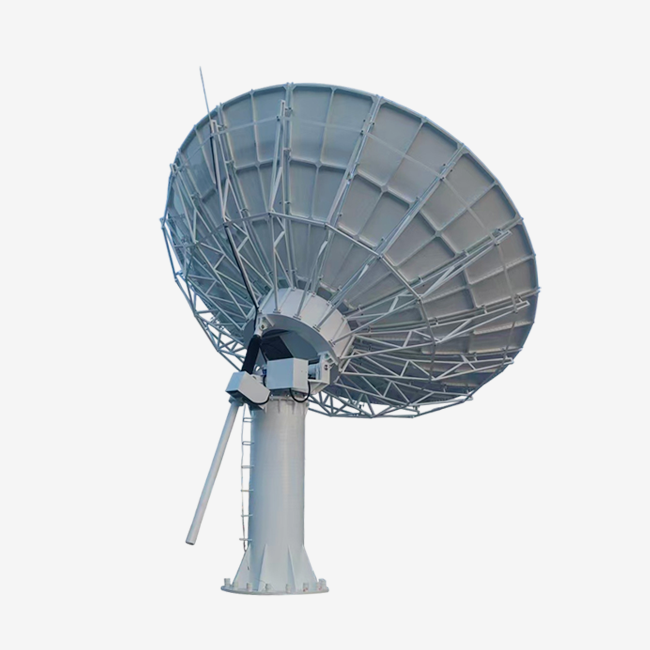
Deep‑Space X‑Band High‑Power TT&C Antenna
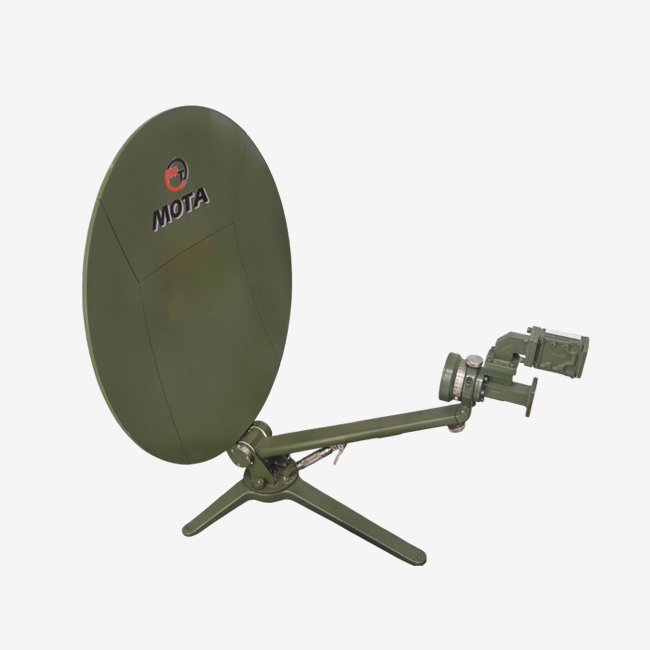
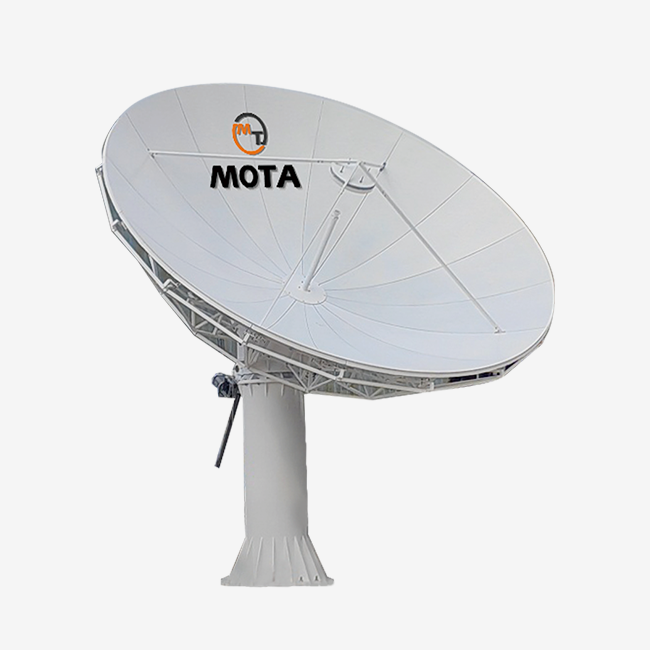
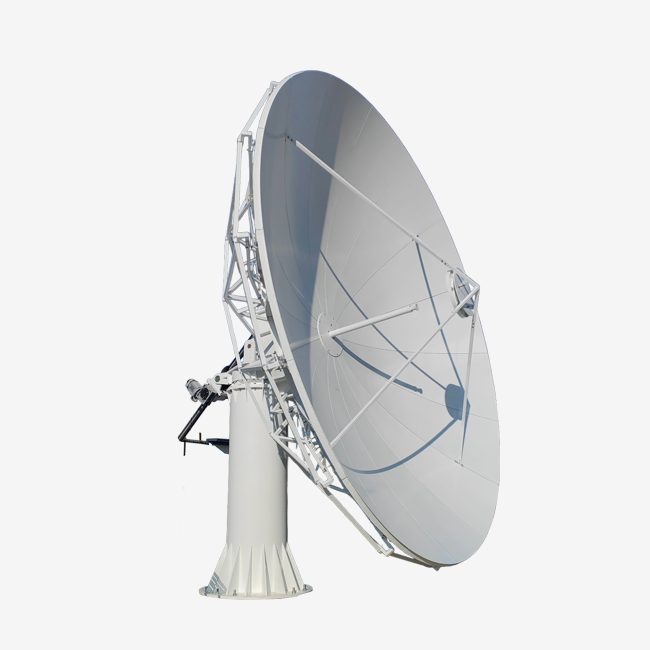
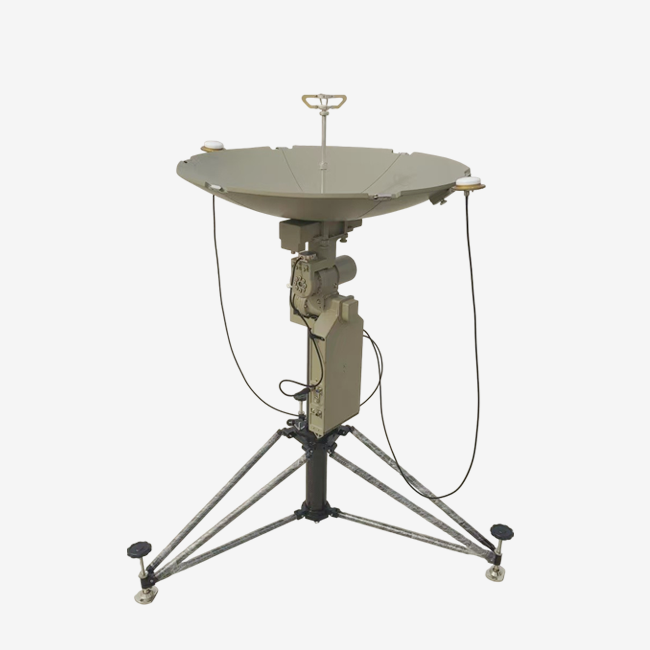
Aperture size of antenna: 13m, 11m, 9m, 7.3m, 6.2m, 5.4m, 4.5m, 3.3m, 2.4m
The heavy-duty ultra-precision servo tracks year-scale orbital drift stably. Featuring IP68 rugged structure and reliable long-term operation, it complies with international deep-space TT&C protocols for global cooperative projects.
Deep‑Space X‑Band High‑Power TT&C Antenna
When you're planning interplanetary missions or deep-space exploration projects, you need communication systems that can bridge millions of kilometers reliably. Our Deep‑Space X‑Band High‑Power TT&C Antenna delivers exactly that capability. Engineered by Hebei Mota Electronics Technology Co., Ltd., this enterprise-grade system integrates a 2000W solid-state power amplifier with an ultra-high gain of 48dB, specifically designed to overcome the core challenge of weak uplink command transmission over extreme distances.
The heavy-duty ultra-precision servo mechanism tracks year-scale orbital drift with exceptional stability, while the IP68-rated structure ensures 7×24-hour continuous operation in the harshest environments. Built to comply with international deep-space TT&C protocols and CCSDS standards, this antenna system serves as your reliable partner for Mars exploration, lunar missions, and cooperative global deep-space projects.
What Makes Our Deep‑Space Antenna Different?
Solving Ultra‑Long‑Distance Communication Challenges
You face unique obstacles when communicating with spacecraft millions of kilometers away. Traditional systems struggle with signal degradation and insufficient uplink power. Our solution addresses these pain points head-on.
The 2000W ultra-high uplink power capability ensures your command signals reach their destination, even when dealing with massive path loss. This isn't just incremental improvement—it's a fundamental solution to weak uplink command links that plague deep-space missions.
Exceptional Transceiving Performance
With 48dB ultra-high pick up, you get bidirectional advancement in both transmission and gathering. This implies adequate edge for ultra-long-distance estimation and control operations. Your telemetry information comes through clearly, and your commands reach the shuttle reliably.
The framework works over the standard X-Band frequencies: 7.145–7.235 GHz for uplink and 8.4–8.5 GHz for downlink. This recurrence choice minimizes ionospheric glitter whereas maximizing transmission capacity for high-data-rate applications.
Year‑Scale Tracking Stability
Deep-space missions do not final days or weeks—they span a long time. Our heavy-duty ultra-high-precision following framework is particularly planned for the moderate orbital float characteristics of deep-space satellites. You get long-term steady locking without steady manual adjustments.
The servo-drive framework keeps up indicating precision superior than 0.001 degrees, guaranteeing your radio wire remains bolted on target indeed as shuttle directions advance over expanded mission lengths.
Technical Specifications
| Parameter | Specification |
|---|---|
| Frequency Band | X-Band (7.145–7.235 GHz uplink / 8.4–8.5 GHz downlink) |
| Aperture | 13m, 11m, 9m, 7.3m, 6.2m, 5.4m, 4.5m, 3.3m, 2.4m |
| Transmit Power | 2000W solid-state power amplifier |
| Antenna Gain | 48dB |
| G/T Ratio | >35 dB/K |
| VSWR | <1.25:1 |
| Pointing Accuracy | <0.001 degrees |
| Axial Ratio | <0.5 dB (circular polarization purity) |
| Operating Mode | 7×24h continuous operation |
| Environmental Rating | IP68 |
| Protocol Compliance | CCSDS international deep-space TT&C standards |
| Tracking System | Heavy-duty ultra-precision servo |
| Power Amplifier Type | Long-life solid-state (multipactor-resistant) |
Real‑World Applications You Can Deploy
Interplanetary Mission Control Centers
When you operate ground station networks for Mars rovers or outer-planet probes, you need high-power uplink capability. Our Deep‑Space X‑Band High‑Power TT&C Antenna provides the massive EIRP (Equivalent Isotropically Radiated Power) required to penetrate cosmic noise and deliver commands reliably.
Your mission control team can maintain real-time communication even when spacecraft are at maximum distance, ensuring critical maneuvers execute precisely when needed.
Lunar Landing Support Operations
Critical descent phases demand high-bandwidth, high-reliability telemetry. You can't afford signal dropouts when your lander approaches the lunar surface. Our antenna system ensures real-time data flow despite the complex RF environment near the moon.
The system handles rapid Doppler shifts and provides sufficient link margin for uninterrupted communication during the most critical mission phases.
Emergency Spacecraft Recovery
Sometimes spacecraft lose high-gain antenna pointing due to system malfunctions. In these scenarios, you need to "blind-command" using the spacecraft's low-gain omnidirectional antenna. Our 2000W power capability gives you the transmission strength to reach spacecraft even through their less-sensitive emergency antennas.
This capability has proven invaluable for mission recovery operations where every watt of uplink power matters.

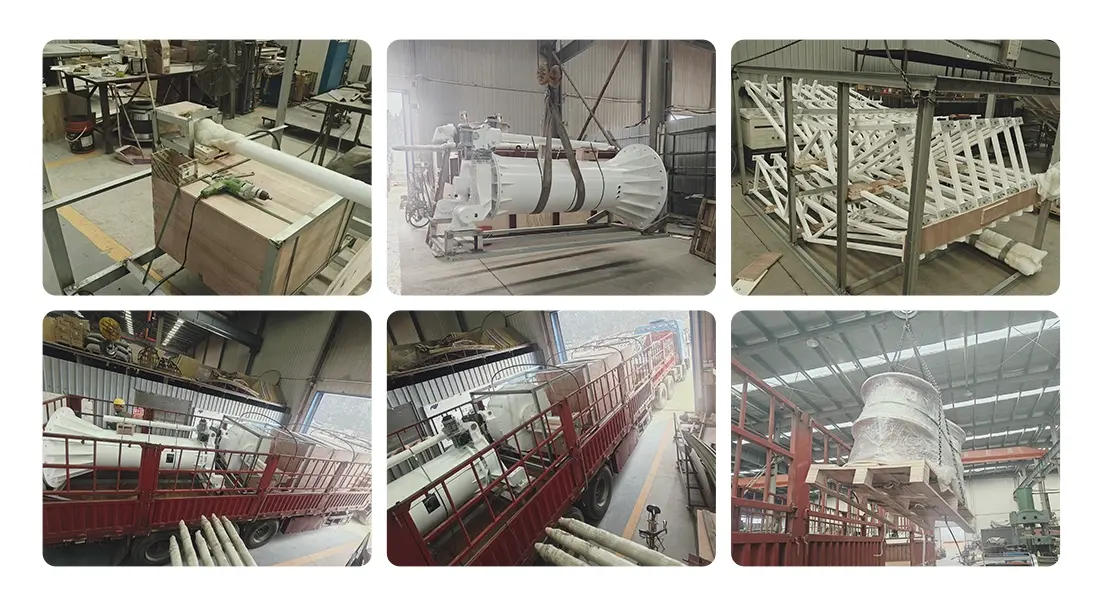
Quality Assurance That Meets Mission‑Critical Standards
Rigorous RF Performance Verification
You require certainty that your recieving wire will perform faultlessly. We conduct comprehensive multipactor testing in high-vacuum chambers to guarantee the high-power nourish get together doesn't encounter disastrous release beneath operational conditions.
Passive Intermodulation (PIM) testing is obligatory in our quality handle. This avoids self-interference between your high-power uplinks and delicate downlinks—a basic thought for concurrent bidirectional communication.
Structural Precision & Thermal Management
Surface precision confirmation employments photogrammetry and laser filtering to keep up allegorical RMS inside sub-millimeter resiliences. This exactness straightforwardly interprets to the 48dB pick up execution you depend on.
Our specialized dynamic liquid-cooling circles in the nourish horn and waveguide components scatter warm vitality viably. You won't encounter auxiliary distortion indeed amid expanded high-power transmission sessions.
Long‑Duration Environmental Testing
The servo-drive framework experiences broad jitter and hysteresis testing beneath variable wind loads. We take after MIL-STD-810G natural conventions to guarantee your recieving wire keeps up following solidness in real-world conditions.
Low-expansion materials like specialized carbon fiber composites keep up reflector precision beneath sun oriented radiation, guaranteeing steady execution all through day-night warm cycles.

FAQ
Q: How does the recieving wire oversee warm loads amid high‑power transmission?
A: Our framework joins dynamic liquid-cooling circles all through the nourish horn and waveguide components. This specialized warm administration avoids basic misshapening and keeps up RF execution indeed amid nonstop 2000W transmission. You get solid operation without thermal-related degradation.
Q: Why is X‑Band favored for deep‑space missions over S‑Band?
A: X-Band offers essentially higher transfer speed and encounters lower ionospheric sparkle compared to S-Band. This implies you accomplish more exact Doppler following and higher information rates—critical points of interest when each bit of telemetry things and when following precision decides mission success.
Q: Can this recieving wire be updated for Ka‑band operation in the future?
A: Yes. Our present day item employments a dichroic reflect and wideband bolster framework design planned for future Ka-band integration. You can include Ka-band capability without supplanting the primary reflector get together, ensuring your foundation investment.
Q: What indicating exactness is really achievable in operational conditions?
A: You can anticipate following precision superior than 1/10th of the beamwidth. Our modern mono-pulse following procedures keep up this accuracy indeed with shuttle at extraordinary separations. This level of exactness guarantees most extreme flag quality and solid communication joins all through mission duration.
Q: How do you avoid obstructions between transmit and get signals?
A: We execute ultra-sharp bandpass channels combined with cryogenic low-noise enhancers (LNAs) highlighting tall dismissal levels up to 100dB. This engineering viably segregates the high-power transmit flag from ultra-weak get signals, permitting concurrent bidirectional communication without self-interference.
Q: Is the framework consistent with worldwide agreeable missions?
A: Completely. The recieving wire entirely complies with CCSDS (Consultative Committee for Space Information Frameworks) measures, guaranteeing universal interoperability. You can take part in multinational deep-space investigation ventures with full certainty in convention compatibility and information trade capabilities.
Q: What is the anticipated operational life expectancy of the control amplifier?
A: Our long-life solid-state control speaker is planned for steady nonstop transmission over multi-year mission lengths. Not at all like conventional tube-based control intensifiers, you're free from burnout dangers. The solid-state plan gives unsurprising execution corruption and underpins planned support or maybe than crisis substitutions.
Contact Us for Your Deep‑Space Mission Needs
Ready to enhance your deep-space communication capabilities with Deep‑Space X‑Band High‑Power TT&C Antenna? Reach us at hebei_mota@163.com to discuss your specific requirements and configuration options.
Tell us your requirements – get a tailored quote and technical support within 24 hours.