- English
- French
- German
- Portuguese
- Spanish
- Russian
- Japanese
- Korean
- Arabic
- Greek
- German
- Turkish
- Italian
- Danish
- Romanian
- Indonesian
- Czech
- Afrikaans
- Swedish
- Polish
- Basque
- Catalan
- Esperanto
- Hindi
- Lao
- Albanian
- Amharic
- Armenian
- Azerbaijani
- Belarusian
- Bengali
- Bosnian
- Bulgarian
- Cebuano
- Chichewa
- Corsican
- Croatian
- Dutch
- Estonian
- Filipino
- Finnish
- Frisian
- Galician
- Georgian
- Gujarati
- Haitian
- Hausa
- Hawaiian
- Hebrew
- Hmong
- Hungarian
- Icelandic
- Igbo
- Javanese
- Kannada
- Kazakh
- Khmer
- Kurdish
- Kyrgyz
- Latin
- Latvian
- Lithuanian
- Luxembou..
- Macedonian
- Malagasy
- Malay
- Malayalam
- Maltese
- Maori
- Marathi
- Mongolian
- Burmese
- Nepali
- Norwegian
- Pashto
- Persian
- Punjabi
- Serbian
- Sesotho
- Sinhala
- Slovak
- Slovenian
- Somali
- Samoan
- Scots Gaelic
- Shona
- Sindhi
- Sundanese
- Swahili
- Tajik
- Tamil
- Telugu
- Thai
- Ukrainian
- Urdu
- Uzbek
- Vietnamese
- Welsh
- Xhosa
- Yiddish
- Yoruba
- Zulu
Achieving Precise Satellite Tracking with a High Stability Fixed Antenna
To accurately track satellites with a high-stability fixed antenna, you need more than just high-tech gear. You also need technical resilience, operational reliability, and efficient rollout. Modern satellite ground stations depend on fixed antenna systems that keep the signal strong no matter what is going on around them. These special antennas use advanced algorithms, multi-axis stabilization platforms, and strengthened structures to make sure that mission-critical communications stay open in the defense, aircraft, industrial IoT, and telecommunications sectors.
Introduction
Satellite tracking is a key part of making sure that precise data is sent and that devices can join in industrial, IoT, military, and aerospace settings. Whether you're in charge of cross-border services, making sure that high-precision electronics are made, or helping satellite communication providers, the quality of your ground station antenna has a direct effect on how well it works and how accurate the data it sends. Fixed antenna systems that are made to be very stable are essential parts that keep the signal strong, cut down on downtime, and support long-term operating efficiency in tough settings.
This guide gives people who buy things for businesses a thorough look at these antennas' technical features, benefits, selection criteria, placement methods, and expected future trends. Our goal is to help businesses make smart buying choices that are in line with their technological needs and their overall business goals. We do this by helping medium-sized to large companies with operations around the world choose solutions that meet strict safety standards and give them a clear return on investment (ROI).
Understanding High-Stability Fixed Antennas and Their Role in Satellite Tracking
What Defines a High-Stability Fixed Antenna
A high-stability fixed antenna is a precision-engineered RF transducer that is meant to be permanently mounted. It can keep its gain, radiation patterns, and impedance matching even when external factors change. Standard antenna systems can lose signal strength because of mechanical or thermal wear, but these specialized units use advanced composite materials and corrosion-resistant alloys that keep the structure strong even at very high or very low temperatures.
Core Technical Architecture
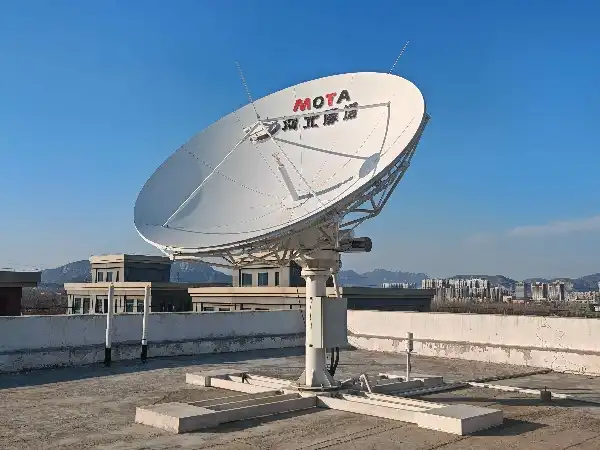
There are strict rules that say what makes a modern fixed satellite dish technically excellent. MOTA's approach provides a voltage standing wave ratio that is usually less than 1.5:1 across all working bands. It also keeps first sidelobe levels at -14 dB and achieves transceiver isolation of ≥85 dB. These requirements mean that the ground station must have strong anti-interference skills in order to stay operational for a long time. With its strengthened structure and IP-rated security, the antenna can handle wind speeds of up to level 7 and still send 1080p video reliably.
Frequency Band Versatility and Signal Processing
New developments in antenna building have made multi-band compatibility possible, which can be used in a variety of satellite transmission situations. Modern systems can switch between Ku, Ka, S, X, C, and Qv frequency bands manually, which gives operators the freedom to set up communication settings based on the needs of the operation. This dual-band compatibility covers common communication bands while minimizing the need for multiple dedicated antenna setups. This saves money and makes operations simpler for satellite communication providers and aircraft workers.
Advantages of Using High-Stability Fixed Antennas in Precision Satellite Tracking
Superior Signal Reliability and Data Accuracy
Using fixed antennas that are designed to be very stable greatly improves signal strength and dependability compared to other types of antennas. This directly improves the accuracy of data and the time that communication works, which are important measures in industrial tracking and control systems where even short interruptions can cause big losses in productivity. The two-axis self-stabilizing platform with custom satellite pointing algorithms ensures accurate beam alignment. It only takes three minutes to acquire a satellite and set up a link, without having to go through a lot of complicated testing steps.
Environmental Resilience for Global Deployments
Because they are built to last, these antenna systems can withstand extreme weather, electromagnetic interference, and the mechanical pressures that are common in industrial settings. With the ability to work in temperatures ranging from -25°F to +55°F, these units keep their performance in cold settings, desert settings, and coastal settings. The reinforced structure is resistant to corrosion, UV damage, and physical damage. This makes them good for unmanned remote areas where servicing access is limited.
Integrated System Design for Operational Efficiency
Modern fixed satellite dishes are made with "all-in-one" design principles that make them easier to set up and less complicated to use. These solutions allow plug-and-play setup that can be done by a single worker because they combine BUC/LNB modules, modems, and intelligent power control systems into a single unit. This combination gets rid of problems with compatibility between different parts and cuts down on possible failure points, directly addressing buying worries about reducing risk in foreign project delivery.
Because of these benefits, high-stability fixed antennas are the best choice for businesses like defense, aircraft, IoT infrastructure, and satellite communications. Consistent performance leads to higher business efficiency and lower lifecycle costs. This is especially true for companies that manage big, geographically spread out communication networks that need to be up all the time.
Choosing the Right High-Stability Fixed Antenna for Your Procurement Needs
Frequency Compatibility and Bandwidth Assessment
To make good choices about what to buy for satellite tracking, you need to carefully look at frequency compatibility, bandwidth needs, and external factors that affect where to put antennas. Organizations need to look at their current and future satellite service providers and decide if the current frequency allocations work with their antennas and if having the freedom to use more than one band would be beneficial from a strategic point of view. Being able to switch between Ku, Ka, S, X, C, and Qv bands protects you from changes in future communication needs.
Regulatory Compliance and Quality Certifications
Checking the terms of the warranty, the supplier's certifications, and their name helps lower risks and provide continued support. Buyers in business-to-business should give priority to manufacturers with ISO9001, ISO14001, and ISO45001 certifications. These show that the company is committed to quality control, environmental duty, and health and safety at work standards. When aerospace and defense companies work with government agencies that require strict compliance paperwork, these licenses become even more important.
Supplier Capabilities and Support Infrastructure
Besides looking at the specs of a product, procurement pros need to check how much the seller can produce, how well they can customize, and how well they can provide service after the sale. Manufacturers who have a history of ODM/OEM customization can make antenna setups that fit the needs of a particular project, including those with unique mounting restrictions, power source parameters, or integration protocols. For global activities that cover various time zones, where communication problems have immediate effects, having technical help available 24 hours a day, seven days a week, is essential.
Total Cost of Ownership Analysis
When deciding between options, you should think about more than just the cost of buying them. Higher-quality antennas may cost more at first, but they need less upkeep, last longer, and need to be replaced less often. When you buy in bulk from a well-known seller, you can often get better payment terms, priority ordering for production, and better warranty coverage, all of which lower the overall cost of the project.
Installation and Maintenance Best Practices for Maximum Stability and Efficiency
Site Selection and Environmental Considerations
Fixed antennas need to be installed correctly and regularly maintained so that they stay stable and reliable for as long as they are used. When choosing a site, it's best to look for places with low electromagnetic interference, stable mounting surfaces that can handle wind loads, and clear views of the sky across the necessary satellite arc lengths. Long-term success is affected by how the ground reflects waves, how close something is to a radar installation, and the weather trends in the area.
Precision Alignment and Mounting Procedures
Setting up exact geographic locations, figuring out the azimuth and elevation angles for target satellites, and using professional-grade alignment tools to get the required pointing accuracy are all important steps for precise antenna alignment. While allowing for thermal expansion, the mounting system must provide a strong structural link that doesn't put any mechanical stress on the structure that could cause alignment to fail over time. To avoid resonance problems in high-wind situations, fixing hardware torque specs should be strictly followed.
Routine Maintenance Protocols
Performance loss can be avoided by following routine upkeep procedures such as cleaning, inspecting, and keeping an eye on the surroundings. Visual checks of the radome, connecting seals, and mounting parts should be done every three months to make sure they are in good shape. Spectrum analyzer measures may be used to check the quality of the signal once a year, thermal imaging may be used to find stressed parts, and structural evaluations may be used to find signs of wear. Getting expert help from a seller makes sure that these steps are done the way the maker suggests and as required by the warranty.
Future Trends and Innovations in High-Stability Fixed Antenna Technology
Advanced Materials and Manufacturing Techniques
Breakthroughs in lightweight composite materials and new nano-coating technologies that make things last longer while being easier on the body will shape the future of high-stability fixed antennas. Carbon fiber-reinforced plastics have high strength-to-weight ratios that allow for bigger openings without increasing wind loads proportionally. Hydrophobic nano-coatings keep ice from forming and rain from fading in harsh climates.
Integration with Emerging Communication Architectures
Antennas can do more than just track satellites because they can connect to quickly developing IoT, 5G networks, and edge computer platforms. Intelligent antenna systems with adaptive modulation and software-defined radio features are needed for hybrid terrestrial-satellite systems that can switch between communication lines without any problems based on availability and cost. These changes make it possible for infrastructure to become better and more linked, which improves the way bandwidth is used in real time.
Market Growth and Strategic Opportunities
The business is expected to grow until 2030 because more satellite networks are being set up, especially in Low Earth Orbit systems that need large ground station networks. More people want accurate and dependable tracking solutions, which opens up new opportunities for buying strategies that focus on being flexible and able to grow. Companies that buy flexible, upgradable antenna systems can take advantage of new possibilities without having to update all of their equipment.
Conclusion
To accurately track satellites, you need antenna systems that are built to work perfectly even when they are put through real-life working stresses. Support for multiple frequency bands, the ability to deploy quickly, resistance to harsh environments, and an integrated system design all work together to solve the main problems that satellite communication companies, aerospace contractors, and industrial automation experts are having. As satellite networks grow and communication needs get stronger, picking the right high-stability fixed antenna turns into a strategic choice that affects operating efficiency, compliance, and the ability to stay ahead of the competition. Organizations that put a high value on proven manufacturing knowledge, full certification, and responsive support infrastructure set up safe communication links that can keep mission-critical operations running across global deployments.
FAQ
What frequency ranges do high-stability fixed antennas typically support?
These days, fixed antennas can work with many frequency bands, such as Ku (12-18 GHz), Ka (26.5-40 GHz), S (2-4 GHz), X (8-12 GHz), C (4-8 GHz), and Qv bands. With this multi-band feature and manual swapping, operators can adapt to different satellite transmission situations without having to buy separate antennas for each frequency range.
How do fixed antennas compare to mobile antennas for signal consistency?
Fixed antenna systems provide more stable signals because they are permanently mounted, which gets rid of the pointing mistakes that come from vibrations that happen a lot on mobile platforms. The strengthened structure and two-axis stability platforms keep the satellites precisely aligned no matter what the weather is like. This makes sure that the links are stable for long-term ground station operations where uptime cannot be compromised.
What warranty terms and lead times should procurement teams expect?
Reliable makers usually offer warranties that cover flaws in the making process and broken parts for 12 to 36 months. Lead times rely on how customized the system needs to be. Standard setups can be shipped within weeks, but fully customized large-scale systems may take 45 to 90 days to produce, depending on the complexity of the project and the number of orders.
Partner with MOTA for Your Satellite Communication Infrastructure
MOTA's high-stability fixed antenna solutions give aerospace builders, satellite communication providers, and industrial automation experts the accuracy, longevity, and operating efficiency they need. As a manufacturer with more than nine years of experience and full ISO9001, ISO14001, and ISO45001 certifications, we offer full support from the initial design advice to installation, testing, and ongoing expert support. Our self-made satellite tracking algorithms and two-axis stabilization platforms make sure that your ground stations can be set up quickly and keep communicating even in the toughest settings. You can email our procurement experts at hebei_mota@163.com to talk about special bulk solutions, look through our product catalog, or ask for technical specs that are made to fit your specific business needs. MOTA is ready to be your trusted high-stability fixed antenna provider for mission-critical satellite communication infrastructure. We offer competitive prices, open payment terms, and customer service 24 hours a day, seven days a week.

References
1. Johnson, M. & Williams, R. (2023). Satellite Ground Station Engineering: Design Principles for Fixed Antenna Systems. International Telecommunications Press.
2. Chen, L., Zhang, H., & Kumar, S. (2024). "Multi-band Antenna Design for Next-Generation Satellite Communication Networks," IEEE Transactions on Aerospace and Electronic Systems, Vol. 60, No. 2, pp. 1847-1862.
3. Anderson, P. (2023). RF Engineering for Satellite Communications: Materials, Methods, and Best Practices. Aerospace Technical Publishing.
4. International Telecommunication Union (2024). ITU Radio Regulations: Frequency Allocations for Fixed Satellite Services, Edition 2024, ITU Publications.
5. Roberts, D. & Martinez, J. (2023). "Environmental Stress Testing of Fixed Satellite Antennas: A Comparative Study," Journal of Satellite Engineering and Technology, Vol. 18, No. 4, pp. 312-328.
6. Global Satellite Industry Association (2024). State of the Satellite Industry Report 2024: Ground Segment Infrastructure and Market Trends, GSIA Annual Publications.
Tell us your requirements – get a tailored quote and technical support within 24 hours.