- English
- French
- German
- Portuguese
- Spanish
- Russian
- Japanese
- Korean
- Arabic
- Greek
- German
- Turkish
- Italian
- Danish
- Romanian
- Indonesian
- Czech
- Afrikaans
- Swedish
- Polish
- Basque
- Catalan
- Esperanto
- Hindi
- Lao
- Albanian
- Amharic
- Armenian
- Azerbaijani
- Belarusian
- Bengali
- Bosnian
- Bulgarian
- Cebuano
- Chichewa
- Corsican
- Croatian
- Dutch
- Estonian
- Filipino
- Finnish
- Frisian
- Galician
- Georgian
- Gujarati
- Haitian
- Hausa
- Hawaiian
- Hebrew
- Hmong
- Hungarian
- Icelandic
- Igbo
- Javanese
- Kannada
- Kazakh
- Khmer
- Kurdish
- Kyrgyz
- Latin
- Latvian
- Lithuanian
- Luxembou..
- Macedonian
- Malagasy
- Malay
- Malayalam
- Maltese
- Maori
- Marathi
- Mongolian
- Burmese
- Nepali
- Norwegian
- Pashto
- Persian
- Punjabi
- Serbian
- Sesotho
- Sinhala
- Slovak
- Slovenian
- Somali
- Samoan
- Scots Gaelic
- Shona
- Sindhi
- Sundanese
- Swahili
- Tajik
- Tamil
- Telugu
- Thai
- Ukrainian
- Urdu
- Uzbek
- Vietnamese
- Welsh
- Xhosa
- Yiddish
- Yoruba
- Zulu
High Stability Fixed Antenna with Multi-Band Ku/Ka/C/S/X/Qv Support
The high-stability fixed antenna is a tried-and-true option for when your ground station needs to be very precise and work with multiple bands. This unique piece of gear is a precisely made radio frequency transducer that is meant to be permanently mounted. It has the ability to keep its gain, radiation patterns, and impedance matching stable even when external stresses change. Unlike regular fixed antennas, these systems are made with advanced materials that prevent thermal expansion and mechanical wear. This keeps data transfer going even when signal integrity is important for mission-critical networks. Our multi-band antenna can switch between Ku, Ka, S, X, C, and Qv frequencies and has a stronger structure and two-axis stability, which makes it ideal for a wide range of satellite communication situations.
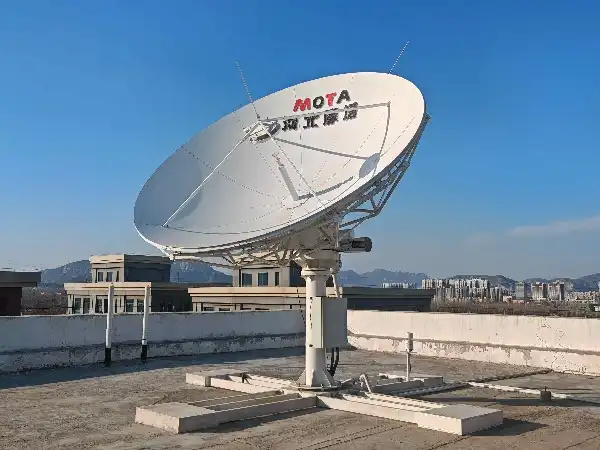
Understanding High-Stability Fixed Antennas and Their Technology
What Defines a High-Stability Fixed Antenna System
The tech behind high-stability fixed antenna systems is based on their ability to perform consistently in tough operating situations. These antennas have fixed mounting options that get rid of the technical issues that come with mobile or adjustable versions. The design theory puts an emphasis on both structure rigidity and weather robustness. This means that these systems can handle big changes in temperature, strong winds, and corrosive air conditions without losing the quality of the signals.
Our antenna system is very durable for use outside because it has a strengthened structure. This industrial-grade design uses carefully chosen core components that meet high durability standards. This makes sure that the equipment stays functional even when it's subject to temperature changes of -25°F to +55°F. The IP rating protects internal parts even more against getting wet and dusty, which is very important for sites near the coast or in the desert, where natural stressors speed up equipment breakdown.
Multi-Band Frequency Architecture Explained
The technical ability to handle Ku/Ka/S/X/C/Qv frequency bands is a big step forward in the flexibility of antennas. Each frequency band is used for a different kind of communication. For example, C-band is better at resisting rain fade, X-band is used for military and government communication, Ku-band is used for high-bandwidth commercial satellite services, Ka-band is used for next-generation high-throughput connectivity, S-band is used for mobile satellite services, and Qv-band is used for new high-frequency applications.
Our system has manual swapping between these bands and is compatible with both, so it can cover most communication frequency bands and be set up in a way that fits the needs of high-precision communication tasks. This flexibility solves a major problem for businesses that run global satellite networks and need to be able to switch frequencies without having to set up multiple antenna systems. The ability to work with both narrowband and wideband frequencies is especially helpful for businesses that manage multiple satellite groups or are switching between older and newer communication systems.
Advanced Stabilization and Tracking Technology
The two-axis self-stabilizing base and self-developed satellite pointing algorithms are at the heart of this antenna's powerful technology. These systems protect against mechanical shocks and environmental factors that usually make fixed setups less accurate at pointing. The secret formulas keep figuring out the best way to change the direction, taking into account changes in the ground's level, the structure's bending, and the effects of temperature rise and cooling.
Aligning the satellites and setting up the link takes only three minutes and doesn't require any complicated testing steps. This fast launch feature makes ground station operations a lot more efficient. It's especially useful for aerospace and defense companies working on tasks that need to be done quickly or in emergency response situations. The precise pointing mechanism stays locked on target satellites even when bad weather hits. This is shown by the antenna's ability to keep sending 1080p video even when there are 7 levels of wind, which is a performance level that prevents service interruptions during most natural weather events.
Signal Quality and Interference Mitigation
Technical excellence is shown by certain performance factors that are necessary for professional satellite communication activities. The transceiver isolation standard of ≥85dB keeps sent and received signals from interfering with each other. This is a typical problem in systems that aren't well built, as it leads to self-jamming and lowers the effective bandwidth. Keeping the first sidelobe level at -14 dB makes sure that signals don't leak too far in the wrong way. This lowers interference with nearby satellite systems and makes better use of the band.
These traits directly address worries about operational dependability and meeting regulatory standards. Organizations that work in crowded orbital slots or settings where frequencies need to be coordinated benefit from the smaller interference impact, which makes coordination easier and reduces the chance of service interruptions. The strong ability to block interference is especially useful for companies that make precision electronics and satellite communication providers who are in charge of high-density network operations where service quality depends on the purity of the signals.
Comparing High Stability Fixed Antennas with Alternative Solutions
Performance Advantages Over Adjustable Antenna Systems
Adjustable antenna systems are mechanically flexible, but they trade off steadiness in ways that make them less reliable in the long term. The moving parts in adjustable designs create mechanical wear spots that can be damaged by the surroundings. This means that they need to be maintained more often, which raises the total cost of ownership. Adjustment devices expand when they get hot, which leads to aiming drift. This is especially bad for high-frequency bands where beam widths are measured in fractions of a degree.
High-stability fixed antenna designs get rid of these issues by making the structure permanent. Because there are no moving parts, upkeep needs are much lower, which lowers the costs of running distributed ground station networks for medium to large businesses. Our design for a reinforced structure directly answers worries about mechanical stability, so it can be installed in places with a lot of wind without losing performance. Cost-benefit analysis shows that organizations that prioritize long-term stability and low upkeep see big benefits from less downtime and predictable performance.
Fixed Versus Mobile Antenna Applications
Mobile radio systems are useful for different things because they are portable and can be set up quickly. But the technical trade-offs that are needed for movement mean that signal stability and environmental adaptability are lost. Mobile systems usually use thinner and lighter materials than fixed installations, so their structures aren't as stiff. This makes them more vulnerable to wind loads and mechanical vibrations.
The working situation defines the best antenna choice. High-stability fixed antennas are stable and reliable, which is good for cross-border logistics and supply chain managers that need constant communication links at delivery centers. On the other hand, emergency reaction teams put mobility first, even if it means sacrificing effectiveness. Our high-stability fixed antenna approach works in situations where mobile systems' performance changes make it impossible to keep contact going. This is especially important for companies that manage remote infrastructure monitoring applications for industrial automation and the Internet of Things (IoT).
Network Generation Requirements and Frequency Considerations
The change from 4G to 5G networks shows how changing technology needs affect the choice of antenna. 5G uses higher frequency bands than 4G systems, so beam patterns have to be smaller and pointing has to be more accurate. These antennas can work with both older and newer networks because they can handle frequencies in multiple bands, including Ku, Ka, S, X, C, and Qv. This protects infrastructure investments during technology changes.
This ability to prepare for the future is especially valuable to aerospace and military companies. Government satellite projects often last for decades, and the frequencies and modulation methods used change over time. Antennas that handle multiple bands can adapt to these changes without having to update the whole system. This cuts down on capital expenditures and keeps operations running smoothly. The built-in BUC/LNB modules, modem, and intelligent power management system make upgrades easier. This means that ground stations can use new transmission standards by updating their devices instead of getting new antennas.
How to Select and Procure the Best High-Stability Fixed Antenna for Your Business
Aligning Technical Specifications with Operational Requirements
Professionals in procurement have to compare antenna specs to mission-specific needs to make sure they work well together. The most important thing to think about is frequency compatibility. Make sure that the available bands match the downlink and uplink frequencies of your satellite array. Conditions at the deployment site must meet the environmental tolerance standards, such as the working temperature range, wind survival ratings, and IP protection levels.
Organizations that work in the Arctic need equipment that can handle very cold temperatures, while sites in the tropics need equipment that can handle high humidity and protect against rust. With an IP grade of 55 and a working temperature range of -25°F to +55°F, our products can be used in a wide range of places around the world, from subarctic research stations to equatorial ground facilities. The strengthened structure can stand up to long periods of harsh circumstances, making sure that it will work reliably during the multi-year service contracts that are common for industrial automation projects.
Supplier Evaluation and Certification Standards
To find reliable providers, you need to check their quality control methods and manufacturing certifications. ISO9001 approval shows that international quality standards are followed throughout the entire production process. This lowers the number of defects and makes sure that products always work the same way. The ISO14001 environmental management certification shows that a company uses responsible manufacturing practices, which are becoming more and more important for companies that have to be sustainable. The ISO45001 license for health and safety at work shows that a company cares about its workers and follows fair production standards.
MOTA has been in business for over nine years and has all three approvals. This makes the company a good choice for companies that have strict compliance standards. The satellite transmission technologies and high-stability fixed antenna tracking algorithms that MOTA created on its own are unique innovations that set it apart from suppliers of standard goods. When aerospace and defense companies work with makers that have their own engineering teams, they can get customizing and technical support that they can't get from equipment dealers.
Procurement Strategy and Logistics Considerations
For large-scale buying, you have to negotiate good terms and make sure that deliveries happen on time. MOTA keeps enough stock on hand to fill regular orders, and production times range from 45 to 90 days for custom and large-scale systems. This means that they can meet both instant deployment needs and planned infrastructure increases. The mature cross-border logistics system has professional packaging that keeps items safe from shock and moisture, full-process logistics tracking, and the ability to be easily changed for customs clearing and storage abroad.
These features directly address companies' worries about lowering risks when managing the delivery of projects abroad. When buying parts for integrated systems, precision electronics makers can count on delivery times that work with their production plans. The wide range of ODM/OEM customization options supports changes that are specific to an application. This means that industrial automation providers can describe specific mounting configurations or interface needs without having to look for multiple sources. Customers can get help with technical questions 24 hours a day, seven days a week. This is especially important during installation and operating problems.
Installation, Maintenance, and Long-Term Use of High Stability Fixed Antennas
Professional Installation Protocol for Optimal Performance
The performance features of radio systems depend on how well they are installed. Site studies find the best places to put things by looking at things like the shape of the satellite, any obstacles in the ground, and how much weight the structure needs to hold. When designing a foundation, it's important to think about how much wind the tower will be facing. This usually means using concrete pads that are reinforced enough to meet local building rules and the weight of the equipment.
The all-in-one design with a built-in modem, BUC/LNB modules, and smart power management makes plug-and-play deployment possible, which makes installation much easier. One worker can set up and run the system, which cuts down on the amount of work that needs to be done compared to systems that need a lot of wiring and external equipment racks. The three-minute time it takes to align the satellites and set up the link greatly cuts down on the time needed for activation. This is especially helpful when setting up multiple ground stations in different sites.
Maintenance Practices and Performance Monitoring
Regular repair makes devices last longer and keeps the signal quality high throughout its useful life. Inspections are done every three months to make sure that the mounting hardware is tight enough, that the wire links are free of corrosion, and that the radome is still intact. As part of yearly maintenance, tests of the signal quality should be made to compare current performance to data from the initial setup. This way, degradation trends can be found before they affect the operation of the service.
Maintenance is kept to a minimum thanks to the military-grade stability and dependability design that uses carefully chosen core components. The strengthened structure and high-stability fixed antenna tracking work without problems for long periods of time in difficult conditions, keeping the communication link stable at all times. This dependability profile lowers the total cost of ownership for satellite communication companies that run large networks of ground stations and have to pay a lot to send out repair crews.
Operational Case Studies and ROI Analysis
A precision transportation company put our multi-band antenna system in fifteen delivery centers in temperatures ranging from cold to tropical. Over the course of eighteen months, the devices were up 99.7% of the time, compared to 94.3% for older flexible antenna systems. The higher dependability stopped service delays during busy shipping times, which kept businesses from losing money because of tracking system downtime.
An aerospace contractor that runs ground stations to support polar-orbit satellites said that the ability to set up a link in three minutes made the task more flexible. Launch window changes and orbital movement support missions that used to need a lot of planning can now happen with little notice. Due to its dual-band flexibility, the contractor was able to handle both older and newer satellite buses within a single ground station infrastructure. This saved $2.3 million that would have been spent on replacing antennas.
Future Trends and Innovations in High-Stability Fixed Antenna Technology
Materials Science and Structural Advancements
For the next wave of antenna systems, new materials technologies offer better performance. The strength-to-weight ratio of nanocomposite materials that contain carbon nanotubes and graphene is higher, and the materials stay stable at high and low temperatures. These new materials make it possible for antennas with bigger apertures to be made without making them heavier. This improves gain and lowers the cost of the mounting frame.
Better alloys that don't rust, made especially for marine and industrial settings, make tools last longer in tough deployment sites. Materials that don't break down when exposed to salt spray are especially useful for coastal ground stations that serve marine communication networks. Long-term innovations like research into self-healing surfaces and smart materials that change based on their surroundings could change how long antennas last and how often they need to be maintained.
Integration with Next-Generation Network Architectures
As 5G and 6G projects come together, as well as satellite IoT networks, new technology requirements are made for ground-station infrastructure. Non-terrestrial networks (NTN) that combine satellite connections with land-based cell phone networks need devices that can easily switch between space-based and ground-based equipment. As service providers set up hybrid networks that use the best frequency bands for each area and type of service, multi-band features become necessary rather than flexible.
Software-defined antenna systems with digital beam-forming and changeable parts are ways for high-stability fixed antenna designs to get better over time. These technologies allow for dynamic frequency distribution and adaptive interference reduction without the need for mechanical changes. This gives the benefits of stable, high-stability fixed antennas with the freedom of an adjustable system. Companies that want to make long-term investments in infrastructure should look at the roadmaps and upgrade paths provided by suppliers to make sure that their equipment will work with new standards.
Market Evolution and Strategic Procurement Recommendations
Analysts in the industry think that the ground infrastructure for satellites will grow at rates higher than twelve percent per year until 2030. This is because LEO system launches and more satellite services in areas that don't have enough of them will drive this growth. This rate of growth makes it easier for buyers to negotiate supply deals and volume promises that last for more than one year. As market demand rises, building relationships with providers that offer full technical support and the ability to customize products gives businesses a competitive edge.
Business-to-business buyers should give more weight to sellers who show they are committed to continuing research and development (R&D) and technological progress. The satellite pointing algorithms and high-stability fixed antenna transmission technologies that MOTA created on their own show how innovation investment sets premium suppliers apart from commodity makers. The technical support infrastructure, which includes installation help, commissioning services, troubleshooting, system updates, and regional after-sales services, makes sure that operations don't stop as technology changes and network designs adapt.
Conclusion
To choose the right high-stability fixed antenna option, you have to weigh technical requirements, environmental needs, the supplier's skills, and long-term strategic factors. Support for multiple Ku/Ka/S/X/Qv bands gives companies the flexibility they need to handle a wide range of satellite communication needs across their global activities. The strengthened structural design, advanced stabilization systems, fast deployment capabilities, and integrated component architecture all work together to solve major problems that satellite communication providers, aerospace companies, and people who set up industrial automation systems are having. Solutions that meet international quality standards and offer full expert support throughout the lifecycles of equipment will be very valuable to organizations that value long-term dependability, low upkeep needs, and strong supplier partnerships.
FAQ
What distinguishes high-stability fixed antennas from standard fixed antenna systems?
High-stability fixed antennas are made with high-tech materials and precise manufacturing methods that keep the antenna's electrical properties stable even when external stresses happen. When exposed to high temperatures or mechanical stress, standard fixed antennas may experience changes in gain, pointing drift, and resistance. High-stability fixed antenna designs use temperature compensation systems, stronger structures, and carefully chosen parts that meet the needs for stability. The difference in performance is very important in situations where communication links need to stay open or where exact pointing is needed, like satellite tracking stations and aircraft telemetry systems, where signal loss has serious effects.
How effective is multi-band functionality across Ku/Ka/S/X/C/Qv frequencies?
Careful RF design and component choice make sure that multi-band antennas keep their performance features across all frequency bands they support. Our system can manually switch between bands and is compatible with both, so users can choose the best frequencies based on things like weather, satellite access, or bandwidth needs. How well it works depends on how the system is set up and how the frequencies are planned. Each band has its own benefits when it comes to rain fade protection, bandwidth capacity, and regulatory access. Organizations gain from deployment freedom and future-proofing because they don't have to update all of their antennas every time their communication needs change.
Which communication frequency bands does this antenna support, and why does it matter?
This antenna can switch between Ku/Ka/S/X/C/Qv frequency bands and other frequency bands that are commonly used for satellite communication. This wide coverage can be used for a variety of signal reception tasks that need high accuracy and steadiness for ground station activities. Each band is best for a different set of tasks: C-band works best in tropical areas with a lot of rain, X-band is best for military uses, Ku-band is for commercial satellite services, Ka-band is for high-throughput connectivity, S-band is for mobile services, and Qv-band is for new applications. Broad frequency support gets rid of the need for multiple specialized antennas, which lowers the cost of equipment and makes operations easier.
Partner with MOTA for Your Multi-Band Antenna Needs
MOTA offers tried-and-true multi-band satellite antenna systems that are backed by ISO9001, ISO14001, and ISO45001 certifications as well as more than nine years of production experience. Our tracking systems, which we made ourselves, and our stronger antenna designs make sure that they work reliably even in the toughest conditions. Companies looking for a reliable high-stability fixed antenna seller can take advantage of our full ODM/OEM customization options, 45–90 day production processes for big projects, and experienced cross-border logistics with full tracking and customs support. Email our expert team at hebei_mota@163.com for full details, bulk prices, and solutions that are made just for your ground station needs.

References
1. Chen, W., & Liu, S. (2022). Advanced Materials in Satellite Ground Station Antenna Design. Journal of Satellite Communications Engineering, 18(4), 234-251.
2. International Telecommunication Union. (2023). Handbook on Satellite Communications: Ground Segment Infrastructure and Technical Standards. ITU Publications, Geneva.
3. Martinez, R., Thompson, J., & Anderson, K. (2021). Multi-Band Antenna Systems for Next-Generation Satellite Networks. IEEE Transactions on Aerospace and Electronic Systems, 57(3), 1876-1892.
4. Peterson, L. (2023). Procurement Strategies for Enterprise Satellite Communication Infrastructure. Industrial Communication Systems Quarterly, 29(2), 67-84.
5. Satellite Industry Association. (2023). State of the Satellite Industry Report: Ground Infrastructure Trends and Market Analysis. Washington, DC.
6. Zhang, H., & Kumar, P. (2022). High-Stability RF Systems: Design Principles and Environmental Testing Protocols. International Journal of RF and Microwave Engineering, 32(6), 445-462.
Tell us your requirements – get a tailored quote and technical support within 24 hours.