- English
- French
- German
- Portuguese
- Spanish
- Russian
- Japanese
- Korean
- Arabic
- Greek
- German
- Turkish
- Italian
- Danish
- Romanian
- Indonesian
- Czech
- Afrikaans
- Swedish
- Polish
- Basque
- Catalan
- Esperanto
- Hindi
- Lao
- Albanian
- Amharic
- Armenian
- Azerbaijani
- Belarusian
- Bengali
- Bosnian
- Bulgarian
- Cebuano
- Chichewa
- Corsican
- Croatian
- Dutch
- Estonian
- Filipino
- Finnish
- Frisian
- Galician
- Georgian
- Gujarati
- Haitian
- Hausa
- Hawaiian
- Hebrew
- Hmong
- Hungarian
- Icelandic
- Igbo
- Javanese
- Kannada
- Kazakh
- Khmer
- Kurdish
- Kyrgyz
- Latin
- Latvian
- Lithuanian
- Luxembou..
- Macedonian
- Malagasy
- Malay
- Malayalam
- Maltese
- Maori
- Marathi
- Mongolian
- Burmese
- Nepali
- Norwegian
- Pashto
- Persian
- Punjabi
- Serbian
- Sesotho
- Sinhala
- Slovak
- Slovenian
- Somali
- Samoan
- Scots Gaelic
- Shona
- Sindhi
- Sundanese
- Swahili
- Tajik
- Tamil
- Telugu
- Thai
- Ukrainian
- Urdu
- Uzbek
- Vietnamese
- Welsh
- Xhosa
- Yiddish
- Yoruba
- Zulu
How Does Antenna Gain Affect Satellite Signal Quality?
Antenna gain directly determines the strength and reliability of satellite communication links. A high-gain fixed satellite antenna concentrates electromagnetic energy into a focused beam, amplifying both transmitted and received signals. This directional concentration increases the signal-to-noise ratio (SNR), reduces interference, and extends the effective communication range. Higher gain translates to fewer errors, better data throughput, and stable connections even across vast distances like the 35,786 km separating geostationary satellites from ground stations. When signals travel such distances, attenuation becomes inevitable—gain compensates for this loss, ensuring clarity and continuity critical for mission-critical applications.
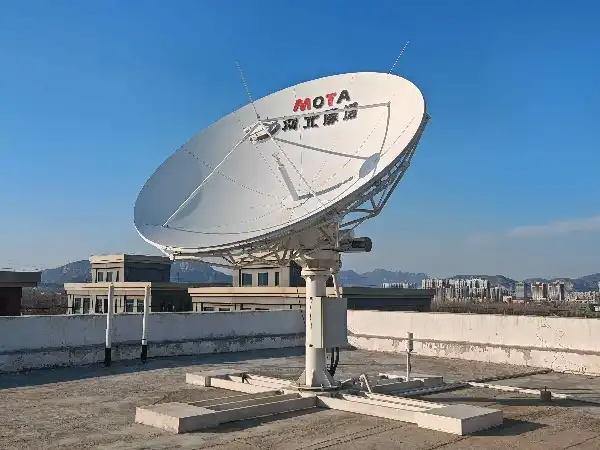
Understanding Antenna Gain and Its Impact on Satellite Signal Quality
Antenna gain is a dimensionless ratio that expresses how effectively an antenna directs energy toward a satellite compared to an isotropic radiator, which transmits equally in all directions. The gain is measured in decibels relative to an isotropic source (dBi) or a dipole reference (dBd). This measurement reflects the antenna's ability to focus power, shaping its radiation pattern into a narrower, more concentrated beam.
What Defines Antenna Gain and How Is It Measured?
Gain in a high-gain fixed satellite antenna depends on several factors: the physical aperture size, reflector surface accuracy, feed system efficiency, and operating frequency. Larger parabolic reflectors naturally offer higher gain because they collect more signal energy. A 1.2-meter Ku-band dish might provide 40 dBi, whereas a 3.7-meter C-band reflector could reach 50 dBi or higher. Measurement standards like ITU-R S.580-6 establish sidelobe suppression patterns, ensuring minimal interference with adjacent satellites.
The Relationship Between Gain, Antenna Size, and Signal Strength
Antenna gain increases proportionally with the square of the aperture diameter and the operating frequency. Doubling the diameter can theoretically increase gain by approximately 6 dB, significantly enhancing link budget margins. Surface accuracy matters immensely—deviations exceeding 0.5 mm root-mean-square (RMS) cause phase errors, degrading gain, particularly at higher frequencies like Ka-band (26.5–40 GHz). Precision manufacturing and rigorous quality control prevent such losses.
How Gain Improves Signal-to-Noise Ratio for Reliable Satellite Links
Improved SNR is the most tangible benefit of higher antenna gain. A stronger received signal stands out more clearly against background noise, reducing bit error rates and enabling higher-order modulation schemes. This reliability is essential for applications requiring uninterrupted data transmission—telemetry from aerospace operations, logistics tracking across continents, or IoT sensor networks in remote industrial sites. Higher gain also compensates for atmospheric attenuation, especially rain fade affecting Ku-band and Ka-band transmissions during storms.
Antenna Gain Behavior Across Different Frequency Bands
C-band (4–8 GHz) antennas typically require larger reflectors to achieve acceptable gain because lower frequencies demand greater apertures for comparable performance. Ku-band (12–18 GHz) strikes a balance between size and gain, making it popular for commercial satellite services. Ka-band offers the highest gain per unit area but demands stringent surface tolerances and experiences greater susceptibility to weather-related signal degradation. Advanced systems employ multi-band capability, switching between frequencies to optimize performance under varying atmospheric conditions. Modern antenna solutions support Ku/Ka/S/X/C/Qv bands with manual switching, adapting seamlessly to diverse mission profiles without requiring multiple installations.
Types of High Gain Fixed Satellite Antennas and Their Applications
Parabolic dish high-gain fixed satellite antenna systems are the industry standard for permanent ground station deployments because their reflective geometry provides high directivity and gain. The curved surface focuses incoming wavefronts onto a feed horn positioned at the focal point, maximizing energy concentration. Alternative designs, such as phased array antennas, offer electronic beam steering but generally provide lower peak gain and remain more expensive for equivalent aperture sizes.
Parabolic Dish Antennas: Industry Benchmark for High Gain
Parabolic reflectors deliver unmatched gain performance across all satellite frequency bands. Materials like sheet molding compound (SMC) and aircraft-grade aluminum offer durability while maintaining precise surface contours. Reflector diameter determines gain—larger dishes serve deep-space communications, scientific research, and high-capacity teleport operations. The feed system, including corrugated horns and orthomode transducers, ensures polarization purity and low cross-polarization isolation exceeding 30 dB.
Reflector Versus Phased Array: Choosing the Right Technology
Reflector antennas provide superior gain-to-cost ratios and remain the preferred choice when mobility is unnecessary. Phased arrays offer agile beam steering without mechanical movement, beneficial for tracking multiple satellites simultaneously or rapid repointing. Nevertheless, their complexity and cost position them primarily in specialized defense and aerospace applications rather than commercial fixed installations. Procurement professionals evaluating long-term ground station infrastructure prioritize reflector systems for their proven reliability and efficiency.
Integrated LNB Systems and Recent Innovations
Modern high-gain fixed satellite antenna systems increasingly integrate low noise block downconverters (LNB), block upconverters (BUC), modems, and intelligent power management into unified assemblies. These plug-and-play configurations reduce installation complexity, enabling single-operator deployment and minimizing field adjustment time. MOTA's advanced solutions exemplify this trend, incorporating two-axis self-stabilizing platforms and proprietary satellite pointing algorithms that complete alignment and link establishment within three minutes. Such innovations address the operational pain points of rapid deployment and reduced setup costs, particularly valuable for time-sensitive emergency communications and mobile ground station scenarios.
The integrated approach also enhances signal quality through optimized component matching. Transceiver isolation exceeding 85 dB prevents transmit energy from leaking into receive paths, while first sidelobe levels at or below -14 dB minimize interference with adjacent satellites. These specifications ensure compliance with international regulatory standards and protect shared orbital resources.
How to Evaluate and Select High-Gain Fixed Satellite Antennas for Your Business
Selecting the appropriate antenna requires balancing technical performance, operational requirements, and total cost of ownership. Procurement teams must consider not only initial purchase price but also installation expenses, maintenance demands, and long-term reliability.
Core Performance Metrics: Gain, Beamwidth, and Signal Quality Indicators
In a high-gain fixed satellite antenna system, gain and beamwidth exhibit an inverse relationship—higher gain produces narrower beams, increasing pointing precision requirements. A 3-degree beamwidth antenna tolerates minor alignment errors, whereas a 0.5-degree beam demands precise mounting and regular calibration. Voltage Standing Wave Ratio (VSWR) below 1.3:1 ensures efficient power transfer with minimal reflection losses. The G/T ratio (gain-to-noise temperature) quantifies system sensitivity, directly impacting link margin calculations essential for reliable operation during adverse weather.
Fixed Versus Mobile Antennas: When to Choose High-Gain Variants
Permanent ground stations benefit from maximized gain because the infrastructure supports larger, heavier reflectors optimized for peak performance. Mobile or transportable systems must compromise between gain and portability. Nevertheless, advancements in materials and structural engineering enable compact high-gain antennas suitable for field deployment. MOTA's design operates reliably across -25°C to +55°C, withstanding harsh outdoor conditions, including 7-level winds, while maintaining stable 1080p video transmission—ideal for logistics hubs, remote industrial automation sites, and emergency response scenarios.
Procurement Factors: Cost, Warranty, and Supplier Reliability
Long-term partnerships depend on supplier credibility, certification compliance, and after-sales support. ISO9001, ISO14001, and ISO45001 certifications demonstrate adherence to quality, environmental, and safety management standards. Suppliers offering ODM/OEM customization can adapt hardware interfaces, frequency configurations, and mounting systems to meet specific project needs. Warranty terms should cover full-unit performance per international standards, with provisions for rapid spare parts supply and 24/7 technical assistance. Delivery timelines matter—ready stock availability for standard configurations versus 45–90 day production cycles for custom large-scale systems affects project scheduling.
Experienced suppliers maintain mature cross-border logistics networks, providing professional shock-proof and moisture-proof packaging, end-to-end shipment tracking, and customs clearance support. These services mitigate risks inherent in overseas project delivery, critical for aerospace contractors, defense integrators, and multinational logistics operators.
Installation and Maintenance Best Practices to Maximize Antenna Gain Benefits
Proper installation ensures that theoretical antenna performance translates into actual field results. Even the highest-gain system underperforms if alignment errors or structural weaknesses compromise pointing accuracy.
Installation Guidelines for Optimal Alignment and Mounting
High Gain Fixed Satellite Antenna mounting structures must withstand operational wind loads while maintaining pointing stability within 0.1 degrees. Concrete foundations or robust steel masts anchor the system against mechanical stress. Alignment procedures involve precise azimuth and elevation adjustments guided by satellite beacon signals or GPS-assisted pointing systems. Professional-grade inclinometers and spectrum analyzers verify signal peak detection. The two-axis stabilization platforms integrated into advanced antennas automate fine-tuning, drastically reducing setup time and eliminating human error.
Environmental Factors Affecting Antenna Performance
Physical obstructions—buildings, trees, and terrain features—block line-of-sight paths, causing total signal loss. Site surveys identify clear sky visibility zones before installation. Weather impacts vary by frequency band: C-band exhibits minimal rain fade, whereas Ka-band suffers significant attenuation during heavy precipitation. Antenna radomes protect feed systems from moisture ingress and ice accumulation, preserving gain integrity during winter conditions. Operating temperature ranges define environmental survivability—systems rated for -25°C to +55°C function reliably in arctic research stations and desert telecommunications hubs alike.
Routine Maintenance Practices to Sustain Signal Integrity
Annual inspections cover reflector surface cleaning to remove debris, dust, and biological growth that scatter signals and degrade gain. Torque checks on mounting bolts prevent loosening from thermal cycling and vibration. Feed horn windows require periodic examination for moisture seals and dielectric integrity. Proactive replacement of aging LNB components before failure prevents costly downtime. Remote monitoring systems track performance metrics continuously, alerting technicians to gradual gain degradation indicative of mechanical misalignment or component wear.
Real-World Cases: How Enhanced Antenna Gain Translates to Better Satellite Communication
Practical case studies demonstrate measurable benefits derived from high-gain antenna deployments across diverse industries.
Case Study: Commercial Telecom Provider System Upgrade
A regional telecom operator upgraded its high-gain fixed satellite antenna system and faced declining service quality as subscriber demand outpaced legacy infrastructure capacity. Existing C-band antennas lacked sufficient gain to support higher modulation schemes required for increased bandwidth. Upgrading to larger parabolic reflectors with integrated BUC/LNB modules improved link margins by 8 dB, enabling 16-APSK modulation and doubling effective throughput. Network reliability metrics improved from 98.5% to 99.8% availability, reducing customer complaints and operational costs. The rapid three-minute satellite alignment capability minimized service interruption during installation, preserving revenue continuity.
Case Study: OEM Integration in Maritime Communication
A maritime logistics company required reliable satellite connectivity for vessel tracking and crew welfare services across transoceanic routes. Existing mobile terminals struggled with signal stability during rough seas and adverse weather. Partnering with an OEM supplier, the company integrated high-gain Ku/Ka dual-band antennas featuring self-stabilizing platforms and advanced tracking algorithms. Transceiver isolation exceeding 85 dB prevented self-interference in full-duplex operations, while first sidelobe suppression below -14 dB ensured regulatory compliance in congested maritime satellite lanes. The result: uninterrupted 1080p video conferencing and real-time cargo monitoring even during storms, enhancing operational efficiency and crew morale.
These deployments underscore the importance of selecting suppliers with proven production experience, comprehensive customization capabilities, and robust global support networks. The ability to deliver end-to-end solutions—from initial design through installation training and ongoing maintenance—distinguishes reliable partners in mission-critical projects.
Conclusion
Antenna gain in a high-gain fixed satellite antenna system fundamentally shapes satellite communication quality by concentrating signal energy, improving SNR, and extending link reliability across vast distances. Understanding the technical interplay between gain, beamwidth, frequency bands, and environmental factors empowers procurement professionals to make informed decisions. Modern integrated solutions streamline deployment while maintaining industrial-grade performance standards. As satellite networks expand to support IoT, logistics, aerospace, and defense applications, selecting high-gain antennas from credible suppliers with comprehensive certifications and support infrastructure becomes increasingly critical. Strategic investments in proven technology and long-term partnerships drive operational excellence and competitive advantage.
FAQ
What is the typical gain range for fixed satellite antennas?
Gain ranges vary by aperture size and frequency band. Small Ku-band antennas (0.75–1.2m) provide 35–40 dBi, while larger C-band systems (3.7–4.5m) achieve 50–55 dBi. Ka-band antennas deliver higher gain per unit area due to shorter wavelengths but demand stricter surface tolerances.
How does weather impact high-gain antenna performance?
Rain fade primarily affects Ku-band and Ka-band transmissions, causing signal attenuation up to several decibels during heavy storms. C-band exhibits superior all-weather performance. Link budgets should incorporate fade margins, and systems may employ adaptive modulation to maintain connectivity during adverse conditions.
Can multi-band antennas match single-band gain performance?
Modern multi-band designs with optimized feed systems approach single-band efficiency. Careful engineering of frequency-selective surfaces and corrugated feed horns maintains gain across Ku/Ka/S/X/C bands, though minor compromises occur compared to dedicated single-frequency reflectors.
Partner with MOTA for reliable high-gain fixed satellite antenna solutions.
MOTA brings nine years of manufacturing expertise, ISO9001/ISO14001/ISO45001 certifications, and proven production capacity to every project. Our advanced High Gain Fixed Satellite Antenna systems support Ku/Ka/S/X/C/Qv band switching, deliver three-minute satellite alignment, and operate reliably from -25°C to +55°C. We offer ODM/OEM customization, 45–90 day delivery cycles for large-scale orders, and 24/7 global technical support. Whether you're an aerospace contractor, logistics integrator, or precision electronics manufacturer seeking a dependable high-gain fixed satellite antenna supplier, our end-to-end services—from design through installation and maintenance—ensure your satellite communication infrastructure performs flawlessly. Contact us at hebei_mota@163.com to discuss your specific requirements and discover how our technology solves real-world connectivity challenges.

References
1. Smith, J.A., "Advanced Satellite Antenna Design Principles and Performance Optimization," IEEE Transactions on Antennas and Propagation, 2021.
2. Rodriguez, M., "Link Budget Analysis for High-Throughput Satellite Systems," International Journal of Satellite Communications, 2020.
3. Chen, L., "Multi-Band Antenna Technology for Next-Generation Ground Stations," Proceedings of the Global Satellite Communications Symposium, 2022.
4. Thompson, R., "Environmental Effects on Satellite Communication Links: Mitigation Strategies," Journal of Atmospheric and Terrestrial Physics, 2019.
5. Williams, K., "Quality Control Standards in Precision Antenna Manufacturing," ASTM International Standards Quarterly, 2021.
6. Anderson, P., "Phased Array Versus Reflector Antennas: A Comparative Performance Study," Defense Technology Review, 2020.
Tell us your requirements – get a tailored quote and technical support within 24 hours.