- English
- French
- German
- Portuguese
- Spanish
- Russian
- Japanese
- Korean
- Arabic
- Greek
- German
- Turkish
- Italian
- Danish
- Romanian
- Indonesian
- Czech
- Afrikaans
- Swedish
- Polish
- Basque
- Catalan
- Esperanto
- Hindi
- Lao
- Albanian
- Amharic
- Armenian
- Azerbaijani
- Belarusian
- Bengali
- Bosnian
- Bulgarian
- Cebuano
- Chichewa
- Corsican
- Croatian
- Dutch
- Estonian
- Filipino
- Finnish
- Frisian
- Galician
- Georgian
- Gujarati
- Haitian
- Hausa
- Hawaiian
- Hebrew
- Hmong
- Hungarian
- Icelandic
- Igbo
- Javanese
- Kannada
- Kazakh
- Khmer
- Kurdish
- Kyrgyz
- Latin
- Latvian
- Lithuanian
- Luxembou..
- Macedonian
- Malagasy
- Malay
- Malayalam
- Maltese
- Maori
- Marathi
- Mongolian
- Burmese
- Nepali
- Norwegian
- Pashto
- Persian
- Punjabi
- Serbian
- Sesotho
- Sinhala
- Slovak
- Slovenian
- Somali
- Samoan
- Scots Gaelic
- Shona
- Sindhi
- Sundanese
- Swahili
- Tajik
- Tamil
- Telugu
- Thai
- Ukrainian
- Urdu
- Uzbek
- Vietnamese
- Welsh
- Xhosa
- Yiddish
- Yoruba
- Zulu
Advantages of Using a Lightweight Satellite Antenna System
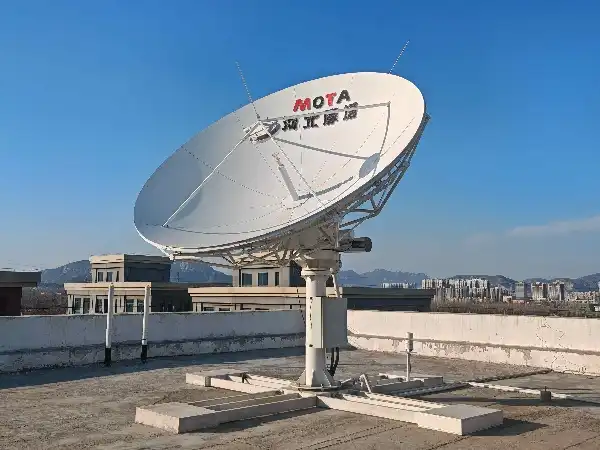
When emergency response teams, field engineers, or broadcast crews need satellite connectivity fast, every minute and every kilogram matters. A lightweight fixed satellite antenna solves both problems simultaneously. Unlike traditional parabolic dishes that demand multi-person crews and heavy lifting equipment, modern compact satellite terminals fold into portable packages, align with the satellite in roughly two minutes, and maintain stable 1080p video transmission even in strong wind. This guide walks B2B procurement professionals through the real advantages of adopting these systems — from technical performance to total cost of ownership.
Understanding Lightweight Fixed Satellite Antenna Systems
What Sets Them Apart from Conventional Terminals
Heavy steel or metal reflectors are used in traditional satellite dishes, which makes transporting and installing them more difficult. High-modulus composites are used instead of those materials in advanced lightweight systems. This makes it possible to get a surface RMS accuracy below 0.3mm for Ka-band uses while reducing structure mass by a huge amount. The end result is a device that can be moved, unfolded, and used by one person without the need for special tools or training in satellite engineering.
MOTA's portable satellite communication system supports Ku/Ka/S/X/C/Qv multi-band switching across three aperture options: 4.5m, 3.3m, and 2.4m. This lets procurement teams match hardware to mission needs without having to find different types of antennas. Built-in BUC/LNB modules, a modem, and an intelligent power management unit all come in one plug-and-play package, so there is no need to worry about cables when you get to the site.
Core Advantages of Lightweight Fixed Satellite Antenna Systems
When procurement teams look at portable satellite stations, they usually only look at how much the gear costs. This way of thinking doesn't fully appreciate how much these systems save in terms of deployment, operations, and upkeep.
The main reasons why this type of antenna is a good B2B investment are listed below:
- 2-Minute Satellite Acquisition: Within two minutes of setup, MOTA's unique tracking algorithm and single-axis self-stabilizing platform secure a satellite lock and set up a live link. In emergency communications, that speed has a direct effect on how well people can work together to respond.
- Single-Person Portability: Because the reflector is foldable and the design is integrated, only one field engineer is needed to move, set up, and take down the equipment. That one factor gets rid of a big line item for labor costs that is used over and over again.
- Wind-Stable 1080p Transmission: High-definition video that stays stable in six levels of wind (about 39–49 km/h) is a performance standard, not a marketing claim. In real time, the single-axis stabilization makes up for mechanical tremor and interference from the surroundings.
- Multi-Band Flexibility: You can manually switch between Ku, Ka, S, X, C, and Qv bands. This means that the same hardware can work with different satellite networks and governing settings without having to switch out equipment.
- Wide Thermal Operating Range: This product's certified performance from -20°C to +50°C makes it suitable for use on arctic survey sites, warm coastal platforms, and high-altitude command posts.
All of these benefits lower the total cost of adoption over the whole duration of the product, not just the price of the line item. Shorter setup windows and lower ongoing labor costs are good for emergency response integrators, media broadcast crews, and remote infrastructure operators.
Application Scenarios and Industry Use Cases
Emergency Response and Disaster Communications
During floods, earthquakes, or industrial accidents, when infrastructure on land breaks down, satellite relay becomes the main way for people to talk to each other and plan how to respond . First responders can connect to MOTA's lightweight fixed satellite antenna system in less than two minutes. Real-time video feeds from field teams can be sent back to incident command. The foldable design fits inside standard emergency response vehicles, and the plug-and-play interface lets operators who aren't experts use it without having to watch them do it.
Temporary Event Broadcasting and Remote Media Production
Tight production windows are common for news teams covering sports events, political meetings, or disaster zones. Traditional satellite uplink trucks are hard to move around, but a movable multi-band satellite station can do the job. Setting up the system only takes minutes instead of hours, and it produces broadcast-quality video without the need for a large team that past methods required.
Remote Site Connectivity for Infrastructure Projects
Construction sites, mines, and temporary government buildings in areas that aren't well covered need enterprise-level broadband without having to invest in long-term infrastructure. Portable, light antennas go with the project and keep the connection strong no matter where it is. When the job is over, the equipment is put to use again right away instead of being left idle.
Comparative Analysis: Lightweight Fixed vs. Traditional Satellite Antennas
Portable consumer-grade antennas are convenient because they are small and light, but they lack gain, signal stability, and the ability to work continuously, which means they are not good for professional B2B uses. Traditional fixed antennas work well for signals, but they need to be installed with a crane and a team of several people, and their infrastructure areas are set.
The lightweight fixed satellite antenna from MOTA is in the middle ground for functional purposes. It has a first sidelobe level of -12dB and transmitter isolation of ≥80dB, which are levels that meet business and government interference standards. It can also be set up by a single person in the field. That mix really isn't found very often on the market.
Industry-grade composite materials are stiffer to heavier than aluminum, don't rust in salty coastal settings, and keep their alignment in the wind, which would cause a lighter consumer dish to become misaligned. The antenna can withstand multiple transport rounds that would damage cheaper options, which lowers the need for replacement over a longer period of time.
Procurement and Supplier Guidance
What to Verify Before Committing to a Supplier
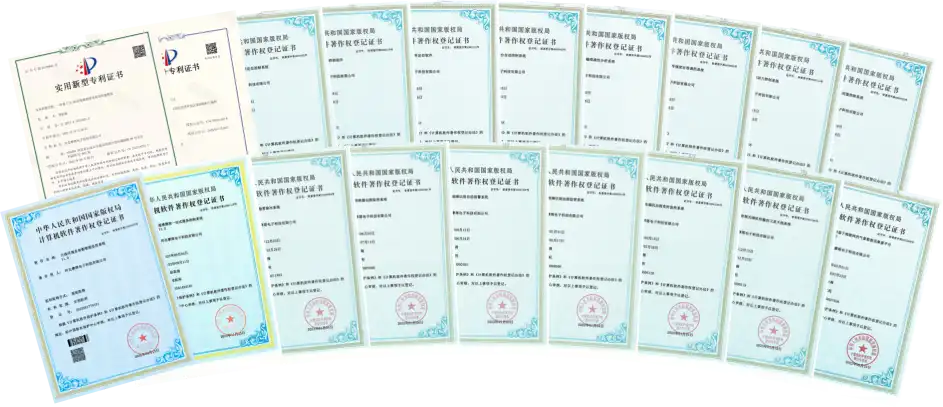
When looking for a lightweight fixed satellite antenna supplier, procurement professionals should look at more than just the unit price. Certifications are important. MOTA has management system certifications for ISO9001, ISO14001, and ISO45001, as well as local type approval for radio communication equipment. The company has been making things for nine years and keeps standard configurations in stock. Customized or large-volume orders take 45 to 90 days to make.
Integrators who work with government disaster agencies also need to be able to customize their services. In addition to ODM/OEM services, MOTA also provides hardware design, interface protocols, functional modules, and regional approval compliance. This covers the whole process, from making a sample to mass production.
For remote operations, stability after the sale is always a worry. MOTA has a system for responding to customers 24 hours a day, seven days a week. They also offer remote technical support for installation and troubleshooting, and they keep localized after-sales channels open for international markets to get spare parts. That makes it easier for operators to get spare parts in places where local satellite equipment service isn't available.
Conclusion
Lightweight satellite antenna systems used to be niche specialty items, but now they are being bought more often in emergency response, broadcast media, defense, and remote infrastructure. The operational case is simple: faster deployment, lower labor costs, fewer logistical problems, and signal performance that lasts in tough environments. Total cost of ownership calculations strongly favor small, ruggedized, multi-band terminals over both consumer-grade portables and heavy fixed dishes for B2B buyers who have to manage funds for multiple deployments. In the world of satellite communications, MOTA's lightweight fixed satellite antenna system shows that portable and professional-grade are no longer opposites.
FAQ
1. Can a non-technical operator deploy this antenna without training?
Yes. The BUC/LNB modules, modem, and power control are all built into a single completed unit with an integrated plug-and-play design. The special tracking program takes care of getting satellites automatically, so the user only needs to set up the system and connect the power. The system is usually set up properly by field teams that aren't trained in satellite tech.
2. Which frequency bands does the system support?
You can switch between Ku, Ka, S, X, C, and Qv bands by hand with this method. That range includes most commercial FSS satellite networks around the world and can be changed to meet the needs of different regions' regulations without having to replace any hardware.
3. How does the antenna perform in wind and extreme temperatures?
The base with a single axis of stabilization keeps 1080p video streaming stable in 6-level wind situations. The temperature range of -20°C to +50°C is suitable for most working settings around the world, from cold emergency operations to tropical seaside installations.
4. What aperture sizes are available?
There are three aperture options: 2.4m, 3.3m, and 4.5m. This gives procurement teams the freedom to match antenna gain to link budget needs for each mission situation.
5. What warranty and after-sales support does MOTA provide?
MOTA offers a full warranty that meets international standards, technical support that is available 24 hours a day, seven days a week, and the ability to get spare parts in your area through cooperative service channels.
Partner with MOTA for Your Next Portable Satellite Antenna Procurement
MOTA offers tested, lightweight fixed satellite antenna options backed by nine years of manufacturing experience, the ability to work with multiple bands, and help 24 hours a day, seven days a week. Our team offers personalized buying advice, competitive prices, and full logistics support, whether you are adding to your emergency communications equipment library or looking for a dependable lightweight fixed satellite antenna manufacturer for ongoing project deployments. To get specs and a project advice, email us at hebei_mota@163.com or go to motasat.com.
References
1. European Space Agency. (2022). Compact Satellite Terminal Design for Field Operations. ESA Technical Reports.
2. Emergency Management Agency (FEMA). (2023). Emergency Communications Technology Assessment: Satellite Backhaul Solutions. U.S. Department of Homeland Security.
3. ITU-R. (2022). Recommendation ITU-R S.580-6: Radiation diagrams for use as design objectives for antennas of earth stations operating with geostationary satellites. International Telecommunication Union.
4. Via Satellite Magazine. (2023). Portable vs. Fixed VSAT: Evaluating Total Cost of Ownership for B2B Deployments. Access Intelligence.
5. INTELSAT. (2022). Earth Station Standards and Technical Requirements for FSS Networks. Intelsat Technical Publications.
6. MIL-STD-810H. (2019). Environmental Engineering Considerations and Laboratory Tests. U.S. Department of Defense.
Tell us your requirements – get a tailored quote and technical support within 24 hours.