- English
- French
- German
- Portuguese
- Spanish
- Russian
- Japanese
- Korean
- Arabic
- Greek
- German
- Turkish
- Italian
- Danish
- Romanian
- Indonesian
- Czech
- Afrikaans
- Swedish
- Polish
- Basque
- Catalan
- Esperanto
- Hindi
- Lao
- Albanian
- Amharic
- Armenian
- Azerbaijani
- Belarusian
- Bengali
- Bosnian
- Bulgarian
- Cebuano
- Chichewa
- Corsican
- Croatian
- Dutch
- Estonian
- Filipino
- Finnish
- Frisian
- Galician
- Georgian
- Gujarati
- Haitian
- Hausa
- Hawaiian
- Hebrew
- Hmong
- Hungarian
- Icelandic
- Igbo
- Javanese
- Kannada
- Kazakh
- Khmer
- Kurdish
- Kyrgyz
- Latin
- Latvian
- Lithuanian
- Luxembou..
- Macedonian
- Malagasy
- Malay
- Malayalam
- Maltese
- Maori
- Marathi
- Mongolian
- Burmese
- Nepali
- Norwegian
- Pashto
- Persian
- Punjabi
- Serbian
- Sesotho
- Sinhala
- Slovak
- Slovenian
- Somali
- Samoan
- Scots Gaelic
- Shona
- Sindhi
- Sundanese
- Swahili
- Tajik
- Tamil
- Telugu
- Thai
- Ukrainian
- Urdu
- Uzbek
- Vietnamese
- Welsh
- Xhosa
- Yiddish
- Yoruba
- Zulu
All You Need To Know About Fixed Satellite Reception Antenna
Businesses use specialized ground station tools made for accuracy and dependability when they need to stay connected in rural areas or mission-critical situations. A fixed satellite reception antenna is a receiver that is constantly attached and is designed to pick up electromagnetic signals from geostationary or non-geostationary satellites. It does this by turning low-power downlinks into data, video, or voice streams that can be used. Compared to mobile systems, these stationary antennas offer better stability and signal quality thanks to their optimized parabolic geometry and strong mechanical design. This makes them essential for telecom providers, defense contractors, and industrial operators who need to work around the clock in tough conditions.
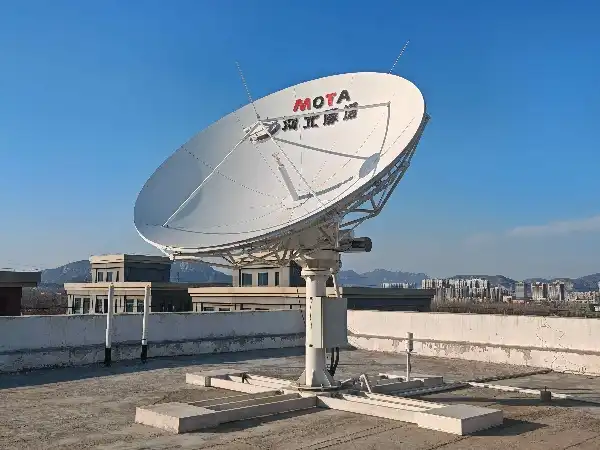
Understanding Fixed Satellite Reception Antennas: Technology & Types
Radio frequency signals sent by satellites in space are picked up by a low-noise block downconverter, which is the basic idea behind satellite receiving technology. Whether it's a parabolic, flat-panel, or phased array antenna, the reflector surface focuses arriving waves on a single point, making the signal stronger while reducing crosstalk.
How Fixed Antennas Differ from Mobile Variants
A fixed satellite reception antenna prioritizes structural stability and long-term performance over portability. This lets bigger holes and heavier building materials be used, which improves the gain-to-noise temperature ratios. Mobile systems give up performance for portability, but stable sites get better cross-polarization isolation of more than 30dB and surface accuracy tolerances of less than 0.5mm for Ka-band operations. This fixed position makes it possible to precisely line up with circular spots, so there is no need to recalibrate as there is with portable units.
Main Antenna Configuration Types
Parabolic dish designs are still the standard because they work so well and are very efficient across C, Ku, Ka, and the new Qv frequency bands. Offset designs stop shading of the feed system, which increases efficiency in small setups. Flat-panel antennas have lower wind loads and slim shapes that make them good for urban teleports, but they usually have lower gain levels. Phased array systems let you steer an electrical beam without moving any parts. This makes them perfect for watching multiple satellites quickly.
Frequency Band Characteristics
The C-band (4-8 GHz) works reliably even when it rains a lot, but it needs bigger openings. Ku-band (12-18 GHz) is the most popular frequency for commercial broadcasting because it combines dish size with bandwidth capability. Ka-band (26.5-40 GHz) allows for high-throughput satellite services, but it needs very accurate surface and direction. Modern Fixed Satellite Reception Antenna systems support multiple frequency bands, including C, Ku, Ka, S, X, and Qv bands, and offer operating freedom across a wide range of task profiles. They can be manually reconfigured as project needs change.
Signal Optimization Strategies
To maximize fixed satellite reception antenna performance, operators should focus on reflector accuracy, feed horn optimization, and VSWR control. Using Sheet Molding Compound or carbon fiber construction will reduce the effects of heat expansion. Choosing the right feed horns is important for getting good lighting patterns, and using high-quality diffuse coats keeps the sun from shining directly on sensitive parts. Checking the Voltage Standing Wave Ratio data on a regular basis—ideally, keeping the values below 1.3:1—confirms that the system is healthy and keeps transmission equipment from getting damaged by reflected power.
Comprehensive Installation Guide for Fixed Satellite Reception Antennas
A successful rollout starts long before the first bolt is tightened. It needs careful planning and performance to avoid having to do expensive repairs.
Pre-Installation Site Assessment
By doing thorough site surveys, you can find possible obstacles, check how much weight the dirt can hold, and measure the electromagnetic interference from transmitters nearby. Environmental effect studies show that local rules are being followed, and foundation engineering makes sure that the building is stable under the highest wind loads—it is usually built to withstand gusts of more than 200 km/h. Before sending out installation teams, legal compliance verification makes sure that all flight clearance requirements and zoning laws are being followed.
Antenna Alignment Procedures
Precision aiming is the most important part of installation because it has a direct effect on link gap and interference avoidance. Modern systems, like MOTA's two-axis stabilization platform with its own tracking algorithms, can acquire a satellite in just three minutes, so there is no need for long setup times. Azimuth, elevation, and polarization angles are checked against satellite ephemeris data using alignment tools like inclinometers, spectrum analyzers, and GPS-based pointing computers. Lightning strikes and static electricity can be avoided by using the right grounding methods, which are outlined in the national electrical code for communications equipment.
Troubleshooting Common Installation Challenges
During launching, signal loss is often caused by the reflector deforming during transport or the feed not being positioned correctly in relation to the focus point. To fix interference problems, terrestrial radio sources must be systematically identified, and sidelobe reduction filters must be adjusted. Configuration mistakes in the Block Upconverter and Low-Noise Block settings need to be carefully checked against the requirements of the satellite receiver. Modern plug-and-play designs have a combined BUC/LNB module, modem, and intelligent power management system that make these tasks much easier. This means that a single person can set them up without needing RF tech help.
Benefits and Use Cases of Fixed Satellite Reception Antennas for B2B Clients
Businesses across multiple industries rely on fixed satellite reception antennas to maintain reliable connectivity where terrestrial networks are unavailable.
Core Business Advantages
Mining companies, marine energy platforms, and Arctic research stations can all get reliable high-speed internet even though fiber infrastructure is still too expensive for them. Cost-effective scalability lets you add more transponders to your system without having to update the hardware. When the system uptime is more than 99.5%, it serves mission-critical applications in networks for telemedicine, financial services, and emergency management, where downtime directly means lost income or safety risks.
Here are the operational benefits that directly impact project success:
- Extreme Environment Survivability: Working in temperatures from -25°F to +55°F with IP-rated shelters means it can work in dry heat, arctic cold, and coastal rust zones without losing any performance.
- High-Definition Data Transmission: Handling stable 1080p video backhaul in 7-level wind helps security networks, broadcast uplinks, and remote training apps that can't risk picture quality.
- Superior Interference Rejection: Achieving ≥85 dB receiver isolation and ≤-14 dB first sidelobe performance stops interference from neighboring satellites and stops people from purposely jamming signals in settings where security is important.
These features allow application in situations where regular communication infrastructure doesn't work, making sure that business keeps going even when ground networks aren't available.
Real-World Application Scenarios
Teleport providers use fixed ports as the main downlink sources for Direct-to-Home TV distribution, which means they need to be reliable 24 hours a day, seven days a week. Maritime transportation companies set up ground stations at ports so they can keep an eye on ships and goods moving along the world's sea lanes. Implementations in the energy sector include networks for tracking pipelines and connecting offshore platforms. In these cases, satellite links act as both main communication routes and backups in case of disaster. Mining activities depend on these systems to coordinate self-driving vehicles and send real-time geology data from mining sites far away.
Fixed versus Mobile Antenna Comparison
Managers of procurement have to find a mix between the need for success and the need for operational flexibility. For fixed placements, stationary systems offer higher gain, better stability, and lower costs per megabit. Mobile antennas give you the freedom to move them to different locations quickly, but they reduce the size of your antenna's opening and add extra complexity to the system by using stability platforms. When operating life spans are longer than three years and data amounts require continued high throughput, permanent ground stations are worth the investment. The decision process takes these factors into account.
How to Choose the Best Fixed Satellite Reception Antenna: Market Comparison & Procurement Guide
To choose the best satellite ground equipment, you need to carefully look at the technical specs, the vendor's skills, and the total cost of ownership.
Critical Performance Metrics
The antenna gain directly affects the link budget cushion and the size of the dish that can be used for the frequency bands that are wanted. Beamwidth standards affect how much tilt is allowed and how much disturbance from nearby satellites is possible. Supported encoding methods, roll-off factors, and DVB-S2/S2X standard compliance are all parts of network compatibility. Ratings for aperture efficiency above 70% show good reflector design and feed optimization. Cross-polarization detection values above 30dB stop signals from crossing between orthogonal polarizations, which makes the best use of transponders.
Leading Manufacturer Analysis
There are well-known companies with different technology specialties in the global market. Integrated network management systems that can handle big telecom providers are what companies like Huawei focus on. Harris focuses on dependability that is good enough for security and the ability to do secret operations. Intellian and Kymeta were the first companies to use flat-panel and electronically directed array technologies in new kinds of uses. Commscope offers flexible options that work best with broadcast infrastructure.
MOTA's fixed satellite reception antenna solutions distinguish themselves through comprehensive customization capabilities and independently developed satellite communication technologies. Their multi-band switchable systems covering Ku/Ka/S/X/C/Qv frequencies address diverse mission requirements within a single platform, reducing inventory complexity for global operations. The company's ISO9001, ISO14001, and ISO45001 certifications demonstrate systematic quality control, while 24/7 technical support ensures rapid issue resolution across time zones.
Strategic Procurement Considerations
Bulk purchasing deals let you get savings for buying in bulk and get first dibs on production schedules, which is especially helpful for deployments that span multiple sites. By looking at ODM and OEM customization options, you can make sure that the specifications of the terminals match the needs of the network design without having to make practical sacrifices. By using professional packing and tracking systems, cross-border logistics can help avoid delays in customs processing and damage to shipments. Financial risk can be reduced by having flexible payment terms and guarantee structures. This is especially important for projects with long rollout timelines that span multiple fiscal periods.
Maintenance and Performance Optimization of Fixed Satellite Reception Antennas
To keep operations running at their best, you need preventative maintenance plans and organized ways to find problems.
Routine Maintenance Protocols
Physical checks of the reflector surface are done every three months to make sure it is still in good shape and to look for rust, deformation, or trash that could affect the signal quality. Cleaning methods that use approved, non-abrasive materials bring back brightness without hurting special coats. Updating software and hardware fixes security holes and makes devices work with new satellite network standards. Lubricating mechanical parts keeps bearings from seizing up in elevation and azimuth drives, and checking the torque keeps fasteners from coming loose when the system is vibrating or heating up and cooling down.
Diagnosing Common Performance Issues
Effective troubleshooting can significantly extend the operational lifespan of a fixed satellite reception antenna. Spectrum analysis is the first step in looking into signal loss because it helps tell the difference between problems with satellite transponders and problems with local receiving. Component failure tests use systematic replacement testing to find broken LNBs, cable assemblies, or waveguide sections. Comparing current alignment parameters to launching baselines is what configuration drift detection does to find foundation settling or structure movement that needs repointing. Modern designs make troubleshooting easier by combining the modem and power control systems into one unit. These systems also have built-in diagnostic reporting and online tracking features.
Environmental Protection Measures
Installing a radome to protect feed units from ice buildup and UV damage while keeping RF openness is one way to reduce weather exposure. Lightning safety systems with surge suppressors and proper connections keep electrical storms from damaging equipment. Treatments that stop corrosion that are made for marine, industrial, or dry settings make things last decades longer. These investments protect infrastructure costs that can go over six figures for large-aperture systems, making sure there is a steady return on investment over the life of the system.
Conclusion
A fixed satellite reception antenna is a critical component of modern satellite communication infrastructure. From antenna selection and installation to maintenance and long-term operation, organizations must carefully evaluate performance, environmental durability, and supplier capabilities. By investing in a high-quality fixed satellite reception antenna, businesses can achieve reliable connectivity, superior signal reception, and long-term operational efficiency across a wide range of applications.
FAQ
What distinguishes a fixed satellite antenna from VSAT systems?
Very Small Aperture Terminals, or VSATs, are small satellite ground stations that are usually less than 3 meters across. They can be set in one place or moved around. The main difference is movement, not technology: fixed antennas focus on performance through bigger apertures and stable mounting, while VSAT focuses on portability and quick deployment. Since many VSAT systems are fixed sites, the terms don't really mean the same thing. Instead, they mean that the systems are in different groups.
How do environmental factors affect antenna performance?
Extreme temperatures can affect the accuracy of the reflective surface and the dependability of the parts that make it up. Because precipitation weakens signals, especially at higher frequencies, Ka-band devices need bigger link margin funds. Wind loading puts mechanical stress on the structure and can throw it out of line if the base isn't stable enough. These problems can be fixed by choosing the right location, using strong mounting systems, and taking steps to protect the environment. This is why industrial-grade designs with military-grade durability standards are necessary for continued operation.
Should organizations install antennas in-house or hire professionals?
Professional installation makes sure that safety standards are met, that the manufacturer's guarantee is followed, and that the system works at its best after approval. The level of accuracy needed for satellite acquisition—especially for Ka-band systems that need sub-degree pointing accuracy—is higher than what most facilities can handle for upkeep. However, current plug-and-play designs with automated alignment make things a lot simpler. This could mean that trained technical staff can handle deployment while being supervised by the seller, which would save money and make sure the installation is done correctly.
Partner with MOTA for Your Satellite Communication Infrastructure Needs
Hebei MOTA has been making specialized goods for almost ten years and can help businesses that need reliable satellite ground station tools. As a recognized provider of fixed satellite reception antennas that follows ISO9001, ISO14001, and ISO45001, we provide industrial-grade systems that are as reliable as military systems all over the world. Our antennas can switch between multiple bands and have special tracking algorithms and BUC/LNB modules built in. This lets them pick up satellites in three minutes and work reliably in temperatures ranging from arctic to tropical. We keep enough stock on hand to ship right away, and we also offer 45–90 day custom production processes for unique needs. Email our expert team at hebei_mota@163.com to talk about your unique connectivity issues and find out how our full ODM/OEM capabilities, experienced cross-border operations, and 24/7 support infrastructure can make your next satellite communication project go more smoothly.

References
1. Maral, G., & Bousquet, M. (2020). Satellite Communications Systems: Systems, Techniques and Technology (6th ed.). John Wiley & Sons.
2. International Telecommunication Union. (2019). ITU-R S.580-6: Radiation Diagrams for Use as Design Objectives for Antennas of Earth Stations Operating with Geostationary Satellites. ITU Radiocommunication Sector.
3. Elbert, B. R. (2019). The Satellite Communication Ground Segment and Earth Station Handbook (2nd ed.). Artech House.
4. Ippolito, L. J. (2017). Satellite Communications Systems Engineering: Atmospheric Effects, Satellite Link Design and System Performance (2nd ed.). John Wiley & Sons.
5. Slobin, S. D., & Astarita, S. (2018). Antenna Performance Verification and Ground Station System Integration Best Practices. IEEE Transactions on Antennas and Propagation, 66(8), 3842-3856.
6. Morgan, W. L., & Gordon, G. D. (2021). Communications Satellite Handbook: Ground Segment and Earth Station Design Principles. CRC Press.
Tell us your requirements – get a tailored quote and technical support within 24 hours.