- English
- French
- German
- Portuguese
- Spanish
- Russian
- Japanese
- Korean
- Arabic
- Greek
- German
- Turkish
- Italian
- Danish
- Romanian
- Indonesian
- Czech
- Afrikaans
- Swedish
- Polish
- Basque
- Catalan
- Esperanto
- Hindi
- Lao
- Albanian
- Amharic
- Armenian
- Azerbaijani
- Belarusian
- Bengali
- Bosnian
- Bulgarian
- Cebuano
- Chichewa
- Corsican
- Croatian
- Dutch
- Estonian
- Filipino
- Finnish
- Frisian
- Galician
- Georgian
- Gujarati
- Haitian
- Hausa
- Hawaiian
- Hebrew
- Hmong
- Hungarian
- Icelandic
- Igbo
- Javanese
- Kannada
- Kazakh
- Khmer
- Kurdish
- Kyrgyz
- Latin
- Latvian
- Lithuanian
- Luxembou..
- Macedonian
- Malagasy
- Malay
- Malayalam
- Maltese
- Maori
- Marathi
- Mongolian
- Burmese
- Nepali
- Norwegian
- Pashto
- Persian
- Punjabi
- Serbian
- Sesotho
- Sinhala
- Slovak
- Slovenian
- Somali
- Samoan
- Scots Gaelic
- Shona
- Sindhi
- Sundanese
- Swahili
- Tajik
- Tamil
- Telugu
- Thai
- Ukrainian
- Urdu
- Uzbek
- Vietnamese
- Welsh
- Xhosa
- Yiddish
- Yoruba
- Zulu
Ground Station Transceiver Antenna: Key Features and Applications Explained
When satellite communication networks demand reliability under pressure, a ground station transceiver antenna becomes the lifeline connecting orbital assets to terrestrial operations. This specialized equipment facilitates bidirectional data exchange between ground facilities and satellites across LEO, MEO, and GEO orbits, solving critical challenges like signal attenuation, latency, and tracking instability. Unlike receive-only systems, these antennas integrate advanced feed networks, enabling simultaneous uplink transmission and downlink reception across multiple frequency bands, including Ku, Ka, S, X, C, and Qv. Their high-precision servo-tracking mechanisms and low-noise amplifiers ensure stable, high-throughput links essential for aerospace contractors, defense systems, and precision electronics manufacturers requiring uninterrupted satellite connectivity for mission-critical operations.
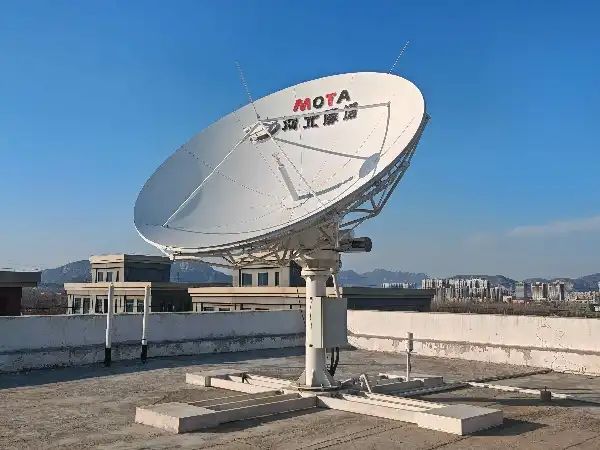
Understanding Ground Station Transceiver Antennas
Core Functions in Satellite Communication Systems
Ground station transceiver antennas are the main way that networks on Earth talk to equipment in space. When these devices receive radio waves, they change them into electrical impulses. When they send data, they change the data into electromagnetic waves. Advanced feed horn systems and waveguide designs that keep the signal's integrity over long distances are needed for the conversion process.
These antennas are needed for modern satellite ground stations to handle multiple transmission lines at the same time. The equipment can handle real-time telemetry, command uplinks, and payload data downlinks without any problems. This is very important for aircraft activities that need to be precise with timing. This dual-functioning feature gets rid of the need for separate transmission and reception gear for logistics managers that track shipments across borders by satellite or defense companies that manage remote surveillance assets.
Critical Technical Specifications
An antenna's working flexibility is based on its frequency band compatibility. Systems that can manually switch between Ku, Ka, S, X, C, and Qv bands are flexible enough to work with a wide range of satellite groups and mission plans. With this multi-band feature, companies can switch between different orbital platforms without having to buy multiple antenna systems, which greatly lowers the cost of infrastructure.
Gain and beamwidth specifications have a direct effect on the length and quality of a transmission stream. Higher gain values focus the broadcast power on the target satellite, which makes the effective isotropic radiated power (EIRP) better for uplink operations. At the same time, narrow beamwidths improve receiver sensitivity, which can be seen in the gain-to-noise temperature (G/T) ratio. Transceiver separation in modern systems is higher than 85dB, which means that sent signals don't affect sensitive receiving circuits. This is an important factor for keeping the link stable during high-power operations.
Controlling polarization is an extra step that can be taken to improve performance. Dual-polarization antennas use waves that are oriented both vertically and horizontally, which essentially doubles their bandwidth. Cross-polarization isolation levels above 30dB keep signals in orthogonal polarization states separate, which keeps data from getting messed up when two-way contact is going on at the same time.
Performance Advantages Over Alternative Technologies
When compared to phased array systems, parabolic reflector designs offer higher gain per unit cost. This means that medium to big businesses can afford to use them. The technical ease of reflector-based antennas also means that they need less upkeep and can work for longer in harsh environments.
Professional-grade gear stands out because it can handle harsh environments. Systems that can work in temperatures ranging from -25°C to +55°C keep working well in places like the Arctic tundra and the desert. Wind resistance features that allow stable 1080p video streaming in 7-level winds (about 50–61 km/h) Make sure that the device can keep working even when the weather is bad, which is very important for defense applications and emergency response situations where communication must stay open.
Modern radio transmitters are different from older systems because they can be set up quickly. When equipment can fix a satellite within three minutes, it gets rid of the need for complicated calibration processes, which lets people respond quickly to emergencies. This speed edge is very helpful for crisis aid, military tactical deployments, and short-term event coverage where being able to connect right away is key to mission success.
Types and Design Principles of Ground Station Transceiver Antennas
Parabolic Reflector Systems
Because they have great directivity and gain, parabolic antennas are used in most business and military installations. Incoming radio waves are focused on a centrally located feed horn by the bent reflector surface. This concentrates signal energy for the best receiving sensitivity. The building of carbon fiber and an aluminum alloy makes it thermally stable, so the beam doesn't bend when the temperature changes, which would affect its accuracy.
Offset-fed parabolic shapes make things more efficient by letting signal lines go through without any problems. This arrangement also lowers sidelobe levels, which show how much energy spreads out in unwanted areas. Systems with first sidelobe values at or below -14 dB are very good at blocking interference from nearby satellites, which is very important for orbital spots that are already full.
Phased Array Antenna Technology
Ground station transceiver antennas using phased array technology use beam patterns that can be controlled electrically, so there are no mechanical moving parts, and the tracking response is faster. When several antenna elements work together in sync, they create positive interference patterns that can quickly change the direction of beams. This electronic flexibility works well for watching groups in low earth orbit, where satellites move quickly across the sky.
On the other hand, phased arrays usually cost more per square meter of opening than reflector designs. Because they are so complicated, they need complex beamforming networks and phase control circuits, which means they cost more to buy and need more upkeep knowledge. For geostationary satellite lines where quick repointing is not needed, organizations that want to save money often choose manually steered parabolic systems.
Integrated Stabilization Platforms
Two-axis stabilization platforms take into account vibrations in the mounting frame and changes in the surroundings. Self-made tracking programs use real-time readings of signal strength and satellite ephemeris data to figure out the best pointing vectors. Servo motors make tiny tweaks all the time, so the beam stays aligned within a few degrees of error, even when wind loads or temperature changes happen.
Putting together modems, clever power management systems, block upconverters (BUC), and low-noise block downconverters (LNB) into single units makes installation a lot easier. Plug-and-play setups make deployment possible by a single person, which cuts down on labor costs and the need for expert training. This modular method also makes maintenance easier in the field, since techs can swap out whole subsystem modules instead of trying to figure out what's wrong with individual parts.
Comparison and Selection Guide: Choosing the Right Ground Station Transceiver Antenna
Performance Criteria Analysis
To choose the best ground station transceiver antenna, you need to know what your task needs. To compare the pros and cons of gain and beamwidth, narrow beamwidths focus transmission power but require very accurate aiming. Wider beams, on the other hand, allow for more tracking tolerance but lower EIRP. Moderate beamwidths balance link margin against pointing complexity, which is helpful for applications involving mobile platforms or satellites that move quickly.
Active antenna systems with amplification steps built right into the feed elements have better noise performance than passive designs that need long runs of coaxial wire. The amplifiers make up for connection losses so that weak satellite signals stay strong until they reach sensors on the ground. This design is very important for Ka-band operations because of problems with link costs caused by air attenuation and free-space path loss.
Compatibility and Integration Factors
The ability to update depends on how well the new system works with the existing ground station equipment. Old systems that were built to work with certain frequency bands may need to be replaced completely instead of just getting better over time. By checking the standards for mounting interfaces, power source voltages, and control protocol compatibility, you can avoid expensive integration mistakes during the purchase process.
The total cost of ownership is directly affected by the durability requirements. Industrial-grade designs with IP-rated housings, coatings that prevent corrosion, and carefully chosen core parts offer longer service times. Military-grade stable standards make sure that equipment can keep working even when it's being hit by shocks, vibrations, or electromagnetic pulses, which would stop commercial-grade equipment from working.
Real-World Performance Validation
Integrated radio technology has grown up, as shown by current-generation devices. Anti-interference features that are necessary for public safety and defense uses are proven by equipment that keeps high-definition video links going even when the weather is bad. Rapid satellite gathering, strong environmental tolerance, and single-operator rollout all work together to solve problems that used to need a lot of different specialized tools and trained people.
When purchasing managers compare different options, they should give more weight to sellers with ISO9001, ISO14001, and ISO45001 standards. These credentials for the quality management system show that the company is dedicated to consistent production standards and methods for ongoing growth. Companies that have been in business for more than nine years have lower risk ratings than newer companies that don't have a track record of reliability.
Procurement and Supply Chain Considerations for B2B Buyers
Sourcing Strategy Development
To find trusted makers of the ground station transceiver antenna, you need to look at both their technical skills and how mature their supply chains are. Operational scalability is shown by suppliers who keep enough stock for standard setups and offer 45–90 day production processes for custom systems. This mix lets businesses get deployments right away while planning for future growth that will need custom specs.
For foreign projects, cross-border transportation knowledge is very important. Delivery risks are lower for companies that use mature shipping systems with professional shock-resistant packing, full-process tracking, and customs clearing coordination. Organizations that have had delays and damage because of bad export handling should give priority to partners who have a track record of successful foreign fulfillment.
Customization and Support Services
With ODM and OEM customized options, antenna systems can be made to fit exact operating needs. Full-service partnerships that include design advice, prototype development, mass production, and system integration get rid of the need to coordinate with many providers. This unified method shortens project timelines and lowers the cost of teamwork.
Technical help that is available 24 hours a day, seven days a week takes into account the fact that global activities take place across many time zones. Providers that give customer response systems 24 hours a day, seven days a week make sure that problems with equipment or questions about setup get instant attention, no matter what time it is in your area. Localized after-sales teams offer installation help, starting support, troubleshooting advice, and system update services to keep operations running smoothly.
Financial and Contractual Considerations
It is possible to make accurate budget projections when price systems are clear and include material costs, customization fees, and logistics fees. Letters of credit or flexible payment terms that allow for milestone-based payments lower the financial risk of large-scale operations. Manufacturers who offer warranty plans with longer service periods show that they trust the stability of their products.
When judging a supplier, the focus should be on compliance paperwork that shows they are following the rules. Certifications in environmental management and health and safety at work show that a company is doing good things that are in line with the sustainability goals of its buyers. Authoritative domestic standards in manufacturing countries give extra confidence in the legitimacy and ability of production facilities.
Applications and Future Trends in Ground Station Transceiver Antenna Technology
Current Application Domains
Ground station transceiver antennas are the main part of satellite broadband networks that handle aggregating user data and connecting to the internet backbone. As the number of LEO constellations that provide global internet service grows quickly, so does the need for tools that can handle the frequent handovers of satellites that happen as spacecraft fly overhead at high speeds.
Earth observation projects need these systems to send huge amounts of data, like high-resolution synthetic aperture radar images and data from multispectral sensors. With simultaneous uplink capabilities, ground managers can send tasking orders that change the parameters of orbital sensors in response to new intelligence needs or the need to keep an eye on things during a disaster.
Emerging Technology Integration
Miniaturization trends make it possible for radio systems to get smaller and lighter, so they can be used on mobile platforms like boats, planes, and cars. Small designs that keep performance levels that used to need much bigger openings open up the market for satellite communications to use cases where size and weight limitations made it impossible before.
With smart antenna technologies that use AI algorithms, beam patterns are optimized in real time based on disturbance levels and measurements of link quality. Machine learning models can guess the best way to choose satellites and point them, which will maximize throughput while reducing power use. This is useful for remote sites that run on batteries.
Strategic Procurement Guidance
Organizations that want to make long-term investments in infrastructure should look at antenna systems that can handle expected frequency band increases and updates to modulation standards. Designed equipment that can handle software-defined radio updates has longer useful lives, which protects capital investments from becoming obsolete due to new technology.
By working with makers that are constantly coming up with new ideas and investing in research, you can get access to the latest technologies as they come out. Suppliers who have their own tracking algorithms, satellite communication technologies, and combined satellite-terrestrial solutions can offer benefits over competitors that can't be found through outlets that sell standard equipment.
Conclusion
Ground station transceiver antennas are important pieces of equipment that make satellite communications effective in the transportation, military, and aerospace industries. Support for multiple frequency bands, the ability to deploy quickly, resistance to environmental damage, and the design of combined subsystems are some of the technical factors that determine whether something is suitable for demanding uses. Through strategic antenna buying, companies that put performance, compliance certifications, and supplier trustworthiness at the top of their list of priorities gain a competitive edge. As the number of satellite constellations grows and communication needs rise, businesses will be better prepared for long-term success in the changing world of space communications if they buy their gear from reputable companies that offer customization, global logistics, and full support services.
FAQ
What distinguishes professional ground station transceiver antennas from consumer satellite equipment?
Professional ground station transceiver antennas offer military-grade stability thanks to strict industrial design standards, environmental rates that range from -25°F to +55°F, and wind resistance that keeps HD transmission going even in bad weather. Precision tracking platforms with sub-degree accuracy are built into these antennas. They also support multiple frequency bands and allow manual change, and they use enterprise-grade parts that have been chosen to last for a long time without any problems. Consumer electronics don't have the environmental protection, improved stability, or customization choices that are needed for mission-critical uses.
How do rapid satellite alignment capabilities impact operational efficiency?
Three-minute acquisition times get rid of the need for expert techs for standard calibration methods, which lets a single operator be used in an emergency. This speed edge cuts down on setup costs, speeds up reaction times to disasters, and helps tactical military operations where quick connection is key to mission success. Organizations that are in charge of a lot of temporary setups or moving equipment around a lot can save a lot of time and effort by making the alignment process easier.
Why does transceiver isolation matter for satellite communication quality?
When the isolation level is higher than 85dB, high-power transmission signals can't overwhelm sensitive receiver circuits that share the same antenna opening. Inadequate separation leads to self-interference, which corrupts downlink data and limits the amount of two-way contact that can happen at the same time. Full-duplex operation is needed for real-time video streaming, telemetry tracking, and order uplinks to happen at the same time without interfering with each other.
Partner with MOTA for Your Ground Station Transceiver Antenna Needs
You can trust MOTA as a provider of ground station transceiver antennas because they have been in business for over nine years and have full ISO9001, ISO14001, and ISO45001 certifications. Our satellite transmission technologies, high-precision tracking algorithms, and ability to integrate satellites and ground systems give us performance benefits that other providers can't match. We keep basic configurations in stock and have 45–90 day production processes for large-scale systems that are made to order and exactly how you want them.
Our experienced cross-border transport network makes sure safe delivery all over the world through professional shock-proof packing, real-time tracking of shipments, and easy customs clearance. MOTA offers full ODM/OEM customization, from design advice to mass production. They also offer expert help 24 hours a day, seven days a week, on-site commissioning, and localized after-sales services. Email our team at hebei_mota@163.com to talk about how our track record of dependability, low prices, and open relationship terms can help you with your satellite communication infrastructure needs.

References
1. Elbert, Bruce R. The Satellite Communication Ground Segment and Earth Station Handbook. Artech House Publishers, 2014.
2. Maral, Gérard, and Bousquet, Michel. Satellite Communications Systems: Systems, Techniques, and Technology. John Wiley & Sons, 2020.
3. Pratt, Timothy et al. Satellite Communications. John Wiley & Sons, 2003.
4. Kadish, Jules E. Satellite Communications Fundamentals. Artech House, 2000.
5. Ippolito, Louis J. Satellite Communications Systems Engineering: Atmospheric Effects, Satellite Link Design and System Performance. John Wiley & Sons, 2017.
6. Roddy, Dennis. Satellite Communications. McGraw-Hill Education, 2006.
Tell us your requirements – get a tailored quote and technical support within 24 hours.