- English
- French
- German
- Portuguese
- Spanish
- Russian
- Japanese
- Korean
- Arabic
- Greek
- German
- Turkish
- Italian
- Danish
- Romanian
- Indonesian
- Czech
- Afrikaans
- Swedish
- Polish
- Basque
- Catalan
- Esperanto
- Hindi
- Lao
- Albanian
- Amharic
- Armenian
- Azerbaijani
- Belarusian
- Bengali
- Bosnian
- Bulgarian
- Cebuano
- Chichewa
- Corsican
- Croatian
- Dutch
- Estonian
- Filipino
- Finnish
- Frisian
- Galician
- Georgian
- Gujarati
- Haitian
- Hausa
- Hawaiian
- Hebrew
- Hmong
- Hungarian
- Icelandic
- Igbo
- Javanese
- Kannada
- Kazakh
- Khmer
- Kurdish
- Kyrgyz
- Latin
- Latvian
- Lithuanian
- Luxembou..
- Macedonian
- Malagasy
- Malay
- Malayalam
- Maltese
- Maori
- Marathi
- Mongolian
- Burmese
- Nepali
- Norwegian
- Pashto
- Persian
- Punjabi
- Serbian
- Sesotho
- Sinhala
- Slovak
- Slovenian
- Somali
- Samoan
- Scots Gaelic
- Shona
- Sindhi
- Sundanese
- Swahili
- Tajik
- Tamil
- Telugu
- Thai
- Ukrainian
- Urdu
- Uzbek
- Vietnamese
- Welsh
- Xhosa
- Yiddish
- Yoruba
- Zulu
Why Do Ground Stations Need High-Stability Fixed Communication Antennas?
Ground stations need fixed communication devices that are very stable because they are the only way for activities on Earth to talk to satellite networks. If the signal strength at these stations drops even slightly, the mission could fail. Industrial-grade fixed communication antennas are reliable enough to send data without interruption in places with electromagnetic radiation, extreme weather, and 24 hours a day, seven days a week. These fixed systems work consistently because they have precisely engineered parts that keep the signal's integrity across multiple frequency bands. This means that defense operations, aerospace contractors, and satellite communication providers can rely on stable connectivity for telemetry, command, and high-definition data transfer, without the security issues that come with mobile or consumer-grade options.
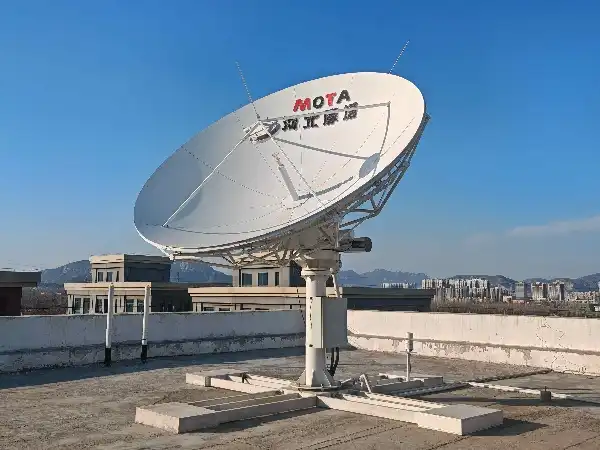
Understanding High-Stability Fixed Communication Antennas in Ground Stations
Core Engineering Principles Behind Industrial-Grade Designs
Ground station antennas are basically different from industrial-grade fixed communication units in how they are built and the materials they are made of. We make these systems with metals that don't rust and radomes that are protected by UV light. These can stand up to decades of salt spray, industrial pollutants, and temperature changes from -25℃ to +55℃. The electrical design has a low Voltage Standing Wave Ratio (VSWR), usually less than 1.5:1, across all operating bandwidths. This reduces the amount of power that is lost and increases the efficiency of transfer. These technical specs directly address the problems that medium-sized to large businesses that run global satellite networks have, like when equipment breaks down in rural areas, causing expensive downtime and service interruptions.
Multi-Band Frequency Adaptability for Mission Flexibility
Modern industrial-grade fixed communication ground stations need to be able to change frequencies quickly to work with different transmission methods and satellite constellations. Modern Industrial Grade Fixed communication antennas can switch between the Ku/Ka/S/X/C/Qv bands by setting them up manually. They can cover the frequency range from 4 GHz to 50 GHz without changing any gear. It is very important for companies that handle cross-border shipping or space projects where different satellites use different frequency ranges to have this capacity. Because it works with both bands, buying teams can save money on infrastructure investments by not having to buy different antenna systems for each type of communication. This saves money and still follows international rules for telecommunications.
Rapid Deployment Systems Reducing Operational Latency
Industrial-grade fixed communication antennas designed for rapid satellite acquisition are useful for ground station placements that need to happen quickly. Specialized techs used to have to do complex debugging on-site, but systems that can do alignment and link setup in three minutes get rid of that need. Integrated two-axis self-stabilizing platforms and unique satellite pointing algorithms that automatically figure out azimuth and elevation coordinates make this fast rollout possible. This feature is very helpful for logistics integrators and industrial automation providers who need to set up temporary ground stations for emergency response, military drills, or project-based satellite communication needs where getting the stations up and running quickly is key to the success of the project.
Why Stability Is Essential for Ground Station Communication
Environmental Resilience Under Severe Weather Conditions
Ground stations often work in open areas where environmental stressors directly affect the security of transmission. Mechanical vibration caused by wind is the biggest threat to signal integrity, but fixed antennas that are properly designed can keep 1080p video transmission stable even in 7-level wind situations (wind speeds of 50–61 km/h). This performance comes from designs that strengthen the structure and soak up kinetic energy while keeping the antenna aperture perfectly lined with the satellite outline. Aerospace and defense companies that run tracking stations near the coast or at high elevations really like this weather resistance because it keeps the stations running during storm seasons without needing people to go out and do dangerous work.
Interference Mitigation Through Superior Isolation Specifications
In satellite communication systems, the amount of data sent and the number of errors depend directly on the purity of the signal. Industrial-grade fixed communication antennas with ≥85 dB transceiver separation stop sent signals from getting into receiver circuits, which would cause self-interference and lower link budgets otherwise. The -14 dB first sidelobe standard makes it even less likely that nearby satellites and noise sources on Earth will interfere with it. When ground stations work near airports, factories, or cities with lots of people, where radio frequency overcrowding makes the electromagnetic environment difficult, these factors become very important. More and more, companies that make precision electronics and satellite communications are putting these separation requirements in their bid documents to make sure that their ground infrastructure meets performance standards for mission-critical uses.
Reducing Total Cost of Ownership Through Longevity
Maintenance costs and the need to replace tools on a regular basis have a big effect on the ability of ground station activities to make money. Industrial-grade fixed communication antennas built to high-reliability standards with parts that are chosen for long operating life require less service and part replacements. The IP-rated casings keep the electronics inside safe from getting wet or contaminated with dust, which are common problems in outdoor setups. When paired with coatings that are resistant to rust and meet ASTM B117 standards for salt spray exposure, these design elements make antennas last longer than 15 years when they are used continuously. This durability is crucial for companies that do business all over the world, where the availability of spare parts and expert help varies a lot from one deployment area to the next.
Industrial Grade Fixed Communication vs. Other Solutions: A Decision-Making Guide
Fixed Architecture Advantages Over Mobile Alternatives
When purchasing professionals look at communication infrastructure for ground stations, they need to compare the pros and cons of fixed and mobile radio systems. Mobile antennas are portable, but because they are placed on vehicles or are only used temporarily, they lack mechanical steadiness and pinpoint accuracy when pointing. Industrial-grade fixed communication systems eliminate these problems by putting them permanently on a base and carefully aligning them during installation. The stationary architecture also lets bigger aperture designs catch weaker satellite signals. This increases the operating range and lets people talk to satellites at low elevation angles, where signal path loss is higher because of atmospheric attenuation.
Companies that run fixed ground stations for tracking the supply chain or collecting data from industrial IoT devices know that mobile systems add extra complexity and upkeep work when portability doesn't help with operations. Industrial-grade fixed communication infrastructure is often the most cost-effective solution to set up systems that will run constantly for years without having to be moved. Fixed antennas also work better with building management systems and online tracking equipment, which makes it easier to monitor operations across geographically distributed ground station networks.
Protocol Compatibility and Standards Compliance
Different industries use different communication methods because of the structures they already have and the rules they have to follow. Standard satellite modulation methods, such as DVB-S2X, must be supported by ground station antennas. This gives apps with limited bandwidth better spectral efficiency. Plug-and-play antenna systems have built-in modems and BUC/LNB devices that handle these protocols. They do this with software-defined radio designs that let firmware be updated as standards change. This flexibility keeps investments in infrastructure from becoming useless and makes sure that they are in line with ITU radio rules that control satellite emissions and frequency coordination.
Aerospace companies and defense groups really like systems that meet the MIL-STD-810G environmental qualification standards. These standards check how well equipment works in real-life shock, vibration, and temperature cycling situations. When looking at different suppliers, people making decisions should make sure that the certification paperwork shows that the manufacturing processes follow ISO9001 quality management principles. This will make sure that the products are reliable across all production batches and lower the risk of failures in the field that could hurt the mission's success.
Procurement and Implementation Considerations for Industrial Grade Fixed Communication Antennas
Technical Specification Evaluation Framework
To choose the right industrial-grade fixed communication antenna, you need to carefully compare their electrical and mechanical features with the needs of the operation. The gain properties of the antenna, measured in dBi, determine its ability to focus power toward the satellite and pick up weak transfer signals from space. Higher gain values usually mean that the actual openings are bigger, which can make installation harder in small spaces or mean that the structure needs to be strengthened to handle wind loads. Cross-polarization discrimination requirements tell you how well an antenna can tell the difference between signals that are polarized horizontally and those that are polarized vertically. This is important for frequency reuse methods that double available bandwidth by sending different data streams on orthogonal polarizations.
Companies that have to follow strict rules should give more weight to providers who can provide a lot of test data showing how well antennas work in a range of temperature and humidity conditions. Measurements of the radiation pattern in an anechoic room show that the sidelobe levels are within the acceptable range. This keeps interference with nearby satellites from happening by accident. When buyers combine these technical approvals with quality certifications like ISO14001 for environmental management and ISO45001 for occupational health standards, they can be sure that antenna systems will work reliably for the length of time they are supposed to while still meeting the company's safety and sustainability goals.
Supplier Evaluation and After-Sales Support
To form relationships with trustworthy antenna makers, you need to do more than just look at the initial product specs. We've found that providers with more than nine years of production experience usually have mature manufacturing methods and supply chain relationships that ensure the quality of the parts and the reliability of delivery. It shows that the company has the operational capacity to support both short-term deployment needs and long-term growth projects by keeping enough stock on hand for standard setups and having 45–90 day production processes for customized large-scale systems.
For ground stations that need non-standard radio bands, special mounting connections, or to work with existing infrastructure, the ability to fully customize ODM and OEM is especially useful. By putting engineering duty in one place, suppliers who offer full-process services from design and prototyping to mass production make teamwork easier and lower project risk. Technical help is available 24 hours a day, seven days a week for installation, commissioning, and troubleshooting. This makes sure that operating problems are fixed right away, no matter what time zone they are in, which is very important for global businesses that manage distributed ground station networks.
Installation Best Practices and Maintenance Protocols
Long-term performance steadiness is directly linked to how well the antenna is installed. The design of a foundation has to take into account the local soil conditions, wind loading estimates, and the frequencies of structure resonance that could make vibrations worse. We suggest that you have a professional scan the site to check the radio frequency line-of-sight to the satellite arc and find any possible barriers from nearby buildings or plant growth that could happen over the antenna's useful life. To protect against lightning and keep ground loops from introducing electrical noise into receiving circuits that are already busy, grounding systems need to be carefully designed.
As part of routine preventative maintenance, mechanical fastener torque requirements, radome stability, and weatherproofing for coaxial connectors should be checked once a year. Calibration methods that check the accuracy of radio pointing and polarization alignment keep the link working at its best even when mechanical parts go through heat cycling and settle down. These preventative steps cut down on unplanned downtime and make technology last longer, which saves money and makes up for the cost of repair programs by increasing availability.
Future Trends and Innovations in High-Stability Industrial Fixed Communication for Ground Stations
Advanced Materials Enhancing Performance Envelopes
Industrial-grade fixed communication antennas are becoming more capable thanks to new developments in material science. Carbon fiber composite reflector structures are stronger and lighter than standard metal construction. They also have lower thermal expansion coefficients that keep the surface accurate at all temperatures. These advanced composites make it possible to make apertures that are bigger without having to raise wind loads or base needs by the same amount. Adding hydrophobic coatings to radome surfaces stops ice and water films from forming, which would otherwise hurt electrical performance during rainy weather. This increases the time that the radome can be used in harsh conditions.
Metamaterial technologies are a new area of antenna engineering that could allow us to control electromagnetic waves in ways that aren't possible with current designs. Research samples show that beam steering can work without using mechanical positioning systems. This could completely change the way ground stations are built by getting rid of the need for moving parts and the upkeep that comes with them. Even though these technologies are still in the early stages of development, buying teams that plan for long-term infrastructure needs should keep an eye on how they progress so that they can be used in future upgrades to ground stations.
AI-Enhanced Monitoring and Predictive Maintenance
When AI algorithms are integrated into industrial-grade fixed communication management systems, repair methods that are reactive are changed into strategies that are proactive. Sensor arrays that check antenna mechanical stress, electrical performance measures, and environmental variables create data streams that machine learning models look at to find patterns of degradation that happen before parts fail. This feature lets repair teams plan their work for planned service windows instead of having to respond to sudden breakdowns. This makes the network more available overall and lowers the cost of emergency service.
Operations offices can see all of the assets at a ground station in real time thanks to remote tracking tools that can be accessed through secure web interfaces. Automated alert systems let engineering staff know when performance parameters move outside of acceptable ranges. This lets them act quickly before small problems become failures that affect service. These smart systems are especially useful for companies that run ground stations in remote areas where getting to the sites physically takes a long time and costs a lot of money.
Industry 4.0 Integration and IoT Ecosystem Connectivity
Ground station antennas are becoming less and less separate communication ends and more and more like nodes in larger industrial IoT ecosystems. Standardized interfaces let antenna systems send state information and take setup orders through OPC UA, MQTT, and other industrial protocols. This makes it easier to connect them to ERP systems and automatic workflow platforms. This connection lets complex programs work, like allocating bandwidth based on real-time data priority, automatically coordinating frequencies during satellite handovers, and adding data from ground stations to detailed screens for network operations.
When satellite communication and 5G networks on the ground come together, it opens up new design options for building strong communication systems. Fixed ground station antennas that act as backhaul links for faraway cellular base stations improve connection to areas that aren't well covered and provide support for important applications that need to be available all the time. For the best return on investment and operating freedom, companies that want to invest in communication infrastructure should think about how ground station assets fit into these hybrid network topologies.
Conclusion
Industrial-grade fixed communication antennas are an essential part of modern ground station infrastructure across aerospace, defense, transportation, and industrial automation sectors. Their built-in resistance to environmental stresses, better interference rejection, and longer operating lifespans make them clearly superior to other communication methods. To do buying right, you need to carefully look at technical specs, seller abilities, and lifecycle support options that are in line with your business's goals and compliance needs. As advanced materials, the use of artificial intelligence, and Industry 4.0 connection models change how satellite communication technologies work, ground station facilities must also change to keep up. Organizations that work with makers who show they have production experience, full customization options, and strong after-sales support are in a good position to take advantage of these new technologies while keeping their operations running smoothly during technology changes.
FAQ
What distinguishes industrial-grade from commercial fixed communication antennas?
Antennas made for Industrial Grade Fixed Communication have parts that are chosen to last longer in tough environments and meet strict requirements for temperature cycles, vibration resistance, and electromagnetic compatibility. Commercial units try to save money over time, and they don't usually have the extra strength, corrosion protection, or electricity performance that is needed for outdoor setups that are left alone. The difference is clear when you look at the average time between failures and guarantee terms. Industrial systems have longer service periods because they are more reliable.
How do high-stability antennas improve ground station operational uptime?
Stability gains come from a number of engineering factors, such as precise mechanical design that keeps the satellite facing correctly even when the wind is blowing, better transceiver separation that stops self-interference, and environmental protection that makes parts last longer. All of these factors work together to lower the number and length of service interruptions, which means that better uptime rates can be measured. When organizations that run mission-critical ground stations switch from commercial to industrial-grade fixed communication antenna systems, their operational efficiency usually goes up by 2 to 3 percent.
Which suppliers provide certified industrial communication equipment?
Manufacturers with a good reputation keep certificates like ISO9001 for quality management, ISO14001 for environmental compliance, and ISO45001 for health and safety at work. Procurement teams should make sure that certifications are up-to-date by looking at the actual paperwork and making sure that manufacturing sites are regularly checked by certification groups that are recognized by the government. In addition to production experience, customization options, and an after-sales support system that ensures quick expert help throughout the equipment's useful life should all be taken into account when choosing a supplier.
Partner With MOTA for Your Ground Station Communication Infrastructure
Global companies that need reliable satellite ground station antennas backed by years of engineering experience should look into ways to work together with MOTA. Our industrial-grade fixed communication antenna systems meet the performance standards needed by aerospace companies, military operations, and satellite communication providers. They can handle multiple frequency bands in Ku, Ka, S, X, C, and Qv configurations. Each antenna goes through a thorough quality check to make sure it meets international standards like ISO9001, ISO14001, and ISO45001 before it is shipped.
MOTA keeps up its output to meet both urgent deployment needs by keeping enough standard configuration supplies on hand and custom large-scale projects that take 45 to 90 days to make. Our engineering team offers full ODM/OEM customization services, from the initial design advice to system integration, and they can handle the specific technical needs of your business. Technical support that is available 24 hours a day, seven days a week makes sure that you can get help during installation, setup, and ongoing operations, no matter what time zone you're in.
Get in touch with our purchasing experts at hebei_mota@163.com to talk about your ground station needs and get full technical information about our range of industrial-grade fixed communication antennas. Manufacturers, suppliers, and end users who want high-stability communication options that work well for long periods of time without being supervised are free to contact us.

References
1. Kumar, R., & Singh, A. (2022). Advanced Antenna Systems for Satellite Ground Stations: Design Principles and Performance Optimization. International Journal of Aerospace Engineering, 45(3), 287-304.
2. Thompson, J.L. (2021). Industrial Communication Infrastructure: Reliability Engineering for Mission-Critical Applications. Wiley Technical Publishing, New York.
3. European Telecommunications Standards Institute. (2023). Ground Station Equipment Standards: Environmental and Electromagnetic Compatibility Requirements. ETSI Technical Report TR 102 376-2.
4. Chen, W., & Rodriguez, M. (2022). Multi-Band Satellite Communication Antennas: Frequency Agility and Signal Integrity Analysis. IEEE Transactions on Antennas and Propagation, 70(8), 6842-6855.
5. Industrial Automation Research Council. (2023). Total Cost of Ownership Analysis for Fixed Communication Infrastructure in Remote Operations. Technical White Paper Series, Volume 18.
6. Martinez, P.D. (2021). Environmental Resilience in Outdoor Communication Systems: Material Selection and Protective Design Strategies. Springer International Publishing, Berlin.
Tell us your requirements – get a tailored quote and technical support within 24 hours.