- English
- French
- German
- Portuguese
- Spanish
- Russian
- Japanese
- Korean
- Arabic
- Greek
- German
- Turkish
- Italian
- Danish
- Romanian
- Indonesian
- Czech
- Afrikaans
- Swedish
- Polish
- Basque
- Catalan
- Esperanto
- Hindi
- Lao
- Albanian
- Amharic
- Armenian
- Azerbaijani
- Belarusian
- Bengali
- Bosnian
- Bulgarian
- Cebuano
- Chichewa
- Corsican
- Croatian
- Dutch
- Estonian
- Filipino
- Finnish
- Frisian
- Galician
- Georgian
- Gujarati
- Haitian
- Hausa
- Hawaiian
- Hebrew
- Hmong
- Hungarian
- Icelandic
- Igbo
- Javanese
- Kannada
- Kazakh
- Khmer
- Kurdish
- Kyrgyz
- Latin
- Latvian
- Lithuanian
- Luxembou..
- Macedonian
- Malagasy
- Malay
- Malayalam
- Maltese
- Maori
- Marathi
- Mongolian
- Burmese
- Nepali
- Norwegian
- Pashto
- Persian
- Punjabi
- Serbian
- Sesotho
- Sinhala
- Slovak
- Slovenian
- Somali
- Samoan
- Scots Gaelic
- Shona
- Sindhi
- Sundanese
- Swahili
- Tajik
- Tamil
- Telugu
- Thai
- Ukrainian
- Urdu
- Uzbek
- Vietnamese
- Welsh
- Xhosa
- Yiddish
- Yoruba
- Zulu
Can anti-interference satellite antennas work in industrial environments?
An anti-interference fixed satellite antenna can work in a factory as long as the whole link is made for that location. Signals that aren't wanted are blocked by a narrow beam, low sidelobes, filtering, and polarization control. It still depends on the amount of interference, the frequency band, the budget for the link, the size of the antenna, how well it was installed, and the weather. At MOTA, we've seen that projects go well when the dish, the RF chain, and the site are all thought of as a single unit. This goes for mines, factories, ports, utilities, oil and gas facilities, transportation hubs, and infrastructure that is far away. There are two types of filtering: passive and active. The best mix for each site is different.
This guide is for people who buy from OEMs, procurement teams, RF engineers, and distributors. I talk about interference sources, protection methods, needs for harsh weather, evaluation steps, choosing a supplier, and what information to include in a request for a quote.
Interference Sources and Core Principles
What Causes Satellite Signal Interference in Industrial Environments?
There is both intentional and unintentional interference with industrial satellite links. The local RF noise floor is raised by radar, microwave links, private LTE networks, high-power radios, variable-frequency drives, and welding equipment that are close by. The carrier-to-noise ratio goes down when the noise floor is higher, which leads to lost packets, retransmissions, and modem lock. The United States is a good example. The FCC gave 5G access to frequencies between 3.7 and 3.98 GHz in 2020, but kept frequencies between 4.0 and 4.2 GHz for satellite services. This means that C-band terminals close to 5G sites need strong filtering. I suggest you do an RF site survey before you buy something. This survey should record the frequency, power, direction, duty cycle, and daily changes of the interference.
How Does an Anti-Interference Fixed Satellite Antenna Work?
The antenna is made up of layers for anti-interference fixed satellite antenna. A narrow-beam high-gain reflector focuses on the satellite you want to see and blocks signals coming from other directions. Off-axis energy is cut off by low sidelobes. ITU-R S.580 describes radiation patterns that earth station antennas that work with geostationary satellites should aim for when they are being designed. More unwanted energy can be blocked by cross-polarization isolation and correct polarization alignment. Bandpass filters, waveguide parts, and low-noise receive parts are all examples of passive parts. Interference detection, adaptive filtering, or digital signal processing are some of the things that active systems do. I rate anti-jamming performance at the system level because the antenna, modem, cables, grounding, and monitoring all have an effect on the outcome.
Anti-Interference Fixed Satellite Antenna vs. Standard Satellite Antenna
When RF conditions are normal, standard antennas provide cheap connectivity. When there is a lot of traffic, anti-interference models focus on making sure the link is always available and performing well. Compare more than just gain. Make sure to check the beamwidth, off-axis rejection, G/T, noise temperature, cross-polarization isolation, adjacent-band rejection, and the stability of the machine. If the site is quiet and doesn't have any important traffic, a regular antenna can work. I recommend an anti-interference model for backup networks, places with a lot of transmitters close together, and any use case where downtime costs money or lives. It's not always true that a bigger dish will block more interference. This is because sidelobe control and filter quality are more important than diameter.
Technologies and Reliability in Harsh Conditions
Key Technologies for Dependable Industrial Satellite Communication
Matching parts are the first step in making a reliable link. It's important that the antenna's size and gain work with the satellite service, frequency band, availability goal, and link budget. Lots of insertion loss is bad for filters, and LNBs, LNAs, BUCs, cables, and waveguides all need to work together. It's just as important for mechanical design. Pointing accuracy is kept up by using stable mounts, rigid reflectors, materials that don't rust, grounding, lightning protection, and good sealing. A narrow beam loses signal after a small change in direction, so the RF design includes a strong base. These link-budget connections are talked about in Maral and Bousquet's textbook, Satellite Communications Systems.
Can Anti-Interference Satellite Antennas Operate in Harsh Industrial Conditions?
Yes, as long as the equipment and installation work well in the area. Interference is cut down with directional gain, filtering, and frequency planning. An RF survey confirms the plan. How long you can stay alive outside depends on the wind rating, the rigidity of the structure, the temperature range, the resistance to corrosion and humidity, and the lightning protection. IEC 60529 says that an IP66 rating means a dust-tight enclosure that can handle strong water jets. The ISO 9227 salt spray test is a standard way to compare how resistant coastal sites are to corrosion. Sites in the desert, at high altitude, or with chemicals may need different radomes or materials. I also check maintenance plans, spare parts, backup power, network failover, and thermal management when I'm on continuous duty.
Comparing C-Band, Ku-Band, and Other Options for Industrial Sites
Pick the band based on the satellite service, the site, the budget, the rules in the area, and any interference. Don't just pick one at random. C-band has less rain fade, so it works well in places with a lot of rain and high-availability networks. However, it needs a bigger dish and needs to be carefully coordinated with terrestrial services. Ku-band finds a good balance between antenna size and service availability, but it needs careful rain attenuation and precise pointing. Ka-band has a lot of data to send, but it loses signal more when it rains. ITU-R P.618 tells engineers how to make predictions about links between Earth and space. If they are licensed, S-band and X-band fit specialized services. Size of the antenna, beamwidth, filter choices, coverage, and the total cost of ownership should all be compared.
Evaluating and Buying with Confidence
Active vs. Passive Anti-Interference Satellite Antennas
Directivity, polarization isolation, shielding, and RF filtering are all types of passive protection for anti-interference fixed satellite antenna. It works best with interference that is stable and predictable, and it uses less power and is easier to maintain. Active protection is needed for strong, changing, or multidirectional interference that orientation and filters can't handle on their own. Adding adaptive filtering, digital processing, and real-time monitoring makes things more reliable, but it also needs more power, software, integration, and support throughout its lifecycle. In a hybrid design, many important sites use both at the same time. I decide by looking at the level of interference, the cost of downtime, the infrastructure that is available, and the level of assurance that I need. Active isn't always better because it costs more and is harder to use.
How to Evaluate Anti-Interference Performance Before Purchase
First, write the need in terms that can be measured, such as frequency band, polarization, data rate, target availability, latency, satellite orbit, and operating environment. Next, look at the gain, G/T, beamwidth, off-axis rejection, cross-polarization isolation, adjacent-channel rejection, accuracy of pointing, and environmental ratings. You should add the suppression range, response time, power use, and control interfaces for active systems. Instead of believing what the company says on the advertising, ask for radiation patterns, test reports, environmental documents, factory acceptance procedures, and project references. When it comes to defense and government work, the safest proof of a specification is data measured by a third party. Finally, make sure that the full link budget is met by the modem, LNB or LNA, BUC, filters, cables, and monitoring platform.
Common Deployment Mistakes and How to Avoid Them
Deployment, not antenna design, is the main cause of most performance issues. High gain does not guaranty that it will not jam. Off-axis rejection, filtering, beamwidth, and polarization isolation all need to work together. If you skip the RF site survey, you won't be able to find nearby transmitters. Link margin is quickly lost when there are problems with the foundation, pointing, polarization, cable loss, grounding, connectors, or lightning protection. The initial price alone doesn't take into account the total cost of ownership. Before I accept an order, I make sure it meets clear criteria, test it in the factory and on the job site, and look over the warranty and service terms. These steps give you control over the quality of the project that you can see.
Supplier Selection and Procurement
How to Choose an Anti-Interference Fixed Satellite Antenna Supplier
You should look for someone who has experience with mechanical engineering, system integration, satellite antennas, and protecting against RF interference. Check out the quality systems, packaging, international shipping, inspection procedures, calibration capabilities, traceability, manufacturing controls, and spare parts support. OEMs and integrators often need feeds, filters, radomes, mounts, control units, private labeling, project documents, and different sizes of reflectors. Technical communication, remote commissioning, warranty response, software updates, and field service should all be part of global support. Along with environmental ratings, test documents, lead time, customization needs, and after-sales terms, a strong RFQ lists gain, G/T, beamwidth, cross-polarization isolation, rejection data, and environmental ratings.
Recommended Procurement Process for Industrial Projects
Technical and business risk are both lower when there is a structured process. First, name the site, the satellite, the frequency band, the type of service, the weather, the availability goal, and the level of importance. The next step is to do an RF and site assessment that looks at things like interference, line of sight, installation space, grounding, power, and cable routing. Make a list of the requirements for RF, mechanical, environmental, control, documentation, and acceptance based on what you've learned. Compare prices for the whole system instead of just the antennas, and ask suppliers to explain any claims that can't be backed up. Test everything in the factory before sending it out, and then check the alignment, polarization, grounding, RF connections, and link performance when it gets to the site. A trial batch is also often added by buyers before a large order.
What Industrial Buyers Can Expect From a Properly Designed Solution
Link stability, modem lock, throughput consistency, and operational continuity are all better when the system is well-designed. Outages, emergency troubleshooting, and unplanned maintenance can be cut down by making the system more resistant to local interference. Setting performance baselines, managing spare parts, keeping an eye on equipment from afar, and planning upgrades are all easier when the design is written down. Different frequency bands, satellite networks, backup links, and central monitoring can all work at the same site, depending on the architecture. Because of things like weather and satellite conditions, no design can completely eliminate outages. That's why I write down my availability goals. Look at the value over the whole lifecycle, which includes the risk of downtime, installation, maintenance, replacement, and long-term support.
MOTA Anti-Interference Fixed Satellite Antenna for Demanding Sites
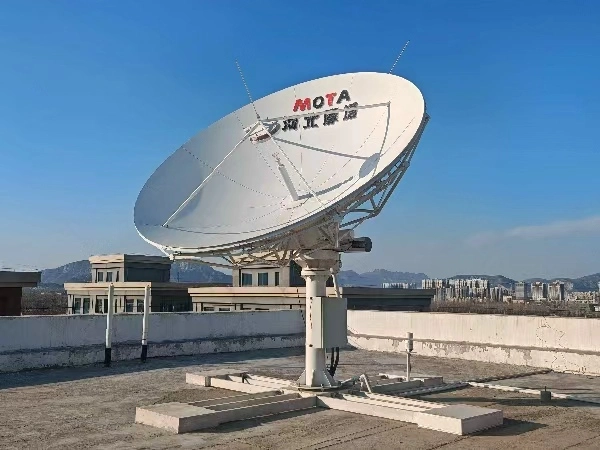
This is how our product meets the above requirements. This system was made by Hebei Mota Electronics Technology Co., Ltd. for RF sites with a lot of people, like military bases, border stations, and industrial complexes.
Self-Developed AI Module and Key RF Parameters
Our anti-interference fixed satellite antenna has an AI anti-interference module that we made ourselves. It finds electromagnetic noise and blocks it in real time, and it changes as the day goes on because interference patterns change. It's important that the transceiver isolation is at least 95 dB, the first sidelobe level is at least -20 dB, and the noise figure is at least 0.7 dB. This means that 95 dB cuts the amount of power that leaks from the transmit path into the receive path by 3.2 billion times. A sidelobe with a -20 dB level carries 1% of the main beam's power, and a noise temperature of 0.7 dB is about 51 K. It only takes three minutes for our special pointing algorithm to align the satellites.
Multi-Band Support and Nine Aperture Sizes
One fixed installation can switch between the Ku, Ka, S, X, C, and Qv bands by hand, so teams can switch bands without having to buy new hardware. Ka-band is better for faster speeds, Ku-band is better for wider coverage, and S, X, or C bands are better for government frequencies when allowed. There are 13 m, 11 m, 9 m, 7.3 m, 6.2 m, 5.4 m, 4.5 m, 3.3 m, and 2.4 m aperture sizes, so you can find the right gain and beamwidth for your link. It's easier to maintain and take up less space if you only need one antenna instead of several single-band systems.
Weather Resistance and Pointing Stability
The IP66 case keeps dust and high-pressure water jets out. Materials that don't rust and radiation shielding work well in coastal, desert, and industrial areas. It works from -30°F to +55°F (-22°F to 131°F) and stays stable in 8-level wind, which is about 39 to 46 mph on the Beaufort scale. The link can handle stable 4K video, and a three-axis self-stabilizing platform fixes pointing drift caused by wind load, thermal expansion, and vibration. This is what the main specs are:.
| Parameter | Specification |
|---|---|
| Frequency bands | Ku/Ka/S/X/C/Qv (manual switching) |
| Transceiver isolation | ≥95 dB |
| First sidelobe level | ≤-20 dB |
| Noise figure | ≤0.7 dB |
| Satellite acquisition | 3 minutes |
| Protection rating | IP66 |
| Operating temperature | -30℃ to +55℃ |
| Stabilization | Three-axis self-stabilizing platform |
These numbers make it easy for your engineers to write bid documents and test plans.
Delivery, Customization, and Support
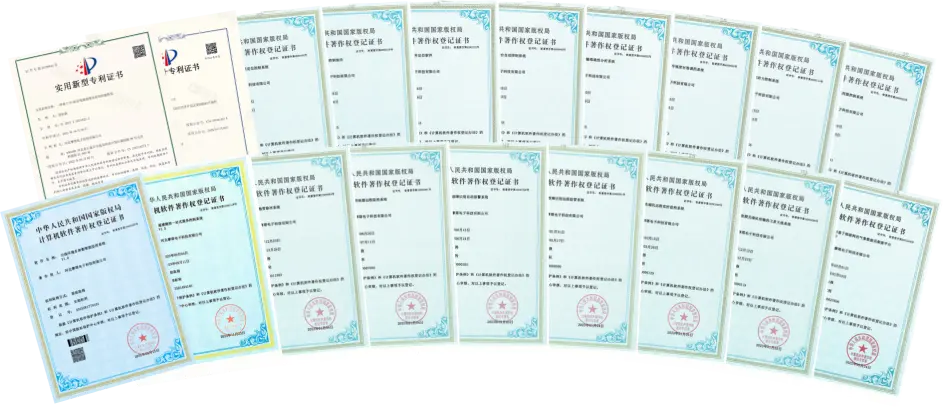
MOTA has been making things for nine years and has ISO9001, ISO14001, and ISO45001 certifications. They also have domestic type approval for radio transmission equipment. During project review, please make sure you know the rules for your own market. Regular orders can be filled from ready stock, and custom or large-scale systems take 45–90 days. We can make hardware, interface protocols, functional modules, and software interfaces exactly the way you want them. We also offer packaging that is resistant to shock and water, help with customs, remote technical support 24 hours a day, seven days a week, and an international standard warranty on the whole unit.
Conclusion
An anti-interference fixed satellite antenna can work in factories as long as engineers treat it like any other part of the RF and mechanical system. A lot of noise comes from radar, 5G, private networks, and heavy machinery. To block this noise, narrow beams, low sidelobes, filtering, and polarization isolation are used. Passive protection works for interference that doesn't change, active suppression works for interference that does, and hybrid designs work for critical sites. Weather ratings like IP66, the right band, and a solid installation all work together to keep the link stable over time. To lower their risk, buyers should do an RF site survey, ask for measured test data, compare full system proposals, and set criteria for factory and site acceptance. The final choice should be based on measurable factors, not marketing claims.
FAQ
Can an anti-interference fixed satellite antenna work near factories, ports, or mines?
Yes, as long as the design goes with the site. An RF survey, the right filtering, the right pointing, and a written test plan determine the outcome. Ask for measured data that fits your interference profile and frequency band.
Is active suppression always better than passive protection?
No, active suppression works for interference that is very strong or changes often, but it costs more, uses more power, and needs more software. Passive filtering and directivity work well with stable sources most of the time, so choose the method that works best for your site.
Which bands does the MOTA antenna support?
It has nine aperture sizes, ranging from 2.4 m to 13 m, and can switch between Ku, Ka, S, X, C, and Qv bands.
How long does delivery take?
Regular orders are met by ready stock. It takes 45 to 90 days for customized and large systems to be built. Send information about your project to hebei_mota@163.com to get a time frame.
Request a Project-Specific Anti-Interference Satellite Antenna Consultation from MOTA
Ready to talk about your site? MOTA has been making anti-interference fixed satellite antennas for nine years and has ISO9001, ISO14001, and ISO45001 certifications. They also offer ODM/OEM support and a response team that is available 24 hours a day, seven days a week. Send your frequency band, aperture, site conditions, and quantity to hebei_mota@163.com. Our engineers will get back to you with a proposal that is tailored to your project.
References
1. ITU-R Recommendation S.580-6, Radiation Diagrams for Use as Design Objectives for Antennas of Earth Stations Operating with Geostationary Satellites, 2004
2. ITU-R Recommendation P.618-14, Propagation Data and Prediction Methods Required for the Design of Earth-Space Telecommunication Systems, 2023
3. IEC 60529, Degrees of Protection Provided by Enclosures (IP Code), 2013
4. ISO 9227, Corrosion Tests in Artificial Atmospheres: Salt Spray Tests, 2017
5. Federal Communications Commission, Expanding Flexible Use of the 3.7 to 4.2 GHz Band, 2020
6. Maral and Bousquet, Satellite Communications Systems, 2020
Tell us your requirements – get a tailored quote and technical support within 24 hours.