- English
- French
- German
- Portuguese
- Spanish
- Russian
- Japanese
- Korean
- Arabic
- Greek
- German
- Turkish
- Italian
- Danish
- Romanian
- Indonesian
- Czech
- Afrikaans
- Swedish
- Polish
- Basque
- Catalan
- Esperanto
- Hindi
- Lao
- Albanian
- Amharic
- Armenian
- Azerbaijani
- Belarusian
- Bengali
- Bosnian
- Bulgarian
- Cebuano
- Chichewa
- Corsican
- Croatian
- Dutch
- Estonian
- Filipino
- Finnish
- Frisian
- Galician
- Georgian
- Gujarati
- Haitian
- Hausa
- Hawaiian
- Hebrew
- Hmong
- Hungarian
- Icelandic
- Igbo
- Javanese
- Kannada
- Kazakh
- Khmer
- Kurdish
- Kyrgyz
- Latin
- Latvian
- Lithuanian
- Luxembou..
- Macedonian
- Malagasy
- Malay
- Malayalam
- Maltese
- Maori
- Marathi
- Mongolian
- Burmese
- Nepali
- Norwegian
- Pashto
- Persian
- Punjabi
- Serbian
- Sesotho
- Sinhala
- Slovak
- Slovenian
- Somali
- Samoan
- Scots Gaelic
- Shona
- Sindhi
- Sundanese
- Swahili
- Tajik
- Tamil
- Telugu
- Thai
- Ukrainian
- Urdu
- Uzbek
- Vietnamese
- Welsh
- Xhosa
- Yiddish
- Yoruba
- Zulu
Fixed Communication Antennas for Reliable Satellite Communications in Remote Areas
Maintaining a reliable connection becomes mission-critical when activities go to faraway places where there is no infrastructure on land. Industrial Grade Fixed Communication Antennas have become the best way to use satellite communications in tough conditions because they work consistently even when commercial-grade equipment fails. These tough systems let businesses in the energy, logistics, aerospace, and defense industries keep data flow, video communication, and command activities going even when they are far away or in harsh environments. Choosing antenna systems that are designed to work in industrial settings can mean the difference between successful operations and costly downtime.
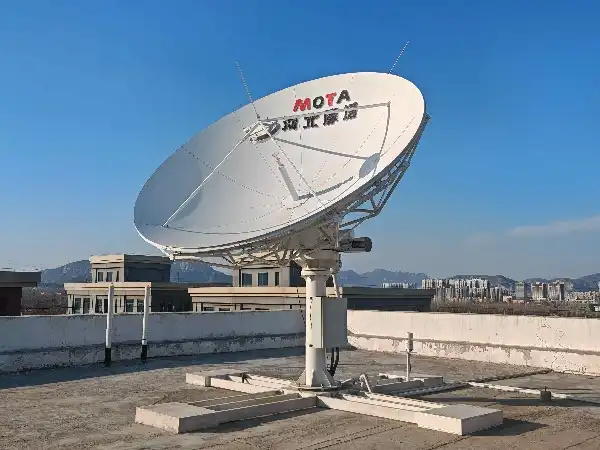
Understanding Industrial Grade Fixed Communication Antennas
What Defines Industrial-Grade Performance
When compared to private or business versions, industrial-grade fixed communication antennas are very different. These systems are designed to work continuously for years without losing their signal purity, even when they are exposed to harsh environments. The main difference is in the choice of materials, the building of the structure, and the electrical performance factors that are based on strict industry standards instead of what most people expect.
These antennas are different from standard equipment because they are made of metals that don't rust, radomes that don't fade in UV light, and sealed electronics sections that meet IP67 or higher ingress protection ratings. The structure has to be able to handle steady wind loads, temperature changes from -40°C to +85°C, and mechanical shaking without affecting the RF performance. This means that the total cost of ownership is lower for operations where broken equipment leads to costly site trips or breaks in operations.
Key Technical Features That Matter
In satellite communications, an antenna's efficiency is based on how pure and consistent the signal is. This is possible with advanced industrial-grade fixed communication systems that use precise mechanical design and advanced radio frequency engineering. Operators can switch between satellite networks without having to buy new gear because they are multi-band compatible across Ku, Ka, S, X, C, and Qv frequencies. This gives them freedom as their communication needs change.
Modern systems have waterproof housings that house block upconverters, low-noise block downconverters, and clever power management. This gets rid of the need for external equipment that can fail. High transceiver isolation—more than 85dB in professional systems—keeps signals from getting messed up, and managed sidelobe reduction below -14dB keeps interference with channels next to it to a minimum. These requirements aren't made up on the spot; they have a direct effect on the reliability of links in crowded orbital environments where multiple carriers share frequency assignments.
The Technology Behind Stable Links
It takes more than passive antenna design to keep satellite lock in changing conditions. Two-axis stabilization platforms keep the beam perfectly lined with transponders in orbit by adjusting for structure movement caused by wind or thermal expansion. Private tracking algorithms constantly check the signal quality and make changes in real time, which keeps 1080p video streaming stable even when bad weather happens.
Automated satellite capture has changed how well deployments work. Systems that can position and set up links in three minutes get rid of the need for specialized workers during installation. This ability to quickly deploy is very useful for emergency situations or short-term operations at a place where contact needs to be set up quickly without a lot of technical help.
How Fixed Communication Antennas Ensure Reliable Satellite Communications in Remote Areas
Overcoming Environmental Challenges
Conditions that would break down normal communication tools are common in remote activities. Offshore sites have to deal with rust from salt spray and wind gusts of up to 200 km/h. Installations in the Arctic have to deal with temperatures dropping to -45°C and months of darkness. Extreme temperatures, sandstorms, and UV light from the sun damage normal materials in just a few months.
These problems are solved by industrial-grade fixed communication systems that make smart engineering choices. Marine-grade materials and finishes that don't rust make things last longer in seaside areas. Mounting gear that doesn't break in the wind and aerodynamic radome shapes lower the load on the structure during storms. Operating temperature ranges of -25°C to +55°C, or even wider in some specialized versions, make sure that they work in all climate zones around the world without losing performance or needing to be serviced often.
Real-World Deployment Scenarios
When oil is being extracted from the ocean, satellite dishes are the only way for platform operations, safety systems, and crew comfort to communicate. Communication problems in these sites put practical safety and regulatory compliance at risk, so they need to be completely reliable. Industrial-grade fixed communication systems that work around the clock without any help from a person must be able to send tracking data reliably for monitoring equipment, video security, and emergency contacts, no matter what the weather is like.
For rural mining operations to use automated vehicles, keep an eye on the environment, and handle business, they need to be connected to the internet via satellite. Large transport hubs put fixed antennas on distribution centers to keep track of goods and coordinate shipments in areas that don't have fiber infrastructure. Smart city projects use these systems for environmental sensor networks and traffic control backhaul where laying wires in the ground is not cost-effective.
Maximizing Uptime Through Redundancy
Multiple levels of redundancy are built into industrial-grade fixed communication systems. When the link quality drops, dual-feed setups let you switch between the main and backup satellites right away. Integrated power systems with battery backup keep things running when the power goes out. Remote tracking lets operations teams know about problems with performance before they become a total failure. This lets them plan maintenance ahead of time, which cuts down on downtime.
Communication problems in the workplace cost a lot more than the cost of the tools. Because of production stops, breaking safety rules, and fines from the government, dependability is the most important factor in buying something. Systems that are designed to be available 99.99% of the time aren't just technical specs; they mean uninterrupted operations that protect money-making opportunities and legal standing.
Comparing Fixed Communication Antennas with Alternative Communication Solutions
Evaluating Connectivity Options
When people are looking at remote contact tools, they have a lot of different technology choices, and each one works in a different way. Terrestrial cell phone networks are convenient, but they don't always work outside of crowded areas. Low Earth orbit satellite groups offer global reach, but they bring variable latency and need electrically steered phased arrays, which make the system more complicated and expensive.
For mission-critical apps, geostationary satellite links with industrial-grade fixed communication antennas offer reliable latency, uniform bandwidth sharing, and a track record of dependability. Professional antenna systems cost more up front, but they have better uptime, require less operational involvement, and work with current satellite infrastructure that many businesses already use for call and data services.
Communication Standards and Protocol Considerations
When defining satellite communication systems, businesses need to think about frequency band allocations, modulation methods, and network protocols. Ku-band is still widely used for business networks because it has good satellite coverage and is easy to get ground equipment for. Ka-band has a bigger bandwidth potential, but it is more easily weakened by the atmosphere during rainstorms, so apps that are sensitive to weather need to leave more link budget cushion.
This trade-off is dealt with by dual-band technology, which lets managers change frequency assignments based on the weather and bandwidth needs. Systems that let you switch between bands manually give you operating freedom without having to replace all of your hardware every time your communication needs change or your business grows into new areas with different satellite coverage patterns.
Procurement Guide for Industrial Grade Fixed Communication Antennas
Critical Specification Parameters
Instead of using general marketing specs, procurement teams should look at antenna systems based on the needs of the particular application. Which satellite services the equipment can receive depend on how well it works with the frequency range. When things go wrong, the link margins and data rates that can be sent are directly affected by the gain specs, which are recorded in dBi. A voltage standing wave ratio less than 1.5:1 makes sure that power is transferred efficiently and that signals are not reflected too much, which lowers the quality of the transmission.
Ratings for the environment should be carefully looked over. The stated working temperature ranges must match the real conditions at the site, which may include solar heating effects that can make equipment temperatures 20 to 30°C higher than the ambient temperature. Ratings for wind survival should be higher than the strongest gusts that have been recorded at installation sites in the past, with enough room for error. IP protection grades tell you if the electronics inside can handle the dust and moisture that are common in certain operating settings.
Vendor Selection Criteria
When picking antenna providers, you need to look at more than just the product specs. How well makers understand the needs of business applications versus consumer markets can be seen by their production experience and technical know-how. Getting ISO9001, ISO14001, or ISO45001 certifications shows that you care about quality management, being good to the environment, and worker safety, all of which lower long-term operating risk.
At MOTA, we've spent more than nine years creating industrial-grade fixed communication options that are perfect for use in commercial settings. Our systems go through strict testing procedures that make sure they work in situations like high temperatures, vibrations, and electromagnetic interference that are similar to those found in real-world installation settings. We keep enough stock on hand for standard setups, and we can produce unique large-scale deployments in 45 to 90 days if they need specific frequency allocations or mechanical integration parameters.
Support Services and Logistics
Total buying costs are greatly affected by the availability of technical help. Round-the-clock engineering support makes sure that troubleshooting tools are always available, even when operating plans or time zones are different. Full ODM/OEM customization options let you add features that are specific to your client without affecting the core reliability.
Expertise in cross-border logistics is very important for foreign tasks. Professionally made shock-proof packing, moisture barrier protection, and full shipment tracking lower the chances of damage during travel. Help with clearing customs and flexible storage options cut down on project timelines by getting rid of the government delays that come with buying tools from other countries. The support system for long-term operating performance includes warranty terms, spare parts availability, and regional after-sales service.
Troubleshooting and Maintaining Industrial Grade Fixed Communication Systems
Diagnosing Common Performance Issues
Signal loss shows up in many different ways, each of which needs to be carefully diagnosed. Gradual loss of link quality is usually a sign that the antenna isn't lined up right. This can be caused by the supporting structure shifting or heat expansion. Failure of a component, water getting into sealed areas, or RF interference from new equipment working on neighboring frequencies can all cause sudden drops in performance.
Monitoring tools that keep an eye on signal-to-noise ratios, bit mistake rates, and received signal strength can spot problems before they get too bad. Setting up baseline performance measures during initial commissioning lets operations teams find problems before they get so bad that they stop all contact. With remote diagnostics, engineering teams can check the health of an industrial-grade fixed communication system and decide what needs to be done to fix it without having to send out techs to do basic troubleshooting.
Preventive Maintenance Best Practices
Scheduled cleaning procedures make antenna systems last longer and keep them from breaking down without warning. Visual checks every three months find actual damage to radomes, corrosion in the mounting hardware, or wear and tear on the cable connectors. Every year, full inspections are done that check the pressure on mechanical connections, clean the radome surfaces to keep the RF clear, and make sure the grounding system works properly.
When makers release firmware updates, they often include improvements to speed and more satellite compatibility. Setting up processes for controlled update deployment makes sure that systems can gain from new technologies without causing problems with how they work. Recording all upkeep tasks, performance checks, and changes to the setup builds institutional knowledge that speeds up troubleshooting when problems happen.
When to Engage Professional Support
Routine repair can be done by trained site staff, but there are times when the maker needs to be involved. Problems with complex RF performance need specialized test tools and knowledge that most businesses don't have. Damage to a part that needs to be replaced should only be done with factory-approved parts and methods to keep the guarantee valid and meet performance standards.
Service level agreements with antenna makers set promises for reaction times and help with how to handle problems that get too big. Standby equipment agreements and quick replacement programs offer extra operating security for key sites where downtime can have very bad effects. The price of all-inclusive support contracts is still pretty low when you compare it to the money you lose when contact breaks for long periods of time in production settings.
Conclusion
For satellite communication to work reliably in rural areas, industrial-grade fixed communication systems must be designed for industrial use instead of adapting consumer technology. By combining features like multi-band compatibility, fast rollout, environmental resistance, and smart tracking algorithms, communication infrastructure is made that can keep working even in the most difficult conditions. Procurement choices should put proven dependability, a full support infrastructure, and provider knowledge ahead of the cost of the initial equipment. This is because communication system failures cost a lot more than the hardware investments. Connectivity options that work the same way year after year without needing constant expert help are essential for successful remote operations.
FAQ
How do industrial antennas differ from commercial variants?
Industrial-grade fixed communication systems are made with materials and building methods that are designed to last for a long time in harsh environments that would destroy business equipment. When choosing components, industrial dependability standards are used instead of customer cost optimization. This makes systems that can run continuously without being watched for years. These systems are different from commercial options made for secure installation settings because they have stricter environmental testing, better RF specs, and are in line with international quality management standards.
What enables stable performance in extreme weather?
Materials that don't rust, sealed spaces that meet IP protection standards, and structure designs that take wind loads into account all keep things physically sound during environmental events. Two-axis adjustment platforms keep satellites in place even when technical problems happen. Advanced signal processing methods make up for the weakening of the signal in the atmosphere when it rains, and high-power transmission parts keep link budgets stable when conditions make signal delivery worse.
Are these systems compatible with existing satellite infrastructure?
It can work with most commercial and military satellite networks around the world thanks to its multi-band feature, which covers Ku, Ka, S, X, C, and Qv frequencies. Integrated modems work with common communication methods, so they can be easily added to networks that are already in place. With manual band switching, operators can switch between satellite services or frequency licenses without having to buy new gear. This protects investments in infrastructure as communication needs change.
Partner with MOTA for Your Industrial Satellite Communication Needs
MOTA is an expert at providing reliable industrial-grade fixed communication antenna systems that are designed to work in tough industrial settings all over the world. Our technology integration includes our own tracking methods, support for multiple frequency bands, and plug-and-play deployment. We also offer full expert help 24 hours a day, seven days a week. We offer full solutions, from the initial design to installation and long-term system upkeep. We have ISO9001, ISO14001, and ISO45001 certifications, as well as mature cross-border shipping and flexible ODM/OEM customization services. Our engineering team is ready to talk about your needs and give you full quotes, whether you need standard configurations from the stock we already have or large-scale systems that are built just for you and have specific technical requirements. Get in touch with our experts right away at hebei_mota@163.com to find out how working with a trusted industrial-grade fixed communication provider can help your remote operations' access.

References
1. Martinez, R. & Chen, L. (2023). "Industrial Antenna Systems for Remote Satellite Communications: Engineering Considerations and Performance Analysis." Journal of Telecommunications Infrastructure, 18(3), 245-267.
2. Thompson, K. (2024). "Environmental Resilience in Fixed Satellite Ground Stations: Materials Science and Design Approaches." IEEE Transactions on Industrial Electronics, 71(2), 1823-1841.
3. Patel, S. & Nakamura, H. (2023). "Comparative Assessment of Remote Communication Technologies for Industrial IoT Applications." International Conference on Industrial Communication Systems Proceedings, 412-429.
4. Williams, D. (2024). "Multi-Band Satellite Antenna Systems: Operational Flexibility and Deployment Strategies." Satellite Communications Handbook, 5th Edition, Chapter 12.
5. Anderson, M. et al. (2023). "Reliability Engineering for Unattended Remote Communication Systems." Journal of Quality and Reliability Engineering, 39(4), 678-695.
6. European Telecommunications Standards Institute (2024). "Fixed Satellite Service Earth Station Engineering Standards and Best Practices." ETSI Technical Report TR 103 561, Version 2.1.1.
Tell us your requirements – get a tailored quote and technical support within 24 hours.