- English
- French
- German
- Portuguese
- Spanish
- Russian
- Japanese
- Korean
- Arabic
- Greek
- German
- Turkish
- Italian
- Danish
- Romanian
- Indonesian
- Czech
- Afrikaans
- Swedish
- Polish
- Basque
- Catalan
- Esperanto
- Hindi
- Lao
- Albanian
- Amharic
- Armenian
- Azerbaijani
- Belarusian
- Bengali
- Bosnian
- Bulgarian
- Cebuano
- Chichewa
- Corsican
- Croatian
- Dutch
- Estonian
- Filipino
- Finnish
- Frisian
- Galician
- Georgian
- Gujarati
- Haitian
- Hausa
- Hawaiian
- Hebrew
- Hmong
- Hungarian
- Icelandic
- Igbo
- Javanese
- Kannada
- Kazakh
- Khmer
- Kurdish
- Kyrgyz
- Latin
- Latvian
- Lithuanian
- Luxembou..
- Macedonian
- Malagasy
- Malay
- Malayalam
- Maltese
- Maori
- Marathi
- Mongolian
- Burmese
- Nepali
- Norwegian
- Pashto
- Persian
- Punjabi
- Serbian
- Sesotho
- Sinhala
- Slovak
- Slovenian
- Somali
- Samoan
- Scots Gaelic
- Shona
- Sindhi
- Sundanese
- Swahili
- Tajik
- Tamil
- Telugu
- Thai
- Ukrainian
- Urdu
- Uzbek
- Vietnamese
- Welsh
- Xhosa
- Yiddish
- Yoruba
- Zulu
Rapidly Deployable Fixed Communication Antennas for Emergency Communication Missions
Rapidly movable fixed communication devices are the backbone of mission-critical networks. They make sure that operations can connect right away in case of an emergency or disaster. These specialized systems bring together industrial-grade fixed communication technology with engineering that is ready for the field. They make it possible to connect to the internet via satellite in minutes instead of hours. These antennas are not like consumer-grade equipment or mobile solutions; they are made to work in harsh environments and keep stable, high-bandwidth connections that are needed to guide response teams, send real-time video intelligence, and keep command-and-control operations going. The fact that they can work on their own in rural areas without technical support makes them invaluable to aerospace companies, military groups, and emergency service providers who can't have contact problems at crucial times.
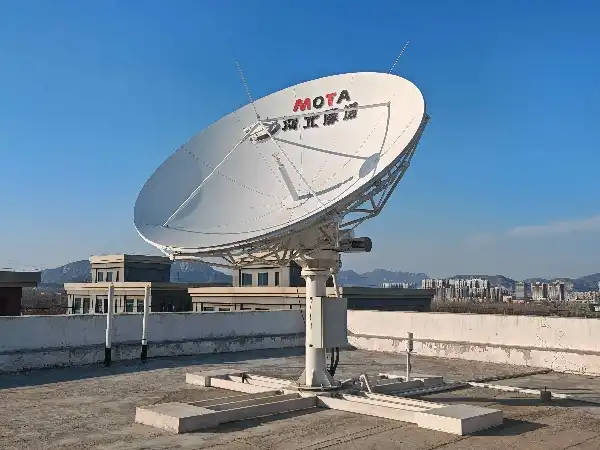
Understanding Industrial Grade Fixed Communication for Emergency Missions
The word "industrial grade" means more than just long-lasting; it also means a level of reliability that regular tools can't match. Industrial-grade fixed communication systems use parts that were chosen based on strict quality standards. This makes sure that the systems work well in harsh conditions like high and low temperatures, electromagnetic interference, and mechanical stress. These systems follow protocol standards like Ethernet/IP and Modbus TCP, and they work with satellite communication networks across a number of frequency bands.
Core Components Optimized for Emergency Networks
Modern antennas that can be set up quickly combine several separate parts into a single unit that works well together. The BUC (Block Upconverter) and LNB (Low Noise Block) units boost signals and change frequencies, and smart power control systems keep the system running smoothly even when grid power goes out. Modem integration makes plug-and-play functionality possible and eliminates the setup delays that standard satellite terminals cause. This unified design makes deployment easier and lowers the number of possible failure spots. This is very important when technical help might not be available right away at emergency sites that are far away.
Built-in Safety Features and Redundancy Mechanisms
Transceiver isolation rates of ≥85dB are built into high-reliability antennas. This stops internal signal interference that could weaken the link. The first sidelobe level standard of -14 dB makes sure that beam patterns are focused so that they don't interact with satellite systems that are nearby. Two-axis stabilization platforms account for things like wind loading in the environment so that the satellite lock stays accurate even when they are placed on temporary buildings or uneven ground. These technology features keep things running even during emergencies, and they provide the information backbone that emergency operations need.
Challenges in Emergency Communication and How Deployable Fixed Antennas Solve Them
When emergency communication tasks go wrong, they run into problems that normal systems can't solve. When earthly systems fail because of damage or power outages, the network becomes unstable. Coverage gaps happen right when connection is most needed, when terrain, weather, and urban buildings can get in the way. Traditional wireless systems have trouble sending high-definition video because they can't handle the extra data. On the other hand, mobile solutions need to be moved around all the time and need human help.
Fast Installation Without Technical Expertise
Industrial-grade fixed communication systems overcome these challenges through simplified deployment engineering. Our industrial-grade fixed communication antenna can establish a satellite link in as little as three minutes, and there is no need for on-site troubleshooting. Self-made satellite pointing programs instantly figure out the best antenna orientation based on GPS coordinates and built-in ephemeris data. This lets them be set up quickly. One operator can do the whole setup process, which frees up technology experts to do other important jobs during emergency reaction operations.
Durable Hardware for Harsh Environments
The industrial-grade fixed communication antenna is engineered for corrosion resistance and wind stability, so it can work reliably in temperatures ranging from -25°F to +55°F in places like the cold and the desert. Its IP-rated casing keeps dust, water, and other contaminants from getting into the circuits inside. Even when there are 7 levels of wind, the system can still send stable 1080p video, keeping connection quality high when other systems would fail. In the real world, these skills have come in very handy for things like coordinating the reaction to wildfires, where smoke, heat, and conditions that change quickly make it hard for everyone to communicate.
Consistent Connectivity with Industrial-Grade Fixed Communication
Fixed satellite transmission gives you a range that isn't limited by facilities on the ground. Satellite links keep working even when storms damage cell towers or earthquakes cut fiber optic lines. The antenna can support Ku/Ka/S/X/C/Qv frequency bands and can be switched manually. This makes it compatible with several different satellite constellations and gives you backup choices in case the main frequencies get crowded or clash with other signals. Mission planners have more options with this frequency agility than with single-band systems. This is especially helpful for foreign deployments where frequency allocations range from region to region.
Comparison of Industrial Grade Fixed Communication Solutions for Emergency Use
To choose the right information infrastructure, you need to know how the performance of different platforms compares. Fixed satellite stations are better than wireless mesh networks and mobile cellular options in a number of ways.
Key Performance Metrics of Industrial Grade Fixed Communication
When coordinating remote reaction teams, latency has a direct effect on how well operations run. Round-trip lag for geostationary satellite systems is usually between 500 and 700 ms, which is fine for most voice and video apps but could be a problem for some real-time data protocols. During long activities, reliability measures become very important. Industrial-grade systems have uptime rates higher than 99.5% because they use redundant units and strong component selection. When it comes to security, point-to-point satellite links are better for private conversations than terrestrial wireless feeds because they make it harder to listen in.
Leading Industrial Communication Providers and Their Offerings
There are a lot of companies that make emergency messaging equipment. Siemens has ruggedized satellite stations that can be used with SCADA systems and have a lot of protocol support. Schneider Electric has options that focus on using less power, which is useful for systems that run on batteries. ABB works on high-bandwidth uses that need video in real time. Cisco's range is designed to work with business networks that are already in place. Even though each seller has their own specialties, buying teams are putting more and more emphasis on quick deployment and self-operation, which are two areas where specialized emergency communication systems really shine.
Communication Protocols and Network Architecture Considerations
These days, emergency networks often use both satellite backup and last-mile distribution on land. The satellite station is the point of link for the wide-area network (WAN). Users and devices can connect to the internet through local WiFi or mesh networks. To make sure that priority traffic gets Quality of Service (QoS), this design needs careful protocol planning. Systems that handle various frequency bands let you combine resources or set up failover scenarios, which makes the network more resilient. When planning for scalability, you should think about how the network might grow as emergency operations get bigger or as the healing phase changes and calls for different kinds of contact.
Procurement Guide for Industrial Grade Fixed Communication Systems
For the successful procurement of industrial-grade fixed communication systems, organizations should establish clear technical and operational requirements. Specific environmental conditions and service goals should be included in reliability standards. When something is easy to install, it means that the setup time and staffing needs can be measured. Scalability means knowing both the physical limits of a network's potential and how to add more terminals to a current network.
Cost-Benefit Analysis and Acquisition Models
Industrial-grade fixed communication systems often deliver lower lifecycle costs through superior reliability and reduced downtime. Large-scale programs to get people ready for emergencies have limited budgets that need careful planning to stay within them. Contracts for buying in bulk can cut costs per unit by a lot, but they require storage space and inventory management. Rental or lease models give groups that need extra capacity during certain times of the year or events more freedom. When you look at the total cost of ownership, you should not only look at the cost of buying the item, but also at the ongoing connection fees, servicing contracts, and the availability of replacement parts. Systems with longer mean time between failures (MTBF) scores are worth the extra money they cost to buy because they save money on running costs.
Support and Maintenance Frameworks
Service agreements that cover everything should include when technical help is available, how long it takes to respond, and how to escalate problems. Customers can get help from Hebei MOTA's tech teams 24 hours a day, seven days a week. These teams are familiar with emergency deployment situations. Maintenance contracts that include regular testing and component refill rounds help make sure that systems are ready when they're not being used. Professional installation services lower the risk of deployment during the initial purchase phase, and training programs help employees learn the skills they'll need for future activations. These kinds of services often make the difference between companies that sell tools and those that really understand mission-critical apps.
Selecting Reputable Suppliers with Global Reach
Choosing a trusted industrial-grade fixed communication manufacturer is essential for mission-critical deployments. When communication problems could cost lives, trust in the brand is important. Look for providers who have production experience that can be checked and who, ideally, have ISO9001 quality management certification and ISO14001 environmental compliance. For foreign operations or regional stockpiling plans, the ability to handle logistics across borders becomes essential. Manufacturers who have set processes for clearing customs and storing goods abroad can cut down on wait times in real situations. Long-term service agreements that promise parts will be available and expert help for many years give procurement managers the operating certainty they need to build a resilient communication infrastructure.
Optimizing Emergency Communications with Rapidly Deployable Fixed Antennas
The success of deployment relies on more than just the quality of the tools. Careful planning turns hardware that can do its job into operating skills that work well.
Pre-Deployment Testing and Network Simulation
Before an emergency happens, businesses should make sure that all of their new equipment works well by trying it thoroughly. This includes checking the times it takes to acquire a satellite in different situations, comparing the real output to what was planned, and making sure it can work with existing network infrastructure. Network modeling tools can model coverage trends and find sources of possible interference. The conditions of testing should be the same as those that will be used in real life, such as changes in power sources, high temperatures, and different levels of human experience. Recording test results creates baseline performance measures that are useful for fixing problems in real cases.
Continuous Monitoring and Rapid Troubleshooting
Once they are set up, tracking systems should keep an eye on key performance factors like environmental conditions, signal quality, throughput, and mistake rates. Automated warning lets you take action before small problems turn into communication problems. Support teams can check the state of a system without having to go to possibly dangerous emergency sites because of remote diagnostics. The antenna's built-in design, which includes ≥85dB transceiver isolation and advanced anti-interference features, reduces the need for repairs, but full tracking is still needed to keep the connection stable during long operations.
Training Programs That Ensure Operational Readiness
When equipment is only used in an emergency, operating staff can find it hard to keep their skills up to date. Training tasks done on a regular basis keep people skilled in rollout processes, troubleshooting methods, and network management. The training should cover both regular operations and situations where backup methods need to be used in "degraded mode." Cross-training different employees makes sure that there are backups of both technical and human skills, just like there are backups of hardware in communication systems. Companies that spend money on thorough training programs always see faster launch times and fewer technology problems during real emergency operations.
Emerging Technologies Enhancing Industrial-Grade Fixed Communication
The future of industrial-grade fixed communication is being shaped by IoT integration, SD-WAN, and AI-powered traffic optimization. Through the same satellite lines used for talk and video, industrial IoT integration makes it easier to track assets and keep an eye on the environment. Advanced network methods, like SD-WAN, make the best use of data on hybrid networks that use both satellite and ground links. Applications that use artificial intelligence can automatically select traffic based on mission needs. This makes sure that important messages get the bandwidth they need, even when networks are getting close to full. Because these innovations are always changing, it's helpful to do regular reviews of the infrastructure to find ways to improve it and make emergency response better.
Conclusion
Industrial-grade fixed communication systems are essential for organizations that require dependable emergency communications. Their rapid deployment capability, rugged environmental design, multi-band flexibility, and autonomous operation address the critical challenges that conventional communication systems cannot overcome. The ability to be set up in three minutes, the ability to send stable 1080p video in bad weather, and the ability to work in a wider temperature range are all real practical benefits during crisis response. When purchasing, teams look at different options; they should give more weight to providers that offer full support, a history of dependability, and the tech know-how needed for mission-critical applications where communication problems can have unacceptable results.
FAQ
What makes rapidly deployable antennas more reliable than mobile communication alternatives?
There are several tech factors that make these fixed antennas more reliable. Their stationary location gets rid of the vibration problems that come with systems that are placed on vehicles. When you choose industrial-grade components for integrated BUC/LNB units, they work the same way at all temperatures. The two-axis stability platform keeps the satellite facing accurately even when the wind is blowing, while mobile systems often lose connection when they move or are in rough terrain. Because satellites are not connected to infrastructure on Earth, communications can still work even when events damage networks on Earth.
How quickly can these systems be operational after arrival at an emergency site?
If the workers are properly trained, the whole deployment takes about three minutes, from unpacking to having a live data link. This includes setting up the hardware, automatically finding satellites using built-in algorithms, and setting up the link without having to do any human testing. The plug-and-play design with built-in modem and power control gets rid of the steps needed to set up a traditional satellite station, which can take time.
Are maintenance contracts available for long-term reliability assurance?
Manufacturers you can trust usually offer full maintenance contracts that include regular checks, testing of parts, and priority technical help. Usually, these contracts cover online diagnostic services, warranties for replacement parts, and new training. These kinds of deals make sure that equipment is ready for use during the long periods of time between emergency activations and provide quick help during real deployments.
Partner with MOTA for industrial-grade fixed communication solutions.
Hebei MOTA has been making things for more than nine years and has come up with its own satellite transmission technologies to make solutions that meet the strict needs of emergency operations. Our quickly deployable antennas can be set up in three minutes and work with Ku/Ka/S/X/C/Qv frequency bands, so your teams can stay linked when it matters most. Our quality control systems are backed by ISO9001, ISO14001, and ISO45001 certifications. This means that military companies, defense groups, and emergency service providers can rely on us. Our well-established cross-border logistics network makes sure that orders are delivered on time all over the world, and our proven platforms can be fully customized to meet your unique business needs. Get in touch with our technical team at hebei_mota@163.com to talk about your emergency communication needs with a seasoned industrial-grade fixed communication provider dedicated to helping important tasks around the world.

References
1. Johnson, M. & Williams, R. (2023). "Emergency Communication Systems: Design Principles for Mission-Critical Networks." Journal of Disaster Management Technology, Vol. 18, pp. 234-251.
2. International Telecommunication Union (2024). "Technical Standards for Satellite Emergency Communications." ITU-R Recommendations Series S, Geneva.
3. Martinez, L. (2023). "Comparative Analysis of Fixed and Mobile Satellite Terminals in Emergency Response Operations." Aerospace Communications Quarterly, Vol. 42(3), pp. 178-196.
4. National Emergency Management Association (2024). "Best Practices Guide for Deployable Communication Infrastructure." NEMA Technical Report Series, Washington, D.C.
5. Chen, X. & Thompson, K. (2023). "Frequency Band Selection Strategies for Multi-Band Satellite Terminals." IEEE Transactions on Aerospace Systems, Vol. 59(4), pp. 1456-1472.
6. Defense Communications Engineering Center (2024). "Reliability Standards for Tactical Communication Equipment in Harsh Environments." DCEC Publication 2024-07, Fort Meade.
Tell us your requirements – get a tailored quote and technical support within 24 hours.