- English
- French
- German
- Portuguese
- Spanish
- Russian
- Japanese
- Korean
- Arabic
- Greek
- German
- Turkish
- Italian
- Danish
- Romanian
- Indonesian
- Czech
- Afrikaans
- Swedish
- Polish
- Basque
- Catalan
- Esperanto
- Hindi
- Lao
- Albanian
- Amharic
- Armenian
- Azerbaijani
- Belarusian
- Bengali
- Bosnian
- Bulgarian
- Cebuano
- Chichewa
- Corsican
- Croatian
- Dutch
- Estonian
- Filipino
- Finnish
- Frisian
- Galician
- Georgian
- Gujarati
- Haitian
- Hausa
- Hawaiian
- Hebrew
- Hmong
- Hungarian
- Icelandic
- Igbo
- Javanese
- Kannada
- Kazakh
- Khmer
- Kurdish
- Kyrgyz
- Latin
- Latvian
- Lithuanian
- Luxembou..
- Macedonian
- Malagasy
- Malay
- Malayalam
- Maltese
- Maori
- Marathi
- Mongolian
- Burmese
- Nepali
- Norwegian
- Pashto
- Persian
- Punjabi
- Serbian
- Sesotho
- Sinhala
- Slovak
- Slovenian
- Somali
- Samoan
- Scots Gaelic
- Shona
- Sindhi
- Sundanese
- Swahili
- Tajik
- Tamil
- Telugu
- Thai
- Ukrainian
- Urdu
- Uzbek
- Vietnamese
- Welsh
- Xhosa
- Yiddish
- Yoruba
- Zulu
Industrial-Grade High Stability Fixed Antenna for Extreme Outdoor Deployments
When satellite communication systems are in harsh environments like bad weather, high temperatures, or faraway places, keeping stable connections is important for keeping operations running. Industrial-grade fixed antennas made to work in harsh outdoor conditions are an important investment in infrastructure, especially for companies that run satellite ground stations, defense sites, or precise tracking networks. The High Stability Fixed Antenna stands out because it has stronger engineering that keeps the signal strong even when external factors happen. Unlike consumer-grade options, these systems have advanced stability mechanisms, multi-band compatibility, and ruggedized construction to make sure they work without interruption in situations where failure would have major effects.
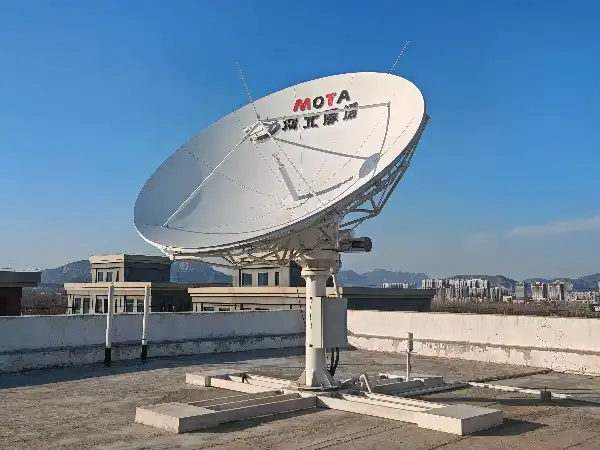
Understanding High Stability Fixed Antennas: Features and Applications
Core Technical Specifications That Define Performance
Industrial-grade High Stability Fixed antennas designed for permanent outdoor deployment must maintain consistent gain patterns and impedance matching throughout their service life. The engineering standards directly deal with problems that come up during operation in the real world. Our fixed antenna system works with Ku, Ka, S, X, C, and Qv frequency bands and can be switched manually. This lets it work with both Ku and Ka bands, so it can be used in a variety of satellite transmission situations. This adaptability is very important for ground stations that need to handle different types of missions without having to change gear.
The self-stabilizing two-axis base is a core feature of our high-stability fixed antenna, enabling rapid and accurate satellite acquisition. Aligning the satellites and setting up the link only takes three minutes, so there are no long setup steps that slow down operating readiness. Transceiver isolation reaches ≥85 dB, and first sidelobe levels stay at ≒ -14 dB. This provides excellent anti-interference properties that keep signal quality safe in places with a lot of electromagnetic noise.
Environmental Resilience for Mission-Critical Operations
Operating temperatures range from -25℃ to +55℃, so they can be used in both cold places and hot ones. Seven levels of continuous wind can't damage the reinforced frame, and 1080p video streaming stays stable. This is a test that shows both mechanical stability and RF performance under stress. IP-rated protection keeps wetness and dust from getting into internal parts, which increases their service life in seaside, industrial, and dusty settings.
High-Stability Fixed-Antenna Applications Across Industries
Satellite communication companies put these dishes on ground stations that need to be able to connect to the internet 24 hours a day, seven days a week. Defense and aerospace organizations rely on high-stability fixed antennas for precision satellite tracking and mission-critical data transmission. They are used by cross-border logistics companies to track vehicles in real time across countries, and industrial automation networks depend on them to send SCADA data from faraway energy infrastructure. Because the phase center stays stable over time, they can be used in geodetic positioning base stations that need to be accurate to the millimeter level.
Comparing High Stability Fixed Antennas: Making the Right Choice
Fixed Versus Mobile Antenna Systems
When making a purchase choice, people often start by deciding whether fixed or mobile antenna systems will meet practical needs better. High-stability fixed antennas offer superior pointing accuracy because they eliminate the mechanical instability commonly associated with mobile systems. Mobile antennas give you more operational options, but they also make things more complicated because they have motorized tracking systems that need to be calibrated often. Fixed deployments are very reliable for businesses that have established buildings, but mobile options are needed for field operations even though they cost more to maintain.
Stability-Focused Design Versus High-Gain Alternatives
When choosing an antenna, you have to weigh the benefits and drawbacks of steadiness and gain improvement. High-gain directional antennas have better link budgets, but their beamwidths are smaller, so they need to be aligned precisely and tracked continuously. Designs that focus on stability make sure that the structure works the same way no matter the temperature or the load. Our strengthened design strikes a balance between these issues, providing enough gain for high-definition video streaming while keeping the accuracy of the pointer even when there are disturbances in the environment.
Material Selection and Build Quality Considerations
The building materials used have a direct effect on how well something works over time in open settings. Corrosion-resistant metals keep structures from breaking down in harsh environments like the sea and factories. UV-stabilized radomes keep interior parts safe and reduce dielectric signal loss as much as possible. High-reliability standards are used to choose industrial-grade components, which makes sure that solder joints, links, and fasteners can handle changes in temperature and dynamic stress. The built-in BUC/LNB module, modem, and clever power management system get rid of the need for extra equipment. This makes installation easier and lowers the number of places where things can go wrong.
Installation, Maintenance, and Troubleshooting for Extreme Deployments
Installation Best Practices for Long-Term Reliability
Proper installation is essential to maximize the performance of a high-stability fixed antenna. When something is installed correctly, it will work reliably for years to come. When choosing a site, it's best to pick one with the fewest obstruction angles and a stable fixing base that can handle wind loads. Our all-in-one design makes plug-and-play operation possible, which cuts down on the time and technical know-how needed for installation. Integrated sections make it possible for one person to operate because they get rid of the need for complicated wire routing and equipment synchronization problems.
To keep mechanical vibration from happening in high winds and to keep fasteners from wearing out from being over-tightened, it is important to carefully follow the mounting torque specs. To protect against lightning-caused surges and electrostatic discharge, grounding links need low-impedance paths to building earth systems. Drip rings and sealed penetrations should be used at cable entry places to keep the IP rating valid.
Routine Maintenance Protocols
Scheduled repair keeps things running smoothly and makes them last longer. Every six months, visual checks find any harm to the radome, rust on the connectors, or deformations in the structure before they affect the signal quality. Checking the tightness of the connectors stops connections from breaking down, which shows up as link instability. Firmware changes sent through our expert help system 24 hours a day, seven days a week, fix bugs and add new features.
Changes in repair regularity are based on environmental factors. More frequent rust checks are needed for sites near the coast, and radome cleaning is recommended for dusty places to keep RF signals clear. For customers who need hands-on help during repair windows, our localized after-sales service network offers on-site help.
Troubleshooting Common Deployment Issues
Signal decline is usually caused by influence from the surroundings, parts that are getting old, or alignment drift. Our built-in monitoring systems keep an eye on the performance of the transceiver isolation and sidelobe, letting workers know when things are getting worse before they cause transmission problems. The self-made satellite pointing program has built-in automatic recalibration processes that fix problems caused by thermal expansion or structures settling.
Extreme weather events can cause damage to parts that may need to be replaced. We keep enough parts in stock for normal orders so that parts can be sent out quickly, and the 45–90 day production cycle for custom parts lets us meet the needs of each fix. The full insurance plans protect you financially in case something breaks down too soon, though the industrial-grade design makes that less likely to happen.
Procurement Insights: Buying and Sourcing High Stability Fixed Antennas
Identifying Qualified Suppliers and Manufacturers
Qualifying suppliers is the first step to successful buying. Companies should check if their products have ISO9001, ISO14001, or ISO45001 standards, which show that they are responsible for quality control and the environment. Experience in production is very important. Manufacturers with a history of success can show that their processes are well-tuned and their supply lines are solid. We have more than nine years of production experience and core technical benefits in high-precision tracking algorithms and satellite transmission systems that we created ourselves.
OEM and ODM customization options let you make solutions that fit the needs of your project. Full-process service, from design and development to mass production and system integration, makes buying easier and makes sure that all the parts work together. Engineering teams can check that performance claims match up with business needs before committing to a purchase when specification paperwork is clear.
Pricing Structures and Lead Time Expectations
The cost of a high-stability fixed antenna should be evaluated alongside lifecycle reliability and maintenance requirements. Companies that are setting up multiple ground stations or growing current networks can save money by buying in bulk. When you mix competitive prices with flexible payment terms, you can stick to your budget without sacrificing quality. Knowing how long it really takes to make something keeps projects from being held up. Standard setups can be shipped from stock, but unique systems need 45 to 90 days to be made.
Because cross-border operations are so complicated, sellers need to have mature international shipping skills. Professional packing that is resistant to shock and wetness keeps sensitive RF parts safe while they're in transit, and full-process logistics tracking lets you see where your shipment is at all times. Flexible customs clearance help and options for storing goods abroad make transport easier for global operations.
Warranty and Post-Sale Support Evaluation
For mission-critical infrastructure, long-term provider responsibility is a must. Full protection terms should cover problems with the way the product was made and parts that break too soon. No matter what release time zone you are in, our customer response system is available 24/7 to help you with technology issues. Full lifetime support that improves return on investment includes help with installation, help with commissioning, help with troubleshooting, and services for system upgrades.
Post-sale help quality is often what sets providers apart who offer similar technical specs. Having access to experienced tech teams that know how to deal with real-world rollout problems speeds up problem-solving and lowers the cost of downtime. Localized after-sales service networks make it easy to get help quickly when problems need to be fixed on-site.
Why Choose Our Industrial-Grade High Stability Fixed Antennas?
Technological Advantages Backed by Performance Data
Our satellite communication antenna systems use advanced technologies that we've built and tested in the field over many years. When combined with our custom pointing algorithms, the two-axis stabilization platform enables faster acquisition than traditional systems that use general satellite tracking methods. Benchmark tests show that 1080p video stays stable even when there is steady 7-level wind, which is a performance level that is needed for broadcast uplinks and surveillance apps.
Even for private operations, the selection of parts is based on military-grade reliability standards. This method increases the average time between fails while lowering the total cost of ownership by lowering the amount of upkeep that needs to be done. Transceiver separation greater than 85dB stops self-interference problems that happen with lower-specification antennas. This is especially true in signal-heavy settings where many ground stations are close to each other.
Proven Global Deployment Success
Our high-stability fixed antennas have been successfully deployed across diverse climates and operational environments worldwide. They are used by satellite communication companies for business ground station networks that handle important data. Defense companies trust the accurate tracking to receive classified data. Logistics managers depend on the dependability of asset tracking networks that span continents and multiple regulatory states.
Real-world stress testing that can't be done in a lab confirms the choices made during planning in these trials. Extreme temperatures in places like arctic research sites and equatorial industrial centers back up claims about operating range. Installations near the coast show that they can survive corrosion, and installations in rural areas of energy infrastructure show that they can be relied on for a long time with little upkeep.
Comprehensive Customization and Support Services
Each deployment setting has its own problems that need custom answers. Our ODM/OEM customization options can be used to meet specific frequency needs, mounting setups, and interaction needs. Engineering teams work with customers from the time they come up with the first specifications until the prototypes are tested and production starts to ramp up. Instead of forcing compromises around standard goods, this partnership method makes sure that the systems provided meet business needs.
System connection services include more than just providing antennas on their own. Satellite-terrestrial communication technologies connect things in space to networks on Earth, making it possible for full solutions that cover the whole communication chain. Round-the-clock expert support ensures that anyone can get help during important installation times or troubleshooting situations, no matter where they are located.
Conclusion
For extreme outdoor applications, selecting a high-stability fixed antenna requires balancing technical performance, environmental resilience, and supplier capabilities. A properly engineered high-stability fixed antenna delivers reliable satellite communications, precise tracking accuracy, and long-term operational stability in harsh environments where conventional antenna systems may fail. They can work with multiple bands, can be set up quickly, and are built stronger. Long-term dependability is based on the choice of materials, the quality of the parts, and the standards for making. The total cost of ownership is affected by the infrastructure for supporting suppliers. When companies engage in permanent ground station infrastructure, they should look for makers with a track record of production, full certification, and global support skills that match the areas where they do business.
FAQ
What makes a fixed antenna suitable for extreme outdoor deployments?
Extreme outdoor usefulness depends on a number of design factors that work together. The ability to work in temperatures ranging from -25°F to +55°F means that it can be used even when the weather changes. Reinforced structure engineering can handle the mechanical loads that come from constant high winds and still keep the pointing accurate. IP-rated weather sealing keeps water and dust from getting into sensitive equipment. Choosing materials like corrosion-resistant metals and UV-stabilized composites keeps them from breaking down when they are exposed to air. When you put these things together, you get systems that can work for decades in difficult conditions where regular tools would break after just a few months.
How quickly can these antenna systems establish satellite links?
Through automatic acquisition processes, our fixed antenna systems can set up a link and align a satellite within three minutes. The two-axis stabilization platform lets the direction be changed quickly, and the self-made satellite tracking program finds the best search patterns based on known orbital parameters. This ability to quickly acquire is very useful during satellite handovers or when re-establishing links after service breaks. Traditional systems that need to be aligned by hand could take 30 minutes or more, which causes operations delays that lower the availability of services.
What frequency bands do these antennas support?
It works with Ku, Ka, S, X, C, and Qv frequency bands and can switch between them manually. It can also work with two different bands at the same time. This wide frequency range works with many different satellite constellations and mission plans without the need to place many antennas. Ku-band is used for business satellite communications, Ka-band is used for high-speed data links, and X-band is used for defense and aircraft. Being able to manually switch between bands means that a single ground station can handle various satellite systems, which makes the most of the money spent on capital.
Partner With MOTA for Reliable High-Stability Fixed Antenna Solutions
When looking for a reliable high-stability fixed antenna maker, businesses should work with providers who have a track record of technological know-how and a full support system. Hebei MOTA offers industrial-grade antenna systems designed for harsh outdoor use. Our ISO9001, ISO14001, and ISO45001 standards demonstrate our commitment to quality, worker safety, and environmental protection. Our mature cross-border shipping system ensures that global projects are delivered on time, and our 24/7 customer support provides expert help when you need it the most. Whether you need satellite communication uplinks, accurate tracking for aerospace programs, or reliable telemetry for remote infrastructure, we can make solutions that are exactly what you need thanks to our ability to customize and provide full-service from design to commissioning. Email us at hebei_mota@163.com to talk about how our antenna solutions can help your information network.

References
1. Institute of Electrical and Electronics Engineers (IEEE). "Standards for Fixed Satellite Service Earth Station Antennas," IEEE Transactions on Antennas and Propagation, 2021.
2. International Telecommunication Union. "Technical Characteristics for Earth Stations Operating in the Fixed-Satellite Service," ITU-R Recommendations, 2022.
3. Society of Satellite Professionals International. "Ground Segment Infrastructure Best Practices for Commercial Satellite Networks," Industry White Paper, 2020.
4. Defense Advanced Research Projects Agency. "High-Reliability Components for Extreme Environment Communications Systems," Technical Report DARPA-TTO, 2019.
5. National Institute of Standards and Technology. "Environmental Testing Protocols for Outdoor Communication Equipment," NIST Special Publication 500-Series, 2021.
6. Satellite Industry Association. "Global Satellite Ground Infrastructure: Market Analysis and Technology Trends," Annual Industry Survey, 2023.
Tell us your requirements – get a tailored quote and technical support within 24 hours.