- English
- French
- German
- Portuguese
- Spanish
- Russian
- Japanese
- Korean
- Arabic
- Greek
- German
- Turkish
- Italian
- Danish
- Romanian
- Indonesian
- Czech
- Afrikaans
- Swedish
- Polish
- Basque
- Catalan
- Esperanto
- Hindi
- Lao
- Albanian
- Amharic
- Armenian
- Azerbaijani
- Belarusian
- Bengali
- Bosnian
- Bulgarian
- Cebuano
- Chichewa
- Corsican
- Croatian
- Dutch
- Estonian
- Filipino
- Finnish
- Frisian
- Galician
- Georgian
- Gujarati
- Haitian
- Hausa
- Hawaiian
- Hebrew
- Hmong
- Hungarian
- Icelandic
- Igbo
- Javanese
- Kannada
- Kazakh
- Khmer
- Kurdish
- Kyrgyz
- Latin
- Latvian
- Lithuanian
- Luxembou..
- Macedonian
- Malagasy
- Malay
- Malayalam
- Maltese
- Maori
- Marathi
- Mongolian
- Burmese
- Nepali
- Norwegian
- Pashto
- Persian
- Punjabi
- Serbian
- Sesotho
- Sinhala
- Slovak
- Slovenian
- Somali
- Samoan
- Scots Gaelic
- Shona
- Sindhi
- Sundanese
- Swahili
- Tajik
- Tamil
- Telugu
- Thai
- Ukrainian
- Urdu
- Uzbek
- Vietnamese
- Welsh
- Xhosa
- Yiddish
- Yoruba
- Zulu
What Are the Main Applications of High Gain Fixed Satellite Antennas?
Introduction
High-gain fixed satellite antennas serve as the backbone for enterprise-grade satellite communications across telecommunications, defense, broadcast media, remote industrial operations, and IoT integration. These precision-engineered systems deliver ultra-reliable signal transmission over vast distances, supporting mission-critical infrastructure where terrestrial connectivity falls short. For procurement managers, system integrators, and technical decision-makers evaluating satellite communication investments, understanding the diverse applications of these antennas directly impacts project success, operational continuity, and long-term cost efficiency.
Modern satellite antenna technology has evolved beyond simple signal relay. Today's fixed ground station antennas incorporate multi-band compatibility, rapid deployment capabilities, and industrial-grade environmental resilience—features that transform how organizations approach connectivity in remote oil fields, maritime corridors, emergency response scenarios, and cross-border logistics hubs. This guide explores real-world applications across key industries, offering practical insights to help B2B stakeholders align antenna specifications with operational requirements while navigating procurement complexities.
Understanding High Gain Fixed Satellite Antennas and Their Role in Modern Communication
Defining Technical Characteristics for Procurement Professionals
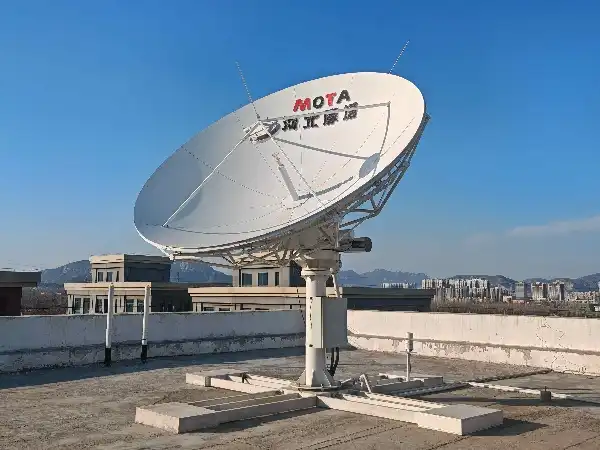
A high-gain fixed satellite antenna represents a specialized parabolic or phased-array system engineered for permanent ground installation, optimizing signal strength through focused beam patterns. Unlike mobile or portable alternatives, these antennas prioritize maximum aperture efficiency and structural stability to maintain consistent link quality over extended operational periods. The term "high gain" quantifies the antenna's ability to concentrate radiated power in specific directions, typically measured in dBi (decibels relative to an isotropic radiator), with professional-grade models exceeding 40 dBi for Ku-band frequencies.
Core Specifications That Impact Performance
Several technical parameters determine an antenna's suitability for specific applications. Operating frequency ranges—such as Ku/Ka/S/X/C/Qv bands—define compatibility with satellite constellations and atmospheric propagation characteristics. Beamwidth affects coverage footprint and pointing accuracy requirements, while gain levels directly correlate with achievable data rates and link margin under adverse weather conditions. Physical dimensions influence wind load tolerance and site preparation needs, particularly relevant for installations in exposed environments.
Advanced systems now integrate two-axis stabilization platforms with proprietary tracking algorithms, enabling precise satellite acquisition within three minutes—a capability that reduces deployment time and operational complexity. Transceiver isolation specifications (≥85 dB) and first sidelobe suppression (≤-14 dB) minimize interference with adjacent satellite networks, ensuring regulatory compliance with ITU-R standards and protecting signal integrity in crowded orbital environments.
Core Applications of High-Gain Fixed Satellite Antennas in B2B Environments
Telecommunications Infrastructure for Remote and Underserved Regions
Satellite ground stations equipped with high-gain fixed satellite antennas bridge the connectivity gap in regions where fiber-optic infrastructure remains economically unfeasible. Telecommunications operators deploy these systems to extend broadband services to rural communities, island nations, and mountainous territories. The ability to support stable 1080p video transmission even under 7-level wind conditions ensures service continuity during severe weather—a critical requirement for consumer-facing connectivity commitments.
Maritime and aviation communication networks rely heavily on fixed ground stations for backhaul connectivity. Offshore vessels, remote airports, and search-and-rescue coordination centers depend on uninterrupted satellite links to maintain operational communications, weather data feeds, and passenger internet services. The dual-band compatibility (Ku/Ka/S/X/C/Qv) with manual switching allows network operators to optimize frequency selection based on atmospheric conditions and satellite availability.
Broadcast Media Distribution and Content Delivery
Media teleports utilize high-gain fixed satellite antennas as primary uplink and downlink terminals for global content distribution. Television networks, radio broadcasters, and live event production companies require exceptional signal reliability to prevent transmission interruptions during critical programming. The superior Equivalent Isotropically Radiated Power (EIRP) achieved through high-gain designs enables 4K and 8K video distribution across continental footprints.
News-gathering operations benefit from rapid deployment capabilities. Systems that complete satellite alignment and link establishment within three minutes support breaking news coverage from remote locations, enabling broadcast-quality video backhaul without extensive setup procedures. The integrated design—incorporating BUC/LNB modules, modems, and intelligent power management—reduces crew size and equipment complexity for field operations.
Defense, Government, and Emergency Response Networks
Military and government agencies implement fixed satellite terminals for strategic communication hubs that must remain operational during terrestrial network failures or regional disasters. These installations support command-and-control functions, intelligence data relay, and inter-agency coordination across geographically dispersed facilities. The wide operating temperature range (-25℃ to +55℃) ensures functionality in extreme climates, from Arctic monitoring stations to desert forward operating bases.
Emergency management agencies deploy these systems as backup communication infrastructure during natural disasters. When hurricanes, earthquakes, or floods disable cellular towers and fiber networks, satellite ground stations provide the sole connectivity for coordinating rescue operations, distributing emergency alerts, and restoring government services. The industrial-grade design with core components meeting high-reliability standards delivers the fail-safe performance essential for life-safety applications.
Oil, Gas, and Mining Remote Operations
Extractive industries operate in some of the planet's most isolated environments—offshore platforms, Siberian gas fields, and Australian mining sites—where satellite connectivity represents the only viable communication method. High-gain fixed satellite antennas enable real-time monitoring of drilling operations, pipeline integrity systems, and automated mining equipment. The ultra-high signal gain effectively reduces signal loss during long-distance transmission, maintaining data quality for supervisory control and data acquisition (SCADA) systems.
Predictive maintenance programs depend on continuous sensor data streams from remote assets. High-gain fixed satellite antennas support the bandwidth requirements for transmitting vibration analysis, thermal imaging, and equipment telemetry to centralized monitoring centers. The rapid deployment characteristic—completing satellite alignment in three minutes—minimizes production downtime when establishing new well sites or relocating mobile drilling rigs.
Enterprise IoT and Industrial Automation Networks
Global logistics companies track shipping containers, refrigerated cargo, and high-value freight across international transit routes using satellite-connected IoT devices. Ground station networks equipped with high-gain fixed satellite antennas aggregate telemetry from thousands of tracking units, providing supply chain visibility throughout ocean voyages and cross-border trucking movements. The Ku/Ka/S/X/C/Qv dual-band compatibility accommodates different satellite service providers and regional frequency allocations.
Industrial automation extends into agricultural operations, forestry management, and environmental monitoring projects that span vast geographical areas. Precision agriculture systems transmit soil moisture data, weather station readings, and autonomous vehicle positioning through satellite backhaul links. The strong anti-interference performance—achieved through ≥85dB transceiver isolation—ensures reliable operation despite radio frequency noise from nearby industrial equipment or weather radar installations.
Factors Influencing the Choice of High-Gain Fixed Satellite Antennas for Specific Applications
Matching Gain and Beamwidth to Coverage Requirements
Higher gain values concentrate signal energy into narrower beams, improving link budget margins but requiring more precise pointing accuracy. Applications demanding maximum data throughput—such as broadcast distribution or data center interconnects—justify the installation complexity of large-aperture high-gain fixed satellite antennas. Conversely, operations requiring wider coverage areas or frequent satellite switching may prioritize moderate gain designs with broader beamwidth characteristics.
Environmental Resilience and Installation Logistics
Deployment environments directly influence antenna specifications. Coastal installations require enhanced corrosion protection and salt-spray-resistant coatings, while Arctic locations demand thermal performance verification across extreme temperature ranges. Our systems maintain operational integrity from -25°C to +55°C, eliminating the need for additional environmental adaptation or climate-controlled enclosures that increase the total cost of ownership.
Wind load tolerance affects mounting infrastructure and site preparation costs. Antennas designed to withstand 200 km/h winds during stowed positions reduce structural engineering requirements and permit installation in exposed locations. The two-axis self-stabilizing platform incorporated in our designs compensates for mounting platform movement, maintaining pointing accuracy even on non-rigid structures or settling foundations.
Compatibility with Existing Infrastructure
Successful integration depends on verifying compatibility with satellite network operators, ground station equipment, and communication protocols. Systems featuring plug-and-play integration with industry-standard BUC/LNB modules, modems, and power systems simplify procurement by reducing custom interface development. Our integrated design approach enables single-person deployment and operation, addressing the operational challenge of limited technical personnel at remote sites.
Frequency band selection must align with licensed satellite capacity and regulatory approvals in operating regions. Dual-band systems with manual switching provide operational flexibility, allowing network operators to optimize frequency selection based on atmospheric conditions, satellite availability, and service pricing. The ability to access Ku/Ka/S/X/C/Qv bands covers mainstream communication satellite constellations, future-proofing infrastructure investments against evolving network architectures.
Total Cost of Ownership Optimization
The purchase price represents only one component of lifecycle expenses. Maintenance requirements, spare parts availability, warranty coverage, and technical support responsiveness significantly impact operational budgets over multi-year deployments. Our 7×24 customer response mechanism ensures timely order processing and remote troubleshooting assistance, reducing downtime costs during critical operational periods.
Customization capabilities affect long-term value, particularly for organizations with unique interface requirements or regulatory compliance needs. Professional ODM/OEM services—adapting hardware design, interface protocols, functional modules, and certification documentation—enable procurement teams to standardize equipment across diverse regulatory jurisdictions while maintaining consistent performance specifications. Our 45-90 day production cycle for customized and large-scale systems supports phased deployment schedules without extended lead time penalties.
Comparative Insights: Why Choose High-Gain Fixed Satellite Antennas Over Alternatives
Fixed Versus Portable Satellite Antenna Systems
Fixed installations prioritize stability, throughput, and reliability over mobility. Permanent mounting structures eliminate the mechanical wear associated with repeated deployment cycles, extending operational lifespan and reducing maintenance interventions. The larger aperture sizes practical for high-gain fixed satellite antennas—unconstrained by transportation dimensions—enable higher gain values and superior link margins compared to portable alternatives.
Portable systems serve distinct use cases requiring rapid relocation, such as emergency response vehicles, military expeditionary forces, and mobile broadcast units. However, their compromised gain performance and reduced weather resistance make them unsuitable for long-term operation in harsh environments or applications demanding continuous high-bandwidth connectivity.
High Gain Versus Low Gain Performance Implications
Antenna gain directly correlates with achievable data rates, transmission distances, and resilience against atmospheric attenuation. High-gain designs support high-definition video backhaul, enterprise-class internet connectivity, and real-time industrial telemetry that low-gain systems cannot sustain. The concentrated beam pattern reduces susceptibility to terrestrial interference sources and adjacent satellite networks, improving signal quality in crowded frequency environments.
Low-gain antennas offer simpler installation procedures and broader coverage patterns suited to applications tolerating lower data rates or shorter transmission distances. Organizations operating in benign RF environments with modest bandwidth requirements may find adequate performance from low-gain solutions at reduced procurement costs.
Parabolic Versus Patch Antenna Architectures
Parabolic reflector designs dominate high-gain fixed satellite antenna installations due to their superior aperture efficiency and proven reliability across decades of satellite communication history. The parabolic geometry focuses incoming signals onto a single feed point, maximizing energy collection and minimizing sidelobe radiation that could interfere with nearby systems.
Patch antenna arrays provide compact form factors appropriate for space-constrained installations or aesthetic requirements. However, their gain limitations and higher manufacturing costs make them less suitable for demanding enterprise applications requiring maximum link performance and long-term durability.
Practical Guidance for Procurement and Deployment
Identifying Trusted Global Suppliers
Reputable manufacturers demonstrate verifiable production experience, quality management certifications, and technical expertise validated through customer references. Our company holds ISO9001, ISO14001, and ISO45001 certifications, confirming systematic quality control and environmental management practices. Domestic type approval for radio transmission equipment ensures compliance with regulatory standards in target markets, reducing certification risks for international deployments.
Intellectual property portfolios indicate genuine innovation capacity versus commodity resellers. Independently developed satellite communication antennas, high-precision tracking algorithms, and satellite-terrestrial integrated communication technologies represent core technological barriers that differentiate performance leaders from generic suppliers. Organizations prioritizing long-term partnerships should verify suppliers maintain sufficient ready stock for regular orders while supporting 45-90 day production cycles for customized systems—capabilities essential for scaling deployments without extended lead times.
Wholesale and Custom Order Strategies
Bulk purchasing arrangements deliver cost efficiency for multi-site deployments or system integrator inventories. Competitive pricing structures, flexible payment terms, and volume discount programs optimize procurement budgets while maintaining quality standards. Our approach prioritizes long-term cooperation and cost optimization, consistently delivering value to global customers through transparent pricing and reliable delivery timelines.
Customization requirements—adapting hardware design, interface protocols, functional modules, software interfaces, and regulatory certifications—necessitate suppliers with professional ODM/OEM capabilities. We provide full services from scheme design and prototyping through mass production, addressing unique project requirements without compromising delivery schedules or quality standards.
Installation Best Practices and Professional Support
Precise antenna alignment directly impacts link quality and operational performance. Systems completing satellite alignment within three minutes reduce installation labor costs and enable non-specialist personnel to establish connectivity. Our self-developed satellite pointing algorithm combined with two-axis self-stabilizing platforms automates acquisition procedures, eliminating manual adjustment iterations that consume time and expertise.
Mounting solutions must account for local wind loads, seismic activity, and foundation characteristics. Professional site surveys identify optimal antenna placement, minimizing obstructions while ensuring structural integrity throughout equipment lifespan. Our mature cross-border logistics system coordinates international dedicated lines, sea freight, and air freight with professional shockproof and moisture-proof packaging, reducing transit damage risks and simplifying customs clearance procedures.
Long-term service agreements, warranty provisions, and technical assistance sustain antenna reliability throughout operational lifecycles. Our 7×24 remote technical support addresses installation troubleshooting, system configuration, and software upgrades, while international warranty standards protect capital investments. Localized after-sales support through cooperative channels—including on-site technical services and rapid spare parts supply—minimizes downtime during critical operational periods, ensuring communication infrastructure remains continuously available.
Conclusion
High-gain fixed satellite antennas enable critical connectivity across telecommunications, broadcast, defense, industrial, and IoT applications where terrestrial alternatives prove impractical or unreliable. Their technical capabilities—multi-band compatibility, rapid deployment, environmental resilience, and integrated design—address the demanding requirements of global enterprises operating in remote, harsh, or strategically important locations. Successful procurement requires matching antenna specifications to operational demands, evaluating total lifecycle costs, and partnering with manufacturers demonstrating proven expertise, quality certifications, and comprehensive support capabilities. Organizations investing in these systems gain resilient communication infrastructure that supports long-term operational excellence and competitive advantage.
FAQ
What determines antenna gain performance?
Antenna gain results from aperture size, surface accuracy, feed design efficiency, and operating frequency. Larger reflector diameters concentrate more signal energy, while precise parabolic profiles minimize phase errors that degrade performance. Professional-grade systems optimize these parameters to achieve gain values exceeding 40 dBi.
How do high-gain systems enhance communication reliability?
Superior gain provides link margin that compensates for atmospheric attenuation during rain, snow, or fog—phenomena particularly severe at Ku and Ka frequencies. This margin ensures continuous connectivity when lower-gain alternatives experience service interruptions, critical for mission-essential applications.
What criteria identify reputable suppliers?
Verified quality certifications (ISO9001, ISO14001, and ISO45001), documented production experience, intellectual property portfolios, customer references, and comprehensive lifecycle support distinguish established manufacturers from commodity resellers. Transparent pricing, customization capabilities, and responsive technical assistance indicate commitment to long-term partnerships.
Partner with MOTA for reliable high-gain fixed satellite antenna solutions.
MOTA brings nine years of specialized manufacturing expertise to global enterprises requiring dependable satellite communication infrastructure. Our high-gain fixed satellite antenna supplier credentials include ISO9001, ISO14001, and ISO45001 certifications; radio transmission equipment approvals; and proprietary tracking algorithms that complete satellite alignment in just three minutes. Whether you need ODM/OEM customization for unique regulatory environments, bulk procurement for multi-site deployments, or 7×24 technical support throughout installation and operation, our team delivers end-to-end solutions tailored to your connectivity requirements. Contact our procurement specialists at hebei_mota@163.com to discuss how MOTA's dual-band antennas, industrial-grade environmental resilience, and integrated design can strengthen your communication networks while optimizing total lifecycle costs.

References
1. International Telecommunication Union. (2021). ITU-R S.580-6: Radiation Diagrams for Use as Design Objectives for Antennas of Earth Stations Operating with Geostationary Satellites. Geneva: ITU Publications.
2. Satellite Industry Association. (2023). State of the Satellite Industry Report: Ground Segment Infrastructure and Market Trends. Washington, DC: SIA Research Division.
3. IEEE Antennas and Propagation Society. (2022). Design and Performance Optimization of High-Gain Parabolic Reflector Antennas for Satellite Communications. IEEE Transactions on Antennas and Propagation, Volume 70, Issue 8.
4. European Telecommunications Standards Institute. (2020). ETSI EN 302 448: Earth Stations on Mobile Platforms (ESOMP) Operating in the 11/12/14 GHz Frequency Bands. Sophia Antipolis: ETSI Standards.
5. Northern Sky Research. (2024). Global Satellite Ground Segment Infrastructure: Market Analysis and Procurement Strategies for Enterprise Buyers. NSR Industry Reports.
6. American Institute of Aeronautics and Astronautics. (2019). Environmental Testing Standards for Fixed Satellite Communication Equipment: Temperature, Vibration, and Electromagnetic Compatibility Requirements. AIAA Technical Publications.
Tell us your requirements – get a tailored quote and technical support within 24 hours.