- English
- French
- German
- Portuguese
- Spanish
- Russian
- Japanese
- Korean
- Arabic
- Greek
- German
- Turkish
- Italian
- Danish
- Romanian
- Indonesian
- Czech
- Afrikaans
- Swedish
- Polish
- Basque
- Catalan
- Esperanto
- Hindi
- Lao
- Albanian
- Amharic
- Armenian
- Azerbaijani
- Belarusian
- Bengali
- Bosnian
- Bulgarian
- Cebuano
- Chichewa
- Corsican
- Croatian
- Dutch
- Estonian
- Filipino
- Finnish
- Frisian
- Galician
- Georgian
- Gujarati
- Haitian
- Hausa
- Hawaiian
- Hebrew
- Hmong
- Hungarian
- Icelandic
- Igbo
- Javanese
- Kannada
- Kazakh
- Khmer
- Kurdish
- Kyrgyz
- Latin
- Latvian
- Lithuanian
- Luxembou..
- Macedonian
- Malagasy
- Malay
- Malayalam
- Maltese
- Maori
- Marathi
- Mongolian
- Burmese
- Nepali
- Norwegian
- Pashto
- Persian
- Punjabi
- Serbian
- Sesotho
- Sinhala
- Slovak
- Slovenian
- Somali
- Samoan
- Scots Gaelic
- Shona
- Sindhi
- Sundanese
- Swahili
- Tajik
- Tamil
- Telugu
- Thai
- Ukrainian
- Urdu
- Uzbek
- Vietnamese
- Welsh
- Xhosa
- Yiddish
- Yoruba
- Zulu
How do you choose an anti-interference fixed satellite antenna?
To choose an anti-interference fixed satellite antenna, start with your interference environment, then match measurable specifications to it. Check transceiver isolation, first sidelobe level, and noise figure, and ask for measured test data instead of datasheet claims. Confirm that the frequency bands, aperture size, and protection rating fit your site. Finally, review lead time, warranty, and technical support, because a fixed terminal stays in service for years. In this guide, I walk through each step so your procurement team can compare options with clear numbers and fewer surprises.
Understanding Anti-Interference Fixed Satellite Antennas
What Makes an Antenna Anti-Interference
A normal satellite dish picks up the signal that is wanted along with any other signals that come in at the same frequency. In order to reject unwanted energy before it hurts the link, an anti-interference fixed satellite antenna with anti-interference features is added. Three things are most important. Sidelobe reduction lowers the signal from sources that are not in the beam's center.
Transmission is kept out of the receive path by transceiver isolation. Weak signals are kept safe by a low-noise receive chain. Filters that change based on the range are also used in some designs. The MOTA model has an AI module that was created by the company itself. This module finds and filters electromagnetic noise in real time, so workers don't have to retune the filters by hand when conditions change.
Where Interference Comes From
Interference can be broken down into a few different types. Terrestrial 5G is one. The FCC opened up 280 MHz of the 3.7–3.98 GHz band for flexible use in 2020 and added a 20 MHz guard band. This means that C-band earth stations can now work close to mobile networks.
Radar is another source, as are electronics used in factories and electromagnetic noise in cities. The signal itself is weakened by things in the atmosphere, like rain fade, which makes any extra noise worse. Government users are also at risk from jamming that is done on purpose. The noise level goes up with each source, which can cause the link to lose its connection.
Where These Antennas Work Best
Fixed terminals are good for places that need a strong, long-lasting link. Military sites, border posts, government communication hubs, and industrial complexes in electromagnetically busy areas are common places for this to happen. There is also a lot of RF congestion at broadcast teleports, coastal tracking sites, and rural industrial gates.
Downtime costs money in all three situations: a video feed that is cut off, a telemetry reading that is missed, or an emergency message that is sent too late. With a fixed placement, engineers only have to look at the spot once, set the direction, and plan the RF environment around it. When you trade some of this security for portability, you get portable displays.
Key Criteria to Consider When Choosing an Anti-Interference Fixed Satellite Antenna
Performance Metrics to Verify
Start with the numbers that show how well interference is being filtered out. When a transceiver is isolated by 95 dB or more, about three billion times less transmit power is lost. If the first sidelobe level is -20 dB or less, the first off-axis lobe is at least 20 dB below the main beam. This means that less energy from outside comes in.
A noise figure of 0.7 dB or less means that the noise temperature is close to 51 K, which keeps weak signals safe. Gain and G/T are also important, and ITU-R S.580 sets the sidelobe limit that many earth station designs try to hit. Not only datasheet numbers should you ask for, but also recorded far-field pattern data from a test lab.
Durability and Environmental Protection
When rating an antenna for the outdoors, you should keep in mind that it will be there for years. Based on IEC 60529 IP66, the enclosure is dust-tight and can handle strong water jets. At seaside areas, corrosion is a problem. To check coatings, ISO 9227 salt spray testing is often used.
Accurate pointing is affected by wind load, so wind rates and stability should be on the list for our anti-interference fixed satellite antenna. From -30°C to +55°C, the MOTA antenna can work. It has an IP66 rating. On the Beaufort scale, 8-level wind is a gale with speeds between 39 and 46 mph. It doesn't move. A three-axis base that can stabilize itself fixes any movement that happens in real time.
Compatibility, Installation, and Total Cost
The next step is to make sure the receiver works with your network. Make sure that your modems and satellite services have the right frequency bands, polarization, and interfaces. You can manually switch between the Ku, Ka, S, X, C, and Qv bands on the MOTA model. This means that as mission needs change, one fixed installation can still connect to different satellite services. The openings are between 2.4 m and 13 m wide.
With the special pointing algorithm, getting a satellite takes about three minutes. Then look at the total cost of ownership, which includes the price of the house itself, the foundations, the work to put it up, spare parts, and repair calls. A cheaper dish that needs to be serviced more often may cost more in the long run than one that is better protected.
Comparing Top Anti-Interference Fixed Satellite Antenna Solutions in 2024
Brand Names Buyers Meet in the Market
When people look for satellite and radio gear, they often come up with Cobham, JRC, Inmarsat, and Hytera. A direct ranking by feature would be wrong because these names cover different groups. For satellite antennas, Cobham SATCOM is known. For naval and radio contact gear, JRC is known. For professional two-way radio, Hytera is known.
Since Inmarsat runs a satellite network and offers services through partners, it does not compete as a maker of fixed anti-interference ground terminals. If you want to find the best provider for your needs, you should look at how well they measure isolation, sidelobe level, noise figure, band coverage, and help after the sale. This way of doing things makes the comparison fair and based on facts.
Fixed Versus Mobile Antennas
Here is a quick comparison of sites with a lot of interference.
| Factor | Fixed antenna | Mobile antenna |
|---|---|---|
| Aperture | Larger sizes, up to 13 m in the MOTA range | Smaller, built for transport |
| Pointing | Set once, then held by the platform | Aligned again after each move |
| Interference control | Site can be surveyed and shielded | Varys depending on location |
| Best fit | Bases, border stations, teleports | Field teams and vehicles |
Permanent communication posts are good because they give engineers time to study the site.
The MOTA Anti-Interference Fixed Satellite Antenna
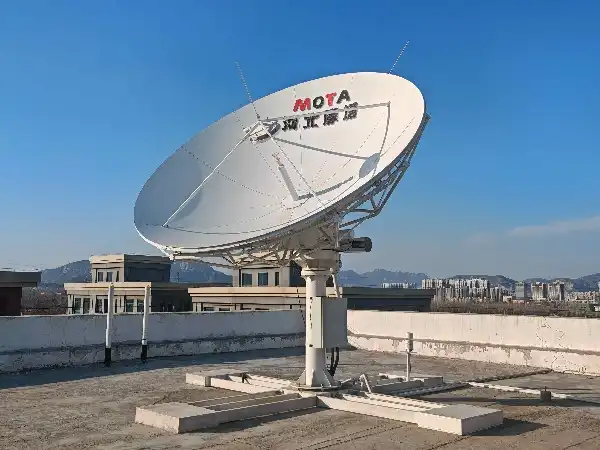
This enterprise-level anti-interference fixed satellite antenna is made by Hebei Mota Electronics Technology Co., Ltd. for places with a lot of electromagnetic fields, like military camps, border stations, and industrial centers. Transceiver isolation of at least 95 dB, a first sidelobe of -20 dB or less, and a noise figure of 0.7 dB or less are some of the most important numbers.
The antenna can send solid 4K video and large amounts of data even when there is 8 levels of wind and a lot of disturbance. Long-term operation is supported by military-grade parts and testing. In nine different sizes, from 2.4 m to 13 m, the aperture can be used. Get our team to tell you which test data works with your setup.
Procurement Considerations for B2B Buyers
Manufacturer, Distributor, or Online Marketplace
When buyers talk to a maker directly, they can talk to experts who can answer technical questions and make changes to the design. Distributors can cut down on shipping routes and keep stock close to home. Online stores are better for selling easy, low-value goods than for selling designed platforms. When buying something for a project, talking to the seller directly often speeds up the process from need to specification.
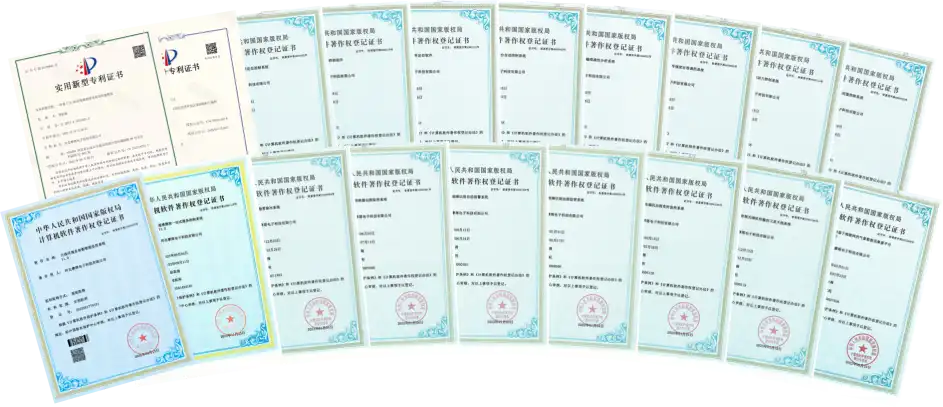
MOTA has been making things for nine years and is certified by ISO 9001, ISO 14001, and ISO 45001 alike. We also do OEM and ODM work that includes designing hardware, making software interfaces, useful parts, and getting certifications for different countries. Before you place an order, make sure that the supplier gives you clear documentation, test data that has been measured, and records of calibration.
Pricing, Lead Time, and Logistics
The price is based on the aperture, band set, amount of customization, and size of the order. Please ask for a rate based on your exact setup. When you buy in bulk or place repeat orders, you can negotiate the price and the terms of payment. MOTA has reasonable prices and easy payment options. Lead time is just as important as price.
We keep a lot of stock on hand for regular orders. It takes 45 to 90 days to make custom or large-scale systems. We move things with foreign dedicated lines, by sea freight, and by air freight. We pack high-tech electronics in materials that are resistant to shock and water, and we help with tracking, clearing customs, and storing goods overseas.
Warranty, Support, and Compliance
Support after the sale keeps the investment safe for your anti-interference fixed satellite antenna. MOTA offers customer service 24 hours a day, seven days a week, and remote expert help for setup, problems, and system upgrades 24 hours a day, seven days a week. International standards say that products come with a full-unit warranty, and there are different payment plans to choose from. Working together adds on-site service and quick delivery of extra parts.
US operators should check the FCC earth station rules in 47 CFR Part 25 to make sure they are following the rules and make sure they know what licenses their site needs. Find out from each provider which marks, like CE or FCC, are right for your setup. Our team helps with paperwork and makes sure that certifications are relevant to your market.
Installation and Troubleshooting Steps
Site Assessment and Installation
Most problems can be avoided later with a careful site plan. Do these basic things:
- Survey the site. Before you place your order, make a map of any nearby 5G towers, radar, or power equipment. Make sure you can see the satellite arc clearly. Making sure the base or roof can support the weight of the antenna and the wind load is important. Also, keep an eye out for any metal structures that might bounce signals back to the dish.
- Build and align. Put the reflector together and make sure the base is level. Then connect the feed, wires, and grounds. Do the routine for pointing. It takes the MOTA algorithm about three minutes to align all the satellites. Instead of relying on the pointing result alone, check the modem's signal strength.
- Calibrate and record. Choose the band, check the noise and separation between the transceivers, and save the baseline results. These numbers help your team find damage that happens over time and show the project owner that the link meets its goals.
These steps set a clean standard that you can then use to compare things later.
Fixing Common Interference Problems
First, tell the difference between interference and equipment problems when the link gets weak. If the noise floor goes up at certain times of the day, it's likely because of something outside the station, like a new radar or cell site. Use an instrument to look at the spectrum and compare it to the numbers you took at the start.
Changing the environment can help. For example, moving the dish a few meters away, adding a shield fence, or changing the feed can all lower the pickup. Checking filters, wire connections, and the low-noise block are all parts of hardware tuning. The MOTA system's AI module changes filtering based on how interference patterns change throughout the day, so many changes don't need to be made by hand.
Routine Maintenance and When to Call for Help
Set up regular times for checks. Look at the bolt torque, the condition of the feed window, the cable seals, the grounding, and how clean the reflector is. As time goes on, wind, thermal expansion, and shaking move parts slowly. Small changes add up, so after each visit, compare results to your starting point.
If you keep losing the connection, hear noise that you can't explain, see play in the mount, or find broken waveguide parts, you should get help right away because these problems tend to spread. On-site service and spare parts are available through cooperative channels, and MOTA's team gives online expert help 7 days a week, 24 hours a day.
Conclusion
It all comes down to fit and proof when picking an anti-interference fixed satellite antenna. The noise floor goes up because of 5G, radar, industrial electronics, and jamming. Buyers should use measured data to check the transceiver isolation, first sidelobe level, and noise figure. Whether the link will hold up outside is based on its durability grades, such as IP66, temperature range, wind tolerance, and instability.
The terminal's fit for the network is based on its band coverage, aperture size, and interface compatibility. The total cost includes setup, spare parts, and maintenance. To compare suppliers, it's better to use criteria instead of a brand's image. After construction, performance stays the same thanks to a thorough site study, written baseline readings, and regular upkeep.
FAQ
How does an anti-interference fixed satellite antenna improve signal quality?
A low noise figure, sidelobe suppression, high transceiver isolation, and filtering are some of the things that an anti-interference fixed satellite antenna does to keep unwanted RF energy out of the receive path. The MOTA model has an AI part that finds and blocks electromagnetic noise in real time. This keeps the link safe when interference patterns change.
Can it work in extreme weather?
Yes. It can work from -30°C to +55°C and stays stable in 8-level wind. The MOTA antenna has an IP66 grade. This machine has a three-axis self-stabilizing base that fixes pointing problems caused by wind load, thermal expansion, and shaking.
What affects the cost of an anti-interference fixed satellite antenna?
The price is based on the size of the aperture, the frequency bands it covers, modification, shipping, installation, guarantee plan, and level of support. Spare parts and maintenance are also part of the total cost of ownership, so send MOTA a picture of your setup to get a proper quote.
Choose Your Anti-Interference Fixed Satellite Antenna with MOTA
MOTA is an anti-interference fixed satellite antenna manufacturer with nine years of manufacturing experience, ISO 9001, ISO 14001, and ISO 45001 certifications, ready stock for regular orders, and 45–90 day production for custom systems. Send information about your site, band, and aperture to hebei_mota@163.com to get a technical answer and quote. For more information on the goods, go to motasat.com.
References
1. Federal Communications Commission, Expanding Flexible Use of the 3.7 to 4.2 GHz Band (Report and Order), 2020
2. Electronic Code of Federal Regulations, Title 47, Part 25: Satellite Communications, 2024
3. International Electrotechnical Commission, IEC 60529: Degrees of Protection Provided by Enclosures (IP Code), 2013
4. International Organization for Standardization, ISO 9227: Corrosion Tests in Artificial Atmospheres – Salt Spray Tests, 2022
5. Dennis Roddy, Satellite Communications (4th ed.), McGraw-Hill, 2006
6. Gérard Maral and Michel Bousquet, Satellite Communications Systems (5th ed.), Wiley, 2009
Tell us your requirements – get a tailored quote and technical support within 24 hours.