- English
- French
- German
- Portuguese
- Spanish
- Russian
- Japanese
- Korean
- Arabic
- Greek
- German
- Turkish
- Italian
- Danish
- Romanian
- Indonesian
- Czech
- Afrikaans
- Swedish
- Polish
- Basque
- Catalan
- Esperanto
- Hindi
- Lao
- Albanian
- Amharic
- Armenian
- Azerbaijani
- Belarusian
- Bengali
- Bosnian
- Bulgarian
- Cebuano
- Chichewa
- Corsican
- Croatian
- Dutch
- Estonian
- Filipino
- Finnish
- Frisian
- Galician
- Georgian
- Gujarati
- Haitian
- Hausa
- Hawaiian
- Hebrew
- Hmong
- Hungarian
- Icelandic
- Igbo
- Javanese
- Kannada
- Kazakh
- Khmer
- Kurdish
- Kyrgyz
- Latin
- Latvian
- Lithuanian
- Luxembou..
- Macedonian
- Malagasy
- Malay
- Malayalam
- Maltese
- Maori
- Marathi
- Mongolian
- Burmese
- Nepali
- Norwegian
- Pashto
- Persian
- Punjabi
- Serbian
- Sesotho
- Sinhala
- Slovak
- Slovenian
- Somali
- Samoan
- Scots Gaelic
- Shona
- Sindhi
- Sundanese
- Swahili
- Tajik
- Tamil
- Telugu
- Thai
- Ukrainian
- Urdu
- Uzbek
- Vietnamese
- Welsh
- Xhosa
- Yiddish
- Yoruba
- Zulu
How Does an Indoor Fixed Satellite Antenna Work?
An indoor fixed satellite antenna works by catching Ku-band signals from a satellite, passing them through a low-noise receiving stage, and sending the clean signal to a connected device such as a TV, computer, or camera. The unit stays in one place and points at one satellite after a short alignment step. The MOTA model covers 10.7–12.75 GHz, keeps its noise figure at 1.2 dB or lower, and finishes alignment in 1.5 minutes. In this article, I explain each stage of that process, compare indoor and outdoor options, and share what buyers should check before ordering.
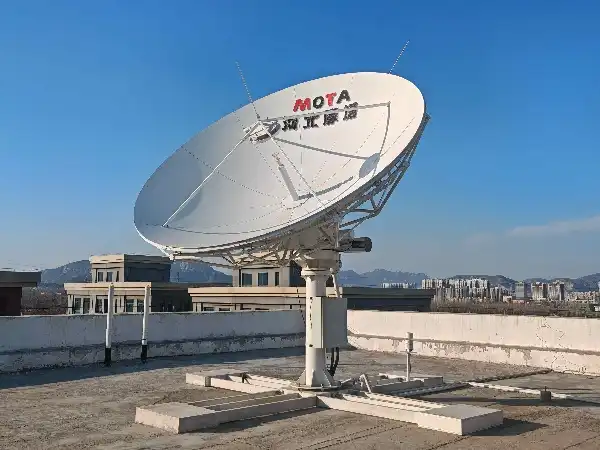
Understanding How Indoor Fixed Satellite Antennas Work
What an Indoor Fixed Satellite Antenna Does
An indoor fixed satellite antenna is a unit that stays inside a building instead of on a roof or pole. Once you point it at a satellite, it stays there. That makes it different from outdoor dishes that have to deal with wind, rain, and sun, and portable terminals that need to be pointed over and over again. The MOTA model can be put on a desk or a wall because it's no more than 20 cm x 20 cm x 5 cm and doesn't weigh more than 1.2 kg. Its job is to pick up the satellite signal, filter out any noise, and send the signal to your gear.
From Satellite to Screen: The Signal Path
A geostationary satellite always floats over the same spot on Earth, 35,786 km above the equator. It sends radio waves down to the ground, but they're not very strong when they get there. The antenna picks it up, and a low-noise stage boosts it before more noise can get in. The data is then sent to your TV, computer, or camera by the unit's built-in links. From the sky to the screen in very little time. The noise number is the first thing I look at when I look at a design because it sets the bar for everything else.
Frequency Band, Noise Figure, and Isolation
Most Ku-band downlinks come from satellites and use bands between 10.7 and 12.75 GHz. This is what the MOTA antenna works with. The receiving stage doesn't add much noise if the noise figure is 1.2 dB or less. If the number is less, it means the signal is better. Transceiver isolation of 80 dB or more keeps the send path from getting into the receive path. This way, a strong signal going out won't block out a weak signal getting in. The sheet of specifications also lists aperture sizes of 1.8 m, 1.0 m, 0.9 m, and 0.8 m. Please make sure with our team that this is exactly what you need before you place your order.
Benefits and Challenges of Indoor Fixed Satellite Antennas
Practical Benefits for Homes, Offices, and Buildings
Putting the gear inside keeps it safe from snow, rain, and direct sunlight. The IEC 60529 code also gives the MOTA unit an IP63 grade, which means it can handle dust and water spray. Put it on a desk or stick it to the wall with glue that leaves no sign. It's easy to set up. No more than 4 W is used when it's on and no more than 0.8 W when it's off. Not loud. It works well in hotel rooms, meeting rooms, and beds. Managers who are done with a makeover but can't cut into walls don't have to worry about getting approval this way.
Security and Placement Advantages
Someone is less likely to steal or mess with an indoor fixed satellite antenna that is locked in a room than a dish that is locked to a porch or roof. This is also important in apartment buildings and other managed properties where owners don't let changes be made to the outside.
It doesn't look like outdoor gear. Staff can get to the antenna without going up or down stairs, so it's safer to check it often. Still, I think you should put the unit somewhere that guests won't be able to easily pull it off a desk or wall. It needs to stay in place for the alignment to work. They can also keep track of each unit and how it is set up with the help of a label that has the room number on it.
Common Challenges and Troubleshooting
It has pros and cons when used inside. The antenna must be able to reach the satellite without any problems. This includes walls, roofs, and metal-coated surfaces. It is possible for low-E glass to weaken Ku-band communications. If it rains a lot on the road, ITU-R Recommendation P.618 says that the signal may fade. Four times, see if the link still works. Put the unit near a window that faces the satellite.
Take down any plants, blinds, or metal objects that are in the way. Do alignment all over again this time. That's how long it will take. Look at how the power and cable are hooked up. If the problems keep happening, our team is available online 24 hours a day, seven days a week to help you set up and fix things.
Indoor vs Outdoor Fixed Satellite Antennas — A Comparative Analysis
Environment and Durability
When dishes are left outside, they get wet, snowy, windy, and UV-light every day. A dish's satellite lock can be lost if the mounts come loose while it moves. This is because an indoor fixed satellite antenna is in a room that doesn't get windy or cold very often. The MOTA machine is inside, but dust, cleaning spray, and drinks that get spilled can still get in. This is why the IP63 grade is useful. The way of the signal is the trade-off. A dish on the outside faces the sky, while an indoor fixed satellite antenna faces a window or an open area. Compare the chance of bad weather with each spot's view of the sky.
Installation Time and Site Requirements
In order to place most outdoor dishes, you need to drill holes in the roof or wall and run cables through them. Usually, two people are needed to put the dish in place. People often need to ask for permission to drill on many sites. You can skip most of that when you're inside. The MOTA antenna can be left on a desk or glued on without leaving a trace.
The antenna and satellite are linked in 1.5 minutes. In a business with many rooms, the time saved on each one quickly adds up. You can't just put it anywhere; it has to be somewhere that satellites can see it, and a room that faces the wrong way might not work. Before you place an order, do a quick site check. It doesn't cost much and keeps units from going to waste.
Signal Performance, Cost, and Maintenance
There aren't as many things stopping the signal from a big dish outside than from a small indoor fixed satellite antenna. The MOTA unit's low noise figure and high separation keep the link clean, even though it is small. Because they need to be mounted, worked on, and fixed after a storm, outdoor systems cost more.
They turned off most of those things inside. Since they only use 4 W of power, they keep the cost of energy low. For an indoor fixed satellite antenna, all that needs to be done is cleaned and the lines checked for damage. In either case, it's important to read the guarantee terms. The warranty on our products covers the whole unit and is in line with international standards. We also offer a range of payment options.
Step-by-Step Installation Guide for Indoor Fixed Satellite Antennas
Pre-Installation Site Survey
Start with a poll. Draw a picture of the satellite that your service uses in the sky. Geostationary satellites can be seen in the southern sky from the United States. A window looking south is a good place to start. Look around to see if there is anything blocking the view, like nearby buildings, trees, or metal window film.
Before you connect, make sure the device you want to power is close enough for the cords to fit. For projects that need more than one room, test one room on each floor and in each window direction. Write down what you find. I think workers should take a picture of each place they check so they can quickly do it again. You won't have to guess later if you take notes.
Tools, Mounting, and Positioning
There aren't many things you need. Bring a clean cloth, the indoor fixed satellite antenna, and the wire that goes from the antenna to the power source. Dust makes the glue less sticky, so clean the wall before you put the traceless glue on it. Choose a flat, stable surface that isn't near where people walk for your desk.
Point the unit at the satellite, and then use the tracker to fine-tune the position while you keep an eye on the reading. The unit weighs less than 1.2 kg, so it can be mounted by one person. Take your time and really press down on the glue. After the time it says to, leave it alone. Make sure the lines aren't so tight that they pull the unit away from the wall.
Connection, Testing, and Final Checks
The receiver is built in and ready to use, so you can connect it directly to a TV, computer, or small tracking camera. Start the unit up and let it do its thing. It takes about 15 minutes to finish. Watch a live show, open a web page, or look at the camera feed for a while to test. Note the time, wind speed, and weather.
Check that the ports are properly put in and that the picture is not blocked. If the picture freezes, go back to the steps for troubleshooting. The last step is to name the unit and write down the settings on a sheet of paper. Our online support team is ready to help you set up any time, day or nite.
Procurement Guide: How to Choose and Buy the Right Indoor Fixed Satellite Antenna
Selection Criteria That Match Your Project
These are the main points I think you should check before you compare prices for an indoor fixed satellite antenna.
• Size and mounting: Make sure the dimensions (20 cm x 20 cm x 5 cm or less), weight (1.2 kg or less), and way of fixing without digging work with the space you have. If you're in a hotel or apartment, test one room first because the right way to mount something depends on things like finished walls and property rules.
• Signal and power: Check the noise level (1.2 dB or less), separation (80 dB or more), frequency range (10.7–12.75 GHz), and power draw (4 W or less when moving and 0.8 W or less when resting). Check these numbers against your satellite service and the noise level that you need in your bedroom and meeting room.
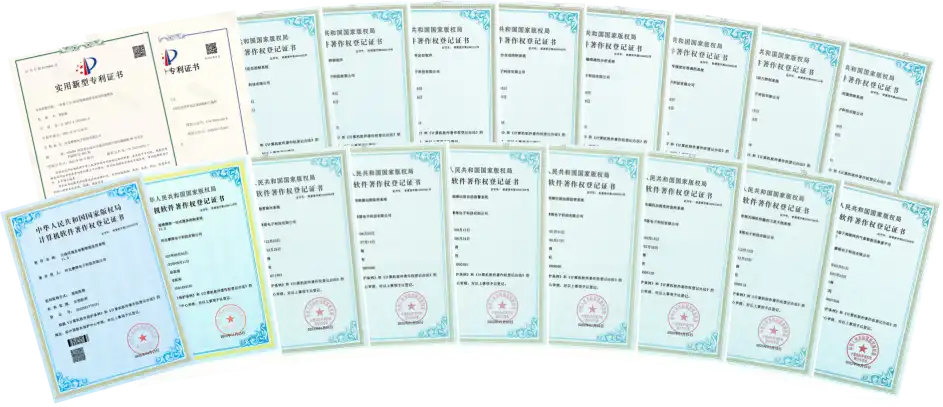
• Quality and compliance: Ask for management certificates and records of radio approval to make sure the quality and rules are followed. It has ISO 9001, ISO 14001, ISO 45001, and GJB 9001C certifications. They also have type approval for radio transmission equipment in their own country. Before you place your order, if you are in the US, you should also talk to a trained compliance expert about the rules for importing and radios in the US market.
A long list of needs can be cut down to a short list that the engineering and buying teams can both use by following these rules.
Supplier Evaluation and OEM/ODM Options
A good service company writes down how it does things and answers technical questions in a clear way. Since it opened in 2017, Hebei Mota has been in business for nine years, doing both trade and manufacturing. We can do work for both OEM and ODM. You can change how the hardware looks, how it works, and how it talks to other devices based on the needs of the country you want to sell it to. We do everything from making plans and samples to mass production.
People who sell and buy things under their own brand names can ask for logos, boxes, and directions that are made just for them. Do not pay a lot of money to replace units that have already been sent. Instead, ask any provider how they test samples, make sure batches are uniform, and handle defects. Before you place your first order, it's best to try a trial.
Pricing, Lead Time, and Logistics
What you pay depends on how many items you order, how customized they are, and how they are packed. That way, you can compare the prices per room or per person. You should get quotes at different levels based on the number of people and the minimum order size. When people place regular orders, MOTA saves stock on hand.
Small or large systems take 45 to 90 days to make. Our company works with foreign specialized lines, as well as air freight and sea freight. We ship high-precision gadgets in packaging that can withstand shock and water. We also help with customs clearance and store items abroad. You can pay in a number of ways. It's not enough to just compare the unit price; you should also ask if you can add extras or change the shipping terms for bigger orders.
Conclusion
Inside an indoor fixed satellite antenna, a low-noise stage takes in a signal from a satellite, cleans it up, and then sends it to a TV, computer, or camera. It depends on the noise level, how far apart the transceivers are, and the Ku-band range (10.7–12.75 GHz) how clean that link stays. Stolen items are less likely to be found because the hardware is kept inside and out of the weather. It can also be installed without a drill.
But walls, coated glass, and heavy rain can still make the signal weaker. It's easier to set up and take care of hardware inside than outside, but they need a clear way through the sky. Taking the time to examine the site, carefully line, and test the connections can help fix many placement issues. Some of the things buyers should look at are the size, the amount of power it uses, the approval history, the OEM capability, the wait time, and the total cost by land.
FAQ
Does an indoor fixed satellite antenna need a clear view of the sky?
Yes. There must be a clear path for the indoor fixed satellite antenna to reach its satellite. To start, find a window that faces south in the US. This is because geostationary satellites are in the south sky.
Can the antenna connect to a TV, computer, and camera?
Yes. Because it's built in and just plugs in, TVs, computers, and small security cams can all link directly. How you set up in the end will depend on your service and receiving tools.
Does MOTA offer OEM branding?
Yes. Along with making sure the hardware looks good, works well, and has the right parts for each country, we help with both ODM and OEM projects. Regular orders can be filled from stock that is already there, but custom orders take 45 to 90 days to make.
Contact MOTA for an Indoor Fixed Satellite Antenna Quote
Need a business that can make indoor fixed satellite antennas, offer ready-to-ship items, OEM/ODM branding, and help 24 hours a day, 7 days a week? Send an email to hebei_mota@163.com with your brand's name, the number of items you need, and the market you want to reach. Our team will respond with a quote and sample options. Visit motasat.com to learn more about their services and products. At the end of 2017, Hebei Mota helped long-term business partners by mixing plant output with trade know-how.
References
1. Satellite Communications, 2019
2. Satellite Communications Systems, 2020
3. IEEE Standard Letter Designations for Radar-Frequency Bands (IEEE Std 521), 2019
4. Degrees of Protection Provided by Enclosures (IP Code), IEC 60529, 2013
5. Propagation Data and Prediction Methods Required for the Design of Earth-Space Telecommunication Systems, ITU-R Recommendation P.618, 2023
6. Radio Regulations, International Telecommunication Union, 2020
Tell us your requirements – get a tailored quote and technical support within 24 hours.