- English
- French
- German
- Portuguese
- Spanish
- Russian
- Japanese
- Korean
- Arabic
- Greek
- German
- Turkish
- Italian
- Danish
- Romanian
- Indonesian
- Czech
- Afrikaans
- Swedish
- Polish
- Basque
- Catalan
- Esperanto
- Hindi
- Lao
- Albanian
- Amharic
- Armenian
- Azerbaijani
- Belarusian
- Bengali
- Bosnian
- Bulgarian
- Cebuano
- Chichewa
- Corsican
- Croatian
- Dutch
- Estonian
- Filipino
- Finnish
- Frisian
- Galician
- Georgian
- Gujarati
- Haitian
- Hausa
- Hawaiian
- Hebrew
- Hmong
- Hungarian
- Icelandic
- Igbo
- Javanese
- Kannada
- Kazakh
- Khmer
- Kurdish
- Kyrgyz
- Latin
- Latvian
- Lithuanian
- Luxembou..
- Macedonian
- Malagasy
- Malay
- Malayalam
- Maltese
- Maori
- Marathi
- Mongolian
- Burmese
- Nepali
- Norwegian
- Pashto
- Persian
- Punjabi
- Serbian
- Sesotho
- Sinhala
- Slovak
- Slovenian
- Somali
- Samoan
- Scots Gaelic
- Shona
- Sindhi
- Sundanese
- Swahili
- Tajik
- Tamil
- Telugu
- Thai
- Ukrainian
- Urdu
- Uzbek
- Vietnamese
- Welsh
- Xhosa
- Yiddish
- Yoruba
- Zulu
How does an industrial anti-interference satellite antenna work?
An industrial-grade anti-interference fixed satellite antenna maintains stable satellite links by combining precision RF engineering with ruggedized physical construction. It uses a built-in band-pass filter module to suppress electromagnetic noise generated by variable-frequency drives, welding equipment, and high-voltage switchgear. The parabolic reflector focuses incoming signals onto a low-noise feed assembly, while spatial filtering rejects off-axis interference. Transceiver isolation ≥90 dB and a first sidelobe level ≤-19 dB ensure adjacent-frequency signals never corrupt your data stream. The result is continuous, low-latency satellite connectivity even when your site generates intense electromagnetic pollution.
Understanding Industrial Anti-Interference Fixed Satellite Antennas
Electromagnetic interference (EMI) is present everywhere in a mine, smelting plant, or power center. For example, variable-frequency drives buzz at switching frequencies, arc welders make noise across a wide range of frequencies, and high-current bus bars send out stray fields. That kind of energy can't be filtered quickly enough by standard commercial dishes to keep a live SCADA link safe.
What Makes These Antennas Different from Consumer Models
Instead of just fixing the problem with software, a custom-built industrial-grade anti-interference fixed satellite antenna fixes it at the hardware level. The die-cast aluminum reflector shell naturally blocks RF signals, and waveguide band-pass filters inside the feed horn get rid of out-of-band energy before it gets to the low-noise block downconverter (LNB). With a noise figure of 0.9 dB, even a very weak satellite signal that comes in after going through a lot of industrial noise can be recovered clearly enough for demodulation to work.
There are different aperture options, from 2.4 m to 13 m. This lets procurement engineers match the antenna gain exactly to the link budget needs, whether the job is backhaul from a remote underground mine or real-time 1080p video monitoring across a distributed power grid.
How Does an Industrial Anti-Interference Satellite Antenna Work?
Four working parts work together to make the principle work: intelligent alignment, spectral filtering, spatial discrimination, and structural isolation.
The parabolic reflector focuses the energy of satellite signals that come from a very small angle range. Any influence from an earthly source outside of that window is weakened by a factor of two. The first sidelobe suppression of -19 dB measures how strongly the antenna blocks energy coming from a few degrees off-axis. This is a number that ITU-R S.580 uses as a standard for coordinating interference in satellite networks.
Signal Filtering and Noise Mitigation
When the feed horn picks up the boosted signal, built-in band-pass filters tuned to the Ku-band range of 10.7–12.75 GHz get rid of any extra energy that isn't in the band. The LNB assembly's noise figure of ≒0.9 dB makes sure that the thermal noise that is added during amplification is very small. This keeps the signal integrity for latency-sensitive industrial data at a delay of ≤60 ms end-to-end.
Automatic Alignment and Structural Resilience
Automatic pointing locks on to the target satellite and sets up a live link in 3.5 minutes, instead of relying on manual pointing, which is prone to error and takes a lot of time. The die-cast aluminum case with an IP67 rating then protects that alignment from wind loads, mechanical vibration, temperature changes from -35 °C to +65 °C, and process gasses that are bad for the metal. Tests done by different people at temperatures ranging from -40 °C to +70 °C show that thermal expansion doesn't move the feed-horn boresight too far from what is allowed.
An example from the energy industry shows how useful it is: an offshore platform operator reported no SCADA dropouts during a six-month monsoon season after replacing a commercial dish with a Ku-band industrial-grade anti-interference fixed satellite antenna that met these requirements, compared with an average of 14 daily link interruptions previously recorded.
Comparing Industrial Anti-Interference Antennas with Commercial Models
Many times, people in charge of buying things wonder if a regular Ku-band dish can connect to industry places. The honest answer is that industrial-grade anti-interference fixed satellite antennas are made to be resistant to electromagnetic interference (EMI) and last a long time between repairs, whereas commercial antennas are optimized for cost and ease of installation.
Here are the core performance differences that matter at the decision stage:
- Transceiver isolation: When it comes to transceivers, commercial dishes usually get 50–65 dB of separation. A unit made for industry has a gap of ≥90 dB, which is very important when a 500 kW variable-frequency drive is working within 30 meters of the antenna mount.
- Housing and sealing: Enclosures made for consumers have ratings of IP54 or IP55. The IP67 standard, which is needed in mining and smelting, means that the antenna can handle being submerged for a short time. This is important during flash flooding or high-pressure washdown processes.
- Service life: Commercial antennas are designed to be replaced every three to five years. The die-cast aluminum structure and anti-UV coating on an industrial model make it last longer than 8 years, which means lower lifetime costs and fewer purchase rounds.
- Monitoring capability: Commercial units don't come with built-in diagnostics. Instead of doing inspections by hand, an integrated O&M module with real-time status reporting, automatic alarms, and remote troubleshooting takes care of everything. This saves a lot of work in distributed mining or power-grid deployments.
All of these differences show that the unit price should be higher. When automated department heads look at things like less work for support staff, no fines for downtime, and longer replacement periods, the total cost of ownership usually goes in favor of the industrial standard in nearly every scenario.
Installation and Maintenance Considerations
About 40% of the long-term success of an antenna depends on how well the spot is prepared. Before the satellite is mounted, the base must be checked for vibration tracks from nearby compressors or conveyor drives. It must also be confirmed that there are no structures in the way of the clear-sky elevation angle to the target satellite.
Deployment Steps and Routine Upkeep
The automatic alignment method that works in 3.5 minutes greatly lowers the risk of launching, and accurate azimuth pre-pointing (within ±5°) speeds up acquisition and cuts down on search time. Once it is set up, the built-in monitoring module does regular health checks and alerts you to problems like signal-level drift, feed-horn condensation indicators, or mounting torque loss before they become outages.
For procurement leads managing framework supply agreements, MOTA offers ODM/OEM customization covering interface protocols, certification packages, and software integration with existing SCADA platforms. Customized and large-format systems can be made in 45 to 90 days, and they can handle big orders with stable mass-delivery capacity and help 24 hours a day, seven days a week. Professional shockproof and moisture-proof packaging is used for all units, and they are shipped with full logistics tracking and customs clearance coordination.
Industry Insights and Future Trends
It is getting faster for IoT sensor layers to be added to satellite ground stations. Embedded tracking units already send real-time information about the quality of the signal. But in the next generation of systems, antenna health data will be linked with weather radar feeds and site EMI maps to make beam changes before interference slows down throughput.
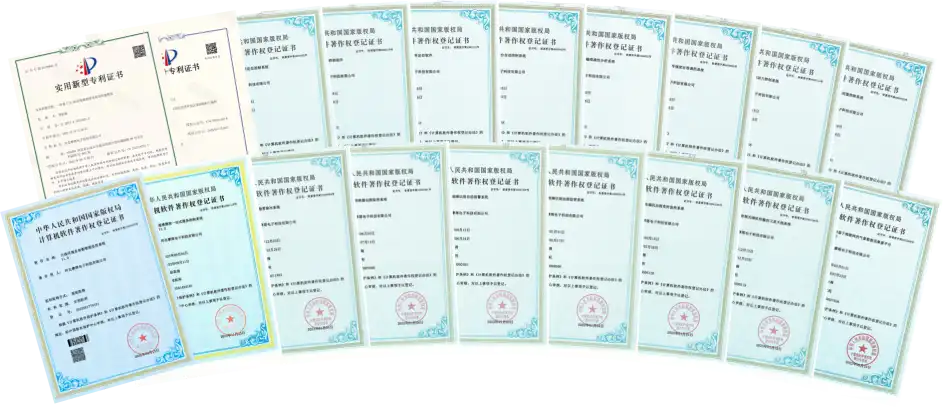
Regulatory pressure is also changing the rules for buying things. As more industrial sites look for MA safety certification for underground equipment, antenna providers with clear records of compliance and proof of MIL-STD-461G EMC testing have a huge edge when it comes to buying. MOTA has management system certifications for ISO9001, ISO14001, and ISO45001, and its products have domestic type approval for radio transmission equipment, positioning the company well for clients navigating multi-jurisdiction compliance requirements .
Conclusion
Rather than trying to fix signals that have been messed up after the fact, an industrial-grade anti-interference fixed satellite antenna deals with EMI at the physics level through spatial discrimination, spectral filtering, structural shielding, and intelligent alignment. This method solves a problem that has been bothering automation directors in mining, power, or smelting operations for a long time: SCADA links stay linked, remote O&M takes the place of regular inspection rounds, and a service life of 8 years or more cuts down on long-term costs. Three choices—choosing the right opening, making sure the interference-rejection specs are met, and buying from a company with a track record of certifications—will decide whether your satellite link is just something you forget about or something that constantly causes problems.
FAQ
1. How does transceiver isolation protect my SCADA link near a variable-frequency drive?
If the transceiver isolation is ≥90 dB, the signal path for sending and receiving signals are far enough apart that the receiver can't see any noise on the sending side. That isolation margin keeps the noise from covering up incoming satellite signals when a 500 kW drive creates switching transients.
2. What aperture size do I need for a remote mining backhaul application?
The amount of money needed for a link depends on the satellite's EIRP, data rate, and rain-fade margin. In North America, openings between 3.3 m and 6.2 m usually meet throughput goals for Ku-band mining backhaul. Larger dishes are only used in areas with a lot of rain or for high-throughput video uses.
3. Can this antenna integrate with an existing SCADA or industrial control system?
Yes. MOTA offers ODM/OEM customization that changes interface protocols and software modules to work with older SCADA platforms. This makes integration easier and gets rid of the need to replace control infrastructure that is already in place.
4. How does the IP67 rating hold up in a chemical smelting environment?
IP67 certification means that dust can't get in and the surface won't get wet for a short time. The die-cast aluminum housing has anti-UV and anti-corrosion coatings that make it work with the acidic process atmospheres that are common in smelting and electrolytic refining plants.
Partner with MOTA for Your Next Industrial Satellite Communication Project
MOTA is a supplier of industrial-grade anti-interference fixed satellite antennas. They have been making antennas for nine years, use military-grade production standards, and are fully ISO certified. Our team offers fair prices, 45–90 day custom production cycles, and 24 hours a day, 7 days a week online technical support, no matter if your project needs a single site upgrade or a phased framework agreement across multiple facilities. To get a technical consultation right away, email us at hebei_mota@163.com or go to motasat.com.
References
1. Evans, B. G. (Ed.). (1999). Satellite Communication Systems (3rd ed.). Institution of Electrical Engineers.
2. ITU-R. (2013). Recommendation ITU-R S.580-6: Radiation diagrams for use as design objectives for antennas of earth stations operating with geostationary satellites. International Telecommunication Union.
3. Pratt, T., Bostian, C., & Allnutt, J. (2003). Satellite Communications (2nd ed.). Wiley.
4. MIL-STD-461G. (2015). Requirements for the Control of Electromagnetic Interference Characteristics of Subsystems and Equipment. U.S. Department of Defense.
5. IEEE. (2020). IEEE Std 1613-2003 (R2020): Standard Environmental and Testing Requirements for Communications Networking Devices Installed in Electric Power Substations. IEEE.
6. ISO. (2015). ISO 9001:2015 Quality Management Systems — Requirements. International Organization for Standardization.
Tell us your requirements – get a tailored quote and technical support within 24 hours.