- English
- French
- German
- Portuguese
- Spanish
- Russian
- Japanese
- Korean
- Arabic
- Greek
- German
- Turkish
- Italian
- Danish
- Romanian
- Indonesian
- Czech
- Afrikaans
- Swedish
- Polish
- Basque
- Catalan
- Esperanto
- Hindi
- Lao
- Albanian
- Amharic
- Armenian
- Azerbaijani
- Belarusian
- Bengali
- Bosnian
- Bulgarian
- Cebuano
- Chichewa
- Corsican
- Croatian
- Dutch
- Estonian
- Filipino
- Finnish
- Frisian
- Galician
- Georgian
- Gujarati
- Haitian
- Hausa
- Hawaiian
- Hebrew
- Hmong
- Hungarian
- Icelandic
- Igbo
- Javanese
- Kannada
- Kazakh
- Khmer
- Kurdish
- Kyrgyz
- Latin
- Latvian
- Lithuanian
- Luxembou..
- Macedonian
- Malagasy
- Malay
- Malayalam
- Maltese
- Maori
- Marathi
- Mongolian
- Burmese
- Nepali
- Norwegian
- Pashto
- Persian
- Punjabi
- Serbian
- Sesotho
- Sinhala
- Slovak
- Slovenian
- Somali
- Samoan
- Scots Gaelic
- Shona
- Sindhi
- Sundanese
- Swahili
- Tajik
- Tamil
- Telugu
- Thai
- Ukrainian
- Urdu
- Uzbek
- Vietnamese
- Welsh
- Xhosa
- Yiddish
- Yoruba
- Zulu
How Ground Station Transceiver Antennas Ensure Reliable Two-Way Satellite Communication?
A ground station transceiver antenna is the important link between activities on Earth and satellite networks, letting data flow both ways over long distances. These high-tech systems combine the ability to send and receive data on a single platform. This makes it easier to send orders to assets in orbit while also getting large amounts of data at the same time. These antennas solve basic problems in satellite communications, like signal loss, tracking accuracy, and interference from the environment, by using advanced servo-tracking mechanisms, low-noise amplification, and multi-band frequency support. This makes sure that defense organizations, telecommunications companies, and aerospace contractors around the world can stay connected during mission-critical situations.
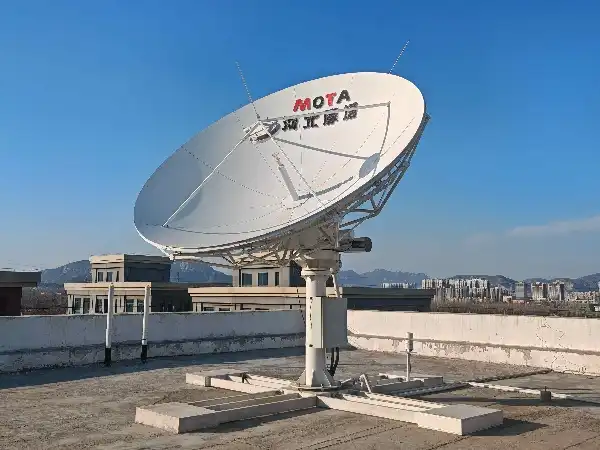
Understanding Ground Station Transceiver Antennas and Their Role in Reliable Communication
Ground station transceiver antennas are a special kind of telecommunications gear that is made to keep high-quality links open with satellites that are in different orbital positions. These systems are different from receive-only dishes because they have both broadcast and receive paths built in. This means that operators can send directions, request data, and get answers within milliseconds. Usually, the structure has parabolic mirrors, precision feed assemblies, and digital tracking systems that account for how the satellite moves and the effects of the atmosphere.
Core Components and Operational Architecture
Transceiver antennas today are made up of several parts that work together to make sure they work well. The reflector assembly, which is made of highly stable materials like carbon fiber or precision-machined metal, very precisely directs electromagnetic energy onto the feed horns. Block Upconverters (BUC) and Low-Noise Block Downconverters (LNB) work behind the radio dish to change frequencies and boost signals. In more advanced systems, these parts are combined with routers and smart power management to create a single platform. This makes installation easier and saves energy.
Frequency Band Coverage and Versatility
The frequency you choose has a direct effect on the range of communication, the speed of data transfer, and the robustness of the system in bad weather. Modern systems can work with many bands, such as Ku, Ka, S, X, C, and Qv. Each band has its own pros and cons when it comes to weather resistance and data capacity. Dual-band compatibility and manual swapping let operators change their missions without having to buy new gear. This flexibility is especially helpful for businesses that run a variety of satellite fleets or do business in areas with different frequency licenses.
Distinguishing Transceiver Systems from Conventional Terminals
Due to their bidirectional capability and precision needs, ground station transceiver antennas are basically different from normal satellite reception equipment. Consumer-grade dishes receive broadcast signals with little feedback, but professional transceiver systems have to keep the aiming very accurate—often within 0.1 degrees—while sending high-power signals that follow rules for the international airwaves. To keep the signal from getting messed up during transmission cycles, this needs complex motion control systems, real-time tracking algorithms, and strict temperature management.
Key Features and Design Principles Ensuring Reliability
Infrastructure on the ground for satellites is reliable because of engineering choices made during the planning phase. Every part, from structural members to electronic assemblies, has to be able to handle working pressures and keep up with performance standards over deployment cycles that last several years.
Antenna Gain and Sensitivity Optimization
Antenna gain shows how well a system can focus electromagnetic energy in certain ways. It has a direct effect on both how well it sends power and how well it receives it. High-gain designs with parabolic geometries can get G/T ratios above 30 dB/K, which lets them pick up weak signals from faraway satellites while using as little power as possible. This feature is very important for businesses that have to stick to tight power costs or talk to satellites in high orbits where path loss is higher than 200 dB.
Environmental Resilience and Protective Measures
Satellite ground stations often work in tough conditions, like study sites in the Arctic or military bases in the desert. Industrial-grade ground station transceiver antennas have safety measures that keep them working even when the temperature drops or rises. Systems that work in temperatures ranging from -25°C to +55°C use special lubricants, hot housings for electronics, and frames that can handle thermal expansion. IP-rated shelters keep out water, and conformal coats on circuit boards keep out corrosive atmospheres. The ability to withstand wind—keeping 1080p video streaming stable even in 7-level wind conditions—shows how finite-element analysis and aerospace-grade building methods can make a structure strong.
Stabilization Technology and Tracking Accuracy
Professional systems are different from business ones because they can keep satellite lock while accounting for wind load, thermal expansion, and platform shaking. High-resolution encoders and brushless servo motors that are managed by custom algorithms are used in two-axis stability platforms. These systems are able to track objects to within a few degrees because they automatically account for things like satellite drift and reflection in the atmosphere. Rapid purchase capabilities—aligning satellites in just three minutes—allow for quick deployment in emergency situations where communication infrastructure needs to be fixed right away.
Electrical Performance Parameters
Transceiver isolation, which is the space between sent and received signals in the same radio system, has a big impact on how well the system works. Getting ≥85dB separation stops emitter noise from making the receiver less sensitive, which lets both channels work at the same time without having to coordinate frequencies. Low sidelobe levels (≤ -14 dB) keep interference with nearby satellites to a minimum and make it harder to jam signals. This meets regulatory standards and improves operational security in electromagnetic environments that are often challenged.
These technology features work together to make systems that can work for a long time without any problems, even in situations where regular phone systems would stop working. When these solutions are used, repair intervals are shortened, running costs go down, and mission security goes up.
Comparing Ground Station Transceiver Antennas: Making an Informed Decision
To choose the right ground station transceiver antenna technology, you need to know how the different system designs meet different practical needs. There are many different options on the market for satellite transmission, and each one is best for a certain set of application scenarios and performance levels.
System Architecture Comparisons
Fixed ground station sites usually use large-aperture reflectors placed on reinforced concrete pads to get the best gain and frequency freedom. Mobile transceiver systems give up some speed in order to be portable. They do this by combining BUC, LNB, modem, and power systems into packages that can be deployed by a single person. This plug-and-play method cuts setup time by a huge amount and gets rid of setting mistakes. It is very useful for emergency response teams and tactical combat communications. The integrated design also makes it easier to handle spare parts and lessens the need for training, which are both important factors for companies that have more than one launch spot to manage.
Selection Criteria for B2B Procurement
When buying teams look at ground station transceiver antennas, they should look at a number of important factors. Frequency compatibility must work with the satellite systems and spectrum rights that are already in place. The highest operational range and data rate are set by the gain specs. The amount of noise affects how sensitive the receiver is, which is especially important for sending low-power satellite data or high-resolution images downward. Environmental grades need to meet where the products will be used. For example, coastal structures need better corrosion protection, while high-altitude sites need wider temperature ranges. Compliance standards, such as ISO9001, ISO14001, and ISO45001, guarantee the quality of the production process and the dependability of the supply chain.
Manufacturer Capabilities and Support Infrastructure
The supplier's production experience and knowledge of advanced technologies have a big effect on the long-term success of the project. Manufacturers that have been around for a while and have a track record of making satellite communication systems offer benefits that go beyond the product specs. Customization lets you change to different task profiles or connect to existing infrastructure. Being clear about lead times and production ability helps project managers plan deployments around operational goals. Full warranty plans and expert help 24 hours a day, seven days a week, make sure that problems in the field are fixed quickly and without extensive downtime. When companies are looking for transceivers, they should check that the suppliers are certified, look at examples of similar setups, and see if there are any regional support services in the areas where the devices will be used.
Procurement Considerations: Streamlining Your Purchase and Deployment
Effective buying strategies cut down on costs and speed up project timelines. Knowing how the market works and what suppliers can do lets you make smart choices that balance technical needs with price limits.
Budget Planning and Lead Time Management
The price of a ground station transceiver antenna depends on its aperture size, frequency range, and amount of integration. Standard setups with fixed frequency bands and standard mounting systems are the least expensive. On the other hand, custom multi-band systems with automatic tracking and environmental protection cost a lot more. To make accurate cost comparisons, organizations should ask for thorough quotes that list parts, installation services, and support agreements. Lead times rely on how complicated the order is. Standard units can ship from stock within weeks, but special large-scale systems usually need 45 to 90 days to be made. Bulk sales get better prices because of the bulk discount, but it takes longer to get the parts and test their quality.
Partnering with Certified Manufacturers
Working with certified sellers lowers the chance of purchasing things and makes sure that rules are followed. Manufacturers who keep their ISO licenses show that they are able to control quality and follow strict process rules throughout the whole production cycle. This is especially important for projects that need to have a lot of paperwork, like aircraft and defense projects that need to be able to track materials and get licenses for them. Cross-border transportation experts know how to handle customs processes, what paperwork is needed, and the right way to package items so they don't get damaged during shipping across borders. Professional packing that is resistant to shock and wetness, along with full-process shipping tracking, lowers the chance of equipment damage or delays.
Installation and After-Sales Support
The success of a system relies on how well it was installed and how well it is maintained over time. Installing antennas, grounding, and RF cables in a way that meets maker standards is made easier by certified installation services. Before handing over, commissioning processes check all performance factors. This lowers the chance of operational problems. Full after-sales support, which includes help with fixing problems, system updates, and part replacement, makes equipment last longer and keep working well over multi-year operations. During the buying process, organizations should be clear about how long it takes for support to respond, how many field service workers are available, and what the warranty terms are for both tools and labor.
Applications and Benefits for B2B Clients Across Industries
Ground station transceiver antennas make it possible for important tasks to be done in many areas where dependable satellite communication is key to mission success. Knowing about these apps helps businesses find use cases and figure out their return on investment.
Aerospace and Defense Communications
Transceiver systems are used for command, control, communications, computers, intelligence, surveillance, and reconnaissance (C4ISR) tasks by both the military and the government. These systems provide safe, jam-proof connections that keep people connected in places where normal equipment isn't available or has been hacked. Expeditionary troops are accompanied by mobile transceiver units that set up contact hubs as soon as they arrive. Being able to send and receive HD video clips from robotic aerial vehicles at the same time helps people make decisions in real time. Similar systems are used by aerospace companies to send data to, track, and control spacecraft during launch operations and orbital movements.
Remote Sensing and Data Backhaul
Earth observation satellites take a huge amount of high-resolution pictures that need to be sent quickly to processing sites. Ground station transceiver antennas with high-throughput Ka-band capabilities allow for fast data transfer while still keeping uplink channels open for tasking orders that point satellite sensors toward new events. Commercial remote sensing operators use this two-way ability to run their satellite systems efficiently and make the most of imaging possibilities that can bring in money. Professional transceiver systems can work in harsh environments, so they can keep working even during important weather-tracking tasks where other equipment might break down.
Telecommunications and IoT Connectivity
Transceiver ground stations are used by satellite network providers as gateways to connect assets in space to fiber backbones on Earth. Managing fast satellite passes and frequent handovers is hard for people who run constellations in low Earth orbit. Advanced transceiver systems with fast capture methods and high-speed tracking make sure that connections stay open even as satellites move through the sky at speeds of more than 7 km/s. This makes it possible for poor areas to get broadband internet and for shipping companies to connect to the internet at sea. Satellite backhaul is used by industrial IoT applications to keep an eye on pipes, mines, and farms from afar when it's not cost-effective to use land networks.
Economic Benefits and Operational Efficiency
Companies that buy professional-grade radio systems get a lot of benefits that go beyond just being able to connect. Integrated designs are cheaper to install and keep up than systems that need different parts and experts who know how to work with them. Rapid rollout features keep service interruptions to a minimum during equipment moves or emergency repairs. Better dependability, which is reached by using military-grade parts and following industrial design standards, cuts down on unplanned downtime and the money lost because of it. Scalability lets you add more power gradually as the need for connection grows, without having to replace the whole system. These factors work together to give strong total cost of ownership benefits over working spans of several years.
Conclusion
By allowing reliable two-way contact between activities on Earth and assets in space, ground station transceiver antennas are high-tech engineering solutions. Modern systems have improved stability, support for multiple frequency bands, and weather resistance built into platforms that can be used anywhere and meet the strict needs of aerospace, military, telecommunications, and remote sensing applications. When companies look at these systems, they should give more weight to providers with a history of producing similar products, a wide range of certifications, and a support system that can quickly respond to problems. When rapid rollout, better environmental performance, and integrated design come together, they offer practical benefits that make investment worth it for mission-critical applications that need to be completely reliable.
FAQ
What frequency bands should organizations prioritize when specifying transceiver antennas?
Which band to use relies on the task and the satellite's infrastructure. Ku-band is a great choice for general communications and data backhaul because it strikes a good mix between speed and equipment cost. Ka-band has a higher output capacity, but it is more affected by air attenuation when it rains. X-band is more reliable in bad weather, which is why it is used a lot in military and research settings. Dual-band systems that allow manual switching between frequency bands are helpful for organizations that run a variety of satellite fleets because they let them change to shifting business needs without having to buy new equipment. Band selection is also affected by regulations and the supply of spectrum licenses in distribution areas.
How do transceiver isolation specifications impact operational capabilities?
Transceiver isolation, which is the electromagnetic difference between the lines of the send and receive signals, has a direct effect on the quality of full-duplex operation. When systems achieve ≥85dB isolation, broadcast signals can't get into sensitive receiver circuits. If they did, noise floors would rise and receiving would become less sensitive. At this level of performance, transmission and reception can happen at the same time without the need for frequency guard bands or time-division multiplexing. Applications that need real-time two-way communication, like controlling a UAV with live video feedback or operating a satellite in a dynamic way, need better separation performance to keep the link quality high while multiple operations are going on at the same time.
Partner with MOTA for Your Satellite Communication Infrastructure
Hebei MOTA has been making high-tech satellite transmission equipment that meets the strict needs of global defense, aerospace, and telecommunications activities for more than nine years. Our ground station transceiver antenna solutions combine advanced tracking methods with industrial-grade building materials to give your important tasks the dependability they need. We keep our ISO9001, ISO14001, and ISO45001 certifications up to date to make sure that all of our systems meet international standards for quality and the environment. We can handle both urgent deployments and planned infrastructure increases because our production cycles for customized large-scale systems are 45 to 90 days and we keep enough standard setups in stock. Our full range of ODM/OEM customization options, along with our expert help available 24/7 and mature cross-border logistics infrastructure, make sure that projects run smoothly from the beginning, when they are designed, to the end, when they need long-term operational support. Contact our team at hebei_mota@163.com to talk about your needs and get detailed technical specs that are specific to your working environment when you need a ground station transceiver antenna provider that can offer performance, compliance, and prompt service.

References
1. Maral, G., & Bousquet, M. (2020). Satellite Communications Systems: Systems, Techniques and Technology (6th ed.). Wiley.
2. Pratt, T., micro, C. W., & Allnutt, J. E. (2021). Satellite Communications (3rd ed.). Wiley-IEEE Press.
3. Ilcev, S. D. (2019). Global Satellite Meteorological Observation Applications (2nd ed.). Springer International Publishing.
4. Kodheli, O., et al. (2021). "Satellite Communications in the New Space Era: A Survey and Future Challenges." IEEE Communications Surveys & Tutorials, 23(1), 70-109.
5. Gagliardi, R. M., & Karp, S. (2018). Optical Communications (2nd ed.). Wiley-Interscience.
6. Morgan, W. L., & Gordon, G. D. (2019). Communications Satellite Handbook. Wiley-Interscience.
Tell us your requirements – get a tailored quote and technical support within 24 hours.