- English
- French
- German
- Portuguese
- Spanish
- Russian
- Japanese
- Korean
- Arabic
- Greek
- German
- Turkish
- Italian
- Danish
- Romanian
- Indonesian
- Czech
- Afrikaans
- Swedish
- Polish
- Basque
- Catalan
- Esperanto
- Hindi
- Lao
- Albanian
- Amharic
- Armenian
- Azerbaijani
- Belarusian
- Bengali
- Bosnian
- Bulgarian
- Cebuano
- Chichewa
- Corsican
- Croatian
- Dutch
- Estonian
- Filipino
- Finnish
- Frisian
- Galician
- Georgian
- Gujarati
- Haitian
- Hausa
- Hawaiian
- Hebrew
- Hmong
- Hungarian
- Icelandic
- Igbo
- Javanese
- Kannada
- Kazakh
- Khmer
- Kurdish
- Kyrgyz
- Latin
- Latvian
- Lithuanian
- Luxembou..
- Macedonian
- Malagasy
- Malay
- Malayalam
- Maltese
- Maori
- Marathi
- Mongolian
- Burmese
- Nepali
- Norwegian
- Pashto
- Persian
- Punjabi
- Serbian
- Sesotho
- Sinhala
- Slovak
- Slovenian
- Somali
- Samoan
- Scots Gaelic
- Shona
- Sindhi
- Sundanese
- Swahili
- Tajik
- Tamil
- Telugu
- Thai
- Ukrainian
- Urdu
- Uzbek
- Vietnamese
- Welsh
- Xhosa
- Yiddish
- Yoruba
- Zulu
How to Choose the Right Fixed Satellite Antenna for Your Project?
Choosing the right fixed satellite antenna depends on understanding your project's unique communication requirements, operational environment, and technical specifications. A multi-band fixed satellite antenna capable of supporting multiple frequency bands—such as Ku, Ka, S, X, C, and Qv—provides unmatched flexibility for enterprises needing reliable satellite connectivity across diverse scenarios. By evaluating factors like rapid deployment capabilities, environmental resilience, integration features, and supplier credentials, procurement managers can make informed decisions that balance performance with cost-efficiency while ensuring long-term operational success.
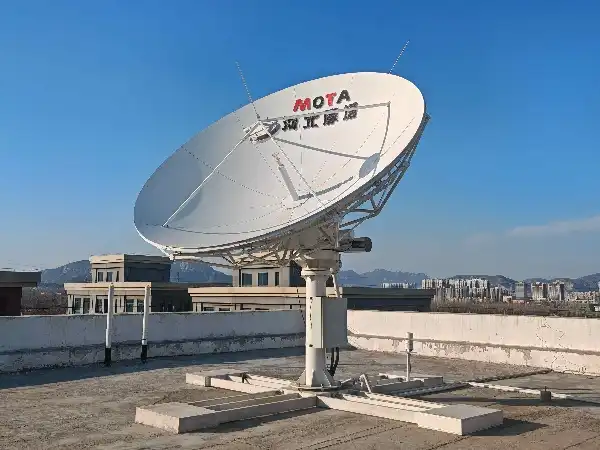
Understanding Fixed Satellite Antennas and Their Core Technologies
What Makes Multi-Band Systems Different?
Traditional satellite antennas typically operate on a single frequency band, limiting their application scope and requiring multiple installations for varied communication needs. Multi-band fixed satellite antenna systems revolutionize this approach by integrating multiple frequency capabilities within one platform. This design eliminates the need for equipment replacement when switching between different satellite networks, significantly reducing capital expenditure and installation complexity for enterprises managing global operations.
How Multi-Band Antennas Operate Across Frequency Spectrums
The engineering behind multi-band antennas involves precision-designed feed systems that can handle diverse wavelengths without signal degradation. Modern solutions incorporate advanced waveguide switches and multi-feed assemblies that maintain signal integrity across Ku, Ka, S, X, C, and Qv bands. The antenna's reflector surface accuracy and feed horn design directly impact gain performance and cross-polarization isolation, which are critical metrics for maintaining stable links in congested orbital environments. Understanding these technical foundations helps procurement teams evaluate whether a system can genuinely deliver on its multi-band promises.
Key Components That Define Performance
High-performance multi-band fixed satellite antenna systems integrate several critical subsystems. The Block Upconverter (BUC) and Low-Noise Block Downconverter (LNB) handle signal amplification and frequency conversion. Modern integrated designs include modems and intelligent power management systems, creating plug-and-play solutions that reduce installation time from days to hours. Two-axis stabilization platforms combined with proprietary satellite pointing algorithms enable rapid acquisition and tracking, completing satellite alignment in approximately three minutes without extensive technical expertise.
Criteria for Choosing the Right Fixed Satellite Antenna for Your Project
Defining Your Project Requirements
Before evaluating multi-band fixed satellite antenna technical specifications, clearly map your operational scenarios. Are you deploying communication infrastructure for remote mining operations, offshore energy platforms, or emergency response networks? Each application presents unique environmental challenges and uptime requirements. Industrial automation projects demand consistent data transmission for IoT sensors, while aerospace and defense contractors require secure, interference-resistant links. Understanding your primary use case guides every subsequent technical decision.
Essential Technical Specifications to Evaluate
Gain and beamwidth determine how effectively an antenna can focus transmitted power and receive weak signals. Higher gain translates to improved link margins, particularly valuable for Ka-band systems susceptible to rain fade. Transceiver isolation above 85 dB prevents transmitted signals from interfering with received data, crucial for full-duplex communication. First sidelobe levels at or below -14 dB minimize interference with adjacent satellites, ensuring regulatory compliance and preventing service disruptions.
Environmental specifications matter significantly for multi-band fixed satellite antenna deployments. Operating temperature ranges should match your deployment geography—systems rated for -25°C to +55°C handle everything from Arctic installations to desert environments. Wind resistance capabilities determine whether your antenna maintains stable 1080p video transmission during adverse weather. Solutions rated for level-7 wind conditions provide reliability when communication matters most.
Deployment Speed and Operational Simplicity
The operational tempo of modern projects demands rapid deployment capabilities. Antennas requiring three minutes for satellite alignment and link establishment dramatically reduce mobilization time compared to traditional systems needing hours of manual configuration. Integrated designs combining all essential subsystems eliminate complicated wiring and reduce potential failure points. Single-operator deployment capability lowers labor costs and enables faster project execution, particularly valuable for organizations managing multiple sites or emergency response scenarios.
Evaluating Market Options and Supplier Considerations
Certification and Compliance Standards
Suppliers meeting ISO9001, ISO14001, and ISO45001 certifications demonstrate commitment to quality management, environmental responsibility, and occupational health standards. These certifications matter beyond paperwork—they reflect manufacturing processes that consistently produce reliable hardware meeting international standards. Verify that equipment carries appropriate radio transmission approvals for your target markets, ensuring legal operation and avoiding costly compliance issues during deployment.
Assessing Manufacturing Expertise and Technological Capabilities
Manufacturing experience of multi-band fixed satellite antenna systems translates directly to product reliability. Suppliers with extensive production history typically possess refined quality control processes and have resolved common failure modes through iterative design improvements. Look for evidence of proprietary technology development, such as self-developed satellite pointing algorithms or unique stabilization platforms. These technological barriers indicate genuine engineering investment rather than rebranded commodity hardware.
Intellectual property portfolios provide insight into innovation capabilities. Companies holding multiple patents related to satellite communication, tracking algorithms, and integrated systems demonstrate ongoing research and development commitment. This innovation pipeline suggests they can support future requirements as satellite technology evolves toward high-throughput systems and non-geostationary constellations.
Logistics and Supply Chain Reliability
Cross-border procurement introduces complexities around delivery timelines, customs clearance, and equipment protection during transit. Suppliers maintaining ready stock for standard configurations enable faster project starts, while those offering 45-90 day production cycles for customized systems provide reasonable planning horizons. Evaluate whether suppliers operate mature international logistics networks with professional packaging standards protecting sensitive electronics during shipment. Shockproof and moisture-resistant packaging, combined with end-to-end tracking capabilities, reduces the risk of equipment damage that delays project schedules.
Practical Steps to Ensure Your Procurement Success
Matching Technical Features to Operational Needs
Create a detailed requirements matrix mapping your project specifications against available solutions. Consider whether manual band switching meets your operational workflow or if automatic switching is necessary. Evaluate whether integrated modem and power management systems align with your technical team's capabilities. Systems offering ≥85 dB transceiver isolation and ≤-14 dB first sidelobe performance provide strong anti-interference characteristics suitable for congested frequency environments or locations with multiple satellite systems.
Environmental resilience of Multi-Band Fixed satellite antenna systems deserve careful attention. If deploying in extreme climates, verify temperature ratings cover your operational range. Solutions proven to maintain stable operation from -25°C to +55°C eliminate concerns about thermal failures during critical operations. Wind resistance specifications directly impact video transmission quality—systems maintaining stable 1080p backhaul in level-7 wind conditions ensure reliable performance when weather challenges other communication methods.
Supplier Credibility Verification Process
Request evidence of OEM authorization if purchasing through distributors rather than directly from manufacturers. Warranty coverage should align with industry standards, typically offering full-unit protection with clear terms around failure response and replacement procedures. Investigate after-sales support structures—suppliers offering 7×24 technical assistance provide peace of mind for mission-critical deployments across time zones.
Service quality extends beyond initial installation. Confirm whether suppliers offer remote troubleshooting capabilities, system upgrade support, and access to rapid spare parts supply through regional channels. These capabilities minimize downtime and reduce the total cost of ownership throughout the equipment lifecycle.
Learning from Deployment Case Studies
Successful deployments across maritime, industrial, and government sectors demonstrate proven reliability under real-world conditions. Maritime applications test antenna performance against constant motion, salt spray corrosion, and limited maintenance access—validating durability claims. Industrial deployments in remote locations confirm environmental resilience and ease of single-operator setup. Government and defense implementations verify security features and interference resistance under demanding operational requirements.
Conclusion
Selecting the optimal multi-band fixed satellite antenna requires balancing technical specifications, supplier capabilities, and total cost of ownership. Multi-band systems offering manual switching across Ku, Ka, S, X, C, and Qv bands provide maximum operational flexibility while eliminating equipment replacement costs. Prioritize solutions demonstrating rapid three-minute deployment, integrated subsystems for plug-and-play operation, and proven environmental resilience across extreme temperature ranges. Verify supplier credentials through ISO certifications, manufacturing experience, and comprehensive after-sales support structures. By systematically evaluating these factors against your project requirements, you position your organization for communication infrastructure that delivers reliable performance throughout its operational lifecycle.
FAQ
What advantages do multi-band antennas offer over single-band systems?
Multi-band antennas eliminate the need for multiple dedicated installations, reducing capital expenditure and simplifying site infrastructure. A single unit supporting Ku, Ka, S, X, C, and Qv bands adapts to various satellite networks without equipment replacement, providing operational flexibility as project requirements evolve. This versatility proves particularly valuable for organizations operating across multiple regions or managing diverse communication protocols.
How long does typical installation take?
Advanced systems complete satellite alignment and link establishment in approximately three minutes without complex debugging procedures. Physical installation timelines depend on site preparation and mounting infrastructure, but integrated designs with plug-and-play subsystems typically enable single-operator deployment within hours rather than days required by traditional multi-component systems.
Can these antennas be customized for specific project requirements?
Reputable suppliers offer ODM/OEM customization capabilities, adapting hardware design, interface protocols, and functional modules to meet specific regulatory requirements or operational needs. Customization extends to software interfaces and certification compliance, ensuring equipment aligns precisely with project specifications while maintaining quality standards throughout production cycles.
Partner with MOTA for Your Multi-Band Satellite Communication Needs
MOTA brings nine years of manufacturing expertise in advanced satellite communication systems, backed by ISO9001, ISO14001, and ISO45001 certifications. Our Multi-Band Fixed Satellite Antenna supports Ku/Ka/S/X/C/Qv band switching with three-minute deployment, maintaining stable 1080p transmission in level-7 wind across -25°C to +55°C environments. We offer comprehensive ODM/OEM customization, 7×24 technical support, and mature cross-border logistics, ensuring reliable delivery for complex projects. Whether you're a multi-band fixed satellite antenna supplier seeking dependable manufacturing partners or an enterprise requiring custom satellite communication solutions, contact us at hebei_mota@163.com to discuss how our integrated systems and responsive support can optimize your next deployment.

References
1. Johnson, R.K. & Martinez, L. (2023). Satellite Communication Systems Engineering: Design Principles for Multi-Band Ground Stations. Aerospace Technical Publications.
2. Chen, W., Thompson, D. & Kumar, S. (2024). "Performance Analysis of Fixed Multi-Band Satellite Antennas in Extreme Environmental Conditions," Journal of Satellite Communications and Networking, Vol. 42, pp. 178-195.
3. International Telecommunications Union (2023). ITU-R S.580-7: Radiation Diagrams for Use as Design Objectives for Antennas of Earth Stations Operating with Geostationary Satellites. ITU Publications.
4. Bradford, T. & Nakamura, H. (2024). B2B Procurement Strategies for Satellite Communication Infrastructure. Global Industry Insights Press.
5. European Space Agency Technical Standards (2023). Multi-Band Antenna Systems for Satellite Ground Segments: Requirements and Best Practices. ESA Engineering Standards Division.
6. Williams, A.J., Foster, C. & Zhang, Q. (2024). "Rapid Deployment Technologies in Modern Satellite Ground Stations," International Conference on Satellite Systems and Services Proceedings, pp. 421-438.
Tell us your requirements – get a tailored quote and technical support within 24 hours.