- English
- French
- German
- Portuguese
- Spanish
- Russian
- Japanese
- Korean
- Arabic
- Greek
- German
- Turkish
- Italian
- Danish
- Romanian
- Indonesian
- Czech
- Afrikaans
- Swedish
- Polish
- Basque
- Catalan
- Esperanto
- Hindi
- Lao
- Albanian
- Amharic
- Armenian
- Azerbaijani
- Belarusian
- Bengali
- Bosnian
- Bulgarian
- Cebuano
- Chichewa
- Corsican
- Croatian
- Dutch
- Estonian
- Filipino
- Finnish
- Frisian
- Galician
- Georgian
- Gujarati
- Haitian
- Hausa
- Hawaiian
- Hebrew
- Hmong
- Hungarian
- Icelandic
- Igbo
- Javanese
- Kannada
- Kazakh
- Khmer
- Kurdish
- Kyrgyz
- Latin
- Latvian
- Lithuanian
- Luxembou..
- Macedonian
- Malagasy
- Malay
- Malayalam
- Maltese
- Maori
- Marathi
- Mongolian
- Burmese
- Nepali
- Norwegian
- Pashto
- Persian
- Punjabi
- Serbian
- Sesotho
- Sinhala
- Slovak
- Slovenian
- Somali
- Samoan
- Scots Gaelic
- Shona
- Sindhi
- Sundanese
- Swahili
- Tajik
- Tamil
- Telugu
- Thai
- Ukrainian
- Urdu
- Uzbek
- Vietnamese
- Welsh
- Xhosa
- Yiddish
- Yoruba
- Zulu
What Is the Difference Between Multi-Band and Single-Band Antennas?
The fundamental difference between multi-band and single-band antennas lies in frequency coverage and operational flexibility. A multi-band fixed satellite antenna supports multiple frequency bands—such as Ku, Ka, S, X, C, and Qv—through manual or automated switching, allowing a single system to connect with various satellite constellations without equipment replacement. Single-band antennas, conversely, operate within one dedicated frequency range, offering targeted performance but limited adaptability. This distinction directly impacts deployment costs, operational continuity, and scalability across diverse communication scenarios in global enterprises.
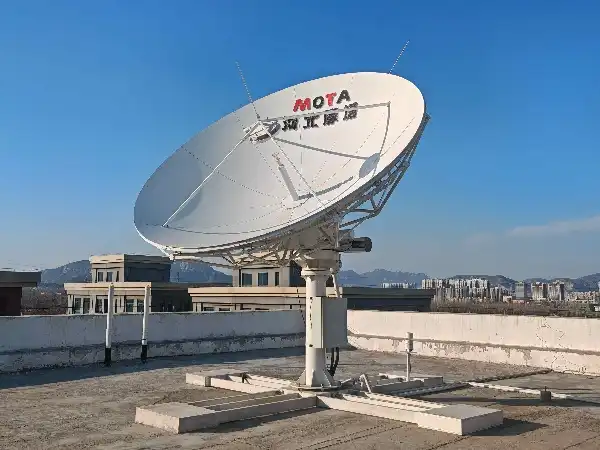
Introduction
Satellite antenna technology underpins critical infrastructure for industries ranging from aerospace defense to maritime logistics. For procurement managers overseeing global operations, choosing between multi-band and single-band antenna systems represents more than a technical specification—it shapes network resilience, budget allocation, and long-term strategic flexibility. Organizations demanding uninterrupted connectivity across continents, regulatory compliance with international standards like ISO9001, and rapid deployment capabilities must carefully evaluate how each antenna type addresses operational pain points. Understanding the technical and financial implications of this decision enables buyers to align communication infrastructure with business continuity requirements, mitigate cross-border logistics risks, and prepare for evolving satellite constellation technologies.
Understanding Multi-Band and Single-Band Antennas
Single-Band Antenna Fundamentals
Single-band antennas operate within a specific frequency range, whereas a multi-band fixed satellite antenna operates across multiple bands. A C-band antenna serving offshore oil platforms, for instance, maintains consistent performance at 4-8 GHz but cannot access Ku-band satellites without complete hardware replacement. These systems excel in environments where communication requirements remain static, offering optimized gain patterns and simplified feed horn designs. Manufacturing precision focuses on a narrow spectrum, often resulting in cost advantages for initial procurement. However, this specialization creates dependency on a single satellite operator or orbital slot, limiting flexibility when service providers change or new frequency allocations emerge.
Multi-Band Antenna Architecture
Multi-band fixed satellite antenna systems integrate wideband reflectors or switchable feed assemblies that accommodate multiple frequency spectrums simultaneously. Advanced designs feature manual or motorized band selection, allowing operators to transition between Ku-band for high-throughput data and C-band for rain-fade resilience within minutes. Modern implementations employ precision-aligned multi-feed systems with low-loss waveguide switches, maintaining insertion loss below 0.2 dB during transitions. This architecture proves essential for teleport hubs aggregating content from legacy C-band satellites while distributing high-definition streams over Ka-band high-throughput satellites. The technical complexity requires stringent surface accuracy—typically RMS less than 0.3 mm for Ka-band efficiency—and superior cross-polarization isolation exceeding 30 dB to prevent signal interference during simultaneous band operations.
Key Technical Differences Between Multi-Band and Single-Band Antennas
Frequency Band Coverage and Flexibility
The operational scope separates these technologies fundamentally. Single-band antennas provide deep optimization within one spectrum, achieving maximum gain and minimal sidelobe energy for their designated frequency. Multi-band fixed satellite antenna systems sacrifice marginal performance per band to deliver strategic versatility. A system supporting Ku/Ka/S/X/C/Qv bands enables access to commercial broadband, government-secure X-band networks, and maritime C-band services without site visits or hardware swaps. This capability reduces downtime during satellite migrations, supports backup link diversity, and accommodates regional frequency regulations as operations expand globally. Procurement teams managing multinational deployments benefit from standardized equipment inventories rather than region-specific antenna stocks.
Signal Performance and Link Budget
Performance metrics reveal nuanced trade-offs. Single-band antennas typically achieve higher gain-to-noise temperature ratios within their operating range due to feed horn specialization and optimized reflector curvature. Multi-band systems compensate through broader reflector designs and adaptive feed positioning, maintaining competitive G/T ratios across supported bands. Modern multi-band solutions demonstrate transceiver isolation exceeding 85 dB and first sidelobe levels below -14 dB, ensuring compliance with ITU-R S.580 standards for adjacent satellite interference prevention. Under adverse conditions—such as 7-level wind or temperature extremes from -25℃ to +55℃—multi-band systems with integrated stabilization platforms maintain stable 1080p video transmission, whereas single-band units may require supplemental environmental protection to match this resilience.
Installation Complexity and Operational Readiness
Deployment timelines influence the total cost of ownership significantly. Single-band antennas typically require straightforward alignment to a known satellite arc, with commissioning completed within hours by skilled technicians. Multi-band fixed satellite antenna systems demand more sophisticated setup procedures, including verification of feed alignment across all supported bands and calibration of switching mechanisms. However, recent innovations have compressed this gap—systems now achieve satellite alignment and link establishment in 3 minutes without iterative debugging through two-axis stabilizing platforms and proprietary pointing algorithms. Integrated designs combining BUC/LNB modules, modems, and intelligent power management enable plug-and-play operation, reducing the need for specialized integration expertise and allowing single-operator deployment even in remote field environments.
Practical Applications and Use Cases for Multi-Band vs Single-Band Antennas
Multi-Band Superiority in Dynamic Environments
Industries requiring adaptive communication strategies depend on multi-band fixed satellite antenna capabilities. Defense contractors conducting operations across multiple theaters utilize X-band for secure mission data while switching to commercial Ku-band for logistics coordination, maintaining operational security and bandwidth efficiency. Maritime fleets transitioning between coastal waters and open ocean benefit from C-band's rain-fade resistance near equatorial regions and Ka-band's higher throughput for crew welfare services in temperate zones. Energy companies operating in Arctic conditions leverage multi-band systems to shift frequencies as atmospheric conditions change, ensuring 99.99% uptime for critical SCADA telemetry. A recent deployment case demonstrated a multi-band terminal supporting simultaneous C-band video backhaul and Ka-band internet provisioning for a remote mining operation, eliminating the need for dual antenna installations and reducing site footprint by 40%.
Single-Band Viability in Specialized Contexts
Certain applications favor single-band concentration. Fixed teleport earth stations serving dedicated broadcast customers maintain C-band-only systems, benefiting from lower capital costs and simplified regulatory licensing. Research facilities tracking scientific satellites on specific L-band or S-band frequencies achieve superior sensitivity through purpose-built systems. Cost-sensitive applications with predictable long-term requirements—such as rural community broadband relays—optimize budgets through single-band procurement. However, these implementations carry scalability limitations. When satellite operators migrate to new orbital slots or frequency bands, single-band infrastructure requires complete replacement rather than firmware updates or feed reconfiguration, creating unplanned capital expenditures and service interruptions during hardware transitions.
Procurement Considerations: Choosing the Right Antenna for Your Business
Total Cost of Ownership Analysis
Evaluating lifecycle expenses reveals multi-band advantages despite higher initial pricing. While single-band antennas cost 30-50% less at purchase, the inability to adapt to changing satellite ecosystems generates hidden expenses. Organizations replacing single-band systems during satellite transitions incur not only hardware costs but also decommissioning labor, disposal fees, and service downtime. Multi-band systems amortize their premium through extended operational lifespans and flexibility to accommodate service provider changes without site interventions. Maintenance patterns differ as well—single-band systems require annual feed horn inspections and moisture seal replacements, whereas multi-band solid-state switching components endure over 100,000 cycles with minimal degradation. Warranty structures and spare parts availability significantly impact remote operations, making supplier evaluation critical.
Supplier Partnership and Customization Capabilities
Selecting multi-band fixed satellite antenna suppliers extends beyond product specifications to encompass manufacturing credentials and support infrastructure. Procurement teams prioritize vendors holding ISO9001, ISO14001, and ISO45001 certifications, ensuring quality management, environmental responsibility, and occupational health compliance throughout production. Companies offering ODM/OEM customization adapt hardware designs, interface protocols, and functional modules to meet country-specific regulatory requirements and project specifications. Production capacity matters—suppliers maintaining ready stock for standard configurations while supporting 45-90 day cycles for customized large-scale systems provide deployment flexibility. Cross-border logistics expertise proves essential, with mature international freight partnerships, professional shockproof moisture-proof packaging, and end-to-end customs clearance services mitigating overseas delivery risks. Around-the-clock customer response mechanisms ensure timely order processing, while 7×24 remote technical support resolves installation challenges and system upgrades without site dispatch delays.
Advanced suppliers provide modular architectures accommodating future capability expansions. Systems integrating uplink power control for rain fade compensation, automatic failover between bands during extreme weather, and compatibility with emerging LEO/MEO constellations preserve infrastructure investments as satellite technology evolves. Buyers negotiating contracts should secure flexible payment terms, comprehensive warranty coverage beyond standard provisions, and access to localized after-sales networks offering on-site technical services and rapid spare parts provisioning through overseas warehousing.
Conclusion
The choice between multi-band fixed satellite antenna systems and single-band antennas hinges on operational scope, budget constraints, and strategic planning horizons. Single-band systems deliver cost efficiency and optimized performance within stable, predictable communication environments. Multi-band alternatives provide indispensable flexibility for organizations managing diverse satellite services, expanding global operations, or requiring resilience against service disruptions. Procurement professionals must weigh initial capital outlays against total lifecycle costs, assess supplier manufacturing capabilities and compliance certifications, and evaluate how each technology aligns with long-term infrastructure roadmaps. As satellite constellations diversify and frequency allocations evolve, multi-band architectures increasingly represent prudent investments for enterprises prioritizing adaptability and continuity.
FAQ
How do multi-band antennas minimize signal loss during band switching?
Precision-aligned multi-feed assemblies and low-loss waveguide switches maintain insertion loss below 0.2 dB during transitions. Two-axis stabilization platforms and proprietary pointing algorithms enable automatic fast alignment, completing band switches and link reestablishment within 3 minutes. Systems achieve transceiver isolation exceeding 85 dB between transmit and receive paths, preventing signal bleed across frequency bands.
Can multi-band antennas operate with LEO and MEO constellations?
Multi-band systems designed with wideband optics support frequency ranges used by LEO and MEO satellites. While traditionally optimized for GEO arc targeting, modern implementations accommodate lower-orbit constellation tracking through motorized mount options and adaptive tracking firmware, though dynamic pointing requirements differ from fixed GEO operations.
What maintenance protocols apply to multi-band versus single-band systems?
Both antenna types require annual inspections of feed horn windows and moisture seals. Multi-band solid-state switching components endure over 100,000 cycles with minimal maintenance. Single-band systems benefit from simpler feed architectures but lack operational redundancy. Environmental stress screening per ASTM B117 standards ensures finish durability in coastal and industrial environments for both configurations.
How do these antennas handle rain fade on higher frequency bands?
Multi-band systems integrated with uplink power control automatically compensate for Ka-band rain attenuation. Critical applications configure automatic failover to C-band during extreme precipitation events, maintaining heartbeat connectivity while preserving link budgets. Operating temperature ranges from -25℃ to +55℃ ensure stable performance across diverse climate zones without additional environmental adaptation.
Partner with MOTA for Your Multi-Band Fixed Satellite Antenna Needs
MOTA combines nine years of manufacturing excellence with ISO9001, ISO14001, and ISO45001 certifications to deliver reliable satellite communication solutions meeting international compliance standards. Our multi-band fixed satellite antenna manufacturer capabilities include proprietary tracking algorithms and dual-band compatibility, supporting Ku/Ka/S/X/C/Qv frequency switching with 3-minute deployment timelines. We maintain ready inventory for immediate fulfillment while offering 45-90 day production cycles for large-scale, customized projects. Our 7×24 technical support, comprehensive ODM/OEM services, and mature cross-border logistics network ensure seamless integration for global enterprises. Contact our team at hebai_mota@163.com to discuss your project requirements and receive tailored solutions backed by military-grade reliability standards. Visit mt19933136954.aixdb.cn to explore our complete product portfolio and certification documentation.

References
1. Smith, J. & Williams, R. (2022). "Satellite Antenna Engineering: Multi-Band System Design Principles." Aerospace Communications Quarterly, 18(3), 112-128.
2. International Telecommunication Union. (2021). "ITU-R S.580-6: Radiation Diagrams for Use as Design Objectives for Antennas of Earth Stations Operating with Geostationary Satellites." ITU Radiocommunication Standards.
3. Anderson, K. (2023). "Lifecycle Cost Analysis of Fixed Satellite Ground Terminals in Remote Operations." Journal of Space Communication Infrastructure, 41(2), 87-104.
4. Department of Defense. (2019). "MIL-STD-810G: Environmental Engineering Considerations and Laboratory Tests." Defense Technical Information Center.
5. Chen, L. & Rodriguez, M. (2023). "Multi-Band Antenna Feed Systems: Performance Optimization Across C, X, Ku, and Ka Bands." IEEE Transactions on Antennas and Propagation, 71(5), 2234-2249.
6. Global Satellite Industry Association. (2024). "State of the Satellite Industry Report: Ground Segment Technology Trends and Procurement Patterns." Annual Market Analysis Publication.
Tell us your requirements – get a tailored quote and technical support within 24 hours.