- English
- French
- German
- Portuguese
- Spanish
- Russian
- Japanese
- Korean
- Arabic
- Greek
- German
- Turkish
- Italian
- Danish
- Romanian
- Indonesian
- Czech
- Afrikaans
- Swedish
- Polish
- Basque
- Catalan
- Esperanto
- Hindi
- Lao
- Albanian
- Amharic
- Armenian
- Azerbaijani
- Belarusian
- Bengali
- Bosnian
- Bulgarian
- Cebuano
- Chichewa
- Corsican
- Croatian
- Dutch
- Estonian
- Filipino
- Finnish
- Frisian
- Galician
- Georgian
- Gujarati
- Haitian
- Hausa
- Hawaiian
- Hebrew
- Hmong
- Hungarian
- Icelandic
- Igbo
- Javanese
- Kannada
- Kazakh
- Khmer
- Kurdish
- Kyrgyz
- Latin
- Latvian
- Lithuanian
- Luxembou..
- Macedonian
- Malagasy
- Malay
- Malayalam
- Maltese
- Maori
- Marathi
- Mongolian
- Burmese
- Nepali
- Norwegian
- Pashto
- Persian
- Punjabi
- Serbian
- Sesotho
- Sinhala
- Slovak
- Slovenian
- Somali
- Samoan
- Scots Gaelic
- Shona
- Sindhi
- Sundanese
- Swahili
- Tajik
- Tamil
- Telugu
- Thai
- Ukrainian
- Urdu
- Uzbek
- Vietnamese
- Welsh
- Xhosa
- Yiddish
- Yoruba
- Zulu
Industrial Fixed Satellite Antenna for Oil, Gas, and Energy Applications
An industrial fixed satellite antenna provides oil, gas, and energy facilities with a persistent satellite connection where fibre, cellular, and microwave networks don’t reach. It feeds SCADA data, CCTV video, audio and IoT traffic from wellheads, pipeline stations, substations and mines back to a control centre. Success is meeting the frequency band, alignment, environmental rating, and interference control for the facility. In this article, I describe how these terminals operate, what specs are important, and how to manage a procurement process without surprises. Also, I reveal how MOTA designs its fixed satcom terminals for continuous operation.
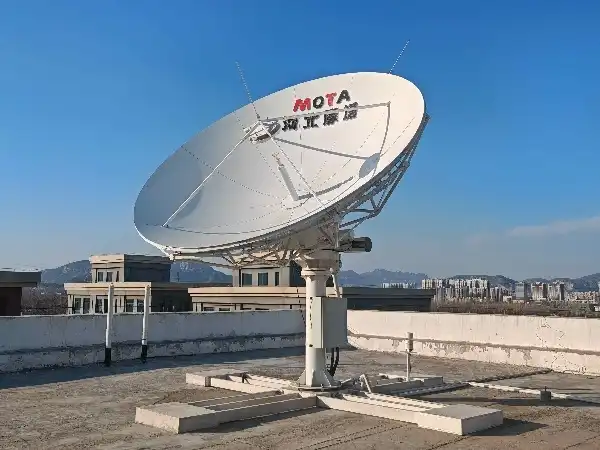
How an Industrial Fixed Satellite Antenna Works at Energy Sites
Before comparing models, it is important to know the difference between an industrial terminal and a consumer dish.
What Makes an Antenna Industrial
An industrial fixed satellite antenna is a permanent, directed dish intended for ongoing operation at a single site. It employs sturdier mounts, sealed housings, corrosion protection, and higher-gain optics than a consumer dish. It also works with professional RF gear such as a block-up converter (BUC), a low-noise block-down converter (LNB), a feed, and a satellite modem. Energy purchasers like this design since a lost connection may interfere with SCADA polling and leave a distant station unmonitored. Industrial designers try to maintain the connection solid for years without regular site inspections – despite heat, cold, dust, sea air and wind.
How the Signal Chain Works
The reflector concentrates radio energy onto the feed. The modem makes the signal on transmit, the BUC converts it to higher frequency and strength, and the antenna beams it to the satellite. The LNB receives the weak downlink and amplifies it and transforms it for the modem. Most communications satellites are in geostationary orbit, approximately 35,786 km above the equator. A two-way exchange adds around 600 ms of delay. With the correct timeout settings, most SCADA polling schedules can handle the delay. The pointing precision is important, since a narrow beam wanders off the satellite with slight inaccuracies. The Azimuth, Elevation and Polarisation have to be correct else the connection loses margin and might interfere with neighbouring satellites.
Where Energy Teams Use It
I envision five frequent uses: wellsite and collection station data, pipeline compressor and valve stations, substations and wind or solar facilities, mine and tailings monitoring, and perimeter video. The traffic profile changes with every usage. SCADA telemetry is little packets that has to come in regularly. 1080p video requires continuous uplink. Satellite service also provides a backup route when a terrestrial link goes down. Mixed traffic is typical; therefore, I propose you identify each data stream, its direction, and availability objective before selecting an antenna. That list makes the link budget and keeps you from getting a terminal that is only sized for today's traffic.
Frequency Bands and Specifications That Decide Performance
Then, after you know the use case, it’s band selection/specs.
C-, Ku-, and Ka-Band Trade-Offs
Higher frequencies mean smaller dishes but higher rain attenuation. See ITU-R Recommendation P.618. C-band is least affected by rain and will suit tropical or heavy rain settings but requires bigger reflectors. Ku-band provides a trade-off between dish size, service availability, and capacity, which is why it is used by many VSAT networks. Ka-band is good for high throughput services, but needs to be cautious when analysing rain and precise aiming. X-band is mostly occupied by authorised government and military communications. The MOTA terminal supports Ku, Ka, S, X, C, and Qv bands with manual switching, which allows teams flexibility when satellite service changes. Band should always be verified with your satellite operator and site-specific connection budget.
Isolation, Sidelobes, and Industrial Interference
Drives, inverters, and switchgear create electrical noise that might affect a satellite connection, so first I verify isolation. The MOTA terminal needs transmit-receive isolation of at least 88 dB to prevent the powerful send signal from overflowing the receive route. Its initial sidelobe is at or below -16 dB, reducing radiation directed towards neighbouring spacecraft. A two-axis self-stabilizing platform for industrial electromagnetic interference suppression and pointing using an industrial alignment algorithm. The EMC level for the location should be determined by the automation engineer. Ask each provider for test results for the precise model you want to purchase since a datasheet number without a report is just a claim.
Environmental Ratings and Structural Loads
Ratings should be related to the actual site. IP65 is dust-tight and protected against water jets. See IEC 60529. The MOTA terminal is IP65 rated, has a corrosion-resistant casing, and operates in a range of -30 °C to +55 °C. For coastal areas, enquire about salt-spray testing (e.g., ASTM B117). Wind loads are a distinct evaluation. Generally, industrial fixed satellite antenna structures in the United States are designed to ANSI/TIA-222-H. Our terminal has a steady 1080p video return in wind force 7 on the Beaufort scale, at 32 to 38 mph. If your location is subject to harsher winters, greater elevation, or desert heat, please give us your circumstances, and we’ll assess fit before you purchase.
MOTA Industrial Fixed Satellite Antenna: Product Features
This is the way MOTA has solved these needs in its own design.
Fast Alignment and Multi-Band Operation
Our permanent terminal locks on to satellites in around 3 minutes, minimising time in the field at distant installations. Operators are able to switch manually between the Ku, Ka, S, X, C, and Qv bands; thus, one hardware base may handle many service plans. The two-axis self-stabilizing platform and industrial alignment algorithm maintain the beam stable in wind and vibration. A simple alignment process is a good fit for maintenance teams with less satellite knowledge, and our 7×24 remote help takes care of installation and troubleshooting. Still, I would suggest a remote check with our engineers at commissioning, particularly on the first site in a multi-site project.
Integrated RF and Power Modules
The terminal has an industrial-grade BUC and LNB, a high-speed modem, and an efficient power management system. “That reduces the field wiring and number of vendors on site so crews can get a unit up and running right out of the box.” Fewer individual boxes also means fewer connections exposed to the elements. The terminal can work 24 hours uninterruptedly, and its main parts have passed industrial environment tests. Ask us which reports are applicable to your setup. For locations with inconsistent power, please provide us with your supply circumstances (i.e., voltage range, backup source, etc.), and we will examine the power plan with you.
Quality System and Company Background
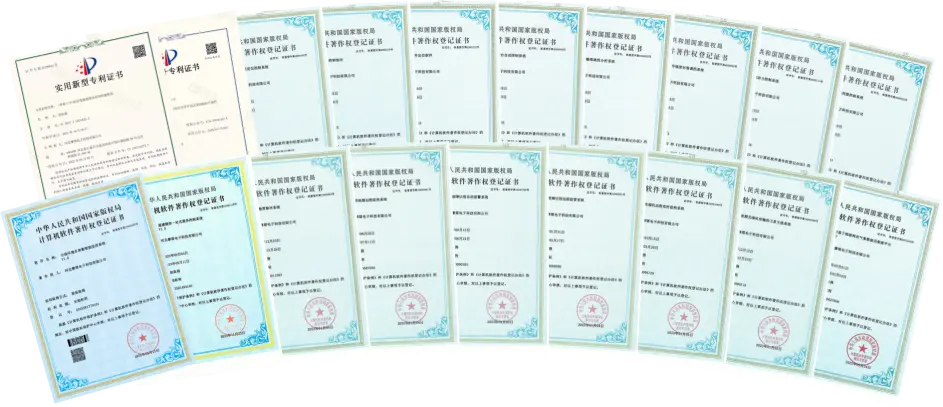
Hebei Mota was established in 2017; it is a manufacturing and trading company. We have ISO 9001, ISO 14001, ISO 45001 certifications, GJB 9001C military quality system certificate, and radio transmission equipment type clearance. We are a national high-tech firm and a military-civil integration enterprise. Our team has created its own satellite communication antennas and high-accuracy tracking algorithms, with several intellectual property rights. We have nine years of production expertise and supply regular models. Qualified-supplier evaluations require numerous papers; therefore, our team assists your procurement office with the documentation it requires.
Installation, Maintenance, and Common Problems
Even a strong terminal needs careful planning on site.
Site Survey and Installation Steps
A competent survey will confirm unobstructed line of sight to the satellite both now and after any proposed development. It also addresses ground conditions, access, and surrounding electrical noise. The base and mount must be able to support industrial fixed satellite antenna weight, wind, and vibration. During commissioning, the technicians level the mount, establish azimuth, elevation and polarisation, verify cross-polarization, turn on the modem and execute acceptance tests. Grounding, surge protection and lightning protection should be per local codes. If the site contains categorised hazardous locations, assess the placement against NEC Article 500 and the regulations of your safety team. In the United States, transmitting earth stations normally need FCC authorisation under 47 CFR Part 25.
Maintenance Routine for Remote Sites
Regular upkeep keeps the connection alive for a long time. I propose periodic checks for corrosion, loose fasteners, water penetration, cable damage, mount movement, and ground connections. In desert, coastal, and high-wind areas, more frequent assessments may be needed. Watch your system for trends in received signal level, transmit power, modem quality indicators, and connection availability before an outage occurs. Re-check alignment after major storms, structural repair, or replacement of RF parts. Spare modules should be stored in a regional warehouse. A distant journey for a single part might cost days. MOTA provides remote assistance 24/7 and replacement parts delivery via partners.
Common Planning Mistakes
Most interruptions are the result of choices taken prior to installation. A smaller dish costs less, but reduces connection margin and increases rain-fade outages. If you choose a band without factoring in regional rainfall and satellite capacity, you get unwanted downtime. Misalignment and structural fatigue are caused by weak foundations or poorly executed wind load calculations. There is also the problem of treating the reflector as an isolated object. The feed, BUC, LNB, modem, cables, and satellite service need to function as a compatible system. An integrated terminal eliminates one cause of mismatch, but the link budget still has to be checked. Finally, if you don't arrange for extra parts, a tiny issue might become a protracted outage.
Choosing, Pricing, and Buying for Multi-Site Projects
Procurement is where a good design either succeeds or stalls.
Matching the Configuration to the Site Type
Remote onshore wells are designed for availability, ease of maintenance, and shipping weight. Offshore platforms need corrosion resistance, wind performance, compact installation, and rigorous safety compliance. Central monitoring and standardised units are good for pipelines, as well as replacement parts and training. Power plants and substations need redundancy and a precise EMC standard. Disaster-recovery sites emphasise quick deployment. Technical Performance Environmental Durability Installation Effort Compliance Documents Supplier Capability Delivery and Cost Evaluate each of the options. A weighted score keeps the discussions realistic, and it offers your committee a written record to justify the conclusion.
Supplier Checks and Quote Contents
Request datasheets, radiation patterns, environmental standards, quality certifications, inspection records, and project references. Each certificate must be for the precise configuration that is in the quotation. Price depends on band, feed, BUC and LNB, mount, protection level, customisation, installation and shipment. A clear quote breaks apart equipment, accessories, services, logistics, warranty, testing and support. Compare the offers and see whether the price includes cables, earthing parts, alignment, commissioning and spares. Only when the requirements are the same can two quotes be compared. We provide various options in accordance with worldwide standards of our full-unit guarantee.
Pilot Sites, Delivery, and OEM Support
A lot of customers use a pilot site for around 8 to 16 weeks before a bulk order, and I believe it is prudent; a pilot displays more than any parameter table. Once the pilot is complete, we may schedule deliveries around the building works. Regular versions are sent from stock; bespoke and big systems take 45 to 90 days. System integrators may need ODM/OEM work that includes hardware design, interface protocols, functional modules and software interfaces tailored to meet target-country regulations. We pack the devices in shock-proof and moisture-proof materials. We provide monitoring, customs clearance, and foreign storage.
Conclusion
An industrial fixed satellite antenna provides distant oil, gas and energy installations with a persistent satellite connection for SCADA, video, audio and IoT traffic. The correct band is critical for reliable operation: C band is the most weather resistant, Ku band is a compromise between size and capacity, and Ka band demands serious rain and pointing study. Test results for the particular model should support isolation, sidelobe level, ingress protection, temperature range, and wind rating. Proper surveys, foundations, grounding and alignment avoid most outages. Periodic inspections and replacement parts ensure availability. Buyers should consider documentation, amount of integration, warranty, delivery, and customisation and utilise a trial site to establish fit. Together, these tests provide an assurance that buying a satellite is an engineered choice and not just a financial decision.
FAQ
1. What is the difference between C-band and Ku-band for energy sites?
C-band resists rain fade better but needs larger dishes. Ku-band uses smaller dishes and suits many VSAT networks. Choose based on site rainfall, satellite coverage, and your link budget.
2. Does the MOTA terminal need extra RF equipment?
No. It includes an industrial-grade BUC and LNB, a high-speed modem, and an intelligent power management system. You still need to confirm the satellite service and site power plan.
3. How long does alignment take?
Our terminal reaches satellite lock in about 3 minutes and holds a stable 1080p video return in wind force 7.
4. What conditions can it handle?
It has an IP65 rating, a corrosion-resistant housing, and an operating range of -30 °C to +55 °C.
5. Can you customize interfaces for our RTU or SCADA system?
Yes. Our ODM/OEM service adapts interface protocols, hardware design, and functional modules to your needs and target-country rules. Share your RTU, PLC, and SCADA details.
Request an Industrial Fixed Satellite Antenna Quote from MOTA
Ready to plan your next site? MOTA is an industrial fixed satellite antenna supplier with nine years of manufacturing experience, ISO-certified quality systems, stock for regular models, and 7×24 response. Send your location, band, quantity, and site conditions to hebei_mota@163.com, and our team will recommend a configuration and quotation.
References
1. ITU-R Recommendation P.618-13, Propagation Data and Prediction Methods Required for the Design of Earth-Space Telecommunication Systems, 2017
2. IEC 60529, Degrees of Protection Provided by Enclosures (IP Code), 2013
3. ASTM B117, Standard Practice for Operating Salt Spray (Fog) Apparatus, 2019
4. ANSI/TIA-222-H, Structural Standard for Antenna Supporting Structures, Antennas and Small Wind Turbine Support Structures, 2017
5. Maral and Bousquet, Satellite Communications Systems, Wiley, 2009
6. Electronic Code of Federal Regulations, Title 47, Part 25: Satellite Communications, 2024
Tell us your requirements – get a tailored quote and technical support within 24 hours.