- English
- French
- German
- Portuguese
- Spanish
- Russian
- Japanese
- Korean
- Arabic
- Greek
- German
- Turkish
- Italian
- Danish
- Romanian
- Indonesian
- Czech
- Afrikaans
- Swedish
- Polish
- Basque
- Catalan
- Esperanto
- Hindi
- Lao
- Albanian
- Amharic
- Armenian
- Azerbaijani
- Belarusian
- Bengali
- Bosnian
- Bulgarian
- Cebuano
- Chichewa
- Corsican
- Croatian
- Dutch
- Estonian
- Filipino
- Finnish
- Frisian
- Galician
- Georgian
- Gujarati
- Haitian
- Hausa
- Hawaiian
- Hebrew
- Hmong
- Hungarian
- Icelandic
- Igbo
- Javanese
- Kannada
- Kazakh
- Khmer
- Kurdish
- Kyrgyz
- Latin
- Latvian
- Lithuanian
- Luxembou..
- Macedonian
- Malagasy
- Malay
- Malayalam
- Maltese
- Maori
- Marathi
- Mongolian
- Burmese
- Nepali
- Norwegian
- Pashto
- Persian
- Punjabi
- Serbian
- Sesotho
- Sinhala
- Slovak
- Slovenian
- Somali
- Samoan
- Scots Gaelic
- Shona
- Sindhi
- Sundanese
- Swahili
- Tajik
- Tamil
- Telugu
- Thai
- Ukrainian
- Urdu
- Uzbek
- Vietnamese
- Welsh
- Xhosa
- Yiddish
- Yoruba
- Zulu
Industrial Fixed Satellite Antenna for Reliable Industrial Communications
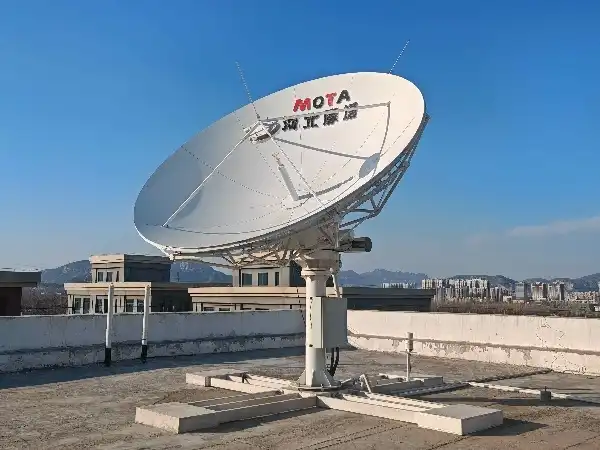
An industrial fixed satellite antenna gives remote plants, pipelines, mines, and unmanned stations a dependable data link where no terrestrial network exists. A well-chosen unit keeps SCADA data and 1080p video moving around the clock. It resists dust, water, corrosion, and electrical noise, and it needs little work on site. MOTA builds such a system with Ku, Ka, S, X, C, and Qv band switching, a two-axis stabilized platform, an integrated BUC/LNB and modem, and IP65 protection. In this article, I cover how it works, how it compares with alternatives, and how I suggest you select and buy one.
Understanding Industrial Fixed Satellite Antennas
What a Fixed Industrial Antenna Does
An industrial fixed satellite antenna stays in one place and points at a single satellite. Most of these links use a geostationary satellite that is 35,786 km above the equator. This means that the dish doesn't need to be tracked again once it is set up. The signal is boosted by a block upconverter (BUC) before it is sent by the dish from your computer.
A low-noise block downconverter (LNB) gets the weak signal from the satellite stronger on the return path. A high-speed modem, an industrial BUC/LNB module, and smart power control are all built into the machine by MOTA. Because of this, your crew connects fewer parts at the site.
Frequency Bands Used in Industrial Work
The C, X, Ku, and Ka bands are often used in industrial links. It says that the C band is from 4 to 8 GHz, the X band is from 8 to 12 GHz, the Ku band is from 12 to 18 GHz, and the Ka band is from 26.5 to 40 GHz. ITU-R P.618 goes into more detail about how higher bands lose signal more when it rains, even though they allow smaller dishes and more capacity. Storms are better handled by the C band, but it typically takes a bigger dish. The MOTA antenna lets you switch between the Ku, Ka, S, X, C, and Qv bands by hand. So, one plan can work for places that rent space from more than one satellite operator.
Why Fixed Units Suit Unmanned Sites
A valve station or remote pump house stays put for a long time. Tracking equipment made for moving vehicles costs more and doesn't add any value. Building something that stays in place keeps things easy and the link stable. MOTA adds an industrial alignment algorithm and a two-axis self-stabilizing platform.
The unit sets up the link and acquires a satellite in about three minutes. That speed helps operators who haven't had much training with satellites. It's easier to get spare parts and train people when there is only one model for many stations. This is important when a project adds stations every few months.
Industrial Fixed Satellite Antenna Technology and Applications
Built for Weather, Dust, and Corrosion
The MOTA unit has an IP65 rating. As per IEC 60529.1, the "6" means that the item is dust-tight and the "5" means that it is safe from water jets. The unit works in temperatures ranging from -30°C to +55°C, and the housing is strong and won't rust. Its main parts have been tested and found to work in industrial environments, and it can run nonstop for 24 hours a day.
But each site is different. A plant on the coast, a tunnel in the desert, and a mine at high elevation all put different amounts of stress on equipment. Before they place an order, I always ask buyers to send me their site conditions. This way, we can make sure the rating fits. Let us know right away if your site's temperature falls outside the range given.
Interference Control and Link Stability
Radio gear doesn't work well in factories and substations because they are noisy. This industrial fixed satellite antenna has at least 88 dB of isolation between send and receive. That number keeps the strong signal going out from being too much for the sensitive sensor to handle. Its first sidelobe is at or below -16 dB, which keeps it from picking up unwanted signals and makes it less likely that it will bother nearby satellites.
Industrial electromagnetic interference can be reduced with the help of the two-axis self-stabilizing platform and the industrial alignment program. The unit also keeps a stable 1080p video return in level 7 wind, which is about 32–38 mph on the Beaufort scale.
Where It Works: Oil, Mining, Power, and Water
Most of our customers are in charge of mines, power plants, forestry stations, water projects, and oil and gas pipes. Some of their places don't have cell phone or fiber internet, but they still need SCADA data and live video to keep everyone safe. The antenna can also be used in industrial plants, work sites, and ground stations that need to be left running for a long time with or without human supervision. The dish sends industrial HD data and traffic for remote monitoring back to a control center in all of these cases. A small crew can install the unit without having to put together different radio parts because it comes fully assembled.
Installation and Troubleshooting Basics
A few habits can stop most link problems. Choose a place to mount it that has a clear view of where the satellite is in the sky, and make sure the base is solid so the wind can't change the direction. Make sure the building is properly grounded, and seal any outdoor connections.
Here are the four things I check when the signal goes out: new buildings or tree growth that might be blocking the signal, the movement of the mount, the state of the connectors and cables, and any nearby emitters. This could be because of rain fade at the Ku or Ka band if the power goes out only when it rains a lot. Then talk about a different band with us.
Comparing Industrial Fixed Satellite Antennas with Alternatives
Fixed Versus Mobile Satellite Terminals
Mobile terminals stay connected even when a car, boat, or plane is moving. Some have electronic steering with a flat panel, like those from Kymeta. These work well with moving platforms. That tracking stuff doesn't move a pipeline station, so it costs more and has parts that could break. In exchange for a simpler structure and a more stable link, an industrial fixed satellite antenna doesn't move. A mobile terminal is a good idea if your crew moves equipment around a lot. A permanent antenna is best if the spot will stay the same for years.
Fixed Antennas and VSAT Networks
VSAT is a way to set up a network so that small dishes in faraway places can talk to a hub through a satellite. Because of this, an industrial permanent antenna can be used as the dish. The hardware is what makes the difference. A lot of standard VSAT kits are made for businesses or offices. A factory site needs more, like dust, salty air, big changes in temperature, and loud electrical noise near motors and switches. When you look at different prices, make sure that the dish is built to work with that network as well.
Rugged Purpose-Built Versus Standard Models
Most standard types meet the requirements of a lab. One type of industrial building that was built just for the site works. Put the ingress grade, temperature range, housing material, separation, sidelobe level, and number of parts you need to add on-site next to each other and compare them.
As the supplier, find out what kind of corrosion test they used. Most of the time, ASTM B117 salt spray testing is used. Don't ask for a general brochure; ask for the test documents that are specific to your model. With this one step, sellers who can't back up their numbers are ruled out.
How to Choose the Best Industrial Fixed Satellite Antenna in 2026
Match Specs to Real Site Conditions
Start with the worst day for your site, not the most common one. Write down the coldest and warmest temperatures, the fastest wind speed, the amount of salt or dust exposure, and the amount of rain that fell. After that, check each one against the datasheet. The MOTA industrial fixed satellite antenna has a temperature range of -30°C to +55°C, an IP65 rating, a level 7 wind rating for stable 1080p video, at least 88 dB of isolation, and a first sidelobe at or below -16 dB. What more does a site need? Let me know before I place the order, not after the fact. A pilot station checks the numbers to make sure they are correct in real life.
Check Integration and Protocol Fit
Integration cuts down on work in the field. The industrial BUC/LNB, a high-speed modem, and smart power management are already built into our machine. Next, find out how it connects to your SCADA, RTU, or PLC. A lot of sites use USB or Ethernet links, and some depend on Modbus. Please describe your exact needs. Our ODM/OEM service changes the rules for the target country so that the hardware looks and works the way the rules say it should. In the US, earth station antennas are also regulated by FCC Part 25, so make sure you get the right licenses and equipment early on.
Compare Suppliers, Warranty, and Total Cost
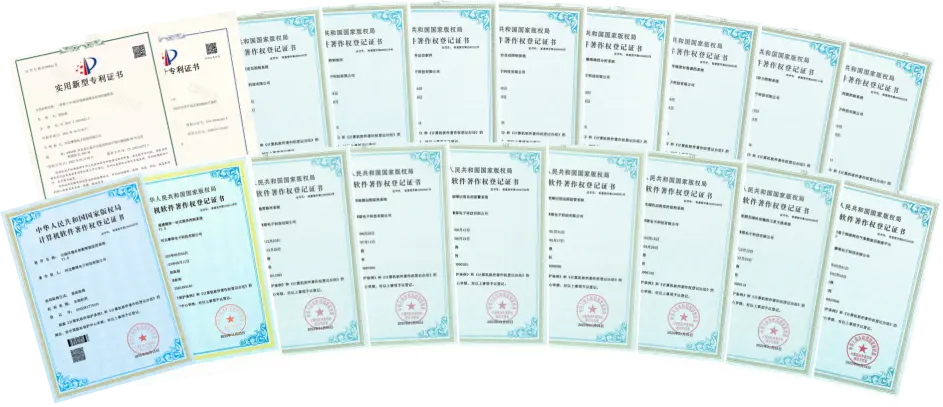
No matter what brand you choose, you should compare the same things: guarantee length, availability of spare parts, help hours, wait time, and paperwork. The trade and manufacturing company MOTA was started in 2017. We have the GJB 9001C military quality system, a radio transmission equipment type approval, and national high-tech enterprise status.
We also have ISO 9001, ISO 14001, and ISO 45001 certificates. Based on international standards, products come with a full-unit warranty and flexible payment plans. Also, add up the total cost, which includes time spent on setup, spare parts, site visits, and downtime. Every once in a while, a lower unit price wins when production stops.
Procurement Guide and Next Steps
Run a Pilot Before Rolling Out
From site needs to technical decision is a common road that takes about 4 to 8 weeks. After an 8–16-week pilot station, there is a bid or price negotiation, and then a batch delivery. The first choice usually takes 3 to 6 months. I think a three-month pilot is better than any datasheet. Before it starts, agree on what it takes to pass: stability, how quickly it can be fixed after the power goes out, video quality, and how much work the site crew puts in. It is much easier to defend the later tender when the criteria are written down.
Customization, Lead Times, and Delivery
We have a lot of stock ready for normal sales. It takes 45–90 days to make customized units and big systems, and we keep our production capacity stable so that we can serve large orders quickly. When you have more than one site to work on, we can split shipments into groups that work with your schedule. Our ODM/OEM team is in charge of scheme design, prototyping, and mass production.
They also design hardware, write software and hardware interfaces, and keep track of certification documents. We use foreign specialized lines, sea freight, and air freight to send goods abroad. The gadgets are protected by packaging that is both shockproof and moistureproof, and shipping risk is lowered by tracking, customs clearance, and foreign warehousing support.
After-Sales Support and Maintenance Planning
Our team provides remote technical support 24 hours a day, seven days a week for system upgrades, installation, and troubleshooting. Through working together, we can set up quick delivery of extra parts and local on-site service. On the first day, I think you should make a simple maintenance plan. Make sure the mount, links, and housing seals are checked regularly, and keep one or two extra units for each group of stations.
One model is used for this plan to keep it short, and your workers will only have to learn one process instead of several. Are you looking for a company that makes industrial fixed satellite antennas and works with pilot stations and batch delivery? MOTA has ready stock, ODM/OEM customization, and response time 7 days a week.
Conclusion
An industrial fixed satellite antenna is best for places that don't move and can't have call drops. When you choose a frequency band, the dish size and rain loss are both taken into account. As important as signal specifications are, environmental protection like an IP65 rating, housing that doesn't rust, and a clear temperature range are also important. Electrical noise and neighbor interference can be stopped by high transmit/receive separation and low sidelobes.
A purpose-built fixed unit is easier to set up and works better in harsh environments than mobile devices and general VSAT kits. Buyers should make sure that the specs match the limits of the real site, check that the protocols work together, compare warranties and customer service, and run a test station before placing a bulk order.
FAQ
Which frequency bands does the antenna support?
It lets you switch between the Ku, Ka, S, X, C, and Qv bands by hand. Which option is best for you relies on your satellite service and the weather where you live.
How long does alignment take?
With its two-axis self-stabilizing platform and alignment algorithm, the unit can get a satellite and set up a link in about three minutes.
What conditions can it handle?
It works from -30°C to +55°C, has an IP65 grade, and can keep 1080p video stable in level 7 wind. Let us know if your site goes over these limits.
What is the lead time?
Products that are used often are kept in stock. It takes 45 to 90 days to make customized pieces and big systems.
Talk to MOTA About Your Industrial Fixed Satellite Antenna Project
Looking for an industrial fixed satellite antenna manufacturer that supports pilot stations and batch delivery? MOTA offers ready stock, ODM/OEM customization, and 7×24 response. Send your site conditions and interface needs to hebei_mota@163.com, and our team will recommend a configuration. Visit motasat.com for product details.
References
1. Satellite Communications Systems: Systems, Techniques and Technology (Maral, Bousquet and Sun), Wiley, 2020
2. Satellite Communications Systems Engineering (Ippolito), Wiley, 2017
3. ITU-R Recommendation P.618-13, Propagation Data and Prediction Methods Required for the Design of Earth-Space Telecommunication Systems, 2017
4. IEC 60529, Degrees of Protection Provided by Enclosures (IP Code), 2013
5. IEEE Std 521-2019, IEEE Standard Letter Designations for Radar-Frequency Bands, 2019
6. ASTM B117-19, Standard Practice for Operating Salt Spray (Fog) Apparatus, 2019
Tell us your requirements – get a tailored quote and technical support within 24 hours.