- English
- French
- German
- Portuguese
- Spanish
- Russian
- Japanese
- Korean
- Arabic
- Greek
- German
- Turkish
- Italian
- Danish
- Romanian
- Indonesian
- Czech
- Afrikaans
- Swedish
- Polish
- Basque
- Catalan
- Esperanto
- Hindi
- Lao
- Albanian
- Amharic
- Armenian
- Azerbaijani
- Belarusian
- Bengali
- Bosnian
- Bulgarian
- Cebuano
- Chichewa
- Corsican
- Croatian
- Dutch
- Estonian
- Filipino
- Finnish
- Frisian
- Galician
- Georgian
- Gujarati
- Haitian
- Hausa
- Hawaiian
- Hebrew
- Hmong
- Hungarian
- Icelandic
- Igbo
- Javanese
- Kannada
- Kazakh
- Khmer
- Kurdish
- Kyrgyz
- Latin
- Latvian
- Lithuanian
- Luxembou..
- Macedonian
- Malagasy
- Malay
- Malayalam
- Maltese
- Maori
- Marathi
- Mongolian
- Burmese
- Nepali
- Norwegian
- Pashto
- Persian
- Punjabi
- Serbian
- Sesotho
- Sinhala
- Slovak
- Slovenian
- Somali
- Samoan
- Scots Gaelic
- Shona
- Sindhi
- Sundanese
- Swahili
- Tajik
- Tamil
- Telugu
- Thai
- Ukrainian
- Urdu
- Uzbek
- Vietnamese
- Welsh
- Xhosa
- Yiddish
- Yoruba
- Zulu
Top Benefits of Using a Ground Station Transceiver Antenna for Data Backhaul
Businesses use advanced gear that connects the sky and the ground to move huge amounts of data from satellite networks in faraway places to processing hubs in the city. A ground station transceiver antenna is that important two-way contact that lets uplink and downlink signals travel across Ku, Ka, S, X, C, and QV frequency bands to keep high-throughput satellite data backhaul running smoothly. This technology fixes problems that keep coming up, like signal loss over long distances, latency during important transmissions, and being susceptible to interference from the environment. Because of this, aerospace contractors, satellite communication providers, and industrial IoT operators who need uninterrupted connectivity in mission-critical situations can't do without it.
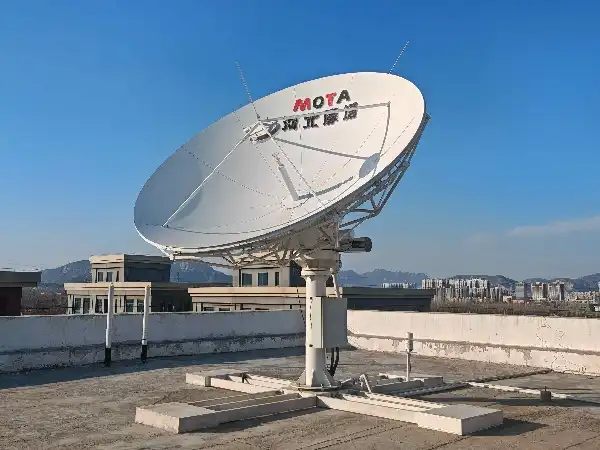
Understanding Ground Station Transceiver Antennas and Their Role in Data Backhaul
Ground station transceiver antennas connect sites on Earth to satellite groups in low-earth orbit (LEO), medium-earth orbit (MEO), or geostationary orbit (GEO). They do this physically and electronically. These advanced units are different from receive-only systems because they combine modems, Block Upconverters (BUC), and Low-Noise Block downconverters (LNB) into a single design. This all-in-one setup makes deployment easier while still meeting the high performance standards needed for data transfer, which sends sensor readings, telemetry streams, video feeds, and command signals back to the core network infrastructure from operating sites that are far away.
Core Components and Technologies
Modern satellite ground stations depend on reflectors that are carefully designed and made from thermally stable materials like carbon fiber or aerospace-grade metal. These reflectors are often conical in shape. These antennas have feed systems that handle both broadcast and receive at the same time. To keep the signals clean, cross-polarization isolation is usually higher than 30 dB. High-end models use advanced tracking techniques, like the monopulse or step-track methods, that can get accuracy down to the degree, even when non-geostationary satellites are moving quickly across the sky.
Its electrical design focuses on high Gain-to-noise Temperature (G/T) ratios for clear reception and large Effective Isotropic Radiated Power (EIRP) for strong inbound transfer. The transceiver isolation in MOTA's approach is at least 85 dB, and the first sidelobe levels are at or below -14 dB. This means that there isn't much interference, even in settings with a lot of frequencies. This level of engineering precision immediately means that data flow stays steady during transfer operations.
Signal Transmission Across Multiple Frequency Bands
These antennas can switch between Ku, Ka, S, X, C, and QV bands manually, so they can be used in a variety of satellite transmission situations without the need for extra gear. Ku-band gives a good balance between bandwidth and weather resistance. Ka-band provides better throughput for applications that use a lot of data, and S and X bands ensure reliability in bad weather. C-band is still useful for old systems, and new uses of Qv-band look ahead to how frequency will be allocated in the future. Because it is so flexible, buying managers can use the same system for a number of different projects. This saves money on capital costs and makes transportation easier.
Top 5 Benefits of Using Ground Station Transceiver Antennas for Data Backhaul
When medium- to large-sized businesses use advanced satellite ground station equipment, they get real practical benefits that directly address the problems they face when managing global infrastructure. These benefits, such as better signal quality and resistance to environmental damage, make investments worthwhile and help reach long-term strategy goals.
Enhanced Signal Integrity and High-Gain Performance
High-gain antenna designs boost weak signals from satellites that are thousands of kilometers away and focus power transmission into narrow bands that efficiently reach assets in space. When weather conditions like rain fade, ionospheric scintillation, or sun interference risk linked stability, this trait becomes very important. Better gain margins make sure that data packets arrive whole, which lowers the number of errors and retransmissions that would slow down speed and make delays worse.
When mixed with MOTA's own satellite-pointing algorithms, the two-axis self-stabilizing platform keeps the beam perfectly aligned even when ground stations shake or buildings move. This stability ensures constant 1080p high-definition video backhaul even in 7-level wind conditions, showing the kind of real-world toughness that operations teams need for important tasks.
Wide Frequency Range and Multi-Band Flexibility
As the number of satellite constellations grows, from small GEO networks to huge LEO constellations like Starlink and OneWeb, businesses need ground tools that can work with a wide range of orbital designs. With multi-band flexibility, you don't have to keep up separate antenna farms for each frequency band. This cuts down on both the size of the system and the amount of work that needs to be done to run it.
Because it is possible to switch between the Ku, Ka, S, X, C, and Qv bands by hand, a single station can be used for military communication, earth observation data download, and telephony relay. Cross-border logistics managers and industrial automation providers that manage distributed sensor networks across countries find this freedom very useful. This is because local spectrum laws and satellite access vary a lot.
Rapid Deployment and Quick Link Establishment
In situations where time is of the essence, like disaster response, military tactical operations, or emergency radio relay, you need tools that can go from being transported to being used within minutes. With MOTA's Ground Station Transceiver Antenna, satellite positioning and link setup are done in just three minutes, instead of the hours that standard systems need. Intelligent power management and built-in modem systems make this plug-and-play feature possible, so it can be set up by one person without the need for expert technology teams.
Operational effectiveness goes beyond the ease of setup. Rapid reconfiguration cuts down on downtime when moving to new sites or switching between satellite targets, which directly boosts return on investment. Businesses that handle time-sensitive data backhaul, like those that run teams of precision farmland drones or remote industrial tracking, can keep working even while their infrastructure changes.
Rugged Construction for Extreme Environments
A lot of the time, satellite ground stations are in harsh places, like study sites in the arctic, mining operations in the desert, or high-altitude observation posts. Extremes of weather, strong winds, water getting in, and dust must not affect the performance of the equipment. MOTA antennas are built to last and can work reliably in temperatures ranging from -25°C to +55°C thanks to their industrial-grade design.
IP-rated safety designs keep sensitive electronics from getting dirty from the outside world, and choosing military-grade parts that have been tested to strict MIL-STD standards ensures life. Total cost of ownership goes down because of this durability, which cuts down on repair trips, part replacements, and unplanned downtime. When procurement teams look at lifetime costs, durable hardware that works without any problems for long periods of time is a better deal than less durable options that need to be serviced often.
Scalability and Customization for Evolving Network Demands
As data amounts rise, new satellite services come online, and legal frameworks change, so do business needs. The equipment at ground stations needs to be able to adapt to these changes without having to be completely replaced. Adding higher-frequency band modules, advanced modulation methods, or bigger antenna arrays are just a few of the small changes that modular designs make possible that make a system more useful over time.
The wide range of ODM and OEM customization options available at MOTA means that custom solutions can be made to fit the needs of any project. For example, radome designs can be changed to look better, feed configurations can be changed to fit specific orbital geometries, and frequency plans can be made to work with specific satellite constellations. This flexibility makes sure that businesses make investments that will pay off in the future instead of one-time purchases. This is in line with strategic buying ideas that value long-term partnerships and cutting costs.
Comparing Ground Station Transceiver Antennas with Traditional and Emerging Technologies
When it comes to buying capital equipment, people who work in procurement should know how new satellite ground station options stack up against both old systems and brand-new alternatives. This situation makes it clear when bidirectional radio antennas are the best choice and when other technologies should be thought about instead.
Performance Advantages Over Traditional Antenna Systems
Transmission and reception tasks were often split in older satellite ground stations, which meant that they needed to place two antennas or use complicated switching mechanisms that created weak spots. Integrated transmitter designs get rid of this extraneous stuff, making the hardware smaller, making the wiring easier, and making it more reliable. Better electrical performance, especially transceiver separation above 85 dB, keeps sent signals from being too strong for sensitive listeners, which was a problem with earlier versions.
Bandwidth is another thing that sets one service apart from another. Old systems that only work with C-band can't handle current Ka-band high-throughput satellites, so when networks improve, they have to be replaced at a high cost. A multiband ground station transceiver antenna protects long-term investments by supporting new frequency allocations while maintaining backward compatibility with existing satellite networks. This keeps purchase funds from going out of date too soon.
Phased Array Technology and Operational Contexts
Electronic beam steering and no mechanical movement are possible with phased array antennas. This lets you switch targets instantly and track multiple satellites. These benefits make LEO cluster base stations that handle high-speed satellite handoffs a good fit. But phased arrays have higher unit costs, use more power, and need to be calibrated in a complicated way, which might not make their benefits worth it for companies that mostly work with GEO satellites or that are in cost-sensitive markets.
MOTA's manually steered transmission antennas are perfect for many uses because they are reliable, don't cost as much to buy, and are easier to maintain. They also have the sub-degree tracking accuracy needed for stable links. The two-axis stabilization system does a good job of handling dynamic pointing needs. This design works well for both permanent installs and units that can be moved to temporary sites.
Manufacturer and Supplier Evaluation Criteria
When procurement teams choose sellers of ground station gear, they have to check certifications that show they follow international standards. The ISO 9001 quality management certification makes sure that production processes are consistent. The ISO 14001 environmental management certification shows that practices are sustainable, and the ISO 45001 workplace health and safety certification shows that operations are responsible. MOTA keeps all three accreditations and also has official local qualifications that prove its manufacturing capabilities.
In addition to approvals, guarantee terms and support structures after the sale are also very important for global deployments. Technical support is available 24 hours a day, seven days a week through MOTA's 24/7 customer response system, and regional service teams cut down on the average time it takes to fix equipment problems. Different people can handle different levels of risk, and flexible warranty plans and detailed paperwork help in-house repair teams. When you look at these service measurements along with gear specs, you can get a better idea of the total cost of ownership.
Practical Considerations for Procurement and Installation
For satellite ground station operations to go well, buyers need to do their research, and installations need to be done carefully. Businesses can avoid common mistakes that hurt performance or raise costs by understanding review measures, logistics issues, and ongoing upkeep needs.
Performance Specifications and Mission Alignment
By matching an antenna's powers to its application needs, you can avoid both over-specification, which wastes money on features that aren't needed, and under-specification, which results in poor performance. Defense communications that are mission-critical need redundant systems that can quickly switch over to a different system. On the other hand, private broadband backhaul might put throughput over 100% uptime. Because MOTA's production cycles for customized systems are 45 to 90 days, they can make solutions that fit specific operating profiles without having to make compromises with off-the-shelf goods.
Electrical parameters need close attention: transceiver isolation affects how susceptible the system is to interference, first sidelobe levels affect how well neighboring channels work, and antenna gain sets the link margin. Purchasing teams should ask for thorough performance curves that show how the product works in a variety of operating frequency ranges and environmental conditions. They should also make sure that the standards are based on real-world conditions rather than ideal laboratory measures.
Pricing Structures and Bulk Purchasing Benefits
A transparent ground station transceiver antenna pricing structure that includes BUC/LNB units, modems, power systems, and control interfaces enables more accurate budget planning. Businesses that are setting up regional or global ground station networks can save money by buying in bulk and getting discounts on multiple units. Flexible payment terms also make it easier to handle cash flow. MOTA keeps enough in stock for regular sales and gives competitive prices that show how efficiently they make things without lowering the quality.
Installation Best Practices and Site Assessment
The success of a ground station depends on how well it is set up. Site studies must check that the sky is clear across the necessary orbital circles and that there are no obstacles in the way of the satellite's line of sight. When designing a foundation, it's important to take into account the loads and winds that will be acting on the antenna. Grounding methods keep lightning hits from happening. Acquiring satellites quickly (within three minutes) during installation allows for precise alignment, which sets a standard level of performance that is maintained by later tracking methods.
Environmental factors affect how long technology lasts. Coastal locations are more likely to rust from salt spray, so they need extra protection. On the other hand, high-altitude sites get more UV light, which breaks down plastics and coats. These problems can be solved by MOTA's IP-rated security design and temperature-hardened parts, but installation teams should also use the suggested environmental controls to get the most out of the equipment and keep upkeep to a minimum.
Future Trends and Technological Advances in Ground Station Transceiver Antennas
The technology behind satellite transmission is changing quickly because of growing data needs, more and more constellation designs, and the need to be environmentally friendly. When buying, pros know about new trends; they can make investments that will still be useful as the industry changes.
AI-Enhanced Adaptive Beamforming and Interference Mitigation
More and more, artificial intelligence programs are improving how antennas work in real time. Traditional ephemeris calculations aren't as good at predicting where satellites will be as machine learning models. This lets proactive beam steering keep link quality high during handovers. AI-driven interference detection automatically finds and cancels out jamming signals or interference from neighboring channels, protecting the security of the data without any help from a person. As spectrum congestion gets worse and fears of adversarial jamming grow in military uses, these skills become more important than ever.
Integration with 5G and Next-Generation Satellite Networks
When land 5G networks and satellite systems come together, they make hybrid designs that make communication possible everywhere. Ground station transceiver antennas that support 3GPP standards allow smooth handoffs between cellular base stations and satellite links, extending coverage into rural areas where ground infrastructure proves to be uneconomical. This integration helps industrial IoT systems that keep an eye on pipes, shipping teams, or distributed energy infrastructure that covers large areas.
Support for Mega-Constellation LEO Satellites
A lot of low-Earth orbit (LEO) satellites from companies like SpaceX, Amazon, and others need tools on the ground to handle fast satellite passes and beam direction. As technology gets smaller, cheaper ground stations that can be used in businesses instead of centralized teleport facilities are becoming possible. Higher frequency bands, like Ka and the new V/Q bands, offer higher output but need more accurate tracking and adaptable adjustment for atmospheric effects. This is what drives new developments in stabilization systems like MOTA's own algorithms.
Sustainability and Energy Efficiency Developments
As businesses try to meet their carbon reduction goals, buying choices are affected by their concern for the environment. Power systems that work with solar panels, amplifier designs that use less energy, and materials that can be recycled all help to lower the environmental impact of operations. MOTA's ISO 14001 environmental management certification shows that the company is committed to using sustainable manufacturing methods. This makes it appealing to companies that use ESG factors to choose suppliers. Long product lives and flexible upgrade paths help the circular economy by reducing the amount of electrical trash.
Conclusion
Ground station transceiver antennas are an important part of infrastructure for businesses that need to send and receive satellite data reliably in a variety of difficult environments and operating situations. The main needs of satellite communication providers, aircraft contractors, and industrial automation operators who run global networks are multi-band freedom, fast deployment, environmental resilience, and scalable designs. With its combined BUC/LNB systems, three-minute satellite alignment, military-grade stability, and full customization services, MOTA's solution offers measurable performance benefits backed by ISO standards and support 24 hours a day, seven days a week. Investing in tried-and-true, flexible ground station technology sets businesses up for long-term operating success as satellite systems grow and data needs rise.
FAQ
What frequency bands does this satellite ground station equipment support?
With controlled switching, the device can work with the Ku, Ka, S, X, C, and Qv frequency bands. This multi-band design covers most types of communication, so it can be set up in a way that works best for each satellite communication job without the need for multiple specialized antennas. Operators are able to easily change to different orbital assets and regulatory settings.
How does tracking accuracy affect data backhaul reliability?
Tracking accuracy has a direct effect on how stable a link is. With its own satellite-pointing algorithms, MOTA's two-axis self-stabilizing platform can achieve sub-degree accuracy and keep the beam aligned even when satellites move or the ground conditions change. This accuracy stops signal drops that stop data transfer, making sure that high-definition video backhaul and telemetry streams stay active, which is important for mission-critical apps.
Can this system be customized for specialized industrial applications?
Complete ODM/OEM skills allow for custom solutions that meet the needs of each project. Certain frequency configurations, changed radome designs, special mounting connections, and built-in control systems are all customization choices. MOTA's design-to-delivery services help with testing, prototyping, and mass production. They can handle both standard deployments and complicated system integration tasks that need custom engineering.
Partner with MOTA for Your Satellite Communication Infrastructure
For advanced ground station technology to work, the seller must be able to make it well and offer full support services. As a company with over nine years of experience in making tracking devices that meet international standards like ISO 9001, ISO 14001, and ISO 45001, MOTA offers ground station transceiver antenna options. Our expert help is available 24 hours a day, seven days a week, and 45 to 90 days for custom systems. We also have experienced cross-border logistics that make sure your project goes smoothly from the specifications to the installation and beyond. Please email our team at hebei_mota@163.com to talk about your satellite data backhaul needs with a skilled ground station transceiver antenna maker who can provide you with approved, reliable solutions that fit your specific needs.

References
1. Gagliardi, R.M. (1991). Satellite Communications. Van Nostrand Reinhold.
2. Elbert, B.R. (2008). Introduction to Satellite Communication (3rd ed.). Artech House.
3. Maral, G., & Bousquet, M. (2002). Satellite Communications Systems: Systems, Techniques and Technology (4th ed.). John Wiley & Sons.
4. Ippolito, L.J. (2008). Satellite Communications Systems Engineering: Atmospheric Effects, Satellite Link Design and System Performance. John Wiley & Sons.
5. Calcutt, D., & Tetley, L. (2004). Satellite Communications: Principles and Applications. Edward Arnold.
6. Kolawole, M.O. (2002). Satellite Communication Engineering. Marcel Dekker.
Tell us your requirements – get a tailored quote and technical support within 24 hours.