- English
- French
- German
- Portuguese
- Spanish
- Russian
- Japanese
- Korean
- Arabic
- Greek
- German
- Turkish
- Italian
- Danish
- Romanian
- Indonesian
- Czech
- Afrikaans
- Swedish
- Polish
- Basque
- Catalan
- Esperanto
- Hindi
- Lao
- Albanian
- Amharic
- Armenian
- Azerbaijani
- Belarusian
- Bengali
- Bosnian
- Bulgarian
- Cebuano
- Chichewa
- Corsican
- Croatian
- Dutch
- Estonian
- Filipino
- Finnish
- Frisian
- Galician
- Georgian
- Gujarati
- Haitian
- Hausa
- Hawaiian
- Hebrew
- Hmong
- Hungarian
- Icelandic
- Igbo
- Javanese
- Kannada
- Kazakh
- Khmer
- Kurdish
- Kyrgyz
- Latin
- Latvian
- Lithuanian
- Luxembou..
- Macedonian
- Malagasy
- Malay
- Malayalam
- Maltese
- Maori
- Marathi
- Mongolian
- Burmese
- Nepali
- Norwegian
- Pashto
- Persian
- Punjabi
- Serbian
- Sesotho
- Sinhala
- Slovak
- Slovenian
- Somali
- Samoan
- Scots Gaelic
- Shona
- Sindhi
- Sundanese
- Swahili
- Tajik
- Tamil
- Telugu
- Thai
- Ukrainian
- Urdu
- Uzbek
- Vietnamese
- Welsh
- Xhosa
- Yiddish
- Yoruba
- Zulu
Low Noise Fixed Satellite Antenna Buyer’s Guide for Beginners
If you are evaluating ground station equipment for the first time, understanding what a low noise fixed satellite antenna actually does — and why its specifications matter — will save you significant time and money. This guide walks through the core technical concepts, procurement criteria, and maintenance considerations that every engineer, network director, and procurement manager should know before committing to a purchase. Whether you are expanding a VSAT network, replacing aging field hardware, or building a new ground station from scratch, the right antenna decision starts here.
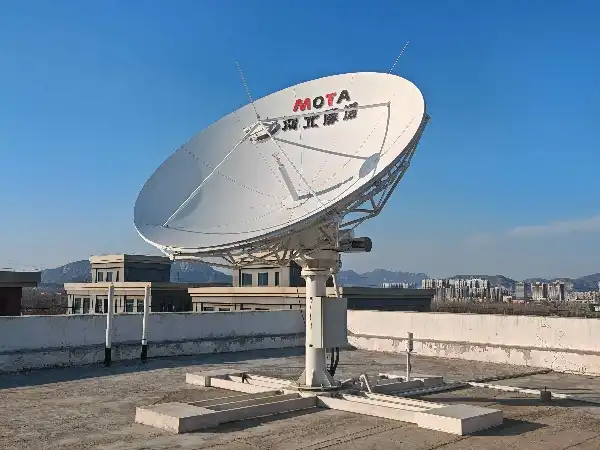
What Is a Low Noise Fixed Satellite Antenna?
A low noise fixed satellite antenna is a precision ground station part designed to be set up in one place and used for a long time to send or receive data via geostationary satellites. Unlike mobile tracking devices, it focuses on keeping the signal as stable as possible and reducing internal noise. A Low Noise Block (LNB) downconverter and an improved parabolic reflector are built into the antenna to reduce heat interference in the receive chain.
This is important because the messages from satellites are very weak when they reach a ground point. The Signal-to-Noise Ratio (SNR) goes down when the receive hardware adds electronic noise. This raises the bit error rate (BER) and threatens the security of the data. When it comes to Ku/Ka-band links, a good fixed ground station antenna keeps its high SNR even when it's outside of satellite coverage areas or when bad weather like rain fades the signal.
Understanding Key Technical Terms
Noise Figure and Noise Temperature
In decibels, noise figure (NF) shows how much noise a device adds to the data it processes. A noise figure of ≤0.8 dB is the best in its class for ground station LNA applications. This means that the amplifier adds very little self-generated interference to the signal coming in. Noise temperature is similar; it measures the same loss in Kelvin and is often used to figure out the overall system G/T (Gain-to-Noise Temperature) ratio, which shows how sensitive the receiving system is.
Gain, Sidelobe Levels, and Polarization
How well the receiver gets energy from a satellite is based on the reflector gain. Gain is directly controlled by surface accuracy, which is recorded as RMS error and should be less than 0.5 mm. This is especially true in the Ka-band, where small differences can cause measurable phase mistakes. The antenna's off-axis interference level is shown by the first sidelobe level. A level of −14 dB means that it strongly rejects signals from satellites nearby. Cross-polarization separation above 30 dB lets a single aperture handle two orthogonal polarizations at the same time, which doubles the useful spectral capacity without affecting either one.
Key Technical Specifications to Evaluate Before Buying
Purchasing experts often ask which numbers should be given the most weight. The answer depends on how much money you have to spend on links, but there are a few things that you should always look at when evaluating a product.
When evaluating, these are the specs that skilled RF engineers look at the most:
- Noise Figure ≤0.8 dB: This level of noise separates professional-grade hardware from mid-market options. It directly affects weak-signal recovery and link margin, which is especially important for isolated sites in rural areas that are close to the edges of satellite coverage.
- Transceiver Isolation ≥85 dB: High isolation keeps the send signal from overloading the receive chain, which is a failure mode that makes quiet link degradation hard to spot in the field.
- First Sidelobe Level ≤−14 dB: Licensed teleport and VSAT operators must follow the ITU-R S.580 sidelobe envelope standards. This picture shows that the rules were followed and that there was no co-channel interference.
- Aperture Range: Reflector diameters range from 2.4 m to 13 m, so operators can match them to EIRP needs and G/T targets for a variety of satellite transponders and frequency bands.
- Operating Temperature −25°C to +55°C: This range covers most outdoor deployment settings around the world, from tracking stations in the arctic to installations in the desert.
Together, these factors tell you how much link profit you can actually get. If a product meets all five standards, this low noise fixed satellite antenna was made to work in the field for a long time and with great accuracy, not just in a controlled lab setting.
How to Choose the Right Fixed Satellite Antenna for Your Operation
Before you can choose the right antenna, you need to have a clear picture of your operating area. Before you talk to suppliers, ask your engineering team to write down three things: the frequency band or bands that you need, the satellite EIRP contour at your site, and the conditions that the hardware must be able to handle.
Multi-band capability is becoming more and more important. MOTA's low noise fixed satellite antenna can switch between the Ku, Ka, S, X, C, and Qv bands by setting it up by hand. This lets operators move ground station resources around as network design changes without having to buy new hardware.
A difference that has a direct effect on total cost of ownership is the level of integration. A fully combined system that combines the LNA, BUC/LNB, modem, and power management into a single plug-and-play unit gets rid of inter-component cable losses, makes installation easier, and lowers the number of failure points that the site support team has to keep track of. This combination leads to measured drops in call-out repair costs at remote sites that aren't being watched, like oil fields, hydroelectric facilities, and polar research posts.
Instead of asking for vague specs when examining suppliers, ask for tested data that has been confirmed. Peak performance isn't the only thing that matters; a provider who can show that output units differ by no more than ±0.1 dB from the stated noise figure during a manufacturing run shows that the process is mature. Always check certifications. For example, ISO 9001 quality management, ISO 14001 environmental compliance, and military or radio transmission type approvals show that a company has formal process controls instead of just winging it when it comes to quality.
Installation and Maintenance Best Practices
Most performance problems after commissioning can be avoided by properly preparing the site. Pick a spot that has a clear view of the orbital arc you want to create, not too much electromagnetic interference from nearby industrial equipment, and a base that can withstand survival wind loads. Professional-grade mounts can withstand wind speeds of up to 200 km/h.
Using a special pointing algorithm, the two-axis self-stabilizing platform on MOTA's antenna sets up the link and acquires the satellite in about three minutes while it is being aligned. This speed is useful not only when the machine is first turned on, but also after repair or when the power goes out. Once it is lined up, the fixed base keeps the boresight accurate without any ongoing motor power.
Even if a system isn't really fixed, it's still a good idea to check it every year. When the temperature changes, concrete pads and structural bolts slowly settle. This can move the boresight by a few hundredths of a degree, which is enough to weaken the link margin on high-frequency bands. For a low noise fixed satellite antenna, checklists for inspections should include checking the torque on the mounting gear, looking at the state of the radome and reflector surfaces, and measuring the live noise figure to make sure the LNA is healthy.
Procurement and Purchase Guidance
A structured buying cycle is usually followed by B2B buyers who run VSAT networks or ground station infrastructure. This cycle includes technical review, prototype testing, framework agreement, and phased delivery. Standard aperture sizes (2.4 m to 6.2 m) usually have shorter lead times. Large apertures and custom configurations, on the other hand, take 45 to 90 days from the time the order is confirmed.
If your network design needs non-standard interface protocols, special approval packages for a target country, or co-branded hardware to be sold later, it's best to work with a maker that offers ODM/OEM customization. From designing the hardware to mass production, MOTA allows for full customization. This includes adapting approval for different regulatory markets.
For unsupervised site owners, it's essential that spare parts are available and that customers can get help after the sale. Before you sign a framework agreement, make sure that your provider keeps important wear parts in stock and has a written 7×24 technical support system. A single unplanned site visit usually costs more than the difference in price between a supplier with good support and one with poor support.
Conclusion
Picking a satellite ground station antenna is a choice that will be made in the future. The initial specs—noise figure, sidelobe performance, and integration depth—determine the quality of daily operations for years. Teams that look at verified measured data, batch consistency records, and a supplier's ability to provide support along with the top price will get a better total cost of ownership than teams that only look at the buy price. MOTA's low noise fixed satellite antenna is designed for users who need high-precision, continuous performance from setups that don't need to be watched.
FAQ
1. What noise figure range should I expect from a professional-grade satellite antenna LNA?
Noise levels of professional-grade LNA parts built into ground station antennas are usually between 0.5 dB and 0.8 dB. A guideline of ≤0.8 dB is the standard for VSAT and teleport systems that need to be very sensitive.
2. Can a fixed satellite antenna be used in mobile or transportable deployments?
Fixed antennas work best when they are stationary. But some designs, like the 2.4 m and 3.3 m versions, have small apertures and can be quickly aligned. These can support semi-permanent or relocatable deployments where the site doesn't change very often.
3. How long does initial alignment typically take?
Alignment and link setup can be done in about three minutes under normal conditions thanks to a self-developed pointing program and a two-axis stabilizing platform that are built in.
4. How often should noise figure be measured on an installed antenna?
The standard in this field is to measure once a year. Noise figure loss in a fitted LNA is often a sign of moisture getting in or parts wearing out before other symptoms show up.
5. What certifications should I verify before purchasing?
Ask for approvals for ISO 9001, ISO 14001, and any radio transmission types that apply. Companies that have GJB 9001C approval for military-grade quality management show that their processes are even more rigorous, which is important for mission-critical uses.
Partner With MOTA for Your Next Ground Station Upgrade
MOTA makes professional low noise fixed satellite antennas for VSAT operators, teleport integrators, and ground station builders all over the world. We offer confirmed performance at scale thanks to nine years of production experience, ISO 9001/14001/45001 certifications, and a support system that is available 24 hours a day, seven days a week. Get in touch with our team to talk about your aperture needs, frequency setup, and shipping plan. You can email us at hebei_mota@163.com or go to motasat.com to see all of the fixed satellite antennas we have for sale.

References
1. Ippolito, L. J. (2017). Satellite Communications Systems Engineering: Atmospheric Effects, Satellite Link Design and System Performance (2nd ed.). Wiley.
2. ITU-R. (2022). Recommendation ITU-R S.580-6: Radiation diagrams for use as design objectives for antennas of earth stations operating with geostationary satellites. International Telecommunication Union.
3. Pratt, T., Bostian, C., & Allnutt, J. (2019). Satellite Communications (3rd ed.). Wiley.
4. Elbert, B. R. (2008). The Satellite Communication Applications Handbook (2nd ed.). Artech House.
5. European Telecommunications Standards Institute. (2021). ETSI EN 303 978: Satellite Earth Stations and Systems — Fixed Earth Stations. ETSI.
6. NASA Technical Reports Server. (2020). Ground Station Antenna Performance and Maintenance Guidelines for Deep Space Communications. NASA.
Tell us your requirements – get a tailored quote and technical support within 24 hours.