- English
- French
- German
- Portuguese
- Spanish
- Russian
- Japanese
- Korean
- Arabic
- Greek
- German
- Turkish
- Italian
- Danish
- Romanian
- Indonesian
- Czech
- Afrikaans
- Swedish
- Polish
- Basque
- Catalan
- Esperanto
- Hindi
- Lao
- Albanian
- Amharic
- Armenian
- Azerbaijani
- Belarusian
- Bengali
- Bosnian
- Bulgarian
- Cebuano
- Chichewa
- Corsican
- Croatian
- Dutch
- Estonian
- Filipino
- Finnish
- Frisian
- Galician
- Georgian
- Gujarati
- Haitian
- Hausa
- Hawaiian
- Hebrew
- Hmong
- Hungarian
- Icelandic
- Igbo
- Javanese
- Kannada
- Kazakh
- Khmer
- Kurdish
- Kyrgyz
- Latin
- Latvian
- Lithuanian
- Luxembou..
- Macedonian
- Malagasy
- Malay
- Malayalam
- Maltese
- Maori
- Marathi
- Mongolian
- Burmese
- Nepali
- Norwegian
- Pashto
- Persian
- Punjabi
- Serbian
- Sesotho
- Sinhala
- Slovak
- Slovenian
- Somali
- Samoan
- Scots Gaelic
- Shona
- Sindhi
- Sundanese
- Swahili
- Tajik
- Tamil
- Telugu
- Thai
- Ukrainian
- Urdu
- Uzbek
- Vietnamese
- Welsh
- Xhosa
- Yiddish
- Yoruba
- Zulu
Miniature vs. Standard Satellite Antennas: Which Is Better for Your Project?
The answer depends on your enclosure, power budget, and data needs. Choose a miniature fixed satellite antenna when your product has a tight cavity, runs on USB or a small lithium battery, and needs basic communication or mini video monitoring. Choose a standard dish when you need higher gain, heavier traffic, or longer uplinks. I wrote this guide from an OEM supplier's point of view, so I compare size, power, cost, and sourcing in plain terms. Read on, and match each point to your own project before you commit.
An antenna choice fixes your bill of materials, your enclosure, and your power design. Once the part enters a product, a change means new tooling and new tests. So I look at the decision from five angles: technology, selection factors, applications, sourcing, and the final call. Each section ends with a point you can bring to your next design review.
Understanding Miniature and Standard Fixed Satellite Antennas
What Defines a Miniature Fixed Satellite Antenna
This kind of ground terminal is small and was made to stay put and point at one satellite. In the Ku band, between 10.7 and 12.75 GHz, the MOTA type can work. It is no more than 15 cm across, no more than 3 cm thick, and no more than 0.8 kg heavy. The noise figure must be 1.2 dB or less, and the transceiver must be isolated by 80 dB or more. It doesn't need any extra boxes to connect to small cameras and tiny ports because the design is fully integrated. It's not meant to replace a big dish; I call it a small Ku-band terminal for basic contact and small tracking.
What Counts as a Standard Antenna
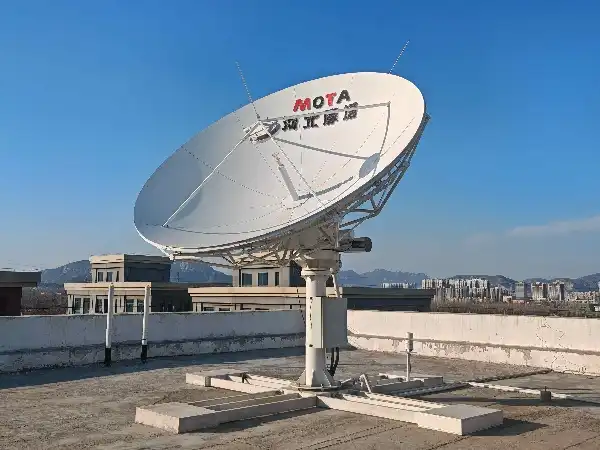
A parabolic dish is usually what is meant by "standard fixed antenna." Most Ku-band VSAT dishes are between 0.75 m and 1.8 m across. They are mounted on a wall bracket, a pole, or a frame on the roof. During installation, holes are drilled into the structure to help the installer aim the dish.
Because a bigger reflector gathers more information, a standard antenna can handle more link space and faster data rates. Space, weight, and work are what it costs. You need to find a safe place for the worker to work and make sure the mount and wire run fit. For a laptop or phone, that size doesn't work very often.
How Size Changes Gain and Beamwidth
The trade-off is set by physics. As the opening area grows, so doubling the width adds about 6 dB at the same frequency and efficiency. From 15 cm to 60 cm, the gain is about 12 dB, which is sixteen times more power. This makes the beam wider, so it picks up less signal and sees more of the sky around the target satellite. Balanis goes into great depth about these methods. So, I tell engineers to first figure out the cost of the link and then pick the form factor. Low-speed links like telemetry, status updates, and tiny tracking can be done with a small Ku-band antenna.
Key Factors to Consider When Choosing Between Miniature and Standard Antennas
Performance and Signal Quality
When it comes to performance, gain, noise, and separation are the most important things. Based on Pozar's standard formula, our small unit has a noise figure of 1.2 dB or less, which is the same as a noise temperature of about 92 K. Not a lot of noise helps a small aperture pick up a weak signal.
When there is 80 dB or more of transceiver separation, the broadcast path does not block the receive path. Even so, a normal dish still has more gain and rain cushion, which means that it works better for heavy data loads. Need batch test data? Ask each supplier for it. At MOTA, antenna pattern measurement, environmental stress screening, and passive intermodulation testing are all done on the units.
Size, Weight, and Installation
Begin with the hole. A miniature fixed satellite antenna is 15 cm by 3 cm and weighs 0.8 kg, giving your structural engineer a clear area to work with. A magnet and glue are used to mount the satellite. There is no need to drill or use any tools, and the positioning process only takes a minute.
It takes more work to set up a standard dish because it needs a mount, a bolted base, and a longer alignment. Environment is also important. The IP64 grade is for the small type. Under IEC 60529.1, a 6 means that the area is dust-tight and a 4 means that it is protected from water splashes. For balconies, roofs, and temporary outdoor posts, that works. But not for submersion or strong water jets.
Power Budget and Interfaces
Power often decides how things are made. The antenna uses no more than 5 W when it's running and no more than 1 W when it's not. It can be powered by USB or a small lithium battery. At 5 V, 5 W is equal to 1 A. A standard USB 2.0 port gives off 500 mA, so plan for a bigger source for peak draw.
To give you an idea, a 10,000 mAh pack at 3.7 V can hold about 37 Wh, which is enough power for seven hours at 5 W before the conversion losses. At 1 W, standby goes that much farther. On the interface side, let us know about your main controller and firmware as soon as possible so that our team can talk about your board's protocol and connector options.
Cost, Warranty, and Supplier Support
The unit price is shown on a single line. The total price includes the antenna, the mount, the work to install it, any replacement parts, and support hours. A standard dish needs extra hardware and work at each site, but a small unit can be mounted without any tools and just needs to be trimmed.
Find out about the warranty, how to get spare parts, and who can take a technical call at midnight. MOTA has flexible plans, a full-unit guarantee that meets foreign standards, and remote help available 24 hours a day, seven days a week for setup, troubleshooting, and system updates. Look at prices for the whole product, not just the first sale. You should also put money aside for pilot runs.
Applications and Use Cases: Which Antenna Fits Your Project Needs?
Where Miniature Antennas Fit Best
I do best when there isn't much room or power. Small tracking points on building sites, in rural areas, or at temporary events need a way to connect to the internet that doesn't involve digging trenches or working on towers. When a storm knocks out power, portable emergency kits need to be light and easy to set up quickly.
Ku-band satellites can be used by IoT sensor nodes that are outside of cell phone range to send small amounts of data. The built-in, plug-and-play unit works directly with mini terminals and small cameras. The small shape is also good for home offices with limited room and cars with small roofs.
Where Standard Antennas Still Win
I don't always bring a small antenna to work. A bigger dish is needed for high-definition video uplinks, broadcast reception, branch offices with lots of users, and sending large files. Most service providers also have rules about what size dish can work with their networks. If there is space for a mount and a trained contractor, a normal antenna will work better in heavy rain and will allow for more traffic growth. If you choose it in those situations, you won't have to deal with complaints later. Being honest about this keeps us both safe.
Embedding the Antenna Into Your Own Product
This is what the miniature fixed satellite antenna looks like when you make a rugged computer, an outdoor hub, or a field camera. The question changes from "catalog fit" to "integration fit": the labeling, the connector, the firmware handshake, and the case. MOTA helps ODM and OEM work on how hardware looks, how it communicates, and what functions it has.
We also make sure that designs follow the rules of the place they are going to. Title 47, Part 25 of the Code of Federal Regulations has the rules that apply to sales in the United States. Ask any supplier to say who is in charge of each approval. We're happy to talk about that split while sampling.
The 2024 Market: Suppliers and Solutions for Miniature Satellite Antennas
What I See in the Supplier Pool
There are a lot of companies that sell complete terminals, but not many that make antennas that fit inside the products of other companies. When you do a search, you'll find big VSAT brands, flat-panel experts, and trading companies that change the labels on stock. I'm not going to rank names here because a ranking without checked facts would be wrong.
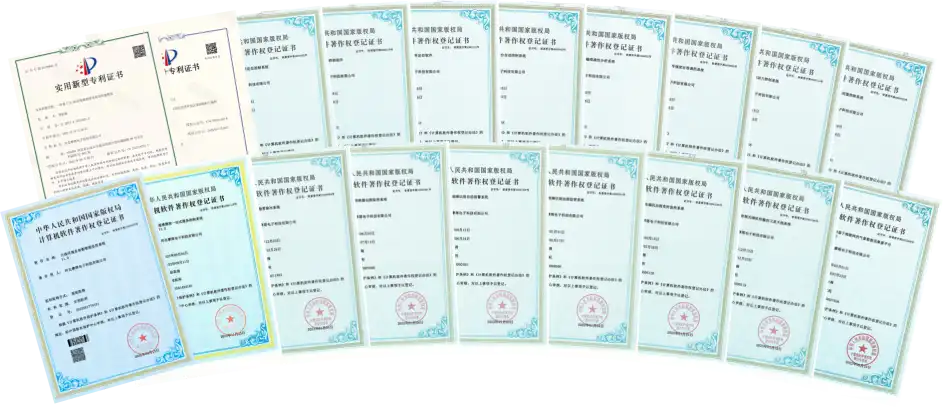
Sort sources instead by what they make themselves, like antenna designs, tracking systems, and the ability to test. MOTA creates its own high-precision tracking algorithms and satellite communication antennas, which are protected by a number of intellectual property rights. That's important if you ever need to change the software or the interface.
Supplier Selection Criteria
Make a short list. First, let's talk about certifications. MOTA has ISO 9001, ISO 14001, and ISO 45001, as well as GJB 9001C for managing the quality of defense products and China's type approval for radio communication equipment. Second, test data: ask for the noise number and isolation that have been recorded.
Third, wait time: we keep simple things in stock, but it takes 45 to 90 days for us to make custom or big systems. Three: Our team is available 24 hours a day, seven days a week. Fifth, logistics: look for packing that is resistant to shock and water, tracking, and help with customs. We do all three, plus stocking goods from other countries.
Customization and Bulk Purchasing
It's best to make a choice early on when it comes to customization. You can get ODM and OEM service from MOTA, from designing the plan to making prototypes and then mass production. That includes designing hardware, working with software, function modules, interface protocols, and certification support based on country. In stock items are used to ship regular orders.
I suggest a step-by-step plan for pilot runs: test samples, fine-tune the joint structure and interface, do a small trial batch, and then do the full run. We have reasonable prices and easy payment options for customers who buy from us again and again. You can start by telling us about your worries about design protection and supply stability. We will talk them over with you.
Making the Decision: Which Satellite Antenna Should You Choose?
A Simple Decision Path
Think about these four questions. First, can your case hold a disk that is 15 cm across, 3 cm thick, and weighs 0.8 kg? A miniature fixed satellite antenna is available if the answer is yes. Second, can your power source give you about 1 A at 5 V during peaks? If not, you should first rethink the source.
Third, does your traffic involve simple voice calls, telemetry, or small-scale monitoring? A small hole can work if the answer is yes. Plan for a bigger dish if you need high-definition streams or a lot of users. 4. Will field crews be able to install without tools? A mount with magnets and glue works for them.
Weighing Technical Metrics Against Cost
Add dots to both sides. List the noise figure, separation, IP grade, power draw, and weight for each link that fits your budget. For the business side, you should list the unit price, installation labor, warranty, lead time, and options for a second source. One dish might have a better raw link margin, but it might cost more overall if each site needs a crew and a drill. A small unit might be cheaper per site, but it won't work if your traffic grows faster than its link can handle. Give each factor a score between 1 and 5, and then decide which ones are the most important.
Practical Procurement Steps
This is the road that most hardware teams take, and it works. Ask for the datasheet and the documents for the interface. For two to four weeks, test the samples. Tune the joint structure and the interface. Make a test batch first, then move on to the big batch. Expect it to take eight to sixteen weeks from the first contact to a decision to go ahead.
Give yourself extra time for approvals in your target market. We will get back to you at any time if you send us your hole drawing, power plan, and target country. Making sure you know what you need to do for approval early on also protects your start date.
Conclusion
Different issues can be resolved using a miniature fixed satellite antenna or a standard dish. Since gain goes up with aperture, a 15 cm Ku-band unit doesn't give you the link range that a 60 cm or bigger dish does. In exchange, the small unit fits into small cases, uses 5 W or less on USB or a small lithium battery, can be mounted without tools, and has an IP64 rating.
Performance, size, power, cost over time, and supplier support are the main things that are used to make the choice. Standard dishes are best for high traffic and a lot of users, while small units are best for basic communication, telemetry, mini tracking, and OEM goods that are installed. Your link budget, cavity, power design, and a provider who can change structure and connections will help you make the right choice.
FAQ
What is the main advantage of a miniature fixed satellite antenna?
A good size and easy installation. It fits small items because it is 15 cm across, 3 cm thick, or less, and weighs 0.8 kg or less. It can be mounted with a magnet and glue in about one minute without cutting.
How do I judge whether it suits a remote deployment?
Satellite coverage, connectivity budget, power, and deployment environment are important. The power supply should give at least 1 A if the antenna uses up to 5 W at 5 V, with more capacity if requested by the manufacturer. IP64 implies the item is dust-tight and protected against water splashes from any direction, but not immersion or water jets. Check satellite visibility, data traffic, climatic conditions, and satellite service compatibility before deployment.
What warranty and after-sales support come with large projects?
MOTA offers a full-unit guarantee that meets foreign standards, and they offer a variety of flexible plans. Support includes remote help for setup, fixing problems, and upgrades 24 hours a day, seven days a week. Through working together, we can also set up quick on-site service and spare parts delivery.
Request a Quote for a Miniature Fixed Satellite Antenna from MOTA
Send MOTA your cavity drawing, power plan, and target market, and our engineers will look over your fit and interface options. We make miniature fixed satellite antennas and have ISO-certified quality systems, ready stock, and ODM/OEM service, so we can help with everything from samples to large orders. Our team answers 7 days a week. You can email hebei_mota@163.com or go to motasat.com.
References
1. Balanis, C. A. Antenna Theory: Analysis and Design, Wiley, 2016.
2. Maral, G., and Bousquet, M. Satellite Communications Systems, Wiley, 2020.
3. Pozar, D. M. Microwave Engineering, Wiley, 2012.
4. International Electrotechnical Commission. IEC 60529: Degrees of Protection Provided by Enclosures (IP Code), 2013.
5. USB Implementers Forum. Universal Serial Bus Specification, Revision 2.0, 2000.
6. U.S. Government Publishing Office. Code of Federal Regulations, Title 47, Part 25: Satellite Communications, 2023.
Tell us your requirements – get a tailored quote and technical support within 24 hours.