- English
- French
- German
- Portuguese
- Spanish
- Russian
- Japanese
- Korean
- Arabic
- Greek
- German
- Turkish
- Italian
- Danish
- Romanian
- Indonesian
- Czech
- Afrikaans
- Swedish
- Polish
- Basque
- Catalan
- Esperanto
- Hindi
- Lao
- Albanian
- Amharic
- Armenian
- Azerbaijani
- Belarusian
- Bengali
- Bosnian
- Bulgarian
- Cebuano
- Chichewa
- Corsican
- Croatian
- Dutch
- Estonian
- Filipino
- Finnish
- Frisian
- Galician
- Georgian
- Gujarati
- Haitian
- Hausa
- Hawaiian
- Hebrew
- Hmong
- Hungarian
- Icelandic
- Igbo
- Javanese
- Kannada
- Kazakh
- Khmer
- Kurdish
- Kyrgyz
- Latin
- Latvian
- Lithuanian
- Luxembou..
- Macedonian
- Malagasy
- Malay
- Malayalam
- Maltese
- Maori
- Marathi
- Mongolian
- Burmese
- Nepali
- Norwegian
- Pashto
- Persian
- Punjabi
- Serbian
- Sesotho
- Sinhala
- Slovak
- Slovenian
- Somali
- Samoan
- Scots Gaelic
- Shona
- Sindhi
- Sundanese
- Swahili
- Tajik
- Tamil
- Telugu
- Thai
- Ukrainian
- Urdu
- Uzbek
- Vietnamese
- Welsh
- Xhosa
- Yiddish
- Yoruba
- Zulu
Portable vs. Fixed Satellite Antennas: Which Is Better for Your Project?
Which type fits depends on how long the link must stay up and who sets it up. A portable fixed satellite antenna works best when a small team must restore a link in minutes, in a place with no cell or fiber service. A fixed dish suits a permanent site where pointing accuracy, data capacity, and uptime matter more than weight. This guide compares both types on signal performance, frequency, power, and cost. It then shows how to buy with confidence, so you can match the antenna to your site.
Understanding Portable and Fixed Satellite Antennas
What a Portable Fixed Satellite Antenna Is
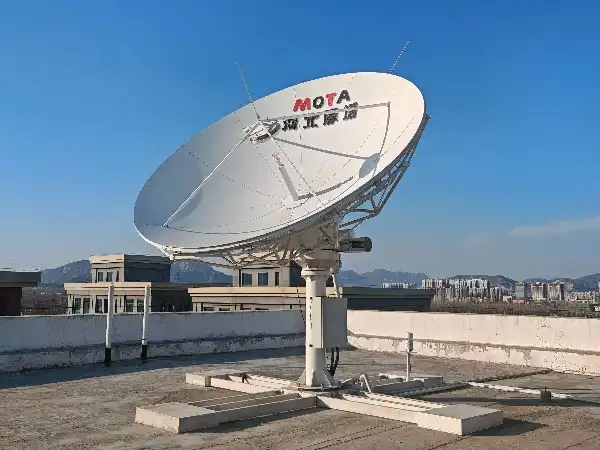
A portable fixed satellite antenna is pointed at a geostationary satellite and stays still while it works. It can be carried by one person because it folds up small. That makes it different from on-the-move terminals, which follow a satellite while a car or boat is moving. The small Ku-band model from MOTA works with frequencies between 10.7 and 12.75 GHz.
It weighs 2.5 kg or less, folds up to the size of a briefcase, and can fit in a backpack or a checked bag. Without any special tools, it gets to satellite lock in about 1.5 minutes. Inside the unit are a small LNB module and a simple modem. This format is used by emergency crews, exploration teams, field newsrooms, and temporary ground stations because they have to carry the link in first and then talk about performance.
What a Fixed Satellite Antenna Is Built For
A fixed satellite dish stays in place for years on a mount, roof, or concrete pad. More information is collected by bigger openings, which makes beams smaller. This increases link margin and data capacity. There are two opening sizes for MOTA's full-band fixed system: 1.8 m and 2.4 m. It automatically switches between the Ku, Ka, S, X, C, and Qv bands. A platform with four axis of stabilization keeps the error in alignment to 0.05° or less.
Protected by IP68, the unit works from -45°F to +70°F, 24 hours a day, seven days a week, and is expected to last more than 15 years. Real-time tracking and self-diagnosis let the operators keep an eye on it. This type is bigger, takes longer to install, and needs a better site to get ready, but it works for large ground stations, defense links, and aerospace links.
Mobility, Stability, and Installation Compared
There are three trade-offs between the two types. To begin, a portable unit can be moved by one person, while a set system needs a car, a crew, and a base. Second, signal stability: a fixed dish can keep a tighter pointing angle and carry more data, while a portable unit gives up some data coverage to be faster.
Third, setting up: a movable unit is easy to put together and only takes minutes, but planning, placing, and aligning a fixed station could take days. Our portable fixed satellite antenna bridges these two deployment scenarios. In every way, neither type wins. The portable format works for short-term, remote, and quick work. The fixed style works well for stable, long-term use with reliable results.
Comparing Performance and Technology: Portable vs. Fixed Satellite Antennas
Signal Strength and Aperture
The antenna gain goes up as the opening size goes up. Standard texts on satellite engineering say that doubling the diameter of the dish adds about 6 dB of gain at the same frequency and efficiency. That's why the specs for the two MOTA lines are different. The noise figure for the small Ku model is 1.3 dB or less, the transceiver isolation is 80 dB or more, and the first sidelobe is -12 dB or less. It says 0.6 dB or less, 98 dB or more, and -22 dB or less for the full-band system.
Lower sidelobes make it harder to pick up signals from nearby satellites. Each model does its job well. In Force 5 wind, which is about 19–24 mph on the Beaufort scale, the small unit can carry 720p video and emergency info. The stable setup can handle 10 Gbps of backhaul and 8K video at 60 frames per second.
Frequency Bands: Ku, Ka, C, and Beyond
The band you choose affects both effectiveness and dish size. Ku-band is a good middle ground for small terminals because even small holes can still hold a link that works. Ka-band can handle faster data rates, but rain weakens it more than Ku-band. C-band works better in the rain, but it generally needs a bigger dish.
Engineers can use the ITU-R P.618 recommendation to figure out how to predict rain fade on paths between Earth and space. Before you order, make sure that your satellite service provider's Ku-band service works with MOTA's portable model. The full-band fixed system instantly changes between Ku, Ka, S, X, C, and Qv, which is good for teams that work from one place with multiple satellite fleets.
Deployment, Maintenance, and Technology Trends
Portable units reward simple habits. Before each deployment, clean the reflector, look for corrosion in the RF connectors, and check the hinges and seals. According to IEC 60529, IP64 means that something is dust-tight and safe from splashing water. Plans are also changed by a low power draw. It's possible for a 10 W or less unit to run on either solar power or a power bank. A 100 Wh battery would last for about ten hours at 10 W before it started to lose power.
That's also the same size as the 100 Wh cap most airlines have on lithium cells you bring with you. Fixed systems depend on self-diagnosis and remote monitoring, which cut down on visits to the site. The LNB, modem, and pointing aids are now all housed in a single, smaller package. This is true for both types.
Decision-Making Guide: Which Antenna Suits Your Project?
Project Scope, Budget, and Environment
There are three questions to start with. How many days or years will the site be up and running? How many people can move and set up the gear? How many bytes does the link need to send? Our portable fixed satellite antenna supports both temporary and continuous deployment scenarios. A temporary field spot with two or three people leads to a portable unit. A constant station that gets a lot of data points to a set dish. The environment is just as important.
So, if it's very hot in the desert or very cold in the winter, the fixed system's -45℃ to +70℃ range might be needed. There is a lot of evidence for the need for independent links. In 2005, after Hurricane Katrina, an independent panel of the FCC talked about how storm damage and power outages made terrestrial networks impossible to use. Plan for the whole cost, including the unit price, shipping, power tools, and training.
Matching Buyers to Antennas
Each type of buyer looks at things in a different way. Purchasing managers look at the total cost, the certifications, and the time it takes to deliver. Link gap, band, power draw, and pointing precision are all checked by engineers. Light package freight, return rates, and an easy-to-follow manual are all things that distributors care about. Emergency integrators want equipment that can be set up by teams that aren't experts, that can run on solar or truck power, and that can connect to a command platform that is already in place.
MOTA changes the functional modules and interface protocols to meet that last need. When making private-label kits, brand owners pay attention to the nameplate, color box, multilingual manuals, plug type, and list of accessories. MOTA's OEM/ODM service includes how the hardware looks, how it interacts with other devices, and how it works. This means that a portable unit can have your brand on it and fit in your emergency kit.
Durability, Size, and Brand Reputation
Don't go by what the ads say; look at the models' description sheets and test records instead. If the antenna folds up, find out how well the hinges and seals work. Ask for records of cycle tests for the locking mechanism and the scores for water and dust that are behind the IP64 or IP68 label. Size and weight should be weighed against how you plan to move the unit.
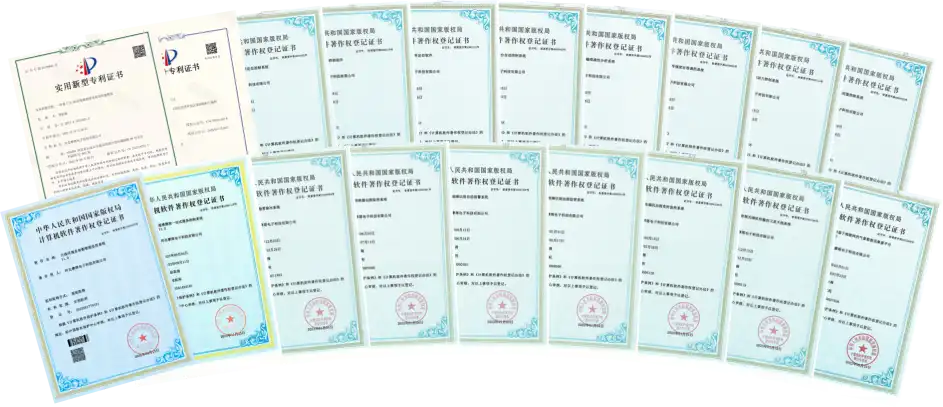
For example, a 2.5 kg terminal the size of a briefcase can go on a long hike or be checked as a bag, but a 1.8 m or 2.4 m dish needs a vehicle. For a good image, look for quality methods that can be tracked. The MOTA has been certified by ISO 9001, ISO 14001, and ISO 45001, and it also has the GJB 9001C military quality management system. Nine years of experience making things and the ability to create your own antenna and tracking technology are proof of those credentials.
Procurement Guide: Buying and Supplying Portable Fixed Satellite Antennas
Choosing a Supplier and Verifying Certifications
For technical questions, a good provider will write them down and show you the records before you even ask. MOTA is a National High-Tech business and a military-civil fusion business. It was formed in 2017 in Hebei. It has been approved as a type of China radio transmission equipment. Each country has its own rules, and in the US, an FCC-regulated transmitting earth station must follow those rules.
Write down who makes the compliance papers and who will answer the phone if an inspector calls. MOTA changes the certification documents, hardware, interface protocols, and functional modules to fit the rules of each target country. This way, the team can see if there are any gaps before you place your order. Send the team your end country and use case early.
Bulk Orders, Trial Runs, and Rentals
Choose the method of purchase that fits your needs. Our portable fixed satellite antenna supports both rental and purchase options. Because you only pay for the days you use them, rentals are good for one-time events or short projects. When you own something, you get paid quickly for it when you do it again and again. People who own brands and sell them usually start out small. From samples and spec checks to packing and marking samples, a trial order, and then repeat orders once the market answers, this is how most things go.
MOTA keeps regular goods in stock and talks with brand owners about trial amounts before placing large orders. It takes 45 to 90 days to make customized and large systems. Precision devices are shipped in packaging that is resistant to shock and moisture. They can also be tracked, help with customs clearing, and be stored abroad.
Warranty, After-Sales Support, and Total Cost
A low unit price doesn't mean much if you have to take time to fix things. Find out how long the warranty lasts, where you can get spare parts, and who does repairs near you. MOTA offers a customizable warranty plan for the whole unit that meets foreign standards. Its team is available 24 hours a day, seven days a week to help with installation, problems, and system updates.
It also sets up local support through cooperative channels, such as on-site technical service and quick delivery of spare parts. Add up the unit price, freight, power accessories, extra parts, and training time when you compare prices. When those things are taken into account, the cheapest quote often loses. Long-term partners can keep that total in check with competitive prices and easy payment terms.
Conclusion
Fixed and portable satellite dishes are used for different things, and neither is always better than the other. It takes about 1.5 minutes for a portable fixed satellite antenna to connect one person. The least it can hold is 2.5 kg and 10 W of power. It can only handle Ku-band and 720p video, though. A fixed system with an aperture of either 1.8 m or 2.4 m has less noise, better separation, more bands, and 10 Gbps of capability. It needs a site, planning, and a bigger budget in exchange. You can sort by project length, crew size, data load, band, and weather. Also, buyers should check the item's licenses, guarantee terms, and total cost of ownership.
FAQ
What is the main difference between portable and fixed antennas?
One that you can take with you folds up, weighs 2.5 kg or less, and connects in about 1.5 minutes in MOTA's Ku model. A fixed dish stays in one place, has an opening of 1.8 m or 2.4 m, and can carry more data.
How much power does a portable unit need?
The small MOTA type uses 10 W or less when it's running and even less when it's not. It can be charged by the sun or a power bank.
Can these antennas handle harsh weather?
From -10°C to +50°C, the small model can work. It is protected against dust and splashes with IP64, and it can hold 720p video in Force 5 wind. Between -45°C and +70°C, the fixed system can work. It is protected by IP68. Compare these limits to what's happening in your area.
What maintenance do they need?
Regular maintenance only takes a few minutes: wipe down the reflector, look for rust in the RF contacts, and check the hinges and seals before each use. Crews can find problems with the fixed system without having to go to the site. It can monitor itself from afar and diagnose itself.
Ready to Match the Right Antenna to Your Project? Talk to MOTA
Planning a project that needs a provider of a portable fixed satellite antenna who can help you at any time? MOTA has stock that is ready to go, lets you brand their products, and is available 24 hours a day, seven days a week. Send an email to hebei_mota@163.com with information about your site, power source, and order quantity. Our team will then suggest either a compact or full-band model. For more information on the goods, go to motasat.com.
References
1. Independent Panel Reviewing the Impact of Hurricane Katrina on Communications Networks, Federal Communications Commission, 2006
2. Propagation Data and Prediction Methods Required for the Design of Earth-Space Telecommunication Systems (ITU-R P.618-13), International Telecommunication Union, 2017
3. Degrees of Protection Provided by Enclosures (IP Code), IEC 60529, International Electrotechnical Commission, 2013
4. Satellite Communications, Dennis Roddy, McGraw-Hill, 2006
5. Satellite Communications Systems: Systems, Techniques and Technology, Gérard Maral and Michel Bousquet, Wiley, 2009
6. The Satellite Communication Ground Segment and Earth Station Handbook, Bruce R. Elbert, Artech House, 2014
Tell us your requirements – get a tailored quote and technical support within 24 hours.