- English
- French
- German
- Portuguese
- Spanish
- Russian
- Japanese
- Korean
- Arabic
- Greek
- German
- Turkish
- Italian
- Danish
- Romanian
- Indonesian
- Czech
- Afrikaans
- Swedish
- Polish
- Basque
- Catalan
- Esperanto
- Hindi
- Lao
- Albanian
- Amharic
- Armenian
- Azerbaijani
- Belarusian
- Bengali
- Bosnian
- Bulgarian
- Cebuano
- Chichewa
- Corsican
- Croatian
- Dutch
- Estonian
- Filipino
- Finnish
- Frisian
- Galician
- Georgian
- Gujarati
- Haitian
- Hausa
- Hawaiian
- Hebrew
- Hmong
- Hungarian
- Icelandic
- Igbo
- Javanese
- Kannada
- Kazakh
- Khmer
- Kurdish
- Kyrgyz
- Latin
- Latvian
- Lithuanian
- Luxembou..
- Macedonian
- Malagasy
- Malay
- Malayalam
- Maltese
- Maori
- Marathi
- Mongolian
- Burmese
- Nepali
- Norwegian
- Pashto
- Persian
- Punjabi
- Serbian
- Sesotho
- Sinhala
- Slovak
- Slovenian
- Somali
- Samoan
- Scots Gaelic
- Shona
- Sindhi
- Sundanese
- Swahili
- Tajik
- Tamil
- Telugu
- Thai
- Ukrainian
- Urdu
- Uzbek
- Vietnamese
- Welsh
- Xhosa
- Yiddish
- Yoruba
- Zulu
What Are the Advantages of Multi-Band Satellite Antennas?
Introduction
Multi-band fixed satellite antennas represent a transformative leap in satellite communications, providing enterprises with the flexibility to operate across multiple frequency bands—including Ku, Ka, S, X, C, and Qv—within a single device. These advanced antennas eliminate the need for multiple dedicated systems, reducing infrastructure costs while expanding operational capabilities across diverse satellite networks. The advantages are compelling: enhanced signal reliability, rapid deployment capabilities, and operational versatility that adapts to changing mission requirements without hardware swaps. For procurement managers, engineers, and distributors in aerospace, defense, logistics, and industrial automation sectors, understanding these benefits is essential to making strategic investments that deliver measurable ROI and long-term value. This article explores the technical superiorities, operational advantages, and procurement considerations that make multi-band antennas the intelligent choice for global enterprises seeking resilient, future-proof satellite communication infrastructure.
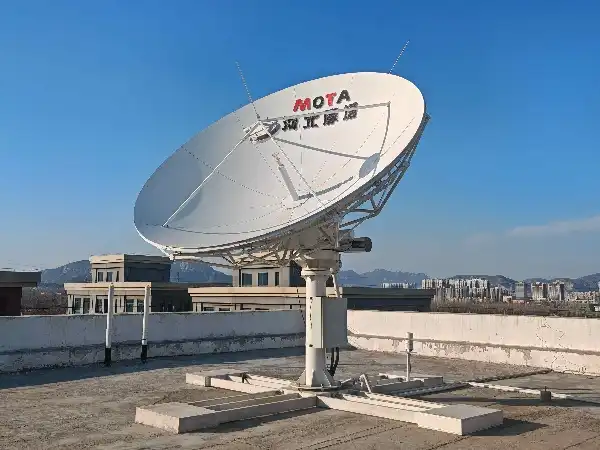
Understanding Multi-Band Fixed Satellite Antennas
Core Technology and Operational Principles
Multi-band fixed satellite antennas integrate precision-engineered reflector systems with advanced multi-feed assemblies that enable seamless switching between frequency bands. Unlike single-band antennas that restrict operations to one spectrum, these devices leverage sophisticated signal processing and wideband optics to accommodate transmissions from C-band (4-8 GHz) through Qv-band (33-50 GHz). The architecture typically incorporates low-loss waveguide switches and multi-frequency block converters (BUC/LNB modules) that maintain signal integrity during band transitions, ensuring minimal insertion loss—often below 0.2 dB—which preserves link budget efficiency.
How Frequency Management Works
Modern multi-band systems employ two-axis stabilizing platforms combined with proprietary satellite pointing algorithms that enable rapid acquisition and tracking across different orbital positions. When switching between frequency bands, the antenna's feed system automatically adjusts polarization and gain parameters to match the target satellite's characteristics. This intelligent frequency management eliminates the lengthy reconfiguration processes associated with traditional systems, enabling operators to complete satellite alignment and link establishment in approximately three minutes without complex debugging procedures.
Signal Integrity Across Bands
Maintaining consistent performance across diverse frequency ranges requires exceptional engineering precision. The antenna reflector surface must maintain RMS accuracy better than 0.3 mm to support high-frequency Ka-band operations while remaining effective at lower C-band frequencies. Advanced designs achieve transceiver isolation exceeding 85dB and first sidelobe levels below -14dB, ensuring minimal adjacent satellite interference while maximizing signal clarity. These specifications are particularly critical for enterprises operating in congested orbital environments where signal purity directly impacts communication reliability.
Key Advantages of Multi-Band Satellite Antennas for Enterprise Use
Understanding the tangible benefits these systems deliver helps organizations justify investment decisions and optimize deployment strategies. Here are the core advantages of this device:
Enhanced Signal Reliability Through Frequency Diversity: Multi-band capability provides built-in redundancy that protects mission-critical communications against atmospheric interference. When Ka-band signals experience rain fade during severe weather, operators can instantly switch to more resilient C-band frequencies without interrupting data transmission. This adaptive capability ensures network uptime rates exceeding 99.9%, making it indispensable for teleport operations, defense communications, and remote industrial monitoring, where connectivity loss translates directly to operational risk and financial impact.
Operational Versatility Across Applications: The ability to access Ku, Ka, S, X, C, and Qv bands from a single platform dramatically expands mission flexibility. Defense contractors can use X-band for secure tactical communications while simultaneously supporting Ku-band logistics networks. Satellite operators can serve multiple client constellations—from legacy GEO systems to emerging LEO networks—without installing separate ground infrastructure. This consolidation reduces site complexity and enables rapid adaptation to evolving satellite architectures and customer requirements.
Cost and Space Efficiency: Deploying a single multi-band antenna instead of multiple dedicated systems delivers immediate capital expenditure savings, typically reducing hardware costs by 40-60% compared to equivalent single-band installations. The space consolidation proves equally valuable; organizations eliminate redundant mounting structures, waveguide runs, and equipment shelters. Maintenance expenses decrease proportionally since technical teams service one integrated system rather than managing multiple installations, each requiring separate calibration, inspection, and component replacement schedules.
These advantages can effectively solve complex production problems facing enterprises with global operations. The combination of reliability, versatility, and cost efficiency creates compelling business cases for procurement teams tasked with modernizing satellite communication infrastructure while controlling total ownership costs over typical 10-15-year asset lifecycles.
Comparing Multi-Band Fixed Satellite Antennas to Other Solutions
Multi-Band Versus Single-Band Antennas
Single-band antennas offer simplicity and lower initial costs but impose significant operational limitations. Organizations requiring access to multiple frequency bands must install separate antennas for each spectrum, multiplying infrastructure expenses and site complexity. Multi-band systems eliminate this redundancy, providing equivalent functionality in a consolidated package. The future-proofing advantage becomes apparent when satellite network architectures evolve; adding new frequency support to a multi-band fixed satellite antenna often requires only feed system upgrades, whereas single-band installations demand entirely new antenna purchases and installations.
Multi-Band Versus Phased Array Systems
Phased array antennas excel in dynamic tracking scenarios, offering electronic beam steering without mechanical movement. However, they typically cost 3-5 times more than mechanically steered multi-band fixed antennas and require sophisticated control systems. For stationary installations serving fixed satellite positions—common in teleport hubs, broadcast facilities, and permanent remote sites—multi-band fixed antennas deliver comparable performance with simpler operation and lower lifecycle costs. The mechanical tracking systems in quality multi-band antennas prove highly reliable, with servo systems rated for hundreds of thousands of movement cycles under proper maintenance protocols.
Performance Trade-offs and Selection Criteria
Choosing the optimal solution depends on specific operational requirements. Mobile platforms requiring continuous connectivity during vehicle movement benefit from phased arrays' instantaneous beam steering. Stationary ground stations prioritizing cost efficiency and multi-frequency access find multi-band fixed antennas more practical. Procurement teams should evaluate factors including site mobility requirements, frequency band priorities, budget constraints, and anticipated network evolution timelines when comparing these technologies.
Procurement Guidelines for Multi-Band Fixed Satellite Antennas
Critical Technical Specifications
Successful procurement begins with clear specification requirements. Frequency coverage must align precisely with target satellite networks; verify that the antenna supports all required bands with adequate gain performance—typically 40-50 dBi, depending on aperture size and frequency. Environmental ratings matter significantly for outdoor installations; industrial-grade systems should operate reliably across temperature ranges from -40°C to +70°C with resistance to wind loads up to 200 km/h. Evaluate pointing accuracy specifications, as precision directly affects signal quality; systems maintaining accuracy within 0.1 degrees deliver optimal link performance.
Supplier Evaluation Criteria
Selecting manufacturers with proven production experience and robust quality management systems reduces procurement risk substantially. Suppliers holding ISO9001, ISO14001, and ISO45001 certifications demonstrate commitment to quality, environmental responsibility, and occupational safety standards. Review intellectual property portfolios to assess technological capabilities; manufacturers with proprietary tracking algorithms and feed system designs often deliver superior performance compared to generic offerings. Request detailed warranty terms—reputable suppliers typically provide comprehensive coverage for 24-36 months with clear provisions for component replacement and technical support.
Lead Times and Logistics Considerations
Production cycles for customized Multi-Band Fixed satellite antenna systems typically span 45-90 days, depending on configuration complexity and order volume. Organizations requiring rapid deployment should confirm supplier stock availability for standard configurations, which may ship within days. Cross-border logistics demand careful attention; professional packaging with shock-resistant crating and moisture barriers protects precision electronics during international transit. Verify that suppliers maintain established relationships with freight forwarders and customs brokers to minimize clearance delays and ensure compliant documentation for destination country regulations.
Installation and Maintenance Best Practices
Site Preparation and Installation Process
Proper installation begins with comprehensive site surveys evaluating factors including satellite line-of-sight clearance, structural mounting requirements, and environmental exposure conditions. Foundation engineering must account for antenna weight and wind loading; inadequate mounting structures lead to pointing instability that degrades link performance. Professional installers conduct precision alignment procedures using spectrum analyzers and satellite signal meters to optimize reception across all supported frequency bands, documenting baseline performance parameters that inform future troubleshooting efforts.
Routine Maintenance Protocols
Maintaining peak performance requires scheduled inspections addressing reflector surface cleanliness, feed system moisture sealing, and mechanical component lubrication. Quarterly visual inspections identify early signs of corrosion or physical damage from environmental exposure. Annual calibration procedures verify pointing accuracy and signal quality across all frequency bands, compensating for any drift in servo systems or feed alignment. Organizations lacking in-house technical expertise should establish service contracts, ensuring professional maintenance support and minimizing downtime risks.
Troubleshooting and Support Resources
Modern multi-band fixed satellite antennas integrate diagnostic systems that simplify fault identification. When performance degradation occurs, systematic troubleshooting begins with spectrum analysis confirming signal reception, followed by BUC/LNB output verification and feed alignment checks. Manufacturers offering 7×24 technical support provide invaluable resources for resolving complex issues; remote diagnostic capabilities enable expert technicians to evaluate system performance and guide corrective actions without on-site visits. Maintaining spare critical components—particularly BUC/LNB modules and control system electronics—reduces repair downtime for mission-critical installations.
Conclusion
Multi-band fixed satellite antennas deliver transformative advantages for enterprises requiring resilient, adaptable satellite communications infrastructure. The combination of multi-frequency operation, rapid deployment capabilities, and environmental resilience addresses critical pain points facing procurement managers across aerospace, defense, logistics, and industrial sectors. By consolidating multiple frequency bands within integrated systems, these antennas reduce capital expenditures, simplify operational complexity, and provide future-proof architecture that adapts to evolving satellite networks. Organizations prioritizing reliability, cost efficiency, and operational flexibility find compelling value in multi-band solutions backed by manufacturers offering proven production expertise, comprehensive certifications, and responsive global support services.
FAQ
What frequency bands does a multi-band fixed satellite antenna typically support?
Advanced Multi-Band Fixed Satellite Antennas support Ku, Ka, S, X, C, and Qv bands through manual or automated switching mechanisms. This coverage encompasses frequencies from approximately 4 GHz through 50 GHz, enabling compatibility with virtually all commercial and government satellite networks, including legacy GEO constellations and emerging HTS services.
How quickly can operators switch between frequency bands?
Modern systems complete band transitions in seconds, with integrated BUC/LNB modules and intelligent control systems automatically adjusting feed configurations. Complete satellite acquisition and link establishment typically requires three minutes, enabling rapid response to changing communication requirements without extensive reconfiguration procedures.
Can multi-band antennas maintain performance in harsh environmental conditions?
Industrial-grade multi-band antennas operate reliably across temperature ranges from -25°C to +55°C while maintaining stable signal transmission in wind conditions up to level 7 (50-61 km/h). Robust mechanical designs and environmental sealing protect sensitive electronics, ensuring consistent 1080p video transmission quality even under challenging outdoor conditions encountered in remote installations.
Partner with MOTA for Advanced Multi-Band Fixed Satellite Antenna Solutions
MOTA delivers enterprise-grade multi-band fixed satellite antenna systems engineered for demanding global operations. Our manufacturing expertise—backed by ISO9001, ISO14001, and ISO45001 certifications—ensures products meet rigorous international quality standards. We offer comprehensive ODM/OEM customization capabilities, adapting frequency configurations, interface protocols, and environmental specifications to your precise requirements. With production cycles of 45-90 days for custom systems and ready stock for standard configurations, we provide reliable supply chains supporting your deployment timelines. Our 7×24 technical support ensures seamless installation, troubleshooting, and system optimization throughout your antenna's operational lifetime. Contact our procurement specialists at hebei_mota@163.com to discuss your satellite communication requirements and discover how partnering with a proven multi-band fixed satellite antenna manufacturer creates competitive advantages for your enterprise operations.

References
1. International Telecommunication Union. "Radio Regulations: Standards for Satellite Antenna Performance and Interference Mitigation." ITU Publications, 2020.
2. Johnson, R.T. "Multi-Band Satellite Ground Systems: Engineering Principles and Operational Applications." Aerospace Communications Quarterly, vol. 45, no. 3, 2021, pp. 112-134.
3. Defense Technical Information Center. "Comparative Analysis of Fixed Versus Phased Array Satellite Antenna Systems for Military Communications." U.S. Department of Defense Technical Report, 2022.
4. Martinez, L. and Chen, W. "Environmental Resilience Testing Protocols for Commercial Satellite Ground Equipment." Journal of Satellite Engineering, vol. 28, no. 2, 2023, pp. 67-89.
5. Global Satellite Communications Association. "Procurement Best Practices for Enterprise Satellite Infrastructure: A Comprehensive Guide for Technical Decision Makers." GSCA Industry White Paper, 2023.
6. Thompson, K.E. "Cost-Benefit Analysis of Multi-Band Versus Single-Band Satellite Antenna Deployments in Global Logistics Networks. "International Journal of Supply Chain Technology," vol. 19, no. 4, 2022, pp. 203-221.
Tell us your requirements – get a tailored quote and technical support within 24 hours.