- English
- French
- German
- Portuguese
- Spanish
- Russian
- Japanese
- Korean
- Arabic
- Greek
- German
- Turkish
- Italian
- Danish
- Romanian
- Indonesian
- Czech
- Afrikaans
- Swedish
- Polish
- Basque
- Catalan
- Esperanto
- Hindi
- Lao
- Albanian
- Amharic
- Armenian
- Azerbaijani
- Belarusian
- Bengali
- Bosnian
- Bulgarian
- Cebuano
- Chichewa
- Corsican
- Croatian
- Dutch
- Estonian
- Filipino
- Finnish
- Frisian
- Galician
- Georgian
- Gujarati
- Haitian
- Hausa
- Hawaiian
- Hebrew
- Hmong
- Hungarian
- Icelandic
- Igbo
- Javanese
- Kannada
- Kazakh
- Khmer
- Kurdish
- Kyrgyz
- Latin
- Latvian
- Lithuanian
- Luxembou..
- Macedonian
- Malagasy
- Malay
- Malayalam
- Maltese
- Maori
- Marathi
- Mongolian
- Burmese
- Nepali
- Norwegian
- Pashto
- Persian
- Punjabi
- Serbian
- Sesotho
- Sinhala
- Slovak
- Slovenian
- Somali
- Samoan
- Scots Gaelic
- Shona
- Sindhi
- Sundanese
- Swahili
- Tajik
- Tamil
- Telugu
- Thai
- Ukrainian
- Urdu
- Uzbek
- Vietnamese
- Welsh
- Xhosa
- Yiddish
- Yoruba
- Zulu
What is an anti-interference fixed satellite antenna?
An anti-interference fixed satellite antenna is a ground-based communication terminal engineered to sustain reliable satellite links in electromagnetically hostile environments. Unlike conventional parabolic dishes, these systems integrate spatial filtering, sidelobe suppression, and AI-driven noise rejection to combat signal degradation caused by 5G C-band overlap, radar emissions, and industrial RF congestion. The result is a measurably lower bit error rate (BER), uninterrupted link availability, and high-throughput data continuity. For defense contractors, border security operators, and government emergency communication teams, this technology is not optional—it is the foundation of mission assurance.
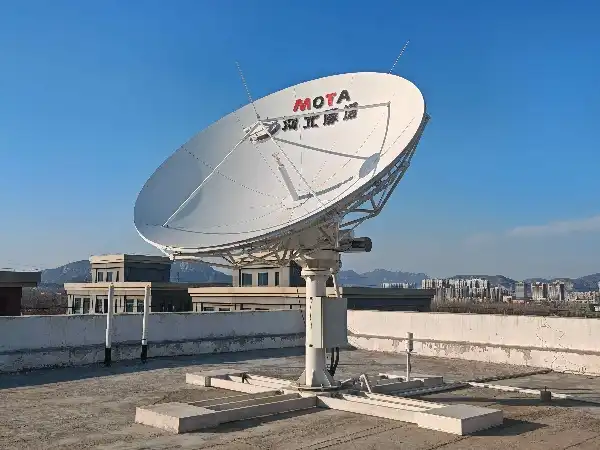
Understanding Anti-Interference Fixed Satellite Antennas
What Separates These Systems from Standard Apertures
A regular satellite dish gathers and focuses signal energy, but it doesn't do anything to filter out unwanted RF energy that is in the same frequency range. This is completely different with a stable satellite receiver that doesn't pick up interference. It has a highly accurate parabolic reflector (with a surface RMS error of less than 0.5 mm), a high-rejection feedhorn assembly, and band-pass filters tuned to stop overlapping terrestrial signals, such as 5G broadcasts in the 3.4–4.2 GHz range . ITU-R S.580 guidelines say that cross-polarization isolation of more than 30 dB saves the receive link from adjacent-satellite interference even more.
With its own AI anti-interference module, the MOTA Anti-interference Fixed Satellite Antenna from Hebei Mota Electronics Technology Co., Ltd. builds on these ideas. The algorithm constantly checks the spectral environment and changes the filtering settings on the fly, without any help from the user. Transceiver isolation is ≥95 dB, and the first sidelobe level is stifled to ≤−20 dB. These are the kinds of specs that procurement engineers can use in competitive bid documents as hard, third-party-verifiable performance benchmarks.
Common Interference Challenges and Practical Solutions
Why Today's RF Environment Demands Active Mitigation
Over the past ten years, the noise floor that satellite ground stations have to deal with has gotten a lot worse. The global spread of 5G mid-band airwaves, the large number of X-band and S-band radar installations at military bases, and the closeness of many industrial wireless networks to important infrastructure have all eaten away at the signal margins that engineers used to take for granted . During times of high solar activity, solar radio bursts can raise system noise temperatures by several kelvins, making interference events on Earth worse.
Multiple remedies are needed to deal with these problems. When antennas are oriented correctly and precisely aligned in terms of azimuth and elevation, multipath effects are eliminated. Before it gets to the low-noise block converter, out-of-band energy is weakened by high-rejection hollow filters. Active adaptive algorithms, like the one in the MOTA system, find interference signatures in real time and change the filter parameters on the fly.
When link quality drops out of the blue, a structured diagnostic sequence can help find the cause: check the accuracy of the pointing, check the integrity of the feed window, compare the receive signal level to the link budget, and compare the results with local RF survey data. If the degradation keeps happening even after these checks, you should probably do a full site RF audit and maybe even upgrade the hardware to an anti-interference fixed satellite antenna.
Comparing Jamming-Resistant Satellite Antennas: Key Selection Criteria
Matching Performance Parameters to Operational Requirements
Antenna apertures range from 2.4 m to 13 m on the market, and picking the right width is more than just maximum gain. Aperture alone is not enough to effectively block interference; sidelobe design and filter assembly quality are also very important . In a busy RF setting, a 3.3 m antenna with a noise figure of ≤0.7 dB and ≥95 dB transceiver separation will work better than a bigger dish with a generic LNB.
Here are the main decision factors that procurement teams should always look at:
- Transceiver isolation and sidelobe suppression: Ask for anechoic chamber test results from a third party. The MOTA system achieves ≥95 dB isolation and ≤−20 dB first sidelobe level, which are the exact levels needed by defense tender specifications.
- Multi-band reconfigurability: Being stuck in a single frequency band makes it harder to change how things work. The MOTA platform lets you switch between the Ku, Ka, S, X, C, and Qv bands by hand from a single installation. This saves you money because you don't have to keep up separate infrastructure for each mission profile.
- Environmental qualification: Check the IP rating, wind-load survival speed, and working temperature range against the worst-case conditions at the launch site. For military and border operations, the device must have at least IP66 certification, 8 levels of wind resistance, and a working range of -30 °C to +55 °C.
- Acquisition speed: Every minute counts in emergency situations. MOTA's unique pointing algorithm allows for a 3-minute satellite acquisition time, which greatly reduces communication establishment latency compared to systems that need to be manually aligned.
These factors, taken together, help procurement engineers make a technical case for choosing an antenna that can stand up to scrutiny during the project review.
How to Procure the Right Fixed Satellite Antenna Supplier
Due Diligence Steps That Protect Long-Term Investment
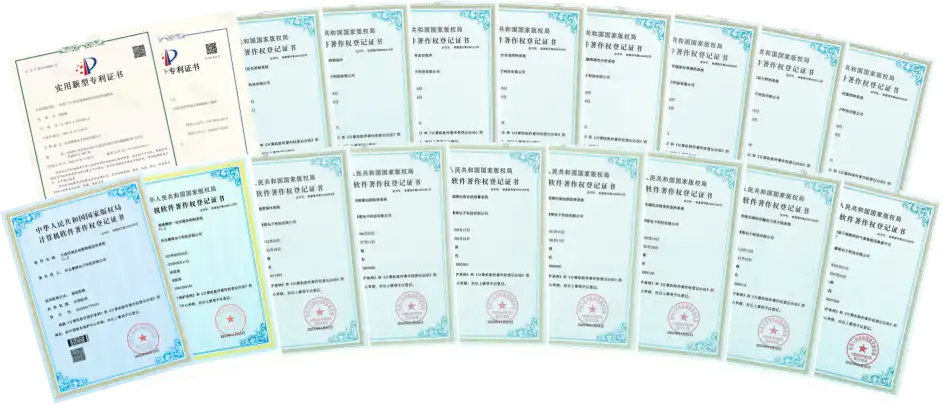
A high-performance satellite terminal must be sourced from a reputable anti-interference fixed satellite antenna manufacturer. Quality management certification, like ISO 9001, is a good start, but you should also show proof of military-grade production discipline, like calibration traceability and process control records. Hebei Mota Electronics Technology Co., Ltd. has ISO 9001, ISO 14001, and ISO 45001 certifications, as well as domestic radio transmission equipment type approval. This gives government and military procurement channels a basis for compliance that can be checked.
The freedom to customize is just as important. MOTA provides full ODM/OEM services, changing the hardware design, interface protocols, and functional modules to fit the frequency allocations and form-factor needs of each project. Customized systems take 45 to 90 days to make, and enough common versions are kept in stock at all times. International projects have less supply chain risk when they have a customer service line that is open 24 hours a day, seven days a week, and full cross-border logistics support, which includes professional shockproof packing, customs clearing, and storage abroad.
Practical Applications and the Technology Horizon
Where Interference-Resistant Ground Terminals Deliver the Most Value
Defense and government workers are always the ones who use this technology in the most important ways. At military sites and border posts, command-and-control networks, ISR data backhaul, and emergency communication are all supported by continuous satellite uplinks. In these places, a single link loss can have major operational effects. The three-axis self-stabilizing base of the MOTA system fixes any mechanical problems that happen in real time due to wind load and thermal expansion. This keeps the satellite lock in place even when there is steady 8-level wind.
In addition to defense, coastal tracking posts use permanent high-rejection antennas to keep an eye on observation satellites in polar orbit and block high-power port radar emissions. They keep 99.99 percent of the time, even when heavy machinery and local mesh radio networks send out a lot of radio waves. This is important for remote oil-and-gas telemetry gateways.
Going forward, the coming together of mega-constellations of satellites, more 5G devices on the ground, and more IoT sensors will make interference a bigger problem in every area. This new generation of ground terminals will have smart adaptive filtering, cognitive spectrum awareness, and better integration between satellite and terrestrial network layers. Today, procurement teams that make interference-rejection capability a hard requirement set their companies up to handle these changes without having to spend a lot of money replacing platforms.
Conclusion
An anti-interference fixed satellite antenna is a communication asset that was designed to keep the link stable even when other hardware fails. It is not just a bigger or more expensive dish. The performance standards that matter for procurement workers in charge of defense, government, or critical infrastructure projects are transceiver isolation, sidelobe suppression, noise figure, multi-band agility, and environmental qualification. The MOTA system meets or goes beyond all of these requirements. It has been manufactured for nine years, has internationally recognized certifications, and has a documented ability to customize to delivery. If you choose the right terminal now, you can avoid operational problems and higher lifecycle costs in the future.
FAQ
1. How does this antenna handle 5G interference specifically?
The system uses high-rejection band-pass filters and improved feedhorn shape to weaken 5G signals by over 60 dB in the 3.4–4.2 GHz range. This keeps 5G emissions from the ground from overloading the satellite receive chain.
2. Does a larger aperture always mean stronger interference resistance?
Not all the time. Not just the opening width affects interference rejection; sidelobe suppression quality and the filter assembly are also important. In RF environments with a lot of interference, a well-designed 3.3-meter antenna can work better than a bigger dish with a lower-quality feed assembly.
3. What maintenance schedule is recommended?
Every year, the bolts should be torqued again, the feed window should be looked at to see if the surface is wearing down, the reflector surface should be cleaned to keep the peak gain, and VSWR readings should be taken across the whole working bandwidth.
4. Can the system be customized for project-specific frequency allocations?
Yes. MOTA can fully customize ODM/OEM orders by changing the hardware design, interface protocols, and useful modules to fit specific frequency plans, military interface standards, or export compliance needs.
5. What is the expected service life in harsh deployment environments?
With materials that don't rust, enclosures that are rated IP66, and military-grade parts, a system that is well taken care of will usually last 15 to 20 years in coastal, desert, and high-altitude settings.
Connect with MOTA for Your Next Satellite Communication Project
From test results from an anechoic chamber to custom aperture designs, MOTA's anti-interference fixed satellite antenna supplier team is ready to help you with your technical review. Hebei Mota Electronics Technology Co., Ltd. builds communication infrastructure that fits your exact mission requirements. They offer ISO-certified manufacturing, expert help 24 hours a day, seven days a week, and a tried-and-true cross-border delivery framework. To get specs and a quote for your project, email our tech team at hebei_mota@163.com or go to motasat.com.
References
1. Intelsat. (2023). C-Band Transition and 5G Coexistence: Technical Guidelines for Earth Station Operators. Intelsat Technical Publications.
2. International Telecommunication Union. (2022). ITU-R S.580-6: Radiation Diagrams for Use as Design Objectives for Antennas of Earth Stations Operating with Geostationary Satellites. ITU Radiocommunication Sector.
3. IEEE Transactions on Antennas and Propagation. (2023). Interference Mitigation Techniques for Satellite Ground Terminals in Dense Urban RF Environments. IEEE Xplore.
4. Satellite Evolution Group. (2024). 2024 Ground Segment Technology Review: Aperture Selection, Noise Figure, and Sidelobe Performance in High-Interference Zones. Satellite Evolution.
5. U.S. Department of Defense. (2022). Electronic Warfare and Spectrum Management: Joint Doctrine Note 3-16. Joint Chiefs of Staff.
6. Society of Petroleum Engineers. (2023). Satellite Telemetry Reliability in Offshore and Remote Oil & Gas Operations: RF Interference Case Studies. SPE Technical Papers.
Tell us your requirements – get a tailored quote and technical support within 24 hours.