- English
- French
- German
- Portuguese
- Spanish
- Russian
- Japanese
- Korean
- Arabic
- Greek
- German
- Turkish
- Italian
- Danish
- Romanian
- Indonesian
- Czech
- Afrikaans
- Swedish
- Polish
- Basque
- Catalan
- Esperanto
- Hindi
- Lao
- Albanian
- Amharic
- Armenian
- Azerbaijani
- Belarusian
- Bengali
- Bosnian
- Bulgarian
- Cebuano
- Chichewa
- Corsican
- Croatian
- Dutch
- Estonian
- Filipino
- Finnish
- Frisian
- Galician
- Georgian
- Gujarati
- Haitian
- Hausa
- Hawaiian
- Hebrew
- Hmong
- Hungarian
- Icelandic
- Igbo
- Javanese
- Kannada
- Kazakh
- Khmer
- Kurdish
- Kyrgyz
- Latin
- Latvian
- Lithuanian
- Luxembou..
- Macedonian
- Malagasy
- Malay
- Malayalam
- Maltese
- Maori
- Marathi
- Mongolian
- Burmese
- Nepali
- Norwegian
- Pashto
- Persian
- Punjabi
- Serbian
- Sesotho
- Sinhala
- Slovak
- Slovenian
- Somali
- Samoan
- Scots Gaelic
- Shona
- Sindhi
- Sundanese
- Swahili
- Tajik
- Tamil
- Telugu
- Thai
- Ukrainian
- Urdu
- Uzbek
- Vietnamese
- Welsh
- Xhosa
- Yiddish
- Yoruba
- Zulu
Why are low-power satellite antennas important for remote sites?
Low-power satellite antennas are critical for remote sites because they make reliable communication economically viable where grid power simply does not exist. In off-grid villages, border checkpoints, and rural broadband hubs across Southeast Asia, Africa, and Latin America, every watt consumed directly affects project budgets and solar array sizing. An energy-saving fixed satellite antenna—operating at ≤5W standby and ≤15W active—reduces total power demand by over 40% compared to conventional units, enabling smaller battery banks and leaner solar installations. This efficiency translates into lower total cost of ownership (TCO) and faster return on World Bank or ADB-funded universal service projects.
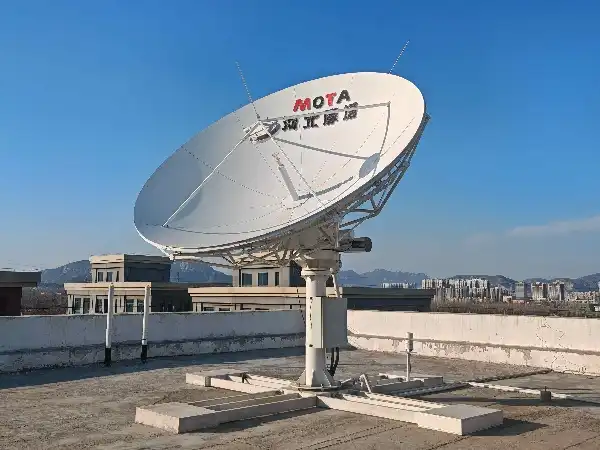
Understanding Low-Power Satellite Antennas and Their Importance for Remote Sites
What Makes These Antennas Different From Conventional Models
Standard satellite antennas were made for places that are attached to the power source and rarely have trouble getting power. Low-power designs are made in a very different way than other designs. They have high-efficiency Low Noise Block (LNB) downconverters with noise levels as low as ≈1.1dB, precise parabolic surface geometry that maximizes the Gain-to-Noise Temperature (G/T) ratio, and smart sleep-wake cycles that reduce power use to almost nothing when the device is not in use.
As a result, the system has both good signal quality and low power consumption. The ITU's 2023 report on rural broadband connectivity says that 30–45% of the total cost of running off-grid telecom sites in developing areas goes to energy. That number being cut by 40% or more is not a small gain; it changes the whole way a remote operation works financially.
Why Energy Efficiency Is a Strategic Priority
When a project includes 200 rural sites spread out across a mountainous state, the difference between a 15W and a 35W antenna gets bigger every day for the whole contract time. When used on a large scale, smaller solar panels, lighter batteries, and fewer fuel runs for generators all save a lot of money. This efficiency directly saves project margins for contractors who are in charge of universal service responsibilities financed by the World Bank or the Asian Development Bank.
Key Features and Benefits of Energy-Saving Fixed Satellite Antennas for Remote Deployments
Core Technical Advantages Worth Knowing
For placements in harsh environments and with limited power, MOTA's Ku-band energy-saving fixed satellite antenna is designed. Here are the main reasons why this gadget is better than others on the market:
- Ultra-low power draw: ≤5W of power is used in standby mode and ≤15W is used in operation mode. This makes it much easier to choose the right size solar array. When scaling across hundreds of sites, smaller arrays mean lower initial capital costs per spot.
- Rapid satellite alignment: Link setup can be done by field teams in 3 minutes without the need for special calibration tools. This cuts down on the time needed for installations, the cost of skilled labor, and the time it takes to deliver project milestones.
- All-weather structural durability: An IP64 grade keeps dust and water jets out, and the temperature range of -20℃ to +50℃ works in all kinds of conditions, from the heat of sub-Saharan Africa to the cold of the Andes. We can send stable 720p video even when there are six levels of wind.
- Intelligent auto sleep-wake management: The built-in power management module automatically lowers power use when not in use and restores full capacity when needed, which increases the time between maintenance visits that the battery can be used.
- Plug-and-play integration: The antenna comes with a basic modem and an energy-saving LNB module already built in. Having only one SKU makes procurement easier and lowers the risk of compatibility issues and problems with coordinating with vendors.
These benefits directly deal with the most expensive problems in off-grid telecom deployments: power systems that are too big, long installation times, and lots of maintenance visits. When compared to traditional antenna solutions, a contractor setting up 150 sites can realistically expect a 40% or more drop in the total costs and benefits of energy use.
Comparing Low-Power Satellite Antennas to Traditional Models: Which Is Right for You?
A Practical TCO Comparison for B2B Procurement Teams
Most fixed satellite dishes use between 30 and 50W when they are working. Under normal tropical conditions, a 150W panel and a 100Ah battery bank are needed to power a 35W unit constantly from the sun. The same site that a 15W antenna serves needs less than half of that equipment. This means that hardware costs per site will be about $200 to $400 less, based on how much the parts cost.
When you add up the costs of maintenance visits, battery replacements, and fuel over a 10-year operational lifecycle, the TCO gap gets a lot bigger. A study in the IEEE Transactions on Green Communications and Networking says that designing an energy-saving fixed satellite antenna that uses less energy can cut the site's 10-year OPEX by 35–50% in off-grid deployments .
Aperture flexibility also matters for matching antenna size to link budget requirements. MOTA has apertures ranging from 2.4m to 13m, so procurement teams can make sure that each site is the right size instead of over-engineering everything the same. This level of detail keeps sites from having to spend money on bigger reflectors when a smaller one will meet their traffic goals just fine.
Practical Guide to Procuring Low-Power Fixed Satellite Antennas for Remote Sites
What to Evaluate Before Committing to a Supplier
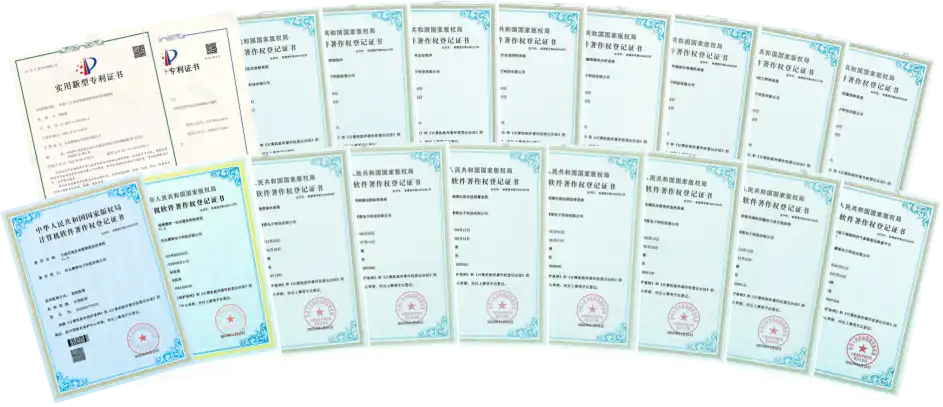
In a serious business-to-business evaluation, unit price should be given the same amount of weight as supplier dependability, logistics capabilities, and post-sale support infrastructure. MOTA is certified by the ISO 9001, ISO 14001, and ISO 45001 management systems. The GJB 9001C defense product quality framework also sets standards for production. This means that every unit that ships has been through several levels of RF performance testing, such as checking the far-field pattern and analyzing the structural stress.
Batch supply scheduling and customs clearance help are musts for buying things for big projects, especially when foreign tender cycles last 3 to 12 months. MOTA keeps enough stock on hand to fill standard orders, and it takes 45 to 90 days to make custom or large-volume systems. Cross-border logistics partnerships that have been around for a while cover international dedicated freight lanes, sea freight, air freight, full tracking from start to finish, and professional packaging that is resistant to shock and moisture.
ODM/OEM customization of the energy-saving fixed satellite antenna is possible for contractors whose bids need certifications specific to their country or different interaction standards. After-sale support is available 24 hours a day, seven days a week, and includes localized technical help and quick spare parts delivery through cooperative regional channels. This takes care of the problems with installation training and inventory that often come up with big rural rollouts.
Future Trends and Innovations in Energy-Saving Satellite Antenna Technology
Where the Technology Is Heading Next
AI-driven power optimization is moving from the lab to the real world. In the next generation of designs, adaptive algorithms that can predict how much traffic there will be and pre-adjust LNB working states should be able to lower idle power consumption below 3W. New composite reflector materials, like carbon fiber hybrid panels, make the structure lighter and the surface more accurate to less than 0.3mm RMS. This lets higher G/T ratios happen without making the aperture bigger.
Adoption is speeding up because of regulatory momentum. The updated EU Ecodesign Directive and ITU suggestions on sustainable telecom infrastructure are setting power efficiency levels that will soon make high-consumption stations ineligible for international project bids [6]. When buying tools today, procurement teams should make sure that the roadmaps that suppliers give them are in line with these new legal standards. When you invest in a company like MOTA that does active research and development with the help of PhDs and top engineers from state-level research centers, you lower the risk of assets getting stuck as requirements get stricter.
Conclusion
Connectivity problems at remote sites can be fixed, and the amount of power used will show if a solution can be used on a large scale and still make money. For rural broadband contractors, universal service providers, and emergency infrastructure programs, low-power satellite antenna technology bridges the gap between what is technically possible and what is economically possible. MOTA's energy-saving fixed satellite antenna is designed specifically for these operations, with standby draw of 5W, operating draw of 15W, 3-minute field alignment, IP64 security, and a full plug-and-play architecture. When contractors honestly make TCO models that include solar hardware, batteries, upkeep, and fuel, they always find that choosing low-power terminals is one of the most important choices they can make when buying something.
FAQ
1. Does lower power consumption mean weaker signal performance?
No, MOTA's design achieves transceiver isolation of ≥85dB and a noise figure of ≈1.1dB, which are the same or better than many other high-power units on the market. The efficiency gains don't come from cutting down on RF output; they come from improving the feed systems and surface geometry.
2. Which aperture size should I select for a rural broadband hub?
The aperture you choose will depend on your link budget, the EIRP of the target satellite, and the volume you need. Sizes range from 2.4m to 13m at MOTA. In tropical Ku-band service zones, a 3.3m or 4.5m reflector is usually enough for most rural internet backhaul needs. Before you agree, our expert team can help you figure out how much a link will cost.
3. Is the antenna compatible with solar power systems already in the field?
The low-power RF chain is made to work with standard 12V/24V DC solar power systems that are popular in IoT and telecom hubs that are far away. The auto-sleep-wake feature improves draw even more during slow times.
4. What warranty and support terms apply to bulk orders?
MOTA offers a full-unit warranty that meets international standards. They also offer flexible extended plans. Customers who place bulk orders get dedicated account support, localized installation help, and priority allocation of spare parts.
Connect With MOTA for Your Next Remote Site Project
Ku-band satellite communication systems from MOTA have been tested and proven to work in the harshest off-grid settings around the world. We support contractors from tender specifications through installation training and long-term maintenance as a reliable energy-saving fixed satellite antenna manufacturer with nine years of production experience and ISO 9001/14001/45001 certifications. Large-scale procurement is easy when prices are competitive, payment terms are flexible, and technical support is available 24 hours a day, seven days a week. Visit motasat.com or contact us directly at hebei_mota@163.com to request a technical consultation and bulk quotation.
References
1. International Telecommunication Union. (2023). Measuring Digital Development: Facts and Figures 2023. ITU Publications.
2. International Telecommunication Union. (2023). Rural Broadband Connectivity and Off-Grid Energy Costs. ITU-D Reports.
3. World Bank Group. (2022). Universal Service Funds and Digital Inclusion: A Review of Policy and Practice. World Bank Open Knowledge Repository.
4. Li, J., & Zhang, W. (2022). Energy-Efficient RF Terminal Design for Off-Grid Deployments. IEEE Transactions on Green Communications and Networking, 6(3), 1423–1435.
5. Asian Development Bank. (2023). Rural Connectivity and Telecommunications Infrastructure in Developing Asia. ADB Publications.
6. European Commission. (2022). Ecodesign for Sustainable Products Regulation: Telecommunications Equipment Scope. EUR-Lex.
Tell us your requirements – get a tailored quote and technical support within 24 hours.