- English
- French
- German
- Portuguese
- Spanish
- Russian
- Japanese
- Korean
- Arabic
- Greek
- German
- Turkish
- Italian
- Danish
- Romanian
- Indonesian
- Czech
- Afrikaans
- Swedish
- Polish
- Basque
- Catalan
- Esperanto
- Hindi
- Lao
- Albanian
- Amharic
- Armenian
- Azerbaijani
- Belarusian
- Bengali
- Bosnian
- Bulgarian
- Cebuano
- Chichewa
- Corsican
- Croatian
- Dutch
- Estonian
- Filipino
- Finnish
- Frisian
- Galician
- Georgian
- Gujarati
- Haitian
- Hausa
- Hawaiian
- Hebrew
- Hmong
- Hungarian
- Icelandic
- Igbo
- Javanese
- Kannada
- Kazakh
- Khmer
- Kurdish
- Kyrgyz
- Latin
- Latvian
- Lithuanian
- Luxembou..
- Macedonian
- Malagasy
- Malay
- Malayalam
- Maltese
- Maori
- Marathi
- Mongolian
- Burmese
- Nepali
- Norwegian
- Pashto
- Persian
- Punjabi
- Serbian
- Sesotho
- Sinhala
- Slovak
- Slovenian
- Somali
- Samoan
- Scots Gaelic
- Shona
- Sindhi
- Sundanese
- Swahili
- Tajik
- Tamil
- Telugu
- Thai
- Ukrainian
- Urdu
- Uzbek
- Vietnamese
- Welsh
- Xhosa
- Yiddish
- Yoruba
- Zulu
What is the difference between industrial-grade and commercial satellite antennas?
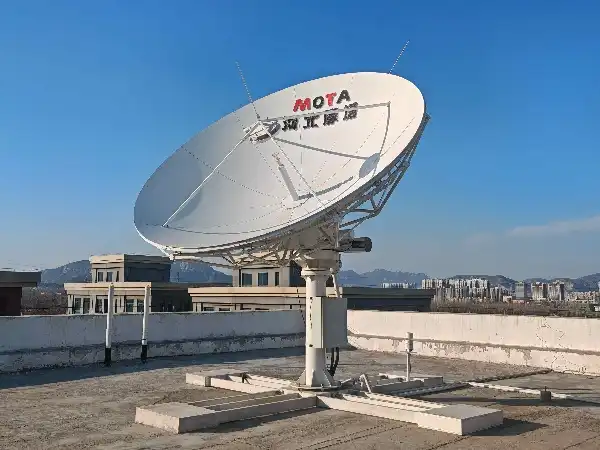
The main difference is the environment each antenna is built to survive. A commercial satellite antenna suits offices, retail sites, and homes, where electromagnetic noise is low and weather is mild. An industrial-grade anti-interference fixed satellite antenna targets plants, substations, and mines, where variable frequency drives and welders fill the air with noise. It adds high transceiver isolation, low sidelobes, a built-in filter, a sealed housing, and remote monitoring so the link stays up for years. Commercial units cost less upfront, but outages near heavy equipment often cost more than the price gap.
Introduction
Why This Question Matters to Plant and Mine Teams
You know that a broken SCADA link can stop a shift if you are in charge of automation for a mine, power plant, or smelter. When fiber can't get to the spot, satellite backup is often used to send the data. A dish that works well on an office park rooftop might not work so well next to a drive cabinet.
This guide was written for automation managers, controls engineers, integrators, and distributors who need to tell the difference between marketing claims and specs that can be measured. We use numbers that you can put in a bidding document to compare the two types of antennas.
What We Cover in This Guide
The main differences in design are what we'll start with. Then we look at some features that are important for an industrial site. These are latency, isolation, sidelobes, and noise figure. Next, we look at cost, support, and compatibility. Finally, we come up with a way to buy that works with how big groups usually do it: figure out what's wrong, test it on-site, bid, sign a supply agreement, and then roll it out in stages. We end with steps for installation and upkeep, as well as a frequently asked questions (FAQ) section. Every number for our antenna comes from MOTA product data, so you can check it out during a test flight.
Who We Are and Why Our View Counts
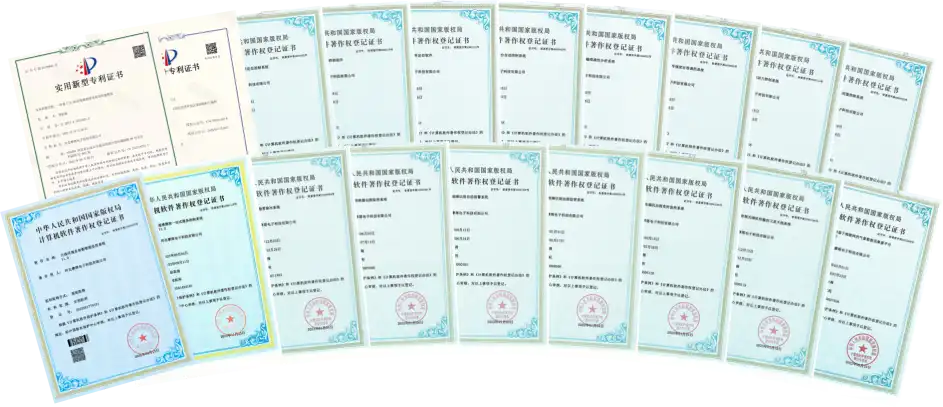
Hebei Mota Electronics Technology Co., Ltd. (MOTA) has been making industrial-grade anti-interference fixed satellite antenna for satellite communication for nine years. We are certified by ISO 9001, ISO 14001, and ISO 45001 for our management systems, and we make our own antennas and high-precision tracking algorithms. We also work on OEM and ODM projects, changing software, functional parts, and interfaces to fit the needs of the customer. If a customer brings us links that keep dropping near big electrical equipment, this guide shows what our engineers see.
Understanding Industrial-Grade vs Commercial Fixed Satellite Antennas
Design Purpose and Operating Environment
A commercial satellite antenna is made to work in moderate conditions, like stable temperatures, little vibration, and not many strong transmitters nearby. It was made with cost and ease of installation in mind. The opposite is true for an industrial-grade antenna. There may be drives, welders, engines, dust, chemicals, and big changes in temperature at its spot.
The MOTA antenna can work in temperatures ranging from -35°F to +65°F and has an IP67 rating. According to IEC 60529. that means it is dust-tight and can handle being submerged for a short time. Every week, rain, snow, or washdown water can damage the hardware, so the rating is important.
Gain, Aperture, and Frequency Band
Gain goes up as dish size goes up, so aperture controls how much information the antenna picks up. A bigger dish also makes the beam narrower, which helps the antenna avoid messages that aren't on its path. The 13 m, 11 m, 9 m, 7.3 m, 6.2 m, 5.4 m, 4.5 m, 3.3 m, and 2.4 m openings on our Ku-band antenna cover 10.7 to 12.75 GHz. When picking an aperture, you take into account your link budget, your data rate, and the amount of rain in your area. This is because heavy rain makes Ku-band signals weaker than lower bands.
Build Quality and Service Life
Why do commercial dishes often use lighter materials? To keep the unit price low, they are chosen. An industrial-grade fixed antenna has a stronger shell that is made to be exposed to the elements all the time. Our case is made of a die-cast aluminum alloy that is resistant to age, UV light, and impacts. It will last for at least 8 years.
That number is important for a maintenance manager because each trip to a remote pad takes time and puts workers at risk. Not having as many replacements also means not having as many purchase orders to handle and spare parts to keep on hand.
Key Features and Benefits of Industrial-Grade Anti-Interference Fixed Satellite Antennas
Anti-Interference Performance You Can Measure
Broadband noise is made by variable frequency drives and arc welders, and a weak receive chain can pick it up. There are three numbers that can be used to measure the quality of our industrial-grade anti-interference fixed satellite antenna: receiver isolation of at least 90 dB, a first sidelobe of -19 dB or less, and a noise figure of 0.9 dB or less.
Industrial electromagnetic interference is stopped by a built-in filter module. The send signal stays out of the receiver with high isolation, and off-axis sources can't be picked up with low sidelobe. Providers should write down these three numbers for you.
Latency and Video Quality for Remote Operations
Data needs to get to control rooms on time. With a communication delay of 60 ms or less, the antenna sends 1080p video and industry data. This lets camera feeds from faraway pits, substation yards, or conveyor lines run along with SCADA traffic. Total path delay is also affected by the network design and the altitude of the satellites, so it is best to check the delay from beginning to end during a trial. When you give your controls engineer clear instructions for the antenna segment, they can use them as a starting point for the test.
Fast Alignment and Remote Monitoring
If you misalign the dish, you'll lose the signal, so it's important to be precise. An automatic program in our antenna lines up the satellites in about 3.5 minutes. An integrated monitoring module sends automatic alarms, reports status in real time, and allows operation and maintenance from a distance.
That means that in the automation department, your team doesn't have to send people on regular visits to check the health of links; they can do it from the control room. The time and money saved on trips over the course of 8 years can close the price gap with a business unit.
Comparing Industrial-Grade and Commercial Fixed Satellite Antennas: Decision Criteria for Buyers
Performance Against Cost
Most of the time, a commercial antenna costs less. It may cost more to buy an industrial-grade model, but it may cost less in the long run when you count downtime, repairs, and site visits. There are five parts that make up the total cost of ownership: the unit price, the installation cost, the scheduled maintenance cost, the cost per hour of downtime, and the replacement cycle. If losing SCADA visibility for an hour stops work or sets off safety procedures, then even a few outages that could have been avoided make a difference. To make sure your comparison is fair, ask each supplier for the same things.
Installation and Compatibility with Existing Systems
When you upgrade a building, you have to connect new tools to old equipment. Make a list of the modems, routers, PLC gateways, and network interfaces that are already there before you buy. Then, make sure that the antenna interface works with those.
MOTA lets you customize as an ODM or OEM, so we can change the project's interaction protocols, useful modules, and software interfaces. Also, look at the hanging. A fixed dish needs a base that is the same size as its opening. A bigger dish needs a stronger pad and a clear view of the sky. This is all sorted out by a site study before any order is made.
Warranty, Support, and Supplier Track Record
Details don't mean much without help. Side by side, compare warranty terms, reaction times, and how easy it is to get extra parts. Our goods come with a full-unit guarantee that meets international standards. We offer flexible payment plans, and our team is available 24 hours a day, seven days a week for remote installation, troubleshooting, and system updates.
Through working together, we can also set up local on-site service and quick delivery of spare parts. Also, look at the certificates. For example, our ISO 9001, ISO 14001, and ISO 45001 systems show how we keep an eye on quality, safety, and the environment during production.
Procurement Guide for Industrial-Grade Anti-Interference Fixed Satellite Antennas
Match the Buying Process to Your Approval Cycle
Big groups don't usually buy all at once. If someone is in pain, they usually start with a small test on-site, then move on to a public tender, a master supply agreement, and a phased installation. Set a time frame of six to twelve months and begin the pilot early. Pick a place with a lot of noise, like near drives or welders, and keep track of link stability, mistake rates, and delay for a few weeks. In a bid, data from your own website is more important than any brochure.
Verify Certifications and Regulatory Fit
Get management system certificates and make sure you know the rules for your site. In the US, the FCC sets rules for transmitting earth stations. Mines and power plants also have their own safety rules that they must follow. Most of the time, satellite dishes are mounted on the ground outside.
Before you place your order, check with your safety officer and the authority in charge of approvals if your plan includes listed dangerous or underground areas. We keep records of our ISO certifications and help our customers with things like paperwork, customs clearance, and running their businesses.
Lead Times, Customization, and Delivery
We keep enough industrial-grade anti-interference fixed satellite antenna in stock so that regular orders can be filled. It takes 45 to 90 days to make customized and large-scale systems, and our mass shipping ability stays the same. To send packages around the world, we use specialized lines, sea freight, and air freight.
We package high-tech electronics in shock- and moisture-proof materials and offer full tracking, customs clearance, and storage overseas. Tell us the amounts, openings, and dates for each phase of the deliveries if you need a supply agreement with stepped deliveries. This way, we can plan production and logistics around your schedule.
Installation and Maintenance Guidelines for Industrial-Grade Fixed Satellite Antennas
Site Survey Before Installation
Do a survey first. Making sure there are no towers, stacks, or buildings in the way of your view of the satellite is important. Make a list of noise sources in the area, like drive rooms, welding bays, and high-voltage equipment, and then try to put the dish as far away from them as you can. Find out how strong the foundation is and how much wind the chosen aperture gets, and make sure that the cable routes are properly grounded. Take pictures and make notes of the site so that our experts, your workers, and your integrator can all use the same record.
Installation and Commissioning Steps
The crew puts together the reflector, mounts the feed, and connects the cables after the foundation has dried. After about 3.5 minutes, the automatic alignment process locks on to the satellite, which cuts down on the time needed for starting compared to human pointing.
Your regular operations team doesn't need to be trained in satellites to set up, and our remote support team can walk them through the process. As a last step, record the tracking alarms, signal levels, and link state so that you can use this information for future checks. Check the link when the whole plant is working, not just when nothing is happening.
Routine Maintenance and Remote Diagnostics
The monitoring module sends real-time status reports and sets off alarms, so the control room is where most checks are done. As required by your site rules, check the case, cable glands, and fastening bolts visually every so often. Also, clear any snow or debris from the reflector. Before anyone drives out, remote diagnostics can often tell right away if an alarm is caused by interference, pointing drift, or a cable fault. Our team can help with system updates and fixing 24 hours a day, seven days a week.
Conclusion
The main difference between commercial and industrial-grade satellite dishes is the type of setting they are made to work in. A commercial unit is better for quiet areas and costs less up front. An industrial-grade anti-interference fixed satellite antenna is better for places like mines, plants, and substations that have a lot of electromagnetic noise. There are differences that can be measured in terms of transceiver isolation, sidelobe level, noise figure, latency, ingress protection, temperature range, and service life.
It has a rating of ≥90 dB, ≒-19 dB, ≒0.9 dB, ≤60 ms, IP67, -35°C to +65°C, and 8 years or more. Instead of just looking at price, buyers should compare the total cost of ownership, system compatibility, warranty, and support. They should also do an on-site pilot to make sure the results are good before putting in a bid. Automatic alignment and monitoring from afar then cut down on the time needed for commissioning and inspection trips.
FAQ
Why does an industrial-grade antenna handle interference better than a commercial one?
It has at least 90 dB of radio isolation, a first sidelobe of -19 dB or less, a noise figure of 0.9 dB or less, and a filter module that is built in. Before you compare, make sure that the commercial models you're looking at are aimed at quieter sites by looking at their datasheets.
Can I use an industrial-grade antenna in a commercial setting?
Yes. One can be used at any place that needs a more stable connection, like a port, a college, or a building that is far away. You pay more up front, so compare that to how much an outage would cost.
What lead time and warranty should I expect?
Regular orders are met by ready stock. It takes 45 to 90 days to make customized and large systems. Each unit comes with an international standard full-unit guarantee, and there are different payment plans to choose from. Send us your opening, number, and site information, and we'll get back to you with exact terms.
Request an Industrial-Grade Anti-Interference Fixed Satellite Antenna Quote from MOTA
We ask that you send information about your site to hebei_mota@163.com so that our engineers can suggest an opening and a test plan. We are an industrial-grade anti-interference fixed satellite antenna manufacturer with nine years of experience. Our management systems are ISO-certified, and we offer ODM/OEM options and remote support 24 hours a day, seven days a week. There may be ready stock, competitive prices, or phased supply agreements that you can ask about. You can find out more about the product at motasat.com and get a quote right away.
References
1. Satellite Communications (Dennis Roddy), 2006
2. Satellite Communications Systems Engineering (Louis J. Ippolito Jr.), 2017
3. Electromagnetic Compatibility Engineering (Henry W. Ott), 2009
4. IEC 60529: Degrees of Protection Provided by Enclosures (IP Code), 2013
5. ITU-R Recommendation P.618-13: Propagation Data and Prediction Methods Required for the Design of Earth-Space Telecommunication Systems, 2017
6. ITU Radio Regulations, 2020
Tell us your requirements – get a tailored quote and technical support within 24 hours.