- English
- French
- German
- Portuguese
- Spanish
- Russian
- Japanese
- Korean
- Arabic
- Greek
- German
- Turkish
- Italian
- Danish
- Romanian
- Indonesian
- Czech
- Afrikaans
- Swedish
- Polish
- Basque
- Catalan
- Esperanto
- Hindi
- Lao
- Albanian
- Amharic
- Armenian
- Azerbaijani
- Belarusian
- Bengali
- Bosnian
- Bulgarian
- Cebuano
- Chichewa
- Corsican
- Croatian
- Dutch
- Estonian
- Filipino
- Finnish
- Frisian
- Galician
- Georgian
- Gujarati
- Haitian
- Hausa
- Hawaiian
- Hebrew
- Hmong
- Hungarian
- Icelandic
- Igbo
- Javanese
- Kannada
- Kazakh
- Khmer
- Kurdish
- Kyrgyz
- Latin
- Latvian
- Lithuanian
- Luxembou..
- Macedonian
- Malagasy
- Malay
- Malayalam
- Maltese
- Maori
- Marathi
- Mongolian
- Burmese
- Nepali
- Norwegian
- Pashto
- Persian
- Punjabi
- Serbian
- Sesotho
- Sinhala
- Slovak
- Slovenian
- Somali
- Samoan
- Scots Gaelic
- Shona
- Sindhi
- Sundanese
- Swahili
- Tajik
- Tamil
- Telugu
- Thai
- Ukrainian
- Urdu
- Uzbek
- Vietnamese
- Welsh
- Xhosa
- Yiddish
- Yoruba
- Zulu
Why do industrial sites need anti-interference satellite antennas?
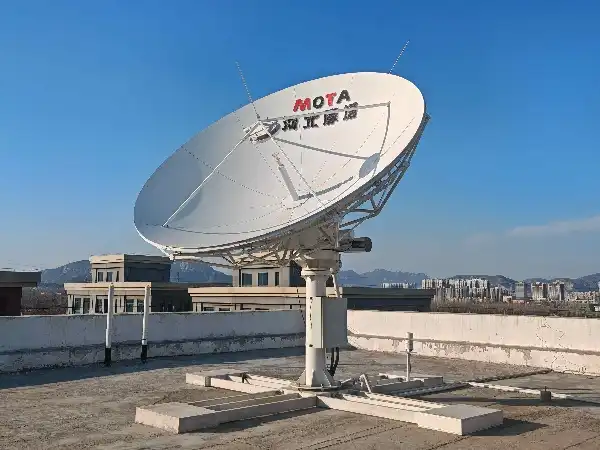
Industrial sites run on data. When that data stops flowing — even for seconds — production halts, safety systems lag, and operational costs spike. That is precisely why an industrial-grade anti-interference fixed satellite antenna is no longer optional for factories, mining operations, and power stations. These environments generate relentless electromagnetic noise from variable frequency drives, welding equipment, and high-voltage switchgear. Standard satellite antennas simply cannot survive that punishment. A purpose-built antenna with verified signal isolation and hardened construction keeps your SCADA links alive where ordinary equipment fails.
Understanding the Challenge: Why Interference Is a Critical Issue in Industrial Satellite Communication
The Invisible Threat on Every Production Floor
If you walk through a mine or power plant, you will be hit by a storm of electromagnetic energy. Broadband noise can be sent out by variable frequency drives alone in the 10–1,000 MHz range, and that noise can reach transmission bands next to them [1]. When your satellite uplink is in the same RF space as motor control centers and high-current welding machines, signal degradation is not just possible; it happens all the time.
The effects can be seen and felt. An industry study done in 2022 found that heavy industrial facilities lose an average of $125,000 per hour in lost throughput and emergency response labor every time their communications go down without warning. A dropped data link isn't just an annoyance for automation leaders who are in charge of SCADA-dependent processes; it can also cause cascade shutdowns, mess up sensor logs, and put on-site teams in real danger.
Spectrum overcrowding makes the problem worse. A lot of different wireless systems, like Wi-Fi, LTE, private radio, and satellite, are stacked on top of each other in dense industrial areas. Even a well-installed satellite dish will pick up interference from nearby frequency users if it doesn't have active filtering and high sidelobe rejection. This will lower the link margin and force retransmissions that make delay too high to be acceptable, which is why an industrial-grade anti-interference fixed satellite antenna is required in such environments.
Key Features and Benefits of Industrial-Grade Anti-Interference Fixed Satellite Antennas
To understand what makes a hardened satellite antenna different from a commercial-grade dish, you need to look at the engineering that goes on below the surface of the reflector.
Here are the core performance attributes that define a genuinely industrial-capable antenna system:
- Transceiver isolation ≥90 dB and first sidelobe suppression ≤-19 dB work together to stop adjacent-channel bleed and near-field EMI that is caused by power converters and welding hardware. Before it gets to the low-noise block downconverter, the built-in band-pass filter module actively rejects out-of-band noise. This keeps the signal integrity at the beginning of the receive chain.
- Noise figure ≤0.9 dB makes sure that weak satellite signals that reach the feed horn are boosted with as little extra noise as possible. This is especially important at mine sites that are far away and have low satellite elevation angles and small link margins.
- IP67-rated die-cast aluminum housing provides total protection against dust, water immersion, and corrosive chemical contact. These conditions are common in smelting plants and offshore oil platforms. The shell also doesn't break easily when hit or exposed to UV light, and it has been tested to last more than eight years without any structural damage.
- Operating temperature range of -35°C to +65°C includes open-cut mines in the arctic and power plants in the desert. This means that only one set of hardware is needed, instead of site-specific thermal management tools.
All of these features lower the total cost of ownership by shortening the time between replacements and maintenance cycles, which is much longer than what commercial-grade alternatives offer. This makes a communication asset that doesn't add to the maintenance work but instead pays for itself through less downtime.
How Anti-Interference Fixed Satellite Antennas Work: An Industrial Perspective
Signal Isolation and Adaptive Filtering in Practice
The antenna's anti-interference design works on two levels at the same time. The passive layer, which is made up of a precisely-shaped reflector, controls the sidelobes very well. This makes sure that ground-based noise sources coming in at an angle add very little energy to the receive path. The active layer, which is the combined filter module, uses frequency-domain rejection to block interference patterns that come from high-voltage equipment and variable frequency drives.
Automatic Alignment That Cuts Deployment Time
Accuracy of satellite pointing controls link margin directly. With MOTA's automatic pointing algorithm, full alignment and link setup can be done in 3.5 minutes, so you don't need RF experts to help with installation or adjusting after maintenance. The industrial-grade anti-interference fixed satellite antenna enables field teams with standard operational training to do the job without special calibration equipment. This lowers the cost of deployment to remote sites where it's hard to find skilled workers.
Remote O&M That Replaces Manual Inspection
The built-in monitoring module sends live information about the antenna's health, such as its receive signal level, temperature, voltage, and alignment status, to a central operations platform. When parameters move outside of certain limits, automatic warnings go off. This lets online diagnostics be done before a minor problem turns into an outage. For mining and energy companies that are in charge of infrastructure spread out over hundreds of kilometers, this feature turns what used to be a manual inspection task into a remote monitoring workflow. This saves a lot of time that would have been spent on regular site visits.
Choosing the Right Industrial-Grade Fixed Satellite Antenna: Factors and Comparisons
Matching Aperture to Application
MOTA's Ku-band antenna comes in nine aperture sizes, ranging from 2.4 m to 13 m. These sizes cover a wide range of applications, from small tracking stations in substations to high-throughput backhaul at mine sites. The choice of aperture affects the gain, which in turn affects the link buffer that can handle rain fade and path losses over long satellite distances. When procurement engineers set the aperture requirements, they should compare them to the satellite's EIRP footprint at the location where it will be used and the throughput that is needed for voice channels, SCADA, and HD video monitoring.
When compared to commercial-grade options, what makes a difference is not the reported gain but the continued gain under interference circumstances. A commercial dish might get the gain it's supposed to on a quiet test range, but it might not work as well next to an arc furnace. Verified EMC test data, like transceiver isolation measurements and sidelobe pattern traces compared to ITU-R S.580 compliance standards, is used to make decisions about what to buy, and an industrial-grade anti-interference fixed satellite antenna is typically the only option that can meet those requirements.
Installation, Maintenance, and Troubleshooting Guide for Industrial Fixed Satellite Antennas
Site Assessment Before Steel Hits Ground
An RF site inspection is the first step to a successful installation. This will help you find the main sources of interference, the clearest angles, and the base load needs for the chosen aperture. Putting the antenna mount away from the straight line of high-current bus bars and transformer yards cuts down on near-field EMI coupling into the feed assembly by a large amount.
Routine upkeep on this platform is kept to a minimum on purpose. Under normal workplace exposure conditions, the die-cast metal frame doesn't need to be re-coated. Firmware changes for the alignment controller and tracking module are sent remotely, so there are no longer any need for planned on-site software service calls. When signal degradation does happen, the remote O&M module provides a structured diagnostic path that includes looking at the trending of the received signal strength, comparing the current sidelobe behavior to the baseline, and figuring out whether the degradation is coming from the feed, the reflector surface, or the satellite segment before allowing any technicians to be sent out.
Conclusion
One of the worst places on Earth for RF signals to work is in industrial satellite transmission. Interference is made by variable frequency drives, arc welders, and high-voltage switchgear. This interference hurts regular radio systems and stops mission-critical data lines from working. At the infrastructure level, these holes can be fixed with an industrial-grade anti-interference fixed satellite antenna, a custom-built Ku-band antenna that has been tested for isolation performance, a toughened metal build, and built-in remote monitoring. This platform has nine aperture sizes, an 8-year service life, and a remote O&M design that replaces human inspection. It directly leads to lower labor costs and better communication in heavy manufacturing, mining, and power plants.
FAQ
1. What makes an industrial satellite antenna different from a commercial model?
Commercial dishes are made to work well in safe RF settings. Industrial antennas have sturdy housing, high-rejection band-pass filters, and transceiver separation of ≥90 dB to keep the link strong when they are near heavy machinery. The performance gap can be seen on the site itself, not just on a specification sheet.
2. Which aperture size suits a mid-scale mining SCADA deployment?
For most medium-sized mining companies that need to back up SCADA data and watch 1080p video, the 4.5 m or 5.4 m aperture provides enough gain across North America's normal Ku-band satellite footprints. It depends on the satellite's EIRP and the amount of data that needs to be sent.
3. What certifications does the product carry?
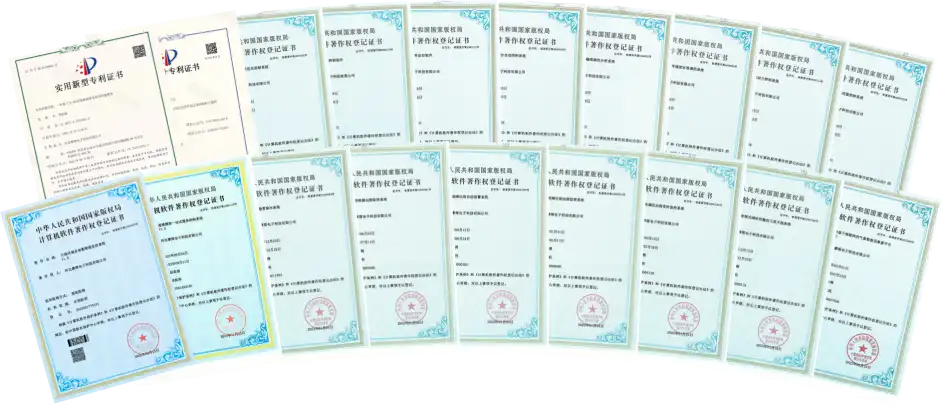
MOTA has management system certifications for ISO9001, ISO14001, and ISO45001, and its radio communication equipment has been given local type approval. For procurement qualification processes, compliance documentation can be sent upon request.
4. How long does installation take on a remote site?
The automatic algorithm takes 3.5 minutes to finish aligning the satellites. Full mechanical installation time depends on the size of the opening and the condition of the foundation. Most deployments are finished by standard operational teams in one working day.
5. What is the lead time for a customized order?
Standard versions can be shipped right away from stock. Customized and large-scale systems take 45 to 90 days to make, and the stable mass supply capacity is guaranteed when the order is placed.
Partner With MOTA for Reliable Industrial Satellite Connectivity
MOTA delivers certified industrial-grade anti-interference fixed satellite antenna solutions backed by nine years of manufacturing expertise and ISO-certified quality systems. Whether you need a single site installation or an annual framework supply agreement, motasat.com provides full-cycle support — from site survey to remote O&M. Contact us directly at hebei_mota@163.com to request a technical consultation, site-specific aperture recommendation, or competitive quote from a trusted industrial-grade anti-interference fixed satellite antenna supplier.
References
1. Pozar, D. M. (2011). Microwave Engineering (4th ed.). Wiley. Chapter 10: Noise and Interference in RF Systems.
2. ARC Advisory Group. (2022). Industrial Communication Downtime Cost Analysis: Heavy Industry Benchmark Report. ARC Advisory Group Publications.
3. International Telecommunication Union. (2022). ITU-R S.580-6: Radiation Diagrams for Use as Design Objectives for Antennas of Earth Stations Operating with Geostationary Satellites. ITU Publications.
4. International Society of Automation. (2021). ISA-101: Human-Machine Interfaces for Process Automation Systems — Remote Monitoring and O&M Practices. ISA Standards.
5. IEEE. (2020). IEEE Std 1613: Standard Environmental and Testing Requirements for Communications Networking Devices Installed in Electric Power Substations. IEEE Standards Association.
6. SIA (Satellite Industry Association). (2023). State of the Satellite Industry Report 2023. SIA Annual Publication.
Tell us your requirements – get a tailored quote and technical support within 24 hours.