- English
- French
- German
- Portuguese
- Spanish
- Russian
- Japanese
- Korean
- Arabic
- Greek
- German
- Turkish
- Italian
- Danish
- Romanian
- Indonesian
- Czech
- Afrikaans
- Swedish
- Polish
- Basque
- Catalan
- Esperanto
- Hindi
- Lao
- Albanian
- Amharic
- Armenian
- Azerbaijani
- Belarusian
- Bengali
- Bosnian
- Bulgarian
- Cebuano
- Chichewa
- Corsican
- Croatian
- Dutch
- Estonian
- Filipino
- Finnish
- Frisian
- Galician
- Georgian
- Gujarati
- Haitian
- Hausa
- Hawaiian
- Hebrew
- Hmong
- Hungarian
- Icelandic
- Igbo
- Javanese
- Kannada
- Kazakh
- Khmer
- Kurdish
- Kyrgyz
- Latin
- Latvian
- Lithuanian
- Luxembou..
- Macedonian
- Malagasy
- Malay
- Malayalam
- Maltese
- Maori
- Marathi
- Mongolian
- Burmese
- Nepali
- Norwegian
- Pashto
- Persian
- Punjabi
- Serbian
- Sesotho
- Sinhala
- Slovak
- Slovenian
- Somali
- Samoan
- Scots Gaelic
- Shona
- Sindhi
- Sundanese
- Swahili
- Tajik
- Tamil
- Telugu
- Thai
- Ukrainian
- Urdu
- Uzbek
- Vietnamese
- Welsh
- Xhosa
- Yiddish
- Yoruba
- Zulu
How to Choose the Best Ground Station Transceiver Antenna for Satellite Communications?
Choosing the right satellite ground station tools is what makes or breaks your mission-critical contacts when they're needed the most. A ground station transceiver antenna handles both uplink and downlink messages over a range of frequency bands. It is the link between activities on Earth and assets in space. Businesses that run satellite systems, military communications, or Internet of Things (IoT) networks need to pick equipment that matches scientific performance with practical dependability. This has a direct effect on the success of projects and the long-term return on investment (ROI).
Understanding Ground Station Transceiver Antennas: Basics and Key Features
What Defines a True Transceiver Antenna System
Unlike receive-only ground connections, ground station transceiver antennas have advanced transmission features that can go both ways. These systems have both send and receive chains in one unit. They can handle uplink and downlink operations at the same time across Ku, Ka, S, X, C, and Qv frequency bands. By using advanced isolation techniques—usually more than 85dB between the send and receive lines to stop self-interference—the merger makes the infrastructure simpler while keeping the signal integrity.
Core Technical Architecture and RF Signal Processing
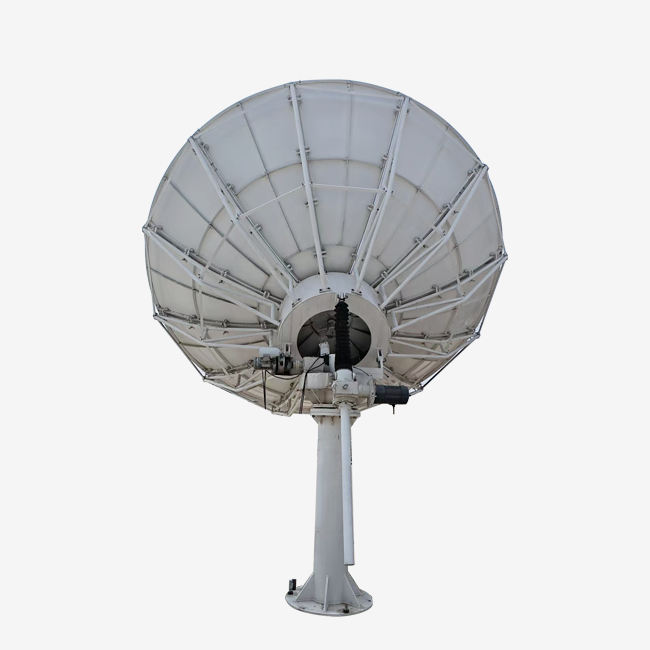
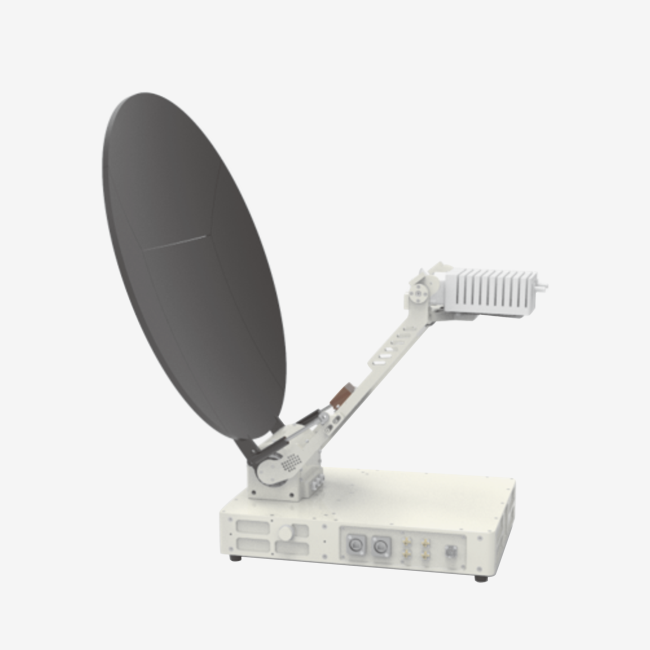
Precision feed units and parabolic or phased array mirrors are used in modern transceiver systems. The feed horn connects to Block Up Converters (BUC) for sending signals and Low Noise Blocks (LNB) for receiving them. These blocks change baseband signals to the right RF frequencies. High-performance units have modems and power control systems built in, so they can be used right away without the need for extra equipment racks. Dynamic tracking is possible with the two-axis stabilization platforms. They use special algorithms to keep the satellites locked in place even when the platforms move or there are changes in the surroundings.
Frequency Band Coverage and Mission Alignment
There are different working needs for each frequency band. Ku-band provides balanced performance for business satellite services, while Ka-band gives higher throughput for apps that use a lot of data. X-band is often used for secret messaging in military and government operations, and S-band is reliable in places where signal propagation is difficult. With equipment that can switch between multiple bands manually or automatically, installations can serve a wide range of task types without having to change the antennas.
Key Criteria to Consider When Choosing a Ground Station Transceiver Antenna
Performance Specifications That Drive Communication Quality
Specifications for performance that affect the quality of communication when picking a ground station transceiver antenna are paramount. Antenna gain directly affects the range and strength of a broadcast. Higher gain antennas focus energy into smaller beamwidths, which increases the link margin but makes tracking more accurate. Specifications for the noise figure tell you how sensitive the receiver is; lower values let you pick up weaker signals from faraway satellites. When looking at your choices, look at the G/T ratio (Gain-to-noise Temperature), which measures how well the listening system works. Effective Isotropic Radiated Power (EIRP) tells you how strong your transfer signal is when it reaches the satellite for delivery.
For non-geostationary satellite operations, tracking precision is very important. In advanced models, systems that can fix satellites within three minutes cut the time it takes to launch during emergencies by a large amount. When two-axis stabilizers and self-developed pointing algorithms work together, they keep the link open even as satellites pass overhead. This keeps contact from dropping during important operations.
Environmental Resilience and Operational Temperature Ranges
When deployed to the field, difficult conditions test the limits of the tools. Operating temperature ranges tell us where systems will work effectively. Specifications that cover -25°C to +55°C make sure that they can be used anywhere in the world, from the cold to the desert. Ratings for wind resistance show whether transmitters can keep sending 1080p video reliably in bad weather. Units that can resist level-7 winds and still keep the signal quality show that they have the structural stability and stabilization skills needed for communications to stay up and running.
Enclosures with an IP rating keep delicate gadgets safe from water, dust, and other harmful substances. Industrial-grade construction with carefully chosen core components allows for long-term, trouble-free operation under constant stress, lowering the need for upkeep and operating interruptions that hurt mission effectiveness.
Installation Complexity and Lifecycle Support Considerations
When buying something, the total cost of ownership, which is more than just the original price, must be taken into account. Integrated designs that combine BUC, LNB, modem, and power systems into units that can be deployed by a single person cut down on installation work and get rid of problems that come up when parts from different makers don't work together. This integration makes transportation easier, which is especially helpful for quick deployments or installs in remote areas where there may not be a lot of technology know-how.
Long-term running costs are affected by how easy it is to do maintenance. Downtime is kept to a minimum with equipment that can be serviced in the field and has clear monitoring connections and modular parts. Check out the support systems that makers offer, such as the expert help that is available, the supply lines for spare parts, and the warranty coverage. Companies that offer reaction methods 24 hours a day, seven days a week, and localized service teams lower the risk for mission-critical applications where communication problems have big effects.
Comparing Ground Station Transceiver Antennas: Making an Informed Choice
Parabolic Reflector Systems Versus Phased Array Technology
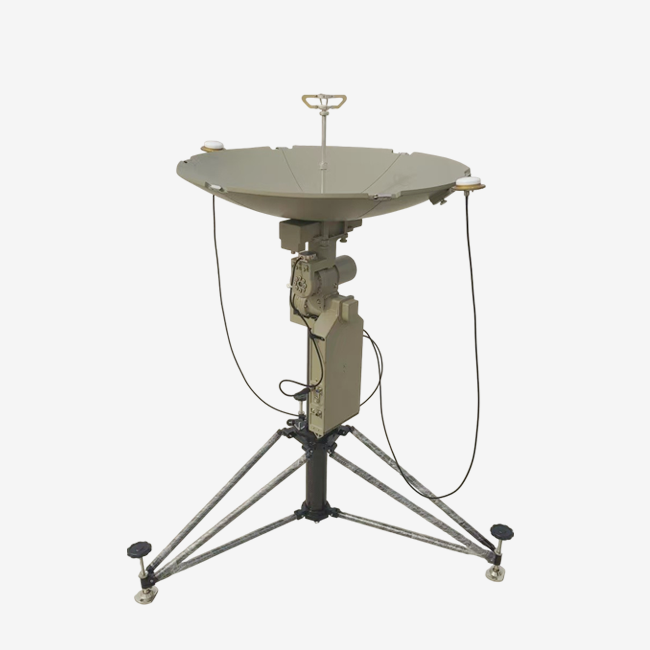
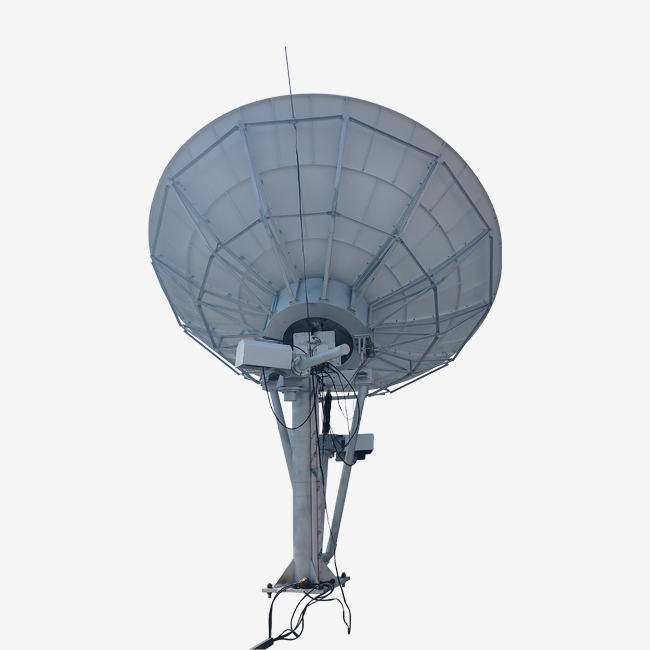
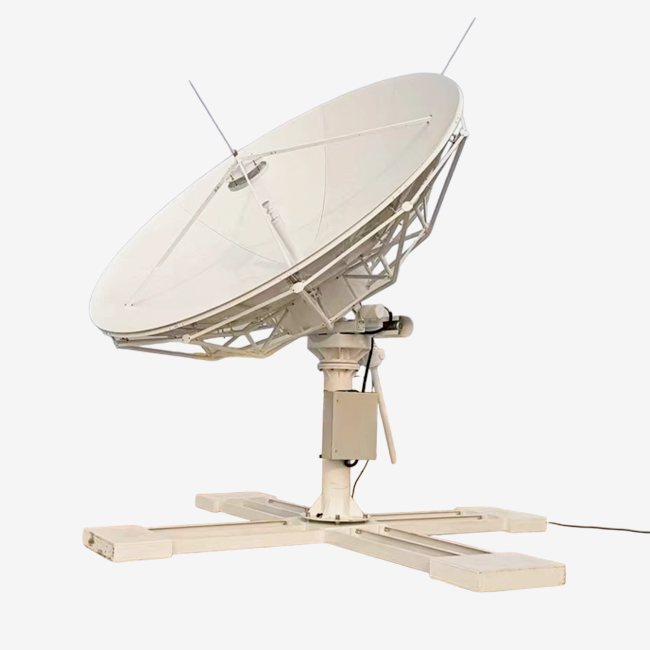
Traditional parabolic antennas work well and use technology that is already well-established. Because they have a high gain and a small beamwidth, they can track satellites that are stable or moving slowly. Mechanical tracking systems work reliably and are less expensive, which makes them appealing for projects on a budget that have stationary satellite targets. Making an informed choice when comparing ground station transceiver antennas involves evaluating these trade-offs against mission requirements.
Phased array antennas can change the direction of an electromagnetic wave without using any moving parts. This lets millisecond-speed tracking adjustments be made. This feature works really well for LEO cluster communications, where satellites move quickly across the sky. The lower level of technical complexity makes it more reliable, but it usually costs more. The decision relies on the mission plan. For example, cost-effective parabolic designs work best for geostationary satellite communications, while phased array agility is better for multi-satellite LEO operations.
Performance Benchmarks and Quality Indicators
Transceiver separation specs show how interference can be managed. When values are higher than 85dB, it means that the filtering and feed design is very advanced, which keeps the signals being sent from overloading listeners. Sidelobe levels below -14 dB show clean radiation patterns that keep interference with nearby satellites to a minimum and make sure that frequency coordination rules are followed.
Metrics for tracking accuracy describe business dependability. Sub-degree accuracy keeps signals perfectly aligned, which increases speed and lowers bit error rates. If you want to compare models, you should ask for success results under real-world conditions instead of idealized lab conditions.
Evaluating Manufacturers and Industry-Recognized Solutions
Certifications like ISO9001 quality management, ISO14001 environmental standards, and ISO45001 occupational health procedures show that a maker has been in business for a while and knows how to make things. These certificates show that consistent production and reliable products are being made in a planned way. Companies that keep enough stock for standard setups and offer 45–90 day production processes for custom systems strike a good mix between supply and flexibility.
Premium providers are set apart by their technical skills, such as their own satellite transmission algorithms and high-precision tracking systems. Experienced cross-border logistics operations with professional packaging, full-process tracking, and flexible customs clearance help make sure that equipment gets to its target ready to be used.
Purchasing and Procurement Guide for Ground Station Transceiver Antennas
Sourcing Strategies and Supplier Verification
To find qualified suppliers, you need to look at their manufacturing skills and past performance. Verified OEMs that offer full ODM/OEM design services can meet the specific needs of any project, from making a pilot to mass production. Authorized dealers and regional sellers offer helpful local support networks that can help with installation and ongoing upkeep. This guide helps in getting high-quality ground station transceiver antennas through verified channels.
When looking at possible partners, look at their client portfolios and case studies that show how they've successfully deployed in situations that are similar to yours. Suppliers who work with aerospace contractors, military groups, and satellite operators bring experience in their fields, which means they can give better technical advice when developing specifications.
Pricing Structures and Total Cost Analysis
The price of equipment is based on its performance level and set of features. Basic systems are good for simple communication needs, while more advanced units with features like fast deployment, multi-band support, and better weather resilience are highly valued. Total cost studies should be done by procurement managers, and they should include installation costs, training needs, upkeep intervals, and the expected service life.
Organizations that set up multiple ground stations can often get big savings by making bulk purchases. Flexible payment terms and financing choices make it easier to keep track of big projects' capital expenditures. With service level agreements that promise response times and warranties that cover longer amounts of time, you can protect your finances against failures that you didn't expect.
Delivery Timelines and After-Sales Support Frameworks
Standard product configurations usually ship within a few weeks, but custom-engineered options take longer. Suppliers who keep product gaps can meet pressing needs, which is important for deployments that need to happen quickly. During procurement talks, make sure that supply schedules are clear and that they are in line with project goals.
Comprehensive help after the sale is what sets some sellers apart. Technical support 24 hours a day, 7 days a week, installation and testing services, fixing methods, and ways to improve systems all help build relationships that go beyond just selling equipment. Check out the support systems, like area service centers and networks of qualified technicians, that make it easier for people to get help when problems happen.
Practical Tips and Checklist for Successful Ground Station Transceiver Antenna Deployment
Site Selection and Installation Best Practices
When choosing a spot, the best one takes into account how clear the sky is and how few things are in the way of satellites' lines of sight. Electromagnetic interference from nearby power lines or antennas can slow things down; measure the RF noise floors during site surveys before deciding on places. For bigger aperture systems, the structural base must be able to hold the weight of the antenna and the wind loads. Setting up a successful ground station transceiver antenna requires following these best practices.
For accurate tracking to work, the fixing must be perfectly aligned. Set up true north references and level mounting surfaces according to the manufacturer's instructions using measuring tools. Quality fittings and the right types of cables should be used in cable routing to keep RF losses to a minimum. There should also be enough service loops to allow for antenna movement during tracking operations.
System Integration and Testing Protocols
Even though integrated systems make starting easier, they still need to be checked in a planned way. When you turn on the power, you should follow the manufacturer's instructions and make sure that the voltage levels and current draws are correct. RF path testing checks the accuracy of the signal from the antenna feed to the modem connections, making sure that the frequency conversions and modulation settings are correct.
Tracking algorithms and servo efficiency are checked by satellite gathering processes. A successful lock within three minutes means that the devices are properly set. Measure the link margin in different weather conditions and write down the performance baselines. This will help with fixing if the performance drops later. Before mission-critical dependence starts, these first tests build trust.
Maintenance Strategies for Extended Service Life
Regular checks find problems before they become failures. Check mechanical systems for wear, lubricate moving parts as directed by maintenance plans, and make sure that vibrations don't cause fastener torques to become too low. To keep the gain specs, clean the surfaces of the reflectors by getting rid of any dirt or trash that might spread RF energy.
Monitoring the environment keeps an eye on things that put stress on equipment. Temperature monitors inside enclosures let workers know when there are problems with the cooling system, and humidity tests show when the seal is breaking down, letting water in. Unexpected outages during important operations can be avoided by replacing parts before they break based on how long they've been used and how exposed they are to the environment.
Real-World Deployment Lessons and ROI Optimization
Companies that get the best results on their investments train their operators and make sure their employees know how to use the system and fix problems. Keeping records of setup settings and performance baselines speeds up the analysis process when problems happen. Keeping in touch with equipment providers gives you access to firmware changes, technical notes, and new best practices that make your equipment more useful throughout its entire lifecycle.
When you put together the ability to deploy quickly, the ability to withstand harsh environments, and the combined design, you get real value. In emergency reaction situations, three-minute setup times help set up contacts when seconds count. Single-person deployment is used in remote activities to cut down on staff costs and practical problems. These practical savings add up over the life of a project, which is why it's worth spending money on high-quality equipment that always works when it's needed the most.
Conclusion
To choose the best ground station transceiver antenna, you have to weigh the technical specs, the working needs, and the price over its entire life. High-performance systems that can operate on multiple bands, be set up quickly, and be resilient in harsh environments make satellite communications effective for a wide range of challenging tasks. Partnerships with makers that show production know-how, a full support network, and a dedication to quality through foreign certifications are key to successful procurement. Organizations make sure their communication infrastructure offers mission security over long service lives by carefully reviewing performance benchmarks, supplier capabilities, and total ownership costs.
FAQ
Which frequency bands are optimal for different satellite communication missions?
Ku-band provides balanced performance for business television and internet services, and many satellites can connect to it. Ka-band has a higher rate and can handle bandwidth-heavy tasks like HD video backhaul, but it also has more rain fade. X-band is a good way for the military and government to communicate securely because it has good transmission properties. When it comes to mobile apps and bad weather, S-band works great. Multi-band ground station transceiver antennas that can switch between Ku, Ka, S, X, C, and QV frequencies manually give you the most operating freedom. This means that a single placement can meet a wide range of mission needs without having to replace any equipment as communication needs change.
What are the trade-offs between fixed and tracking antennas?
For geostationary satellite communications, where orbital positions stay the same in relation to ground stations, fixed antennas work well. Because their mechanical design is easier, they cost less and need less upkeep. Non-geostationary satellites need tracking devices that use motorized placement to keep targets in line as they move across the sky. LEO array communications and mobile platform operations are made possible by advanced tracking systems with two-axis stability and custom algorithms. Tracking stations cost more to buy at first, but they can do more mission types and work with more than one satellite, which fixed sites can't do.
What are typical lead times and warranty terms from certified manufacturers?
Standard configuration equipment from providers that keep a quantity on hand ships within weeks, which helps meet urgent rollout deadlines. Customized systems made to exact specs need 45 to 90 days to be made, which includes validating the plan and getting the parts. Reputable makers give standard warranties that last between one and two years, with choices for longer warranties. Operational security is given by service level agreements that spell out reaction times and how to solve problems. Manufacturers with localized service networks and technical help that is available 24/7 solve problems faster than providers who don't have a full after-sales infrastructure. This cuts down on communication problems that make missions less effective.
Partner with MOTA for Your Next Ground Station Transceiver Antenna Deployment
Aerospace companies and defense groups around the world trust MOTA's industrial-grade satellite communication options. Our range of ground station transceiver antennas includes Ku/Ka/S/X/C/Qv multi-band systems that can connect with satellites in just three minutes, making them useful for quick emergency deployment situations. Our industrial methods are backed by ISO9001, ISO14001, and ISO45001 certifications, which means that the quality is always up to international standards. As part of our ODM/OEM customization services, our engineering team changes the specs of equipment to fit your exact working needs. As a seller with more than nine years of experience, we keep stock on hand for quick shipping and can also accommodate special projects with delivery times of 45 to 90 days. You can talk to our technical experts about your satellite communication infrastructure needs by emailing hebei_mota@163.com. You'll get personalized advice and help around the clock, seven days a week. MOTA's proven dependability and technical skills can help you be more sure of your goal.
References
1. Maral, G., & Bousquet, M. (2020). Satellite Communications Systems: Systems, Techniques, and Technology. John Wiley & Sons, Sixth Edition.
2. Elbert, B. R. (2019). The Satellite Communication Ground Segment and Earth Station Handbook. Artech House Space Technology Library.
3. Ippolito, L. J. (2017). Satellite Communications Systems Engineering: Atmospheric Effects, Satellite Link Design and System Performance. John Wiley & Sons.
4. Calcutt, D., & Tetley, L. (2018). Satellite Communications: Principles and Applications. Edward Arnold Publishers, Second Edition.
5. Pratt, T., Bostian, C. W., & Allnutt, J. E. (2016). Satellite Communications: Principles and Applications. John Wiley & Sons, Third Edition.
6. Kolawole, M. O. (2021). Satellite Communication Engineering: Fundamental Concepts and Applications. CRC Press Taylor & Francis Group.
Tell us your requirements – get a tailored quote and technical support within 24 hours.